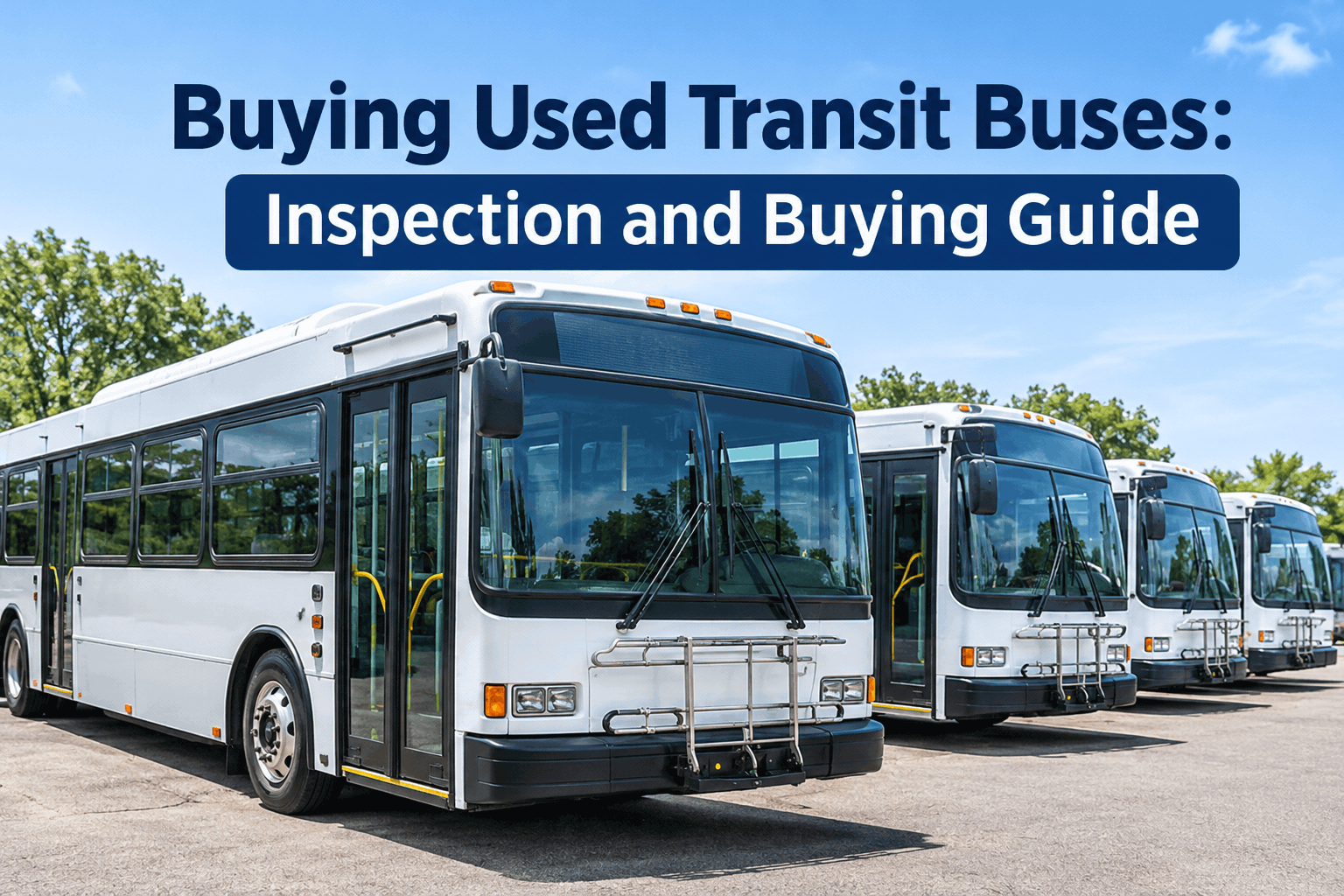
A used transit bus can be a smart buy or an expensive mistake, and the difference comes down to what you check before the money changes hands. Buying used transit buses well is a records-and-inspection discipline — a thorough used bus inspection plus a full service history turns a gamble into a known quantity. You can see the bus-specific inspection tools in a demo before your next purchase.
Buying Used Transit Buses: Inspection and Buying Guide
The listing photos never show rust in the wheel wells or a lift that won't cycle. A structured walk-around does. Here are the zones that decide whether a used bus is a bargain or a money pit.
Why Buying Used Is a Records-and-Inspection Game
A used transit bus had a whole life before it reached the sale lot, and your job as a buyer is to vet that history like you would a new hire. The sticker price is the smallest number in the deal — what a bus will actually cost you is decided by how it was cared for and what is about to break. Four truths separate a good buy from a regret.
Records are your first protection
A bus with consistent maintenance records is a known quantity. One with thin or missing paperwork forces you to assume the worst — and pay for it in surprises.
Cheap with problems isn't cheap
A low sticker on a bus with a tired transmission or a rusted frame is not a deal. The repair bill arrives a month after the sale, at full price.
Inspect past the photos
A listing shows a clean coat of paint. A walk-around — or a mechanic's eye — shows the rust, the leaks and the lift that won't cycle. Always look in person.
Mileage isn't the whole story
A high-mileage bus that was serviced on schedule often beats a low-mileage one that was neglected. Read the odometer alongside the history, never alone.
The best buyers do not just inspect the bus — they inspect the paperwork, then bring the bus under proper tracking the day it is theirs, so they know from day one what they bought. You can sign up free and start inspecting to a real bus-specific checklist.
What the Service Records Really Tell You
Of everything you examine, the maintenance history moves the decision the most. It is the difference between buying a bus you understand and buying a mystery — and a smart seller who kept good records expects to be paid for them.
If a seller cannot produce records, that is not automatically a no — but it is a reason to inspect harder and offer less. And it is worth remembering from the other side of the table: the clean history you keep on your own buses is what makes them sell for more later. Book a demo to see how that record is built and kept.
What to Check, System by System
A good pre-purchase inspection is methodical. Work through the major systems in order, know what "good" looks like, and know the red flag that should make you pause or walk.
| System | What to check | Red flag |
|---|---|---|
| Engine & transmission | Leaks, noises, fluids, service record | Diesel smell or rust in the oil, no history |
| Air brakes & tires | Air build-up, pad and drum wear, tire date code and tread | Soft pedal; tires over about 6 years old |
| Body, frame & floor | Panels, wheel wells, undercarriage, rivets | Rust streaks at seams, a soft or patched floor |
| Wheelchair lift & securement | Full cycle, interlocks, securement hardware | Lift won't deploy, missing securement parts |
| Electrical & lights | All lights, panels, gauges, HVAC | "Rat's nest" wiring, dead circuits |
On a transit bus, two items deserve extra attention: the frame and floor, because rust is expensive and irreversible, and the wheelchair lift, because a lift that won't cycle can ground the bus on day one. See how it fits a passenger operation on the passenger and transit page, or book a demo to run these checks on a tablet.
Before You Buy a Used Transit Bus: A Checklist
Do not let the money leave until you can tick these off. The critical items are the ones that, skipped, turn a bargain into a liability parked in your yard.
- You have complete maintenance and service recordsPlus title and ownership history — the paperwork is the proof.CRITICAL
- The bus was inspected to a checklist, not from the listingA walk-around in person, by you or a trusted mechanic.CRITICAL
- You checked the body, frame and undercarriage for rustWheel wells, steps, rivets and the floor — rust never reverses.CRITICAL
- You verified mileage against the history and titleThe odometer should match the service record and duty cycle.CHECK
- You tested the wheelchair lift, doors and safety exitsA full lift cycle and securement check — the heart of an accessible bus.CHECK
- You priced the total cost, not just the stickerImmediate repairs, upcoming service and insurance, all in.CHECK
Tick the three critical items and the rest of the deal gets a lot less risky. You can sign up free and put this checklist on a tablet for your next purchase.
How BusCMMS Helps You Buy — and Own — Smarter
BusCMMS is not a dealer, a marketplace or a third-party inspection service — it does not sell or appraise the bus. What it does is give you the inspection discipline to evaluate one, and the tracking to make the most of it once it's yours.
Bus-specific inspection forms
Pre-loaded checks for the systems that matter on a bus — air brakes, the lift, the frame — so your evaluation is thorough, not a guess from photos.
Baseline and track from day one
Record the bus's age, mileage and condition the day you buy it, then watch its real cost per mile — so you know what you actually got.
The records that resell it
The clean service history you keep is exactly what a future buyer will pay extra for — so good tracking protects your resale, not just your uptime.
Buy on evidence, not a sales pitch, and manage what you buy from the first day — that is how a used bus stays a bargain instead of becoming a lesson.
A Shop Foreman's Take
Key Takeaways on Buying Used Transit Buses
Buying used transit buses well is about replacing hope with evidence — the records, the inspection and the real cost, before the money moves.
Records come first
A documented bus is a known quantity; an undocumented one is a gamble.
Inspect the five zones
Engine, brakes, frame and rust, the lift, and electrical — in person.
Price the total cost
The sticker is the start; immediate repairs and upkeep are the real number.
Track it from day one
Baseline the bus at purchase so you know what you bought and what it costs.
Demand the records, inspect every zone, price the whole cost, and start tracking the moment it's yours — and a used transit bus becomes one of the best-value decisions a fleet can make. The bargain is real; it just has to be verified.