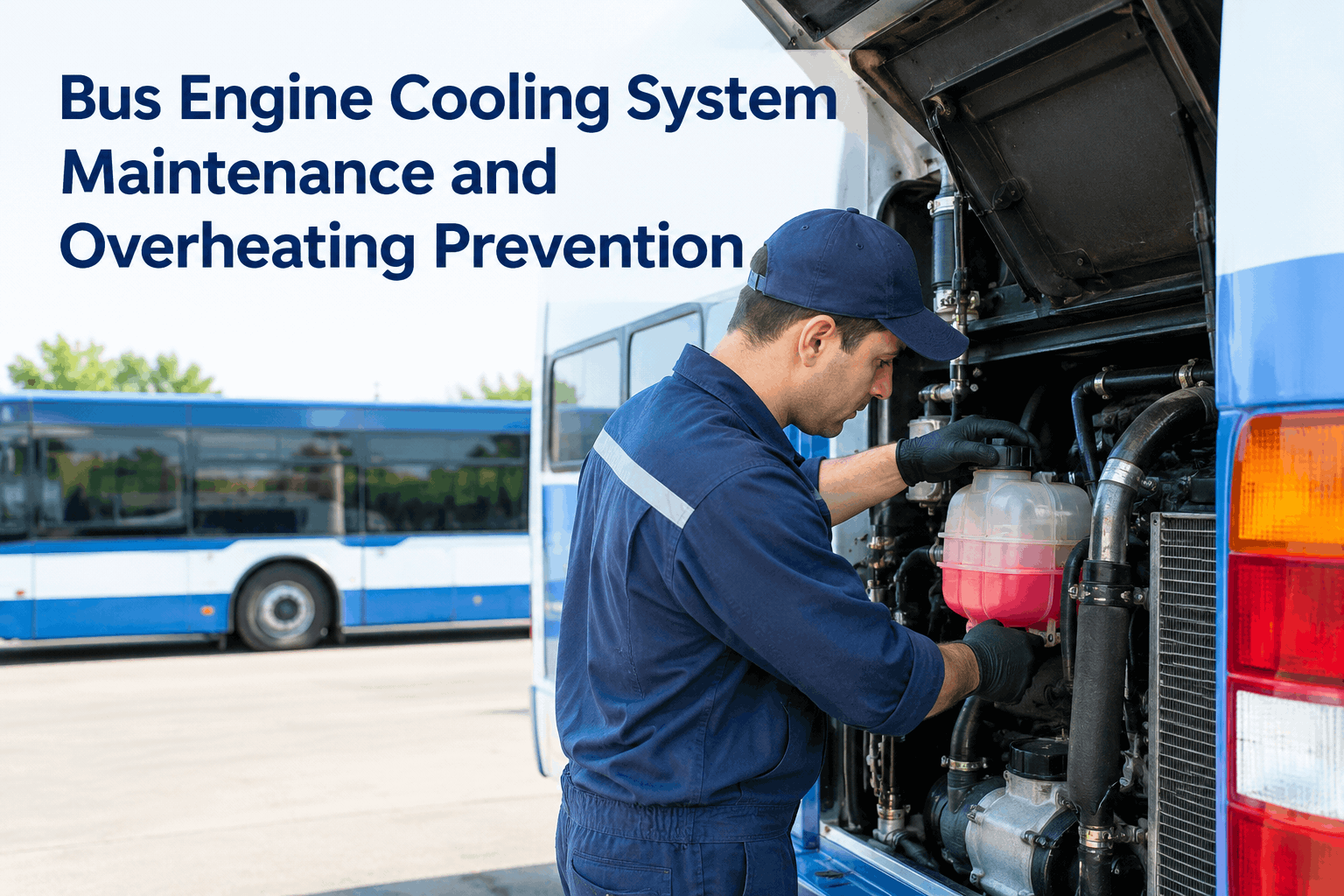
BYD (Build Your Dreams) is the world's largest electric bus manufacturer, with over 75,000 units delivered globally since 2010. From Los Angeles Metro to London's red double-deckers, BYD electric buses have accumulated more than 5 billion kilometers of real-world service. Their K-series transit buses—K7, K8, K9, and K11—use proprietary lithium iron phosphate (LiFePO4) battery technology that delivers exceptional safety, longevity, and 30-40% lower maintenance costs compared to diesel alternatives.
This comprehensive guide covers everything fleet managers need to know about maintaining BYD electric buses: detailed 50-hour PM checklists, realistic maintenance cost expectations, common problems and their solutions, battery life and warranty information, and how to implement bus CMMS software for automated scheduling. Whether you're operating K9 buses for public transit or K7 shuttles for airport routes, this guide will help you maximize uptime while protecting your zero-emission investment.
75,000+
BYD Electric Buses Delivered Globally
$0.25-0.35
Maintenance Cost Per Mile (vs $0.45-0.60 Diesel)
12+ Years
Expected Battery Service Life
50-70%
Longer Brake Life vs. Diesel Buses
BYD K-Series Electric Bus Models & Specifications
Understanding your specific BYD model is essential for proper preventive maintenance planning. The K-series designation indicates "transit bus" with the number representing nominal length in meters. Each model has unique battery capacities, motor configurations, and service requirements that affect PM scheduling and parts inventory.
BYD K7 / K7M
26 ft (8m) | 25-30 Passengers
Compact city bus for feeder routes, airport shuttles, university campuses, and narrow urban streets. Popular with smaller transit agencies and private operators.
BYD K8 / K8M
33 ft (10m) | 35-40 Passengers
Midsize city bus ideal for standard urban routes. K8M variant manufactured in Lancaster, California for Buy America compliance.
BYD K9 / K9M
40 ft (12m) | 40-45 Passengers
BYD's best-selling model globally. Used by LA Metro, Antelope Valley Transit, Long Beach Transit, and dozens of agencies worldwide.
BYD K11 / K11M
60 ft (18m) | 110-120 Passengers
Articulated bus for Bus Rapid Transit (BRT) corridors and high-ridership trunk routes. Operates on IndyGo Red Line and Albuquerque ART.
BYD Electric Bus Maintenance Costs: What to Expect
One of the most common questions from transit agencies considering BYD electric buses is: "How much does BYD bus maintenance actually cost?" The answer varies by model, operating conditions, and maintenance practices, but electric buses consistently deliver 30-40% lower maintenance costs than diesel equivalents. Here's what the real-world data shows:
Annual Maintenance Cost Comparison (40-Foot Transit Bus)
BYD K9 Electric Bus
$12,000 - $18,000/year
$0.25 - $0.35 per mile
Includes battery monitoring, thermal system service, brake inspection, HVAC maintenance, and scheduled PM intervals. No oil, fuel filters, transmission, or exhaust system costs.
Comparable Diesel Transit Bus
$22,000 - $30,000/year
$0.45 - $0.60 per mile
Includes engine oil/filter changes, transmission service, fuel system maintenance, DPF regeneration, DEF refills, exhaust repairs, and more frequent brake service.
Where BYD Electric Buses Save on Maintenance
No Engine Oil Changes
Save $1,800-2,500/year
No Transmission Service
Save $1,000-1,500/year
No Fuel System Filters
Save $400-800/year
No DPF/Exhaust Service
Save $2,500-4,500/year
Extended Brake Life (Regen)
Save $1,200-2,000/year
No DEF/AdBlue Costs
Save $800-1,200/year
These savings compound over the 12-year typical service life of a transit bus. A BYD K9 can save $120,000-$150,000 in maintenance costs compared to a diesel equivalent over its lifetime. When combined with lower fuel costs (electricity vs. diesel), the total cost of ownership advantage becomes substantial. Fleet managers tracking these savings through bus fleet management software can demonstrate clear ROI to stakeholders.
Electric vs. Diesel: What Changes in 50-Hour PM?
The 50-hour preventive maintenance interval for BYD electric buses looks fundamentally different from diesel PM. While many traditional tasks are eliminated entirely, new electric-specific inspections are required to ensure battery health, high-voltage safety, and thermal management system performance. Understanding these differences is essential for training technicians and setting up proper CMMS workflows.
Eliminated Diesel PM Tasks
Engine oil level and condition check
Fuel filter inspection/replacement
Air filter restriction check
Turbocharger inspection
Transmission fluid level/condition
Exhaust/DPF system inspection
DEF/AdBlue level and quality
Fuel system leak inspection
Belt tension and condition
New Electric-Specific PM Tasks
Battery State of Health (SOH) monitoring
BMS fault code diagnostics
Thermal management system check
HV cable insulation inspection
Regenerative braking verification
Charging port/connector inspection
Battery coolant level and condition
Isolation resistance testing
12V auxiliary battery condition
Complete 50-Hour PM Checklist for BYD Electric Buses
The following inspection checklist covers all systems requiring attention at the 50-hour service interval for BYD K7, K8, K9, and K11 electric buses. This checklist forms the foundation of electric bus preventive maintenance and should be completed every 50 service hours (typically every 3-5 days for busy city routes). Transit agencies using bus inspection software can digitize these checklists for mobile technician access and automatic work order generation.
Scan BMS for active fault codes and warnings
Record State of Charge (SOC) at consistent level
Record State of Health (SOH) percentage
Check cell voltage balance (target <50mV variance)
Verify battery temperature readings within spec
Inspect battery enclosure seals and vents
Test HV disconnect and emergency shutoff function
Verify isolation resistance (min 500 kΩ)
Inspect battery mounting hardware torque
Record cumulative charge cycle count
Check battery coolant level in expansion tank
Inspect coolant condition (color, contamination)
Check coolant lines for leaks, chafing, damage
Verify electric water pump operation
Check radiator/heat exchanger for blockage
Test PTC heater function (battery heating mode)
Verify BTMS temperature sensors reading correctly
Inspect condenser and evaporator coils
Check temperature spread across modules (<5°C)
Visual inspection of all HV cables (orange)
Check HV connector integrity and locking
Inspect HV junction box for damage/corrosion
Verify DC-DC converter output (12V system)
Inspect traction motor cable condition
Check motor controller cooling system
Verify precharge circuit operation
Test ground fault detection system
Check HV warning labels visible and intact
Inspect charging inlet for damage and debris
Check charging connector pins for wear/burning
Verify onboard charger fault codes clear
Test charging port interlock safety function
Check pantograph contacts (if equipped)
Verify charging communication protocols
Record recent charging session success rate
Verify regenerative braking energy recovery rate
Measure brake pad/lining thickness all wheels
Check air brake system pressure and leaks
Test ABS sensor operation and scan for codes
Check in-wheel motor connections (if equipped)
Verify reduction gear lubrication level
Inspect CV joints, boots, and wheel bearings
Test HVAC heating and cooling operation
Check pneumatic door function and seals
Verify wheelchair ramp/kneeling system
Test interior lighting and passenger displays
Inspect handrails and grab handles secure
Check emergency exit operation and alarms
Verify fire extinguisher and first aid kit
Test stop request system and driver alerts
Digitize Your BYD Electric Bus Inspections
BMS diagnostics • Battery health tracking • HV safety verification • Automated work orders
Common BYD Electric Bus Problems & Solutions
While BYD electric buses have proven reliable in service worldwide—with some vehicles exceeding 500,000 miles—every fleet technology has its challenges. Understanding common BYD bus problems and their solutions helps maintenance teams respond quickly when issues arise. Most problems are preventable with proper PM practices and early detection through CMMS monitoring.
Reduced Range / Battery Degradation
Symptom: Gradual reduction in miles per charge, SOH declining faster than expected
Common Causes: Thermal management issues, frequent fast charging, extreme temperature operation, cell imbalance
Solution: Monitor SOH at every PM (alert at >2% annual decline vs fleet average), ensure BTMS cooling/heating is functioning properly, balance depot vs. opportunity charging. BYD LiFePO4 batteries should retain 80%+ capacity for 10-12 years with proper care.
Charging Session Failures
Symptom: Charging terminates early, fails to start, or shows communication errors
Common Causes: Worn/damaged connector pins, debris in charging inlet, charger-vehicle communication errors, onboard charger faults
Solution: Inspect charging inlet and connector pins at every 50-hour PM, clean contacts regularly, check for bent pins. Replace worn connectors proactively—a failed connector during overnight charging means a bus can't go out in service.
HVAC Performance Issues
Symptom: Insufficient heating/cooling, passenger complaints in extreme weather
Common Causes: Refrigerant loss, compressor issues, shared thermal load with battery cooling, clogged filters
Solution: Regular HVAC performance testing, maintain proper refrigerant charge, replace cabin filters at specified intervals. Note: BYD uses integrated thermal systems where HVAC and battery cooling share components—issues may affect both systems.
12V Auxiliary Battery Failure
Symptom: Vehicle won't power up despite full traction battery, systems don't initialize
Common Causes: 12V battery powers control systems, BMS, and HV contactors—if it fails, main battery can't engage
Solution: Test 12V battery voltage at every PM (should be >12.4V at rest), replace proactively every 24-30 months. This is the #1 overlooked cause of roadside failures on electric buses.
Battery Thermal Management Alarms
Symptom: High temperature warnings, reduced power mode, battery derates
Common Causes: Low coolant, failed water pump, blocked heat exchanger, sensor malfunction, extreme ambient temperatures
Solution: Check coolant level and condition at every PM, verify pump operation, inspect heat exchanger for debris/damage. Address thermal warnings immediately—operating with degraded cooling accelerates battery aging.
Regenerative Braking Reduction
Symptom: Less energy recovery per route, increased mechanical brake wear
Common Causes: Motor controller issues, battery near full (can't accept regen), temperature limits active, brake system calibration
Solution: Monitor regen capture rates by route and vehicle, investigate sudden drops. Some reduction at high SOC is normal (battery full). Consistent reduction indicates controller or motor issues requiring diagnosis.
Door System Malfunctions
Symptom: Doors stick, close slowly, or trigger sensitive edge faults repeatedly
Common Causes: Worn door seals, air system leaks, sensitive edge damage, controller issues, misalignment from impacts
Solution: Inspect door seals, air cylinders, and sensitive edges at every PM. Check for air leaks in door actuation system. Replace worn seals every 12-18 months—door issues are a top cause of service delays.
Isolation Resistance Faults
Symptom: HV isolation fault codes, vehicle may disable propulsion
Common Causes: HV cable insulation damage, moisture intrusion, connector degradation, battery enclosure seal failure
Solution: Monitor isolation resistance at every PM (minimum 500 kΩ required). Inspect all HV cables for chafing, pinching, or heat damage. Check battery enclosure seals—moisture is the enemy of HV insulation.
BYD Battery Life & Warranty Information
BYD's LiFePO4 (lithium iron phosphate) batteries are the foundation of their electric bus reliability and longevity. Unlike the NMC (nickel-manganese-cobalt) chemistry used in some electric vehicles, LFP batteries offer superior thermal stability, longer cycle life, and avoid cobalt supply chain concerns. Understanding BYD battery specifications helps fleet managers plan for the long term.
BYD LiFePO4 Battery Technology
Chemistry
Lithium Iron Phosphate (LiFePO4/LFP)
Cycle Life Rating
3,000+ full charge cycles
Capacity Retention
80%+ after 10-12 years typical
Operating Temp Range
-30°C to +60°C (-22°F to 140°F)
Optimal Operating Range
15°C to 35°C (59°F to 95°F)
Thermal Stability
No thermal runaway risk at normal temps
Key Battery Parameters to Record at Every 50-Hour PM
State of Charge (SOC)
Record at consistent level (e.g., 80%)
Track charge acceptance over time. Declining acceptance at same SOC level indicates degradation.
State of Health (SOH)
Alert: Below 80% warrants investigation
Percentage of original capacity remaining. BYD LFP batteries typically retain 80%+ for 10-12 years.
Cell Voltage Balance
Target: <50mV variance between cells
Imbalanced cells reduce range and may indicate failing modules requiring BMS attention.
Temperature Spread
Target: <5°C between modules
Large temperature differences indicate thermal system issues or blocked cooling passages.
Isolation Resistance
Minimum: 500 kΩ (safety critical)
Low readings indicate HV insulation degradation—a safety issue requiring immediate attention.
Charge Cycle Count
Track cumulative total vs. 3,000+ rating
Record for warranty documentation and replacement planning. Most transit buses reach end-of-life before cycle limit.
BYD Battery Warranty Coverage
BYD provides long-term battery warranties with specific terms varying by contract and market. Standard coverage typically includes 8-12 year warranty with 70-80% capacity retention guarantee. Proper maintenance documentation through CMMS software is essential for warranty claims—track all PM activities, battery parameter readings, thermal system maintenance, and any fault codes to demonstrate proper care. Many warranty claims are denied due to insufficient maintenance documentation.
Complete BYD Electric Bus Maintenance Schedule
Electric bus preventive maintenance follows a structured schedule based on service hours, mileage, and calendar time. This comprehensive maintenance schedule ensures all BYD K-series systems receive appropriate attention while minimizing downtime for your transit operations.
| Interval | Service Level | Key Tasks | Est. Duration |
|---|---|---|---|
| 50 Hours | PM-A (Inspection) | BMS scan, battery parameters, thermal check, HV visual, safety systems, tire pressure | 1-2 hours |
| 250 Hours | PM-B (Service) | PM-A + detailed brake measurement, HVAC performance test, charging system verification, lubrication | 3-4 hours |
| 500 Hours | PM-C (Comprehensive) | PM-B + suspension inspection, steering check, complete electrical test, door system service | 4-6 hours |
| 1,000 Hours | PM-D (Major) | PM-C + battery coolant analysis/replace, brake service, wheel bearing check, complete systems test | 6-8 hours |
| 2,000 Hours | PM-E (Annual Major) | PM-D + HV system certification, motor controller service, reduction gear service, compliance audit | 8-12 hours |
| Annual | Safety Inspection | FTA/DOT compliance inspection, ADA equipment certification, fire suppression check | 4-6 hours |
CMMS Implementation for BYD Electric Bus Fleets
Managing electric bus maintenance manually becomes impossible as fleet size grows beyond a handful of vehicles. A purpose-built bus CMMS platform automates scheduling based on actual service hours, stores battery health trends for predictive analysis, tracks technician certifications, and ensures compliance documentation is always available for warranty claims and regulatory audits.
Telematics Integration
Connect BYD telematics to CMMS for automatic service hour tracking. System monitors each bus individually and triggers PM alerts at configurable thresholds (e.g., 45 hours for early warning, 50 hours for work order generation).
Automated PM Scheduling
CMMS generates work orders automatically with the correct checklist assigned based on bus model (K7/K8/K9/K11), service interval (PM-A through PM-E), and any outstanding issues from previous inspections.
HV Technician Certification Tracking
System tracks technician HV certifications with expiration dates and blocks work assignment to uncertified staff. Ensures safety compliance for all electric bus maintenance activities.
Digital Battery Data Capture
Technicians record SOC, SOH, cell voltages, temperature readings, and fault codes directly into CMMS. System stores historical data for trend analysis, predictive maintenance, and warranty documentation.
AI-Powered Predictive Analytics
CMMS analyzes battery degradation rates across fleet, identifies vehicles with faster-than-expected decline, and predicts maintenance needs before failures occur. Prioritizes attention where it matters most.
Parts Inventory for BYD Electric Bus Maintenance
Electric bus parts inventory looks fundamentally different from diesel. No oil filters, fuel filters, belts, or exhaust components—but new categories including HV connectors, battery coolant, and 12V auxiliary batteries. Proper inventory management through CMMS prevents PM delays and ensures critical parts are available when needed.
| Component | Part Type | Check Interval | Replace Interval | Stock Level |
|---|---|---|---|---|
| Battery Coolant | Fluid | 50 hours (level) | 24-36 months | 20L per bus |
| HVAC Cabin Filters | Consumable | 50 hours (visual) | 3-6 months | 2 per bus |
| Brake Pads (All Axles) | Wear Item | 50 hours (measure) | 80,000-120,000 mi* | 1 set per 5 buses |
| Door Seals | Wear Item | 50 hours (inspect) | 12-18 months | 2 complete sets |
| Charging Connector | Wear Item | 50 hours (inspect) | As needed | 1 per depot |
| HV Fuses (Main) | Safety Part | After any fault | After trip event | 2 per bus |
| 12V Auxiliary Battery | Critical Part | 50 hours (voltage) | 24-30 months | 1 per 3 buses |
| Wiper Blades | Consumable | 50 hours (visual) | 6-12 months | 2 sets per bus |
| Air Dryer Cartridge | Consumable | 250 hours | 12 months | 1 per bus |
| Suspension Bushings | Wear Item | 500 hours | 36-48 months | 1 set per 10 buses |
*Brake pad life significantly extended on BYD electric buses—regenerative braking handles 60-80% of deceleration in normal city driving, reducing mechanical brake wear dramatically compared to diesel buses.
Automate Your BYD Fleet Maintenance
Battery health trending • Automated PM scheduling • Parts inventory • Warranty documentation
BYD electric buses deliver proven reliability and 30-40% lower maintenance costs compared to diesel transit buses. The key to capturing these savings is implementing structured preventive maintenance that addresses the unique requirements of battery-electric vehicles: battery health monitoring, thermal management, high-voltage electrical safety, and charging system maintenance. Transit agencies that master these electric-specific PM protocols achieve the uptime and reliability that makes zero-emission fleets operationally successful.
Whether you're operating a small BYD K7 shuttle fleet or hundreds of K9 transit buses, implementing CMMS software provides the data infrastructure needed to track battery health trends, ensure compliance, and enable predictive analytics that identify at-risk vehicles before failures impact service. Start building your electric bus maintenance program today and join the transit operators proving that zero-emission transportation works.
Frequently Asked Questions About BYD Electric Bus Maintenance
How much does BYD electric bus maintenance cost per year?
BYD electric bus maintenance costs typically range from $12,000 to $18,000 per year for a 40-foot K9 transit bus ($0.25-$0.35 per mile), compared to $22,000-$30,000 for comparable diesel buses ($0.45-$0.60 per mile). This 30-40% savings comes from eliminating engine oil changes, transmission service, fuel system maintenance, DPF service, and DEF costs. Electric buses also have extended brake life (50-70% longer) due to regenerative braking. Over a 12-year service life, a BYD K9 can save $120,000-$150,000 in maintenance costs versus diesel.
How long do BYD electric bus batteries last?
BYD's LiFePO4 (lithium iron phosphate) batteries are designed for 3,000+ charge cycles and typically retain 80% or more of original capacity for 10-12 years with proper thermal management. Many BYD buses in service have exceeded 500,000 miles on original batteries. Battery life depends heavily on thermal management, charging patterns (depot vs. opportunity charging), and operating climate. BYD provides 8-12 year battery warranties with 70-80% capacity retention guarantees depending on contract terms.
What are common problems with BYD electric buses?
Common BYD electric bus issues include: reduced range/battery degradation (usually from thermal management issues), charging session failures (connector wear or communication errors), HVAC performance in extreme weather, 12V auxiliary battery failures (often overlooked but causes roadside breakdowns), thermal management alarms, and door system malfunctions. Most issues are preventable with proper PM—especially monitoring battery parameters, maintaining thermal systems, and proactively replacing 12V batteries every 24-30 months.
What is the 50-hour PM for BYD electric buses?
The 50-hour PM is a high-frequency inspection interval designed for city transit operations. It includes BMS diagnostics, battery parameter recording (SOC, SOH, cell balance, temperature), thermal management inspection, high-voltage electrical visual checks, charging system inspection, brake wear measurement, and safety system verification. This interval typically occurs every 3-5 days for busy urban routes and focuses on catching developing issues before they cause service disruptions.
Do BYD electric buses require special technician training?
Yes, electric bus maintenance requires high-voltage (HV) safety certification. Technicians must be trained on lockout/tagout procedures, proper use of insulated tools, emergency response, and systems unique to electric buses (BMS diagnostics, thermal management, charging systems). Many diesel technician skills transfer (brakes, suspension, HVAC basics), but HV electrical work is strictly regulated and requires specialized certification. BYD offers training programs, and CMMS systems should track technician certifications to prevent assignment of HV work to uncertified staff.
What BYD electric bus models are available in the US?
BYD offers four main transit bus models in the US market, all assembled at their Lancaster, California facility for Buy America compliance: K7M (26 ft, 180 kWh, 150 mi range) for shuttles and small routes, K8M (33 ft, 350-435 kWh, 140-230 mi range) for midsize operations, K9M (40 ft, 324-446 kWh, 155-200+ mi range) as the best-selling model for full-size transit, and K11M (60 ft articulated, 547+ kWh) for BRT and high-capacity routes. All models have passed Altoona testing.
How does CMMS help with BYD electric bus maintenance?
CMMS (Computerized Maintenance Management System) software automates PM scheduling based on actual service hours from telematics, stores battery health data for trend analysis and predictive maintenance, tracks technician HV certifications, generates digital inspection checklists, manages parts inventory, and maintains complete maintenance records for warranty claims. For electric bus fleets, CMMS is essential for tracking SOH degradation patterns, thermal system performance, and charging anomalies—data that enables early intervention before expensive failures occur.