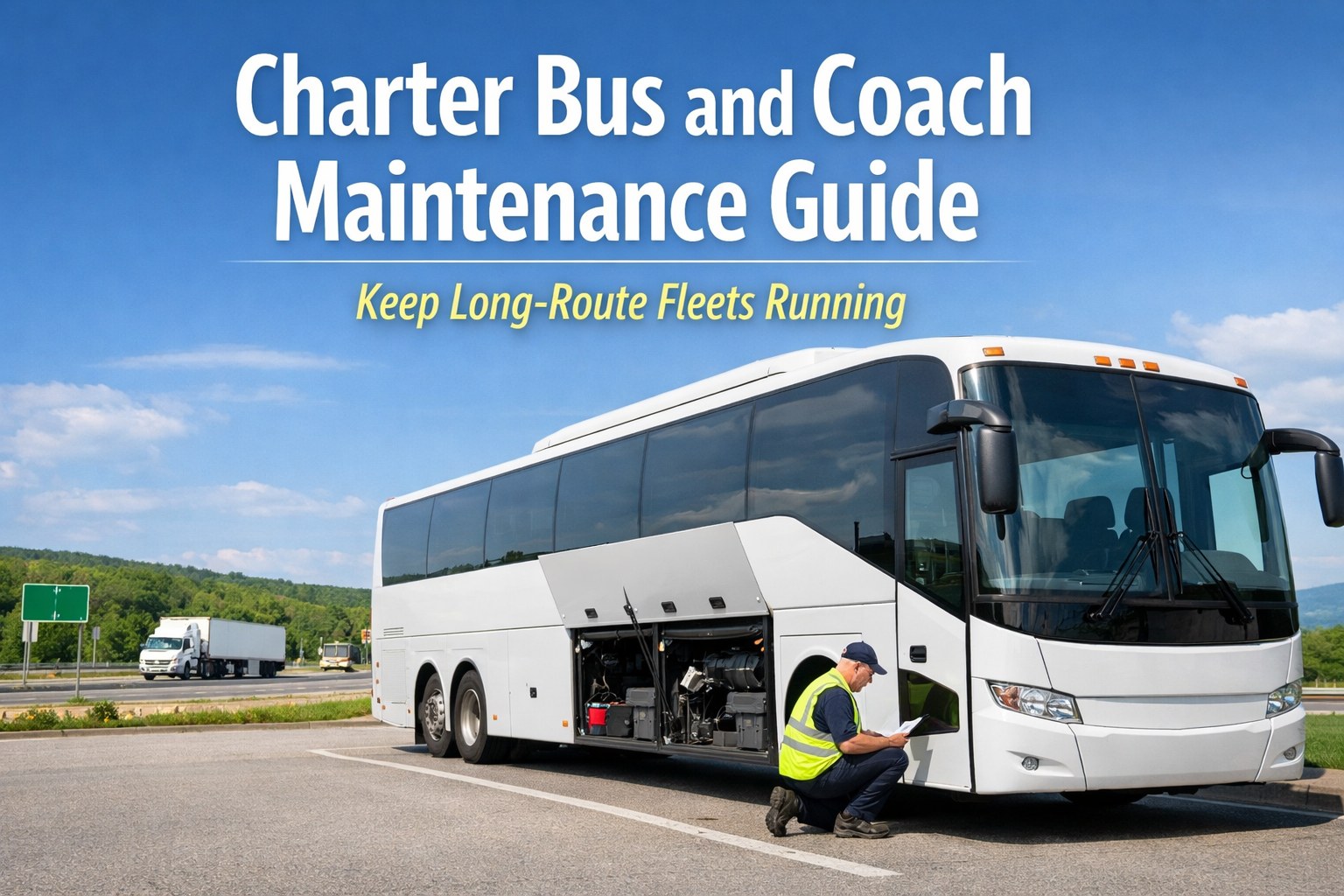
Charter and coach operations face maintenance challenges that urban transit guides never address—buses logging 35,000+ miles per year across state lines, drivers filing defect reports from rest stops in three different time zones, and premium-paying passengers who expect flawless journeys without roadside breakdowns. When over 90% of motorcoach carriers with high crash and violation rates are charter operators, the difference between industry leaders and shutdown notices comes down to one thing: systematic maintenance that works wherever your fleet travels.
Why Charter Maintenance Is Different
Urban transit buses return to the depot every night. School buses run predictable routes. Charter coaches travel 500 miles in a day, cross state lines, and may not see your maintenance bay for weeks. That operational reality demands a completely different approach.
Managing all this with paper inspection forms and spreadsheet PM schedules puts your operating authority at risk. Book a demo to see how BusCMMS handles multi-state charter operations.
FMCSA Compliance Requirements for Charter Operators
Charter and motorcoach operators must comply with 49 CFR Part 396 maintenance requirements. Miss these intervals and your next roadside inspection becomes an out-of-service order.
Small charter operators with 10 or fewer coaches have statistically higher violation rates during roadside inspections. Digital compliance tracking closes documentation gaps that paper systems create. Schedule a demo to see automated FMCSA compliance documentation.
Long-Route PM Schedule: Mileage-Based Triggers
Charter coaches accumulate mileage faster than fixed-route buses. Your PM schedule must trigger based on actual odometer readings, not calendar dates—especially for coaches running multi-day tours.
When your coach is 500 miles from the depot and PM is coming due, you need automatic alerts—not spreadsheet surprises. Book a demo to see mileage-triggered PM scheduling in action.
Expert Review: Mobile DVIR for Drivers on the Road
FMCSA requires drivers to complete DVIRs at the end of each day's work—regardless of location. For charter operations, that means drivers filing reports from hotels, rest stops, and event venues. The question is whether those reports reach your maintenance team in time to matter.
Paper DVIRs filed from remote locations take days to reach maintenance—if they arrive at all. See how mobile DVIR capture works for charter fleets.
Building a Breakdown-Proof Charter Operation
Charter operators with the best safety records share common traits: mileage-triggered PM that follows the coach, instant defect reporting from any location, and compliance documentation that's audit-ready before the inspector arrives. The nearly 600 million annual motorcoach passenger trips depend on fleets that simply don't break down.
Frequently Asked Questions
How often must charter buses receive DOT inspections?
Under 49 CFR 396.17, every commercial motor vehicle including charter buses must pass a comprehensive annual inspection at least once every 12 months covering all items in Appendix A. Additionally, emergency exits (pushout windows, emergency doors, and marking lights) must be inspected every 90 days under 49 CFR 396.3. Drivers must complete DVIRs at the end of each day's work, regardless of location.
What records must charter operators keep for FMCSA compliance?
Charter operators must maintain annual inspection reports for 14 months, DVIRs for 3 months, roadside inspection reports for 12 months, and general maintenance records for the entire period the vehicle is controlled plus 6 months. Records must include vehicle identification, inspection dates, defects found, repairs performed, and brake inspector qualifications. Missing records result in penalties up to $1,544 per day.
Why do smaller charter operators have higher violation rates?
Research shows motorcoach carriers with 10 or fewer coaches, or those with 10 or fewer years in business, have statistically higher crash and violation rates. Common factors include less systematic maintenance programs, paper-based documentation that creates gaps, limited resources for dedicated compliance staff, and less frequent exposure to roadside inspections which means problems aren't caught early.
How should PM schedules differ for charter vs. transit buses?
Charter coaches average 35,000+ miles annually with extended periods away from the depot, requiring mileage-triggered PM rather than calendar-based schedules. Long-distance operation creates different stress patterns—highway miles are easier on brakes but harder on cooling systems and drivetrain components. PM schedules must also address passenger amenities (HVAC, WiFi, entertainment, restrooms) that transit buses don't have.
How does CMMS help charter operators with multi-state compliance?
CMMS platforms provide centralized tracking regardless of where coaches operate. Mobile DVIR apps allow drivers to file inspection reports from any location with instant sync. Mileage-based PM triggers follow the coach across state lines. Digital records are searchable and audit-ready for any jurisdiction's inspection. Automated alerts prevent compliance deadlines from being missed while coaches are on extended tours.