It’s Thursday afternoon and Saturday’s wedding charter is 40 hours away. Coach 22 is scheduled for the run. Your dispatcher wants to know one thing: is that coach actually ready to go? Open defects, last inspection, PM status, any recent camera events — and right now, that answer lives in four different places. That’s the readiness gap the right charter bus fleet software closes. Book a 20-minute demo to see BusCMMS running on a charter fleet the size of yours.
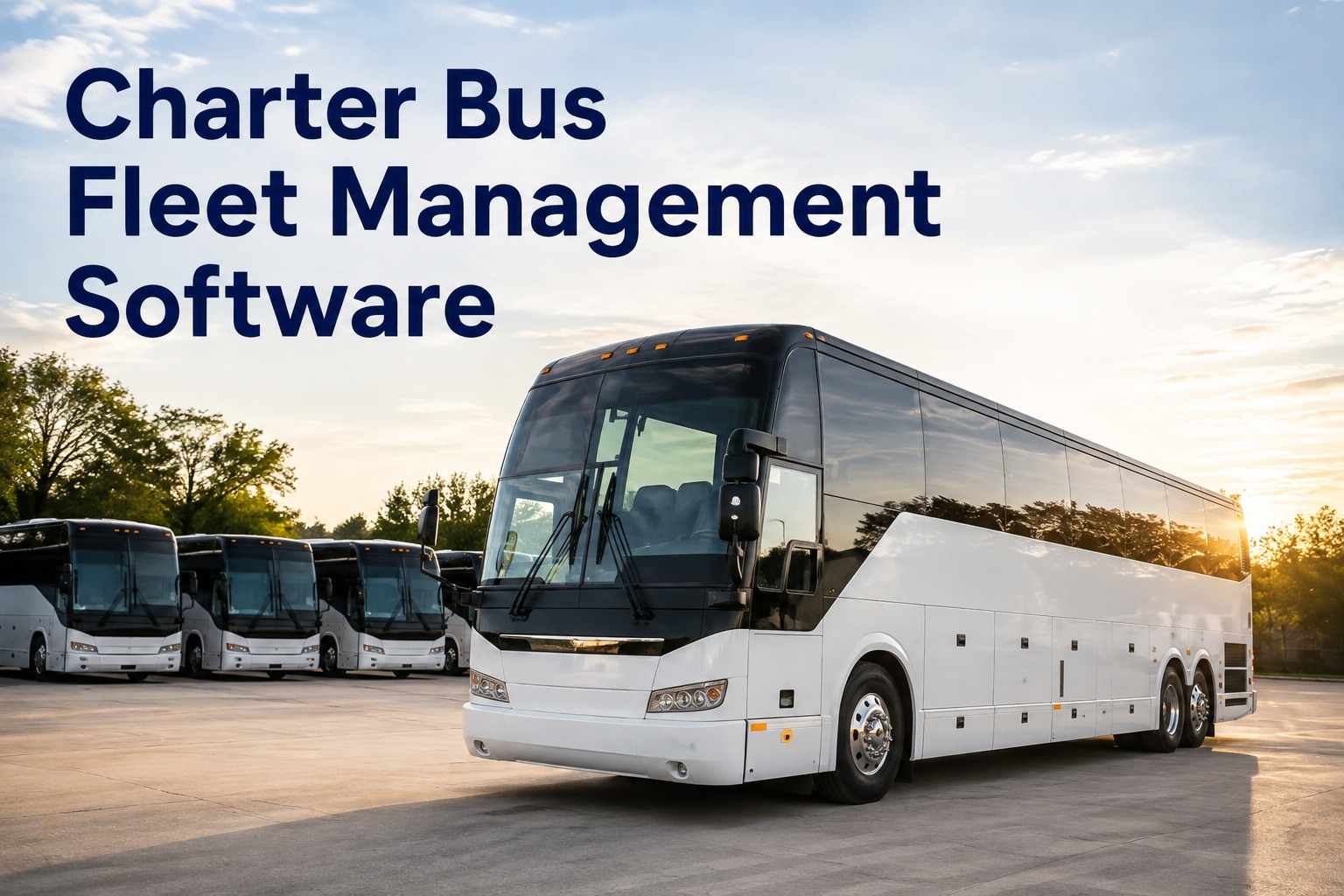
Charter Bus Fleet Management Software
BusCMMS gives charter and tour operators one asset-centered platform for inspections, defects, preventive maintenance, work orders, and camera events — so your team knows exactly which coaches are ready for tomorrow’s trips.
- Inspection Current Post-trip signed 6:12 PM
- Open Defects 1 Minor Passenger reading light, row 8
- PM Status On Track B-service due in 3,800 mi
- Recent Events Clear No flagged camera events, 14d
Trip Readiness Is the Only Metric That Matters
A charter operator’s entire business runs on one Yes/No question: is this coach ready for that trip? Miss the answer and you’re calling a customer at 5 AM on their wedding day to explain a substitute bus. Get it right and the same coach that was borderline yesterday is on the road today, fully signed off. What sits between those two outcomes is data — and where it lives.
Before this view exists, that same information lives across a shop whiteboard, a driver’s clipboard, a spreadsheet on the dispatcher’s laptop, and the maintenance director’s memory. With it, dispatch, ops, and maintenance are all looking at the same fleet at the same time. Book a demo to see the fleet readiness view on a live dataset.
Inspections and Defects: The DVIR Chain of Custody
If your operation is subject to FMCSA rules, 49 CFR 396.11 requires a driver vehicle inspection report at the end of each work day for every commercial motor vehicle operated, and 49 CFR 396.13 requires the next driver to review and acknowledge any previously reported defects before operating that vehicle. That’s a three-link chain: report the defect, repair it, sign off on the repair. Break any link and you’ve broken your record. Applicability depends on your operation — verify against current federal and state requirements.
The Three-Link Chain
Reports the Defect
Post-trip inspection, defect documented with detail, DVIR signed and closed for the shift.
Repairs & Certifies
Work order opened against the coach, corrective action performed, mechanic’s repair certification recorded.
Acknowledges the Repair
Pre-trip inspection includes review of prior defect and repair; driver signs off before operating the coach.
A digital DVIR system runs that chain automatically — the shop can’t close the defect without a repair record, dispatch can’t assign the coach until the next driver has acknowledged the repair. What used to be three signatures on three pieces of paper stapled to a clipboard is now one continuous record on the bus. Book a demo to see the DVIR chain running on your fleet.
A Camera Event Becomes a Pre-Trip Save
You run 60 coaches. Overnight, your camera system logs 34 events across the fleet. In a generic setup, they sit in a video portal a safety manager reviews next Tuesday. In BusCMMS, AI triage groups and scores them by coach before your dispatcher builds tomorrow’s trip board.
Coach 44 · Caught Before Saturday
- 01
Detection
4 harsh-braking events on Coach 44 across 3 different drivers over 6 days. AI flags as vehicle-signal cluster, not driver behavior.
- 02
Correlation
Cross-referenced with recent DVIRs — two drivers noted “brake pedal feels soft first application.” Recurring-defect flag confirmed.
- 03
Trip Impact
Coach 44 is assigned to Saturday’s corporate charter to a resort 4 hours out. Readiness card flips to HOLD.
- 04
Closure
Coach 22 reassigned to the charter. Coach 44 goes into the shop Thursday. Front air valve replaced. Chain of custody closed before dispatch.
The saved charter never became a story. The customer got their coach. The maintenance director prevented a $2,000 roadside repair and a call from an unhappy contract holder. Sign up free to see recurring-defect flagging on your fleet.
An Operations Director’s View
That’s the practical reason bus-first software earns its keep on a charter P&L. Prevented sub-outs and missed trips don’t show up as a line item — they show up as customer retention and repeat contracts. Book a demo to see the shared readiness view for dispatch and shop.
Evaluation Checklist for Charter Operators
Here’s the rubric a working charter operations director would build for evaluating fleet software — focused on what matters on Saturday morning, not on the demo call.
Trip readiness at a glance
One view showing inspection, open defects, PM status, and recent events per coach.
Digital DVIR chain
Driver, shop, and next-driver sign-offs enforced automatically per 396.11 and 396.13.
Recurring-defect clustering
Same failure across drivers or shifts grouped automatically, not lost in one manager’s head.
Camera event integration
Video events surface by priority and route to work orders — not a separate portal.
Roadside repair capture
Off-site vendors log work directly to the coach record without re-typing invoices.
2 to 4 week rollout
Live before your peak season, not the season after. Weeks, not quarters.
Most generic fleet tools score two of six on that list. BusCMMS is built for all six — because it was built for buses, not trucks with different paint.
What is charter bus fleet management software?
Charter bus fleet management software is the operational platform charter and tour operators use to manage coach inspections, defects, preventive maintenance, work orders, camera events, and vehicle history — all tied to the specific bus. Unlike generic trucking fleet software, charter-specific fleet software is organized around trip readiness: knowing whether a given coach is ready for a scheduled charter based on inspection status, open defects, PM completion, and recent operational events.
What software is best for managing charter bus maintenance?
The best fit is a platform built specifically for passenger buses rather than a generic asset-management or trucking CMMS. BusCMMS handles preventive maintenance scheduling per coach, corrective work orders auto-generated from failed inspections or camera events, digital DVIRs that enforce the FMCSA three-signature chain of custody, parts and inventory, roadside repair capture, and full coach history — so a maintenance director sees pending PM and recurring defect patterns at the vehicle level in one place.
Can charter bus fleet software manage inspections and defects?
Yes. BusCMMS ships with bus-specific digital DVIR templates covering brakes, air systems, coupling, lights, mirrors, safety equipment, steering, tires, wipers, and coach-specific items like passenger doors and lifts. Driver defects flow directly into corrective work orders. Repairs are certified in the record. The next driver’s pre-trip inspection includes review of prior defects, meeting the review-and-acknowledge requirement under 49 CFR 396.13. The full chain lives on the coach record instead of on paper forms.
Can BusCMMS connect bus camera events with maintenance work orders?
Yes. BusCMMS uses AI to triage camera and telematics events by significance instead of leaving managers to scroll raw video. When events cluster on a specific coach in a way that suggests a vehicle condition — recurring hard-braking, unusual vibration patterns, warning lights — the system surfaces the pattern, cross-references DVIR history, and can auto-generate or recommend a follow-up work order. That connection is what turns overnight camera data into a pre-trip decision instead of a post-incident review.
What should a charter bus company look for in fleet management software?
Look for a trip-readiness view that shows inspection status, open defects, PM status, and recent events per coach in one place; a digital DVIR chain that enforces the FMCSA three-signature accountability under 49 CFR 396.11 and 396.13; recurring-defect clustering across drivers and shifts; camera event integration into maintenance workflows; roadside repair capture from off-site vendors; and a go-live measured in weeks rather than months. Software alone doesn’t create regulatory compliance — the operator owns FMCSA and state obligations for their specific operation — but the right platform provides the documented inspection and maintenance records those obligations run on.