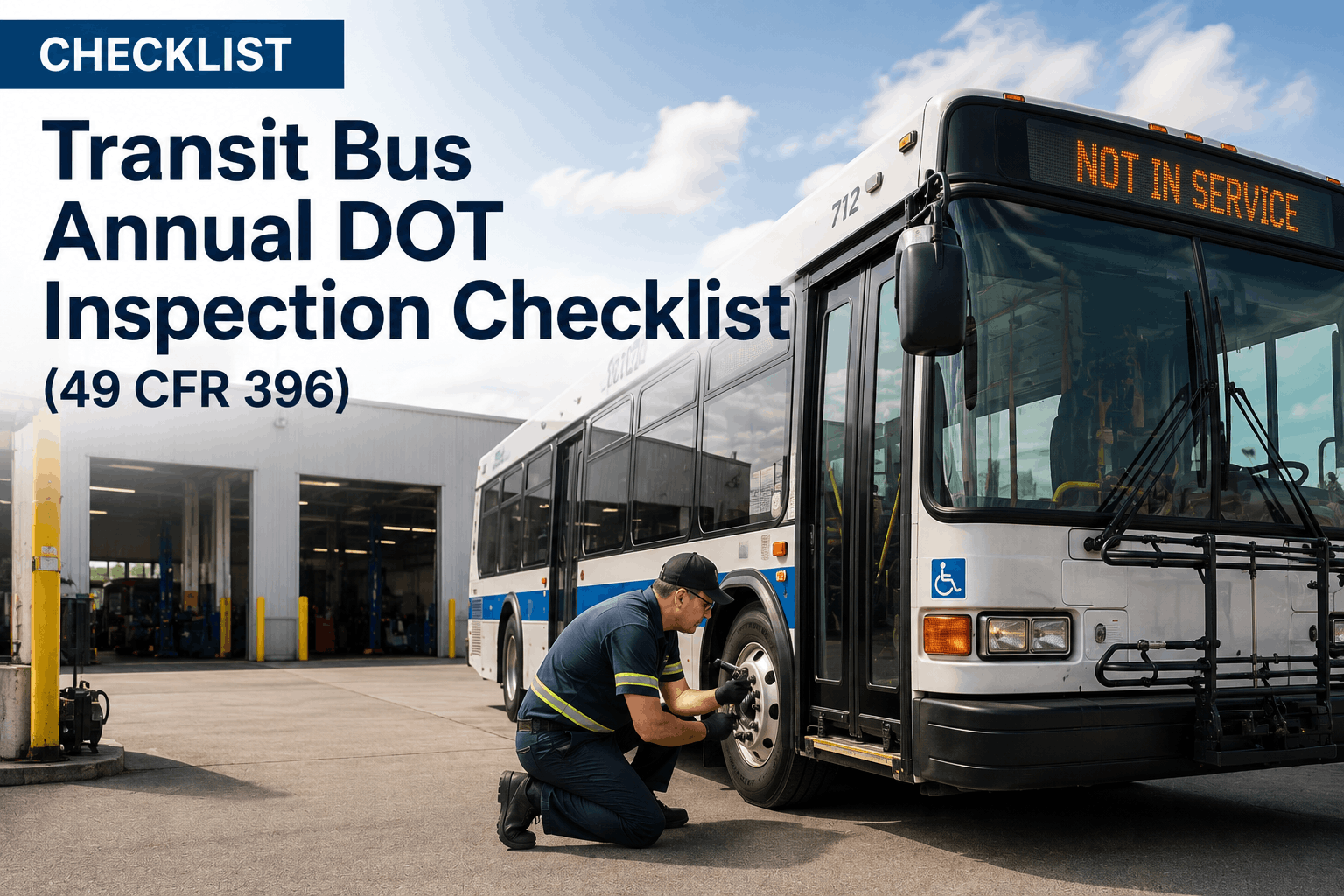
A transit bus operating in revenue service must pass an annual DOT inspection under 49 CFR 396. Appendix A of the FMCSA regulations specifies exactly what inspectors check—brakes, steering, suspension, lighting, tires, and emergency equipment. A failed annual inspection puts buses out of service, triggers fines, and creates safety gaps. Many transit agencies treat annual inspections as a compliance checkbox rather than a preventative maintenance opportunity. Yet the annual DOT inspection is the most comprehensive vehicle exam a transit bus receives. Skipping steps or rushing through the process leads to missed defects that surface during service, causing breakdowns, passenger injuries, and DOT violations. This checklist follows 49 CFR 396 Appendix A requirements specifically for transit buses. Fleet maintenance teams can use it to pre-inspect buses before the official DOT inspection, catch issues early, and ensure first-time pass rates. Use this checklist annually for every transit bus in your fleet.
Transit Bus Annual DOT Inspection Checklist
FMCSA-compliant annual inspection per 49 CFR 396 Appendix A. Covers brakes, steering, suspension, lighting, tires, and emergency systems for transit buses in 2026.
Complete this annual DOT inspection checklist for every transit bus in your fleet. Items marked Critical must be repaired before the bus passes annual inspection per 49 CFR 396. Items marked Recommended address wear items that should be monitored. Document all findings and repairs in your maintenance records. FMCSA requires annual inspection documentation to be retained for 14 months.
First-Time Pass Rate
73%
Using structured pre-inspection
Annual DOT Violations
-52%
After implementing checklist
Common Defect Areas
Brakes, lights, tires top failures
Brake System (49 CFR 396 Appendix A)
CriticalSteering & Suspension Systems
CriticalTires & Wheels (Annual DOT Standards)
CriticalLighting & Electrical Systems
CriticalExhaust, Fuel & Engine Systems
CriticalVehicle Body & Frame Integrity
CriticalSafety & Emergency Equipment
CriticalDocumentation & Annual Inspection Records
Critical"Our transit agency operates 124 buses across three garages. Using this annual DOT inspection checklist before the official FMCSA inspection helped us identify 47 brake and tire defects early. We increased our first-time pass rate from 68% to 91% in one year. BusCMMS digital tracking made the documentation process seamless."
Annual DOT Inspection Completion Protocol (49 CFR 396)
Before inspection: Complete all items marked Critical before submitting bus for official annual DOT inspection. Any critical failure requires repair and re-inspection before the bus can return to revenue service.
During inspection: The certified inspector must follow 49 CFR 396 Appendix A exactly. Document all findings, including pass/fail status for each system. Both driver and inspector signatures required.
After inspection: Passed buses receive inspection decal valid for 12 months. Failed buses cannot operate until all critical defects are repaired and re-inspected. Keep all records for 14 months minimum.
Digital compliance: Use BusCMMS to schedule annual inspections, track due dates across your fleet, and maintain digital inspection records for FMCSA audits.
Annual DOT Inspection FAQs (49 CFR 396 Appendix A)
How often must a transit bus receive a DOT annual inspection?
Per 49 CFR 396.17, every commercial motor vehicle including transit buses must be inspected at least once every 12 months by a qualified inspector.
Who can perform the annual DOT inspection on a transit bus?
A qualified inspector who meets FMCSA training and knowledge requirements. Many transit agencies use certified mechanics or third-party DOT inspection shops.
What happens if a transit bus fails its annual DOT inspection?
The bus cannot operate in interstate commerce until all critical defects are repaired and a re-inspection confirms compliance. Operating with failed inspection triggers fines.
Does 49 CFR 396 Appendix A apply to all transit buses?
Yes, any transit bus operating in interstate commerce must follow Appendix A inspection criteria covering brakes, steering, tires, lighting, exhaust, and safety equipment.
How long must annual DOT inspection records be kept?
FMCSA requires annual inspection records to be retained for 14 months from the inspection date. Digital records are acceptable for compliance audits.
Where should the annual inspection decal be placed on a transit bus?
The decal must be affixed to the driver-side door jamb, clearly visible and showing the inspection date. Replacement decals needed after each pass.
What is the minimum tread depth for transit bus steer tires?
Steer axle tires require minimum 4/32 inch tread depth. Drive tires require minimum 2/32 inch. Both measured at three locations across the tread.
Can BusCMMS help track annual inspection due dates for my fleet?
Yes, BusCMMS provides automated scheduling, expiration alerts, digital inspection forms, and complete documentation storage for FMCSA compliance.
Use this FMCSA 49 CFR 396 Appendix A annual inspection checklist to prepare your transit buses before official DOT inspections. BusCMMS helps schedule inspections, track due dates, store digital records, and maintain fleet compliance year-round.







