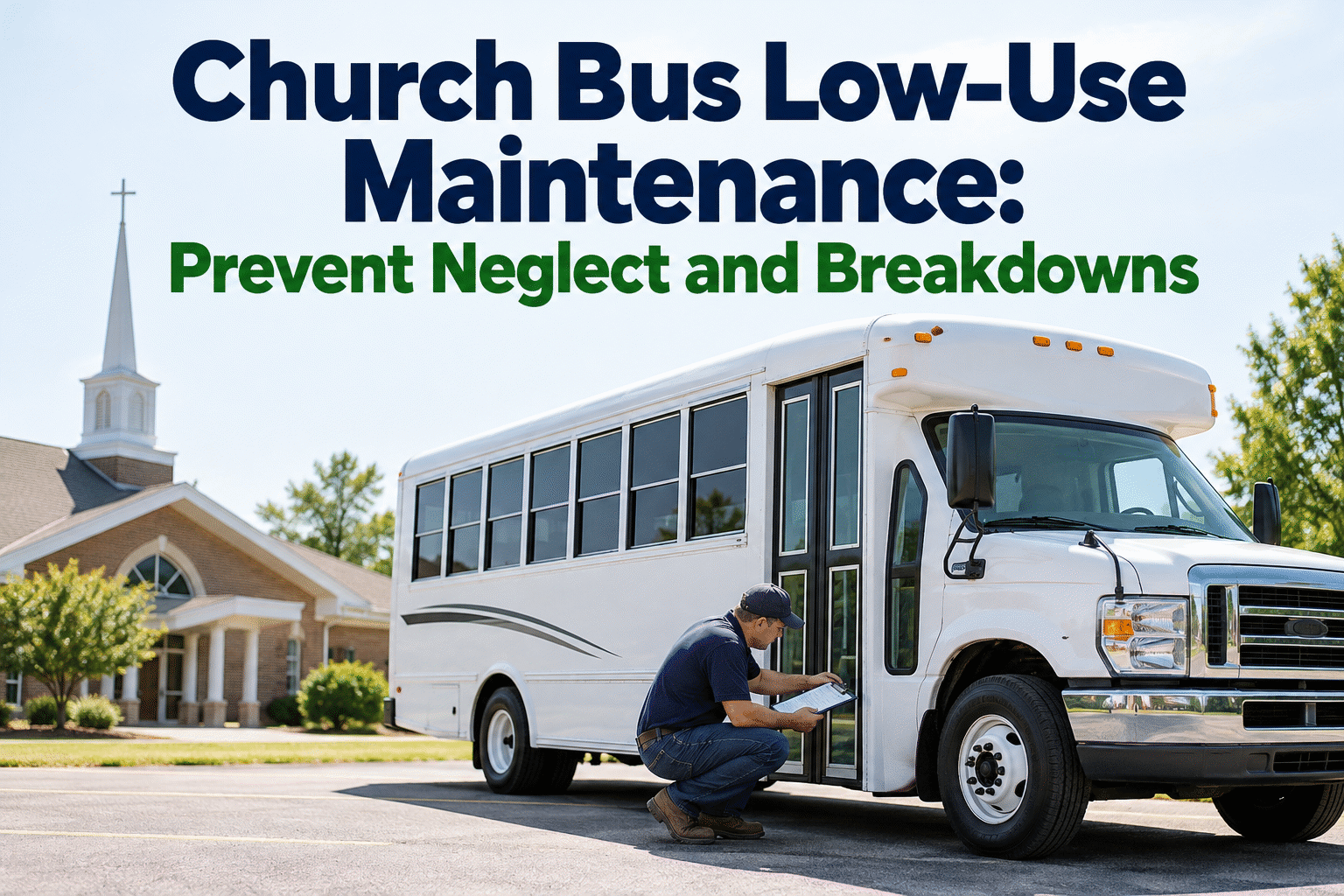
A church bus can travel only a few hundred miles in a month and still need careful maintenance. Long gaps between Sunday services, youth trips, and community events can affect batteries, tires, brakes, and other components. A practical church bus maintenance plan combines calendar-based checks, trip inspections, and documented repairs so the bus is ready when your ministry needs it.
Church Bus Low-Use Maintenance: Prevent Neglect and Breakdowns
Low mileage does not mean low risk. Build a repeatable routine for vehicles that spend more time parked than driving.
Practical guidance for church administrators, volunteer drivers and maintenance coordinatorsLow mileage can hide high maintenance risk
When a church bus sits between services or special events, its odometer may barely move. But batteries continue to self-discharge, tires can lose pressure, moisture can affect braking components, and seals and hoses continue aging. The exact risk depends on vehicle type, storage conditions, climate, and how often the bus is operated.
Battery discharge
A weak starting battery can turn a planned trip into a last-minute cancellation.
Tire condition
Pressure loss, age-related deterioration, and uneven wear need checks even with low miles.
Brakes & moisture
Extended parking and damp conditions can contribute to corrosion or sticking components.
Fluids & leaks
Fluid levels, service age, and visible leaks still matter when mileage is limited.
A good low-use plan follows the manufacturer’s time and mileage limits, whichever comes first, and adds appropriate checks for the way your ministry uses and stores the vehicle. Book a demo to organize church bus maintenance schedules in one fleet workflow.
A practical maintenance rhythm for a low-use church bus
Use this as a planning framework—not a substitute for your vehicle manual, required inspections, or a qualified technician’s recommendations. Some tasks are appropriate for trained drivers; others require a maintenance professional.
Safety & departure checks
Inspect tires and lights, check visible leaks, verify emergency equipment and passenger areas, and complete applicable pre-trip checks. Record concerns before carrying passengers.
Condition checks between trips
Review battery condition, tire pressure, parking location, visible moisture or leaks, and storage precautions at intervals suited to the vehicle and environment.
Manufacturer-based preventive maintenance
Plan fluid service, filters, brake inspection, tire evaluation, and other manufacturer-specified items even when mileage thresholds are not reached.
Confirm readiness for longer journeys
Review open defects, maintenance due dates, vehicle capacity, emergency supplies, and driver readiness before youth retreats or out-of-town events.
Set reminders for both time and mileage instead of relying on odometer readings alone. Sign up free to start organizing your ministry fleet.
Keep ministry trips on the calendar—not in the repair shop
See how digital inspections, scheduled maintenance and defect follow-up can help your church keep vehicle records organized.
What to check before the bus carries passengers
A parked vehicle should not be assumed ready just because it ran well on its previous trip. Assign a trained person to complete the appropriate inspection, and have qualified personnel address safety-related defects before use.
Church bus trip-readiness checklist
- Tires and wheels: inflation, visible condition, tread, wheel concerns.
- Braking and steering: operation, warning indicators, unusual behavior.
- Lighting and visibility: headlamps, signals, mirrors, windshield, wipers.
- Passenger area: seats, seat belts where fitted, exits, loose items.
- Emergency provisions: equipment and exits required for the vehicle.
- Records: inspection completed, defects reviewed, service not overdue.
Required checks pass and no unresolved safety concern remains.
A non-safety concern needs evaluation under your maintenance policy.
Safety-critical defect or required inspection failure: do not dispatch until resolved.
For teams sharing buses among several drivers, a consistent checklist reduces reliance on verbal handoffs. Book a demo to review digital church bus inspections.
Turn occasional checks into a usable maintenance history
Small ministries may have only one or two buses, but a record should still show the date, vehicle, person completing the check, result, defect details, and how an issue was resolved. The example below illustrates a simple log structure; it is not a screenshot of BusCMMS.
| Date | Check / event | Result | Follow-up |
|---|---|---|---|
| May 03 | Pre-trip inspection | Passed | Trip approved |
| May 10 | Battery starting concern | Defect | Technician evaluation requested |
| May 12 | Battery system service | Resolved | Service record attached |
| May 17 | Pre-trip inspection | Passed | Ready for next trip |
Keep inspections, work orders, and supporting repair documentation connected to the same vehicle. This makes it easier to see whether a recurring issue was actually addressed.
Four steps from parked bus to trip-ready bus
Plan
Check the upcoming event calendar, service due dates, and any open concerns.
Inspect
Perform the appropriate pre-trip and condition checks before passenger service.
Correct
Send defects to qualified maintenance staff and document completed work.
Release
Confirm required checks and repairs are complete before dispatch.
Do not use a short drive around the parking lot as a substitute for proper inspection or manufacturer-directed service. If the bus has been stored for an extended period, a qualified technician may need to assess it before passenger use. Book a demo to streamline bus defect follow-up.
Make a small church fleet easier to manage
A low-use bus still creates scheduling, inspection, and maintenance responsibilities. BusCMMS can support the operational recordkeeping side of that work with digital inspections, preventive maintenance scheduling, defect follow-up, and vehicle maintenance histories. Your church should still set service intervals based on manufacturer guidance and applicable requirements.
Scheduled reminders
Organize maintenance due dates that would be easy to miss between infrequent trips.
Digital inspections
Keep completed checks associated with the bus instead of scattered paper forms.
Defect follow-up
Track reported issues and repair activity before the next ministry outing.
Want to replace handwritten binders with more organized vehicle records? Sign up free for church fleet maintenance tracking.
Be ready for the next youth trip, service or outreach event
Build a simple, repeatable inspection and maintenance routine for church buses—even when they spend weeks parked.
Church bus maintenance FAQs
How often should a low-use church bus receive maintenance?
Follow the vehicle manufacturer’s time-based and mileage-based service requirements, whichever applies first, along with any required inspections. Low annual mileage does not eliminate calendar-based maintenance.
Does a church bus need a pre-trip inspection if it was driven last week?
Complete the checks required by applicable rules and your organization’s safety policy before passenger use. A previous successful trip does not guarantee that the vehicle is still roadworthy.
What problems are common when a church bus sits unused?
Possible concerns include battery discharge, low tire pressure, tire aging, corrosion on brake components, fluid leaks, and deterioration of rubber components. The actual risks vary by vehicle and storage conditions.
Can volunteers perform church bus maintenance inspections?
Properly trained drivers or volunteers may carry out permitted routine checks, but repairs and technical assessments should be performed by qualified personnel. Follow applicable licensing, inspection, and operating requirements.
How can maintenance software help a church with only one bus?
A single bus still benefits from a clear service calendar, accessible inspection history, documented defects, and repair follow-up. Digital records can reduce the chance that a time-based task is forgotten.