A CMAQ award doesn't end when the grant letter arrives — it ends when every dollar is documented, every emissions claim is backed by records and the reimbursement request survives review. Fleets that treat the funding stage as the finish line are the ones that struggle at audit time. See how grant-ready fleet records come together in a demo before your next application.
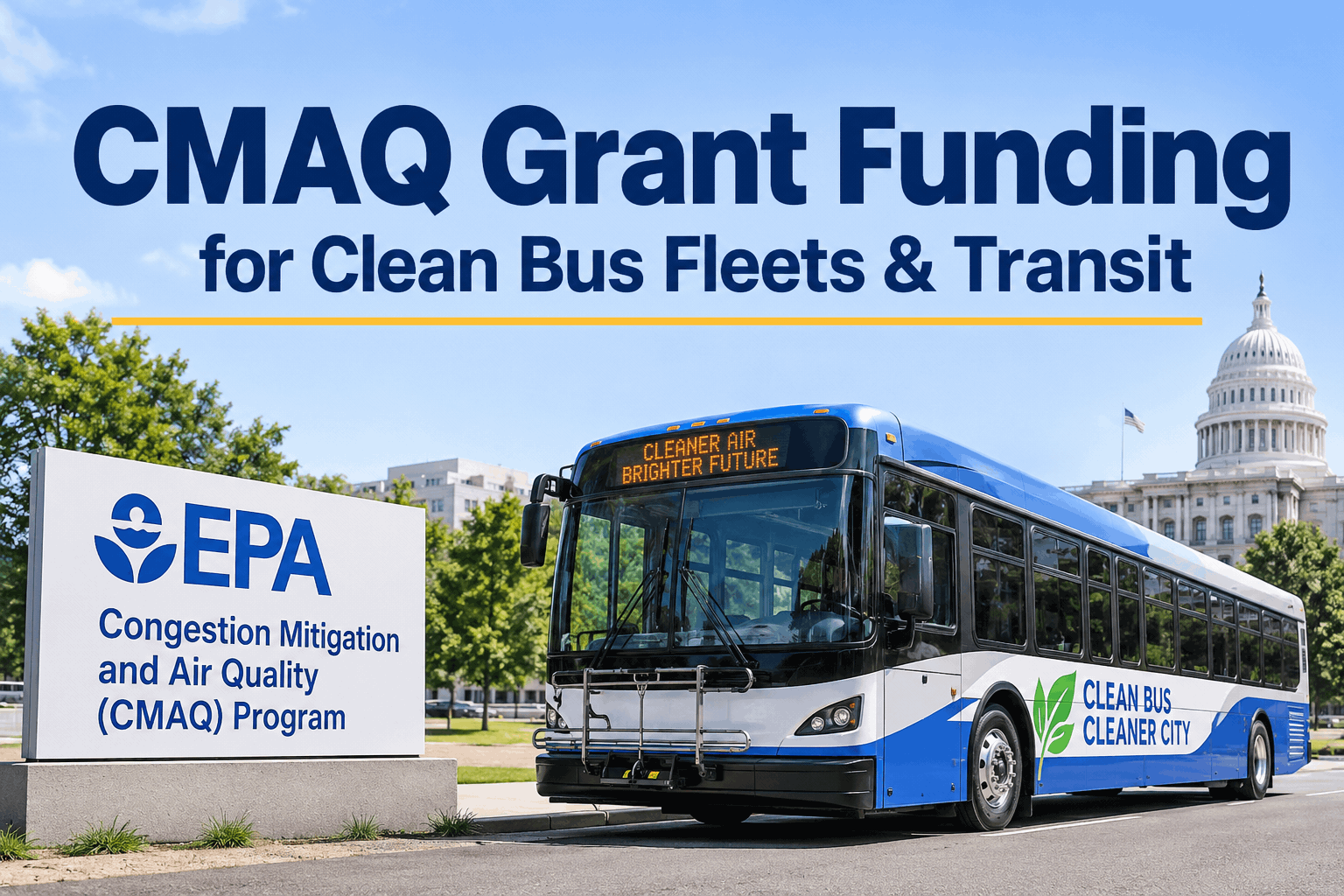
CMAQ Grant Funding for Clean Bus Fleets
The Congestion Mitigation and Air Quality Improvement Program (CMAQ) is one of the largest federal funding sources for clean and zero-emission transit buses. Here's how the money actually moves — from eligible project to reimbursed invoice — and what records your fleet needs at every stage.
CMAQ is reimbursement-based — funds are released only after documented, completed work, which is why stage four is where most delays happen.
What CMAQ Actually Funds
CMAQ, codified at 23 U.S.C. § 149, is a federal-aid program that funds transportation projects reducing mobile-source emissions in areas designated nonattainment or maintenance for ozone, carbon monoxide, or particulate matter under the Clean Air Act. For bus fleets, that typically covers diesel engine replacements and retrofits, transit service improvements, and — since the Bipartisan Infrastructure Law — the purchase of medium- and heavy-duty zero-emission vehicles and their charging infrastructure. Most eligible projects receive an 80% federal cost share, with funds distributed through your State DOT and administered through your region's MPO.
Project Types That Typically Qualify
Eligibility varies by region and funding cycle, but most CMAQ bus awards fall into one of four categories.
Clean & zero-emission buses
Purchase of low- or zero-emission replacement buses, including supporting charging or fueling infrastructure.
Diesel engine retrofits
Emissions-control retrofits and engine replacements on existing diesel buses that remain in service.
Transit service improvements
Service expansions, new routes, or operational changes that measurably reduce vehicle emissions.
Idle-reduction & technology
Anti-idling technology, telematics, and other equipment that supports measurable emissions reduction.
Confirm project-level eligibility with your State DOT or MPO before applying. Organize your fleet data ahead of your next application.
The Eligibility Checklist Reviewers Look For
- Project is located in, or significantly benefits, a current or former nonattainment/maintenance area for ozone, CO, or PM
- Project is listed in your region's Transportation Improvement Program (TIP) or State Transportation Improvement Plan (STIP)
- Emissions reduction can be quantified — typically via FHWA's CMAQ Emissions Calculator Toolkit, built on EPA's MOVES model
- Vehicle and asset records (VINs, in-service dates, mileage, fuel type) are accurate and ready to submit
- Maintenance history documents that the vehicle being replaced or retrofitted was actually in revenue service
- A reimbursement process is in place — CMAQ pays after verified, completed work, not in advance
Walk through this checklist against your current fleet records before your next application window.
Documentation Grantees Are Expected to Produce
Swipe sideways to see all columns.
Expert Review: Grant Files in Folders vs. Fleet Records in a CMMS
Swipe sideways to see all columns.
Content here is grounded in FHWA's published CMAQ guidance on eligibility, cost share, and the reimbursement model — project-eligibility specifics are kept as "confirm with your State DOT/MPO" rather than a fixed rule, since exact eligible categories vary by region and funding cycle. Talk through what your records look like today.
The Bottom Line
CMAQ funding rewards fleets that can prove what they did, not just what they planned to do. Winning the award is step one — producing clean, matched, defensible records through execution and reimbursement is what actually gets the check cashed. The fleets that find this easiest are the ones whose maintenance and asset data were already organized before the application went in.