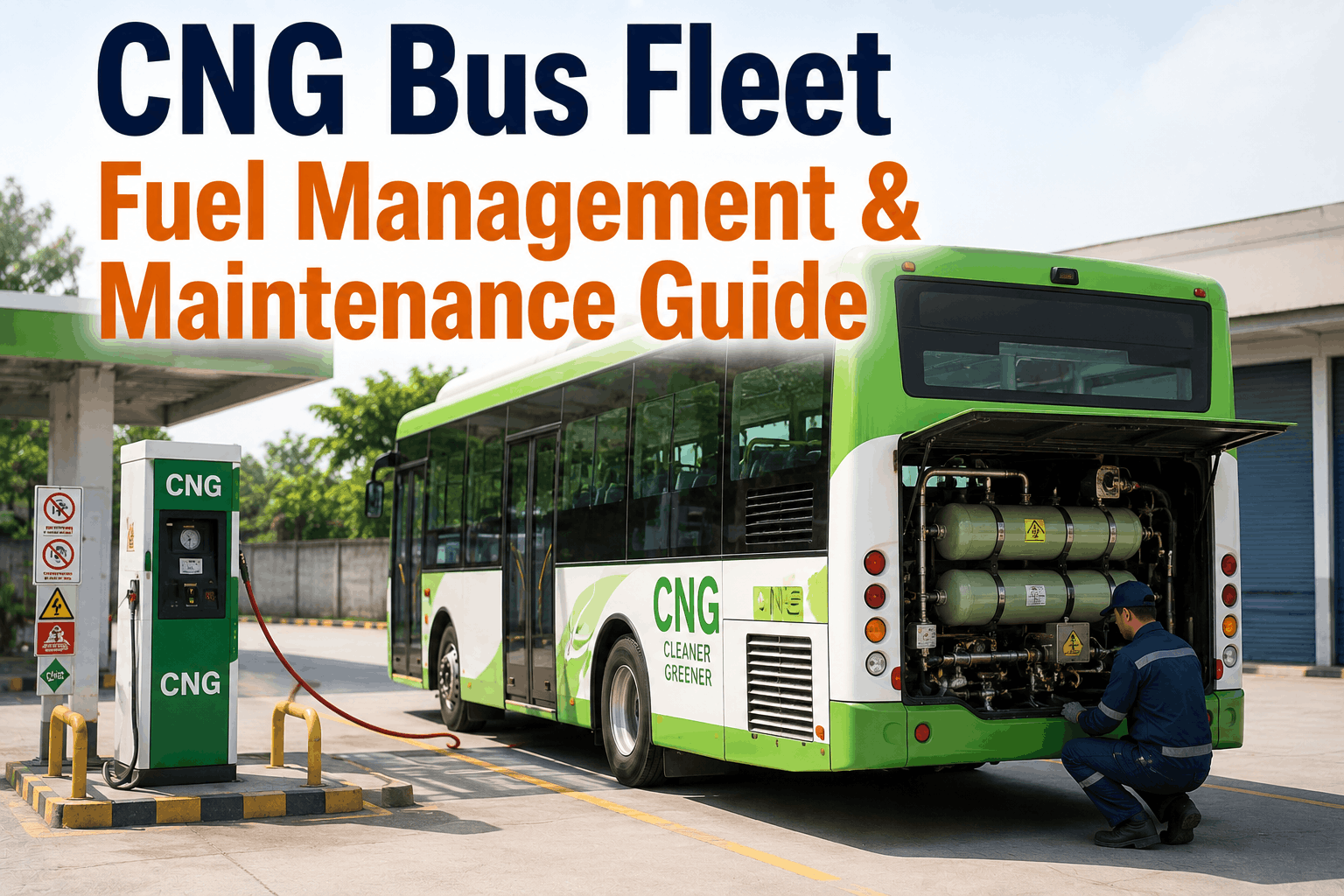
Transitioning to Compressed Natural Gas (CNG) is one of the fastest ways for bus and transit fleets to slash fuel costs and lower tailpipe emissions. However, substituting diesel for methane introduces a completely different operational matrix. CNG systems operate under extreme high-pressure environments—frequently scaling up to 3,600 PSI—which demands specialized safety compliance protocols, strictly enforced tank inspection intervals, and unique engine maintenance workflows. When fleet managers treat a CNG bus like a standard diesel asset, they run into premature component wear, failed federal inspections, and costly fuel-system contamination. Maintaining a reliable, code-compliant natural gas fleet requires a sharp pivot toward pressure-specific preventive management. This guide explores the mechanical realities of CNG bus operations, breaks down the regulatory landscape of fuel tank certification, and provides an actionable template to automate high-pressure fleet safety workflows.
Fuel Management
CNG Bus Fleet Fuel Management & Maintenance Guide
Compressed Natural Gas cuts fuel costs but requires dedicated care. Learn CNG bus fuel management principles, strict tank inspection rules, and critical maintenance differences versus diesel fleets.
Why CNG Fleets Face Unique Maintenance Friction
Natural gas burns cleaner than diesel, which means less soot buildup and no heavy aftertreatment components like Diesel Particulate Filters (DPFs). However, the fuel delivery infrastructure itself introduces strict regulatory and mechanical pain points that can quickly derail a shop floor if not carefully tracked.
Reason 1: Unforgiving Tank Inspection Laws
Federal Motor Vehicle Safety Standard (FMVSS) 304 mandates that CNG fuel cylinders must be thoroughly inspected by a certified professional every 36 months or 36,000 miles, whichever comes first, plus after any accident. Missing this window compromises vehicle legality.
Reason 2: High-Pressure System Hazards
Fuel lines carry gas compressed up to 3,600 PSI. This massive pressure profile requires special fittings, stainless steel lines, and certified technicians. Even tiny, slow-leaking connections pose critical safety and environmental hazards.
Reason 3: Intense Combustion Temperatures
CNG engines run significantly hotter than their diesel equivalents. These elevated temperatures accelerate spark plug degradation, place high stress on ignition coils, and require specialized engine oils formulated to resist severe nitration.
Reason 4: Supply Stream Contamination
If station compressors leak trace amounts of oil or moisture into the fuel line during delivery, it settles in the bus's onboard fuel systems. Unmanaged contamination gums up sensitive pressure regulators and fouls fuel injectors.
The Core Anchors of Natural Gas Preventive Care
To safeguard a CNG transit or school bus operation against unscheduled downtime, shop managers must closely monitor the four key areas where high-pressure fuel delivery interacts with vehicle mechanical lifecycles.
CNG Target Checkpoints vs. Operational Risk
Target: Coalescing Filter Drainage
Onboard filters trap compressor oil and moisture before they reach the engine. Shops must enforce regular, routine drainage intervals to stop contaminants from traveling downstream and destroying fuel regulators.
Target: Pressure Relief Devices (PRDs)
PRDs use a fusible alloy designed to vent gas safely if internal heat or pressure spikes dangerously. Technicians must visually check these channels weekly to ensure they are completely free of road debris, dust, or ice.
Target: Spark Plug Tuning Intervals
Unlike compression-ignition diesels, CNG engines rely entirely on spark plugs. Because natural gas demands a hotter, more stable spark gap to ignite, plug change intervals are brief and require precise torque calibration.
Target: Cylinder Structural Integrity
Whether composed of steel, aluminum, or carbon fiber composites, fuel tanks endure constant expansion and contraction during fast-fills. Documenting exterior scuffs, stress fractures, and mounting-strap tightness is vital.
The Fix: Structuring a Automated CNG Workflow
Do not leave high-pressure gas tracking to manual whiteboard tracking. Implement an automated, data-driven check program using specialized fleet CMMS logic:
1
Hardcode the Dual-Trigger Cylinder Alert Loop
Configure dual schedule rules in the CMMS at 36 months or 36,000 miles. The system auto-locks the bus out from routing if a certified cylinder safety review is overdue.
2
Enforce Coalescing Filter Checks on PM Forms
Embed mandatory data-entry slots into digital inspection checklists. Technicians must record oil volume drained from filters before the software allows the preventative maintenance ticket to close.
3
Track Gas-Specific Lubricant and Parts Supply
Isolate inventory profiles for low-ash CNG engine oils and specific high-heat spark plugs. Auto-reorder parts based on real-time consumption trends so critical maintenance supplies are always on the shelf.
4
Compile Digital Tank Inspection History Logs
Maintain detailed visual records, serial number tracks, expiration dates, and technician certifications online. Generate clean compliance printouts instantly whenever Department of Transportation (DOT) auditors request them.
"When we integrated 45 new CNG buses into our urban transit network, we initially applied our existing diesel maintenance rhythms. That was a costly mistake. Within a year, we suffered three road calls due to oil-contaminated regulators, and we completely blew past our first batch of required 36-month cylinder inspections. The regulatory warning was an eye-opener. We moved our operation onto an automated CMMS workflow tailored to alternative fuels. Now, dual meter triggers track our tank histories, and filter-draining checks are hardcoded into every service loop. Our compliance record is completely spotless, and fuel-delivery downtime has dropped to nearly zero."
— Maintenance Director, Metropolitan Transit Fleet, Texas
Audit-Proof Your Alternative Fuel Fleet Management
Take the guesswork out of high-pressure lines and federal tank regulations. Automate your CNG fleet scheduling, filter tracking, and safety compliance records today.