CNG Bus Maintenance Requirements: Complete Fleet Guide
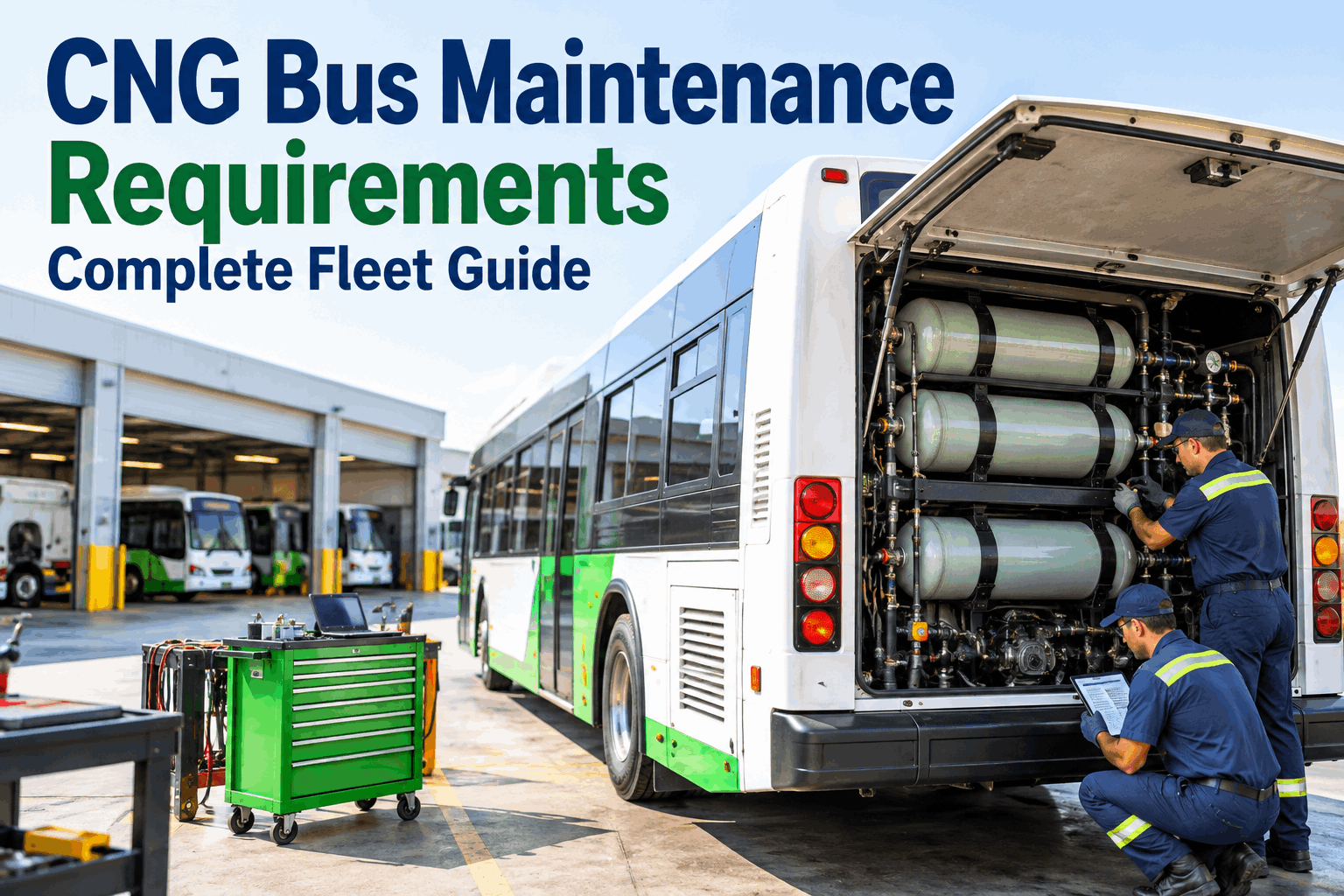
Take on a CNG fleet after years of diesel, and the surprise isn't the fuel — it's the paperwork clock behind CNG bus maintenance requirements. Cylinders holding gas at ~3,600 psi carry a rule diesel never had: inspect on a fixed schedule, after any incident, and retire at expiration.
COMPLIANCE + PM · CNG FLEET
CNG Bus Maintenance Requirements: Complete Fleet Guide
A natural gas bus runs on two clocks — the engine you know, and a regulated high-pressure fuel system with fixed inspection intervals. Here's the compliance calendar that keeps cylinders safe and audits clean.
3yr / 36kvisual cylinder inspection interval, whichever first
~3,600psi the fuel system holds — why it's regulated
15–20yrcylinder service life, then removed from service
THE CNG INSPECTION CLOCK
Every 3 yr / 36,000 mischeduled visual inspection
After any accident or firemandatory, regardless of interval
At expiration datecylinder removed from service
Why CNG Bus Maintenance Requirements Differ From Diesel
Oil, brakes, tires, DVIR items — all of that carries over from a diesel bus. What's new with CNG is the high-pressure fuel system, and it changes the program in ways that trip up fleets treating a natural gas bus like a diesel that burns something different.
DIESEL BUS
Fuel storagelow-pressure tank, inspect for leaks & damage
Inspection clockruns on your normal PM schedule
Who inspectsyour own technicians
Tank lifeeffectively the life of the bus
CNG BUS
Fuel storagehigh-pressure cylinders at ~3,600 psi
Inspection clockfixed 3-yr/36k interval + after any incident
Who inspectsa certified CNG fuel system inspector
Tank lifeexpires at 15–20 yrs, then retired
The CNG fuel system runs on standards diesel never touches: FMVSS 304 (legal force), plus NGV2, CGA C-6.4, and NFPA 52 — and only a certified inspector can sign off the cylinder check.
"CNG cylinder inspection" isn't a glance at a tank — it's a full walk of the high-pressure system. Knowing what's on it shows why it's a certified-inspector job and why it takes real time.
Cylinders
Examined for abrasion, cuts, gouges, impact, heat or chemical exposure — then labeled passed or failed.
Mounting & brackets
Brackets, straps, and isolation checked for corrosion, looseness, and wear that could let a cylinder shift.
Pressure relief devices
PRDs that vent gas in a fire or overpressure event — verified present, unobstructed, undamaged.
Lines, valves & fittings
High-pressure tubing, hoses, valves, and connections — the points where leaks most often start.
Leak detection
The system checked for gas leaks at fittings — the safety test that catches small problems early.
Shields & labels
Protective shields verified in place and cylinder date markings confirmed legible — the date governs retirement.
Every item must be documented — a completed form, photos, and a pass/fail label per cylinder — and retained. That's where fleets fall behind: the inspection gets done, but the record can't be produced at audit.
The Cylinder Lifecycle: From Manufacture to Retirement
The key thing about CNG maintenance: the cylinder has a finite, dated life — it is not a permanent part of the bus. From day one it's on a countdown, punctuated by mandatory inspections, ending in forced retirement.
Yr 0
Manufacture & date stamp
Stamped with manufacture and expiration dates — the two markings that govern its entire service life.
3 yr
First scheduled inspection
At 3 years or 36,000 miles — whichever comes first — the detailed visual inspection is due, and repeats on that interval.
Any
After an accident or fire
Any collision or fire triggers a mandatory inspection outside the schedule — the regular clock doesn't excuse it.
End
Expiration & retirement
At its marked expiration — typically 15 to 20 years — the cylinder must be removed from service. No inspection extends it.
On a large fleet, cylinders bought in different years mean dozens or hundreds of individual clocks. A spreadsheet can hold the dates — but it won't warn you before one slips past a due or retirement date.
How BusCMMS Handles CNG Bus Maintenance Requirements
CNG compliance is a scheduling-and-records problem: the right inspection has to fire on the right clock, get done by the right person, and leave a record you can produce on demand. BusCMMS pairs fuel-type-aware PM with audit-ready records.
Fuel-Type-Aware PM Scheduling
CNG cylinder inspections run on their own 3-yr/36k trigger — by mileage or calendar — separate from diesel and electric.
CNG's own clock
Cylinder Expiration Tracking
Every cylinder's manufacture and expiration date logged, with alerts before end-of-life so none runs past retirement.
never run expired
Digital CNG Inspection Forms
Capture each item, pass/fail per cylinder, and photos — so the record is complete and stored, not on a clipboard.
audit-ready records
Auto Work Orders From Triggers
A due inspection, failed check, or after-incident requirement auto-generates a work order — nothing due sits unassigned.
nothing slips
Audit-Ready Compliance Reports
Pull inspection history for any cylinder or the whole CNG fleet — what an FTA review or state DOT inspection asks for.
produce on demand
Mixed-Fleet Dashboard
Diesel, CNG, and electric on one screen, each on its correct logic — a mixed fleet, not a mixed-up schedule.
one dashboard
A diesel-first tool has no concept of a dated cylinder on a 3-year clock that must retire at end-of-life — BusCMMS ships with that logic built in and is typically live in 2–4 weeks. Sign up free and run CNG compliance on rails.
A Fleet Maintenance Manager's Take
Key Takeaways on CNG Bus Maintenance Requirements
CNG's fuel system is a regulated, high-pressure, dated set of components on its own calendar — separate from the engine work you know. It comes down to five things.
01
Inspect on the clock
Every 3 years / 36,000 miles, and after any accident or fire.
02
Certified inspector only
The detailed visual inspection needs a qualified CNG inspector.
03
Cylinders expire
Retire at the marked date — typically 15–20 years — no exceptions.
04
Document everything
Forms, photos, pass/fail labels — retained and producible at audit.
05
Track each clock
Manage a population of dated cylinders, not one tank — on rails, not memory.
CNG Bus Maintenance Requirements: Common Questions
How often must CNG bus cylinders be inspected?+
The widely-referenced requirement, tied to FMVSS 304 and the NGV2 standard, is a detailed visual inspection of CNG fuel cylinders at least every three years or 36,000 miles, whichever comes first. On top of that scheduled interval, cylinders must be inspected after any accident or fire, regardless of when the last inspection happened — that trigger is mandatory and independent of the clock. The detailed visual inspection has to be performed by a certified or qualified CNG fuel system inspector, not just any technician, because it's assessing the integrity of a high-pressure vessel. Some agencies and cylinder manufacturers specify more frequent checks, and routine leak testing should happen as part of your regular preventive maintenance rather than only at the three-year mark. Always confirm the exact interval against your cylinder manufacturer's guidance and any state or agency policy, since those can be stricter than the baseline. The key point for fleet planning is that each cylinder is on its own recurring inspection clock that you have to track individually.
Do CNG cylinders expire?+
Yes — and this is one of the biggest differences from a diesel fuel tank. Every CNG cylinder is manufactured with both a manufacture date and an expiration date stamped on it, and it has a finite service life, commonly 15 to 20 years depending on the standard it was built to. Cylinders made to the 1992 version of NGV2, for example, carry a useful life of 15 years from the date marked on the cylinder. Once a cylinder reaches its marked expiration, it must be removed from service permanently — no inspection, repair, or recertification extends it past that date. This makes cylinder end-of-life a hard planning item: on a fleet with cylinders bought across many years, you have a rolling series of retirement dates to budget and plan for. Missing one doesn't just risk an audit finding; it means a pressure vessel operating beyond its safe designed life. Tracking each cylinder's expiration date and getting an alert before it arrives is essential, which is why fleets move this off spreadsheets and onto a maintenance system that flags retirements in advance.
What does a CNG fuel system inspection include?+
A detailed visual inspection covers the entire high-pressure fuel system, not just the cylinders. The inspector examines each cylinder for abrasion, cuts, gouges, impact damage, and heat or chemical exposure; the mounting system (brackets, straps, isolation) for corrosion, looseness, and wear; the pressure relief devices that vent gas safely in a fire or overpressure event; the high-pressure lines, valves, and fittings where leaks most often start; and performs leak detection at connections. Protective shields are verified in place, and the cylinder's manufacture and expiration markings are confirmed legible, since those dates govern the cylinder's life. Every cylinder is then labeled passed or failed. Crucially, the inspection must be documented — a completed inspection form, photos, and the pass/fail label on each cylinder — and those records retained. That documentation is a compliance requirement in its own right, and it's where many fleets fall behind: the inspection gets done but the record isn't captured in a way that can be produced when an auditor asks.
What standards govern CNG bus maintenance and inspection?+
Several standards work together. FMVSS 304 is the U.S. federal motor vehicle safety standard for CNG fuel container integrity — it carries legal force and is the backbone of the inspection requirements. NGV2 (incorporated internationally into ISO 11439) is the industry standard detailing cylinder manufacturing, testing, and service life. CGA C-6.4 provides guidance on external visual inspection methods and how to classify damage, so inspectors are judging cylinders against a consistent yardstick. And NFPA 52 addresses the installation and safety requirements for the fuel system as installed on the vehicle. Together they define what a compliant CNG fuel system looks like, how it must be inspected, who's qualified to inspect it, and when a cylinder must be retired. For a fleet, the practical takeaway is that CNG compliance isn't governed by your normal PM standards — it's a separate regulatory framework, which is why CNG buses need their own inspection schedule and record-keeping rather than being folded into a diesel maintenance routine.
How does BusCMMS help manage CNG bus compliance?+
BusCMMS treats CNG as its own maintenance track rather than a variation on diesel. Fuel-type-aware PM scheduling puts CNG cylinder inspections on their own 3-year/36,000-mile trigger, driven by mileage or calendar, separate from diesel and electric PM but visible on one dashboard. Cylinder expiration tracking logs each cylinder's manufacture and expiration date and alerts you before end-of-life, so none stays in service past its retirement date. Digital CNG inspection forms capture the detailed visual inspection item by item, with pass/fail per cylinder and photos, so the record is complete and stored rather than on a clipboard. When an inspection comes due, a check fails, or an after-incident inspection is required, a work order is auto-generated so nothing due sits unassigned. Audit-ready compliance reports let you pull the inspection history for any cylinder or the whole CNG fleet on demand — exactly what an FTA review or state DOT inspection asks for. And a mixed-fleet dashboard keeps diesel, CNG, and electric buses each on their correct maintenance logic. Because it's purpose-built for bus fleets, it's typically live in two to four weeks.