A coach can be mechanically serviceable and still be unready for a charter departure. A warning light, an unresolved inspection defect, an inoperative passenger amenity, or missing trip paperwork can disrupt a booked journey. A consistent charter bus pre trip inspection connects vehicle condition, repair decisions, and departure authorization before passengers arrive.
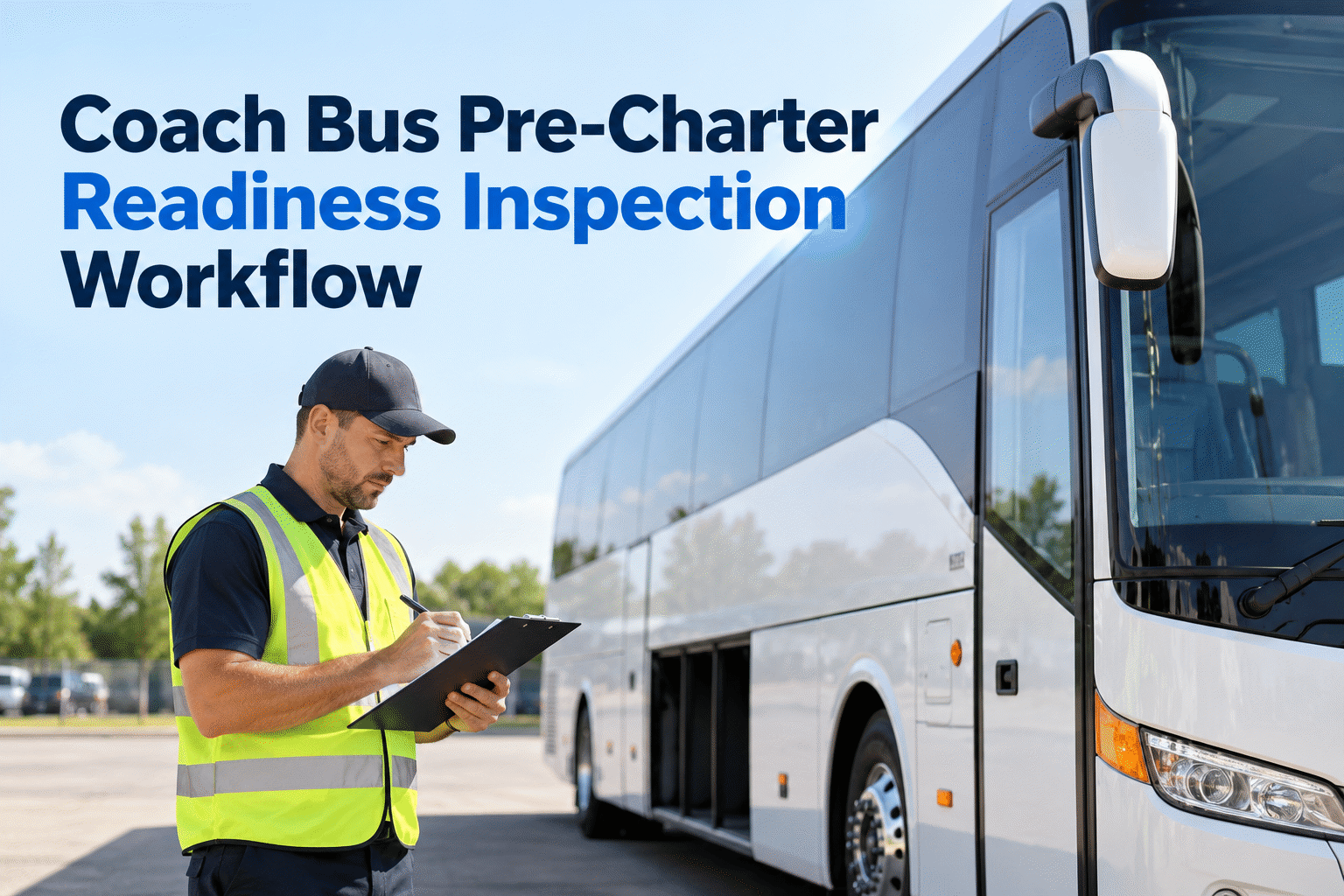
Coach Bus Pre-Charter Readiness Inspection Workflow
Turn scattered pre-trip checks into a clear departure decision. Inspect the coach, resolve defects, confirm trip essentials, and document the release.
Built for charter dispatchers, drivers, and maintenance teamsWhy a pre-charter check goes beyond a routine walkaround
Motorcoach departures combine commercial vehicle safety with passenger-service expectations and time-sensitive dispatch. A driver may complete a required pre-trip inspection, but the operator also needs to know whether a reported defect was corrected, whether the assigned coach is suitable for the route, and whether the trip can leave on schedule.
Safety condition
Inspect brakes, tires, steering, lighting, emergency equipment, and other items applicable to the vehicle.
Passenger readiness
Check doors, seating, climate control, restroom where equipped, cleanliness, and luggage storage.
Dispatch approval
Confirm unresolved defects, repair status, driver assignment, and the release decision are recorded.
A structured process makes these checks visible to the right people. Book a demo to discuss digital coach inspection workflows for your fleet.
Six inspection zones before passengers board
Use a checklist matched to the coach model, manufacturer instructions, applicable rules, and company policy. These categories provide a planning framework, not a substitute for a legally required driver inspection.
Lights, mirrors, glass, body damage, leaks, windshield wipers, and visible obstructions.
Tire condition and inflation, wheel fasteners where observable, suspension concerns, and brake-related indicators.
Instrument alerts, steering response, horn, service and parking brake checks, and dashboard indications.
Seat condition, aisle clearance, handholds, climate control, doors, and accessibility equipment if fitted.
Emergency exits, required safety equipment, exit markings, and emergency systems appropriate to the coach.
Luggage-bay security, restroom condition where fitted, cleanliness, route requirements, and trip documentation.
What a useful pre-charter readiness log should capture
Paper checklists can be difficult to reconcile with maintenance work orders when departure time is approaching. A digital record should give dispatch and maintenance a shared view of the coach's status without hiding unresolved exceptions.
| Inspection item | Result | Action / evidence |
|---|---|---|
| Exterior lighting | Pass | Test completed |
| Passenger entry door | Defect | Slow closing; maintenance review |
| Emergency exits | Pass | Checked per procedure |
| Cabin HVAC | Pass | Operating at inspection |
Linking the defect to its maintenance follow-up makes the final decision easier to verify. Sign up free to organize charter bus inspection records in one place.
Make every charter departure easier to verify.
Bring driver inspections, maintenance follow-up, and vehicle readiness into a more organized fleet workflow.
From driver inspection to approved departure
The inspection itself is only one stage. A reliable readiness process keeps responsibility clear whenever a problem is found.
Assign & inspect
Identify the coach and trip, complete the applicable inspection, and record exceptions.
Triage defects
Determine whether a defect affects safety, regulatory compliance, or passenger service.
Repair & verify
Document corrective work, recheck the affected system, and retain supporting evidence.
Release or substitute
Authorize the coach only when cleared; otherwise assign a suitable replacement vehicle.
A clear handoff reduces last-minute confusion. Book a demo to see how BusCMMS supports defect follow-up across drivers and maintenance staff.
What happens when the coach fails a readiness check?
Safety or regulatory concern
Do not dispatch a vehicle that is unsafe or prohibited from operation. Escalate, repair, verify, and document the decision.
Passenger-service defect
Assess whether the issue affects accessibility, contracted amenities, route suitability, or the customer's trip requirements.
All required checks cleared
Record the authorized decision and communicate readiness to dispatch before boarding or departure.
Where a coach cannot be cleared in time, a documented substitute-bus decision protects both the operation and the customer experience.
Build a repeatable readiness routine
Before the departure window
- Confirm coach assignment, route, passenger needs, and planned departure.
- Review open defects and upcoming preventive maintenance.
- Ensure the assigned inspector has the correct vehicle-specific checklist.
- Identify a substitute coach or escalation contact when practical.
During the departure window
- Record inspection completion and any defects immediately.
- Notify maintenance and dispatch when an exception needs review.
- Keep repair verification and final authorization traceable.
- Retain records according to applicable rules and fleet policy.
Digital workflows help connect these steps without replacing professional judgment. Book a fleet demo to discuss pre-charter inspection coordination with BusCMMS.
Keep inspections, defects, and maintenance connected
BusCMMS can support a structured fleet workflow through digital bus inspections, maintenance records, preventive maintenance scheduling, and defect follow-up. Your organization should configure inspection questions and approval responsibilities to match its operating procedures.
Inspection visibility
Keep coach-specific inspection information accessible rather than relying on scattered paper forms.
Maintenance follow-up
Connect reported defects with repair tasks and supporting service history.
Readiness context
Review vehicle maintenance status before assigning coaches to upcoming charter work.
For a starting point, sign up free to explore digital bus maintenance workflows for your fleet.
Give dispatch a clearer picture before the bus leaves.
Explore a more connected approach to coach inspections, defect records, and maintenance readiness.
Pre-charter inspection questions
What is a charter bus pre-trip inspection?
It is a pre-operation check of the assigned motorcoach's condition and safety-related systems. A charter readiness workflow can add passenger amenities, route suitability, open defects, and dispatch authorization.
Is a pre-charter readiness checklist the same as a required DVIR?
Not necessarily. Driver vehicle inspection and reporting duties depend on applicable regulations and operating circumstances. A charter readiness checklist is an operational tool and does not replace legally required inspections or reports.
Who should approve a coach after a defect is reported?
The fleet should assign responsibility according to its safety policies and applicable rules. Maintenance may verify corrective work, while dispatch or another authorized role records the final release decision.
Should passenger amenities be included in the inspection?
Yes, when relevant to the booking. Climate control, doors, seating, restroom condition, accessibility equipment, and luggage storage can affect whether a coach is suitable for the contracted trip.
How can software help with pre-charter readiness?
Digital inspection records, defect follow-up, maintenance history, and preventive maintenance scheduling can help teams see outstanding work before departure. Confirm specific workflow configuration with your software provider.