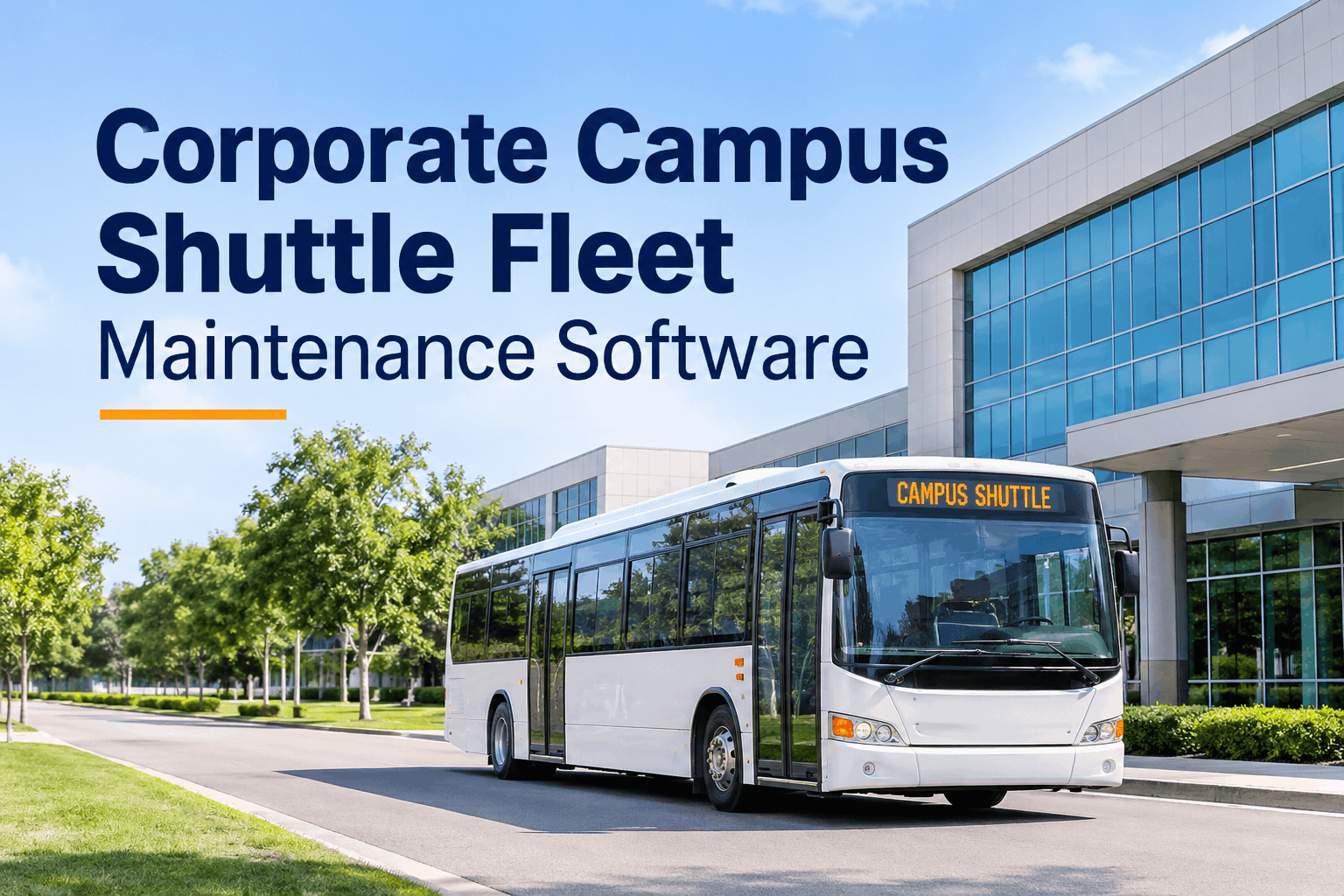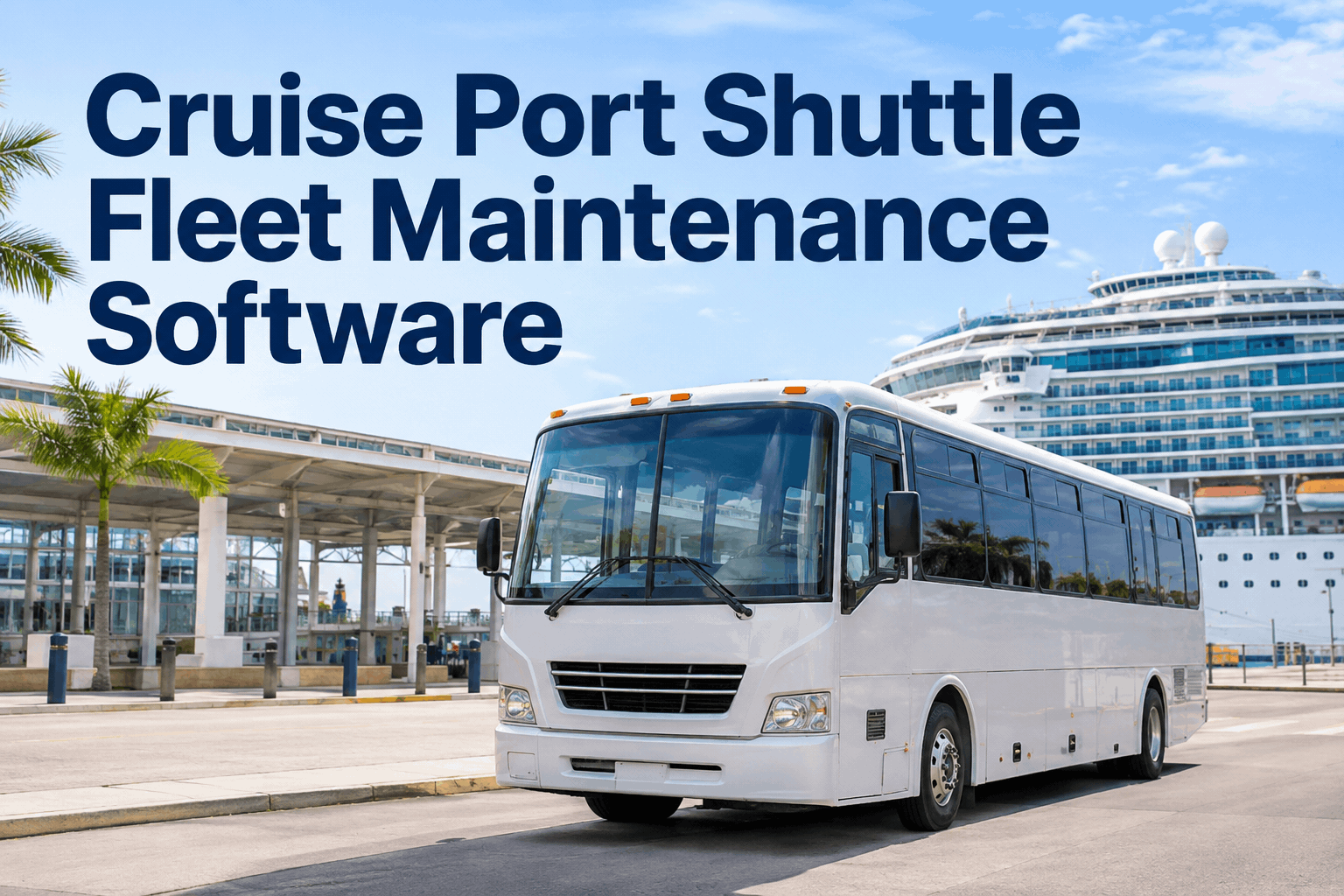
It is 7:40 on a two-ship morning. One shuttle will not start in the yard, and in forty minutes a few hundred passengers are standing at the pier expecting a ride to a ship that sails on time. A cruise port shuttle fleet does not get a second run — the sailing is the deadline. The fix is seeing every bus is road-ready before the surge and you can see that readiness view in a quick demo.
Cruise Port Shuttle Fleet Maintenance Software
Your shuttles do not run a steady route — they sit, then get slammed when the ships are in. Cruise port shuttle fleet maintenance software keeps every bus road-ready for the ship-call surge and the parts and records straight for the season.
Why a Cruise Port Shuttle Fleet Is Its Own Problem
A port shuttle does not break down the way a city route does. The demand pattern and the stakes are different, and that is exactly what generic fleet software misses.
Idle, then slammed
Buses sit for hours, then the whole fleet has to roll at once when a ship is alongside. Near-full availability has to be ready on command, not on average.
The sailing is the deadline
A late route can catch up. A missed embarkation window cannot — the ship leaves. One bus down at the wrong hour strands paying passengers against a hard clock.
Season runs the calendar
A heavy cruise season pounds the fleet for months, then slows. Maintenance that fits a steady 12-month route leaves buses over-run in peak and idle-rotting off-season.
The riders are your reputation
A full coach of cruise passengers, luggage and a schedule is a captive, visible audience. A breakdown is a complaint to the cruise line and the port, not just a late trip.
The job is not fixing a bus fast — it is making sure no bus fails during the window the ship is in.
The Readiness Window Around Every Ship Call
Each ship call opens a tight window where the shuttles have to perform, bracketed by a dead gap. Your maintenance has to land in the gap, never in the window.
To hit that gap you need preventive maintenance that schedules around ship calls, not a calendar built for a steady route — walk through how BusCMMS schedules PM around your calls in a demo.
What Cruise Port Shuttle Maintenance Software Has to Track
These are the things that decide whether a shuttle fleet makes the window or misses it. A real cruise shuttle fleet maintenance software keeps all of them in one place.
Swipe sideways to see all columns
Your Cruise Port Shuttle Readiness Checklist
Run this against your operation before the next busy call day. The red items are what strand passengers; the green items are what keep the season smooth.
- Live availability before every callYou can see how many shuttles are road-ready ahead of the surge, not guess.CRITICAL
- Digital pre-trip on every shuttle, dailyDrivers catch defects in the yard before the first run, not on the pier.CRITICAL
- PM scheduled in the gaps between callsService windows fall in dead time, so you never pull a bus mid-surge.PLAN
- Failed items become work orders automaticallyA flagged defect routes straight to the shop — nothing lost on a paper note.PLAN
- Fast-moving parts stocked for the seasonReorder alerts keep peak-season wear items on the shelf, not on back order.PLAN
- Service and inspection history per busA clean, dated record for each shuttle, ready for a DOT check or a cruise-line review.PLAN
If the two critical lines are still manual, that is where a missed window comes from — sign up free and put every item on one board.
How BusCMMS Keeps a Port Shuttle Fleet Ship-Ready
BusCMMS is built for bus and coach fleets, so the ship-call rhythm maps directly onto how it works. Three capabilities carry the load.
A live readiness board
Real-time fleet availability and PM compliance on one dashboard, so you know how many shuttles are ready before the ship is alongside.
Pre-trip straight to work order
Pre-built digital DVIRs any driver can run; a failed item becomes a work order the shop sees at once, so defects get caught in the yard.
PM that fits the calls
Preventive maintenance scheduled by mileage or date, including separate logic for diesel, CNG and electric shuttles on one dashboard — landed in the gaps.
It ties to the people who book the demo: your transit and ground-transport operation, on the passenger transit fleet page. To set it up for your calls, book a demo and bring your ship schedule.
Surge Day: Reactive vs Ready
The same two-ship morning plays out two very different ways depending on whether you saw the fleet coming.
- A bus will not start at 7:40 — first anyone hears of it
- No spare ready; passengers wait at the pier
- Scramble for the part, which is on order
- Late trips, a complaint to the cruise line
- Pre-trip flagged the fault last night in the yard
- Work order opened, part was on the shelf
- Fixed in the gap; readiness board shows full
- Every shuttle rolls on time, ship sails happy
Same fault, same fleet — the only difference is whether you saw it before the window opened.
From a Port Shuttle Operator
On a three-ship day we used to find out a shuttle was down when the driver turned the key at the pier. Now the pre-trip catches it the night before and I can see on one screen how many buses are actually ready before the first gangway drops. We did not strand a single embarkation group all season. The fleet sits idle between calls either way — the win is that it is ready the second the ships come in.
Key Takeaways on Cruise Port Shuttle Maintenance
Cruise port shuttle fleet maintenance software earns its keep in the window the ship is in. Four things to hold onto.
Readiness beats repair speed
The goal is no bus failing during the ship window, not fixing one fast after it does.
Service lands in the gap
PM scheduled around ship calls keeps buses out of the shop during the surge.
Catch it in the yard
A digital pre-trip turns a pier breakdown into a quiet overnight work order.
One board, before the surge
Live availability tells you if you can cover the call while there is still time to act.
Run your shuttle fleet off a readiness view built for the ship-call rhythm and the surge stops being a scramble — the buses are ready the moment they are needed and quiet the rest of the day.