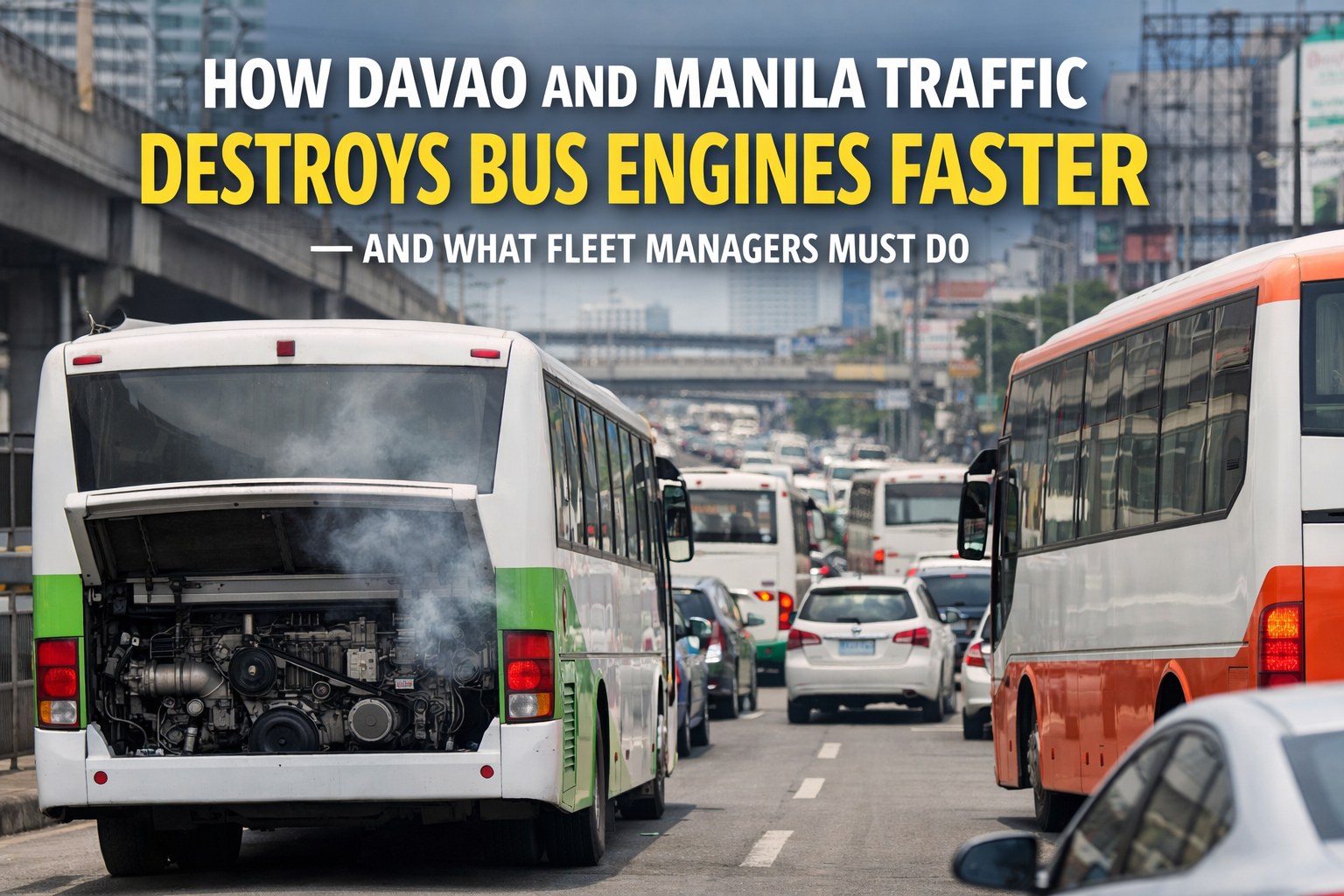
Your driver just radioed in from EDSA—the bus is overheating again. Third time this month. Meanwhile, the Davao fleet is burning through brake pads at twice the expected rate. These aren't random failures. When your buses spend 168 hours per year stuck in stop-and-go traffic—that's 7 full days of idling, braking, accelerating, and cooking critical components—standard PM intervals become dangerously inadequate. The 2025 TomTom Traffic Index just confirmed what Philippine fleet managers already know: Davao and Manila rank among the world's most congested cities. This guide shows you exactly how that congestion destroys your buses—and how to fight back.
What Stop-and-Go Traffic Actually Does to Your Buses
Every hour stuck in Manila or Davao traffic isn't just lost time—it's active damage to your fleet. Here's what happens inside your buses during those 34-minute crawls to cover just 10 kilometers.
Standard manufacturer PM schedules assume "normal" driving conditions—not the 14 km/h average speeds of rush hour Manila. If your maintenance intervals aren't adjusted for congestion, you're running buses toward breakdown. Sign up for BusCMMS to create route-specific maintenance schedules.
The Real Numbers: Congestion vs. Component Life
Here's how high-congestion routes in Davao and Manila compare to highway or provincial routes in actual component lifespan.
The fix isn't more inspections—it's smarter inspections tied to actual route conditions. Book a demo to see how BusCMMS tracks wear by route type automatically.
Early Warning Signs: What to Watch on High-Congestion Routes
Congestion damage doesn't happen overnight—it builds gradually. Here's what your drivers and technicians should be watching for before failures strand passengers.
These warnings are easy to miss in paper logbooks—but digital tracking catches patterns across your fleet before they become emergencies. Sign up for BusCMMS to get automatic alerts when drivers report these symptoms.
Expert Review: Recalibrating PM for Philippine Conditions
The fleets that survive Manila and Davao congestion don't just react to breakdowns—they build traffic-adjusted maintenance programs from the start.
Digital maintenance systems make route-based scheduling practical. Paper systems make it nearly impossible. Book a demo to see how BusCMMS handles multiple PM schedules for the same fleet.
Frequently Asked Questions
How much faster do brakes wear out in Manila/Davao traffic compared to provincial routes?
In high-congestion urban routes like EDSA or Davao City center, brake pads typically wear out 50% faster than on provincial or highway routes. Where you might get 50,000–60,000 km from brake pads on a Batangas-to-Manila expressway run, the same pads on a purely Metro Manila route may only last 20,000–30,000 km. The constant stop-and-go cycle generates extreme heat that accelerates pad wear and can warp rotors.
Why do bus engines overheat more often in traffic even though they're moving slowly?
Engine cooling systems rely on airflow through the radiator. When a bus is moving at highway speeds, plenty of air flows through. But in stop-and-go traffic at 14–17 km/h average speeds, there's almost no natural airflow. The cooling fan must work overtime, and in Philippine heat (often 32–38°C), that's often not enough. The engine temperature climbs, coolant becomes less effective, and overheating risk increases dramatically—especially during the 3–4 PM peak congestion hours.
How should I adjust transmission fluid changes for congested routes?
Transmission fluid in stop-and-go conditions runs 30–40°C hotter than during highway cruising. This heat breaks down the fluid faster, reducing its lubricating properties. For buses operating primarily on EDSA, Davao City, or other high-congestion routes, shorten transmission fluid change intervals to 25,000–30,000 km instead of the standard 50,000–60,000 km. Some fleet managers track engine hours instead of kilometers for even more accurate scheduling.
What's the most common breakdown on Philippine urban bus routes?
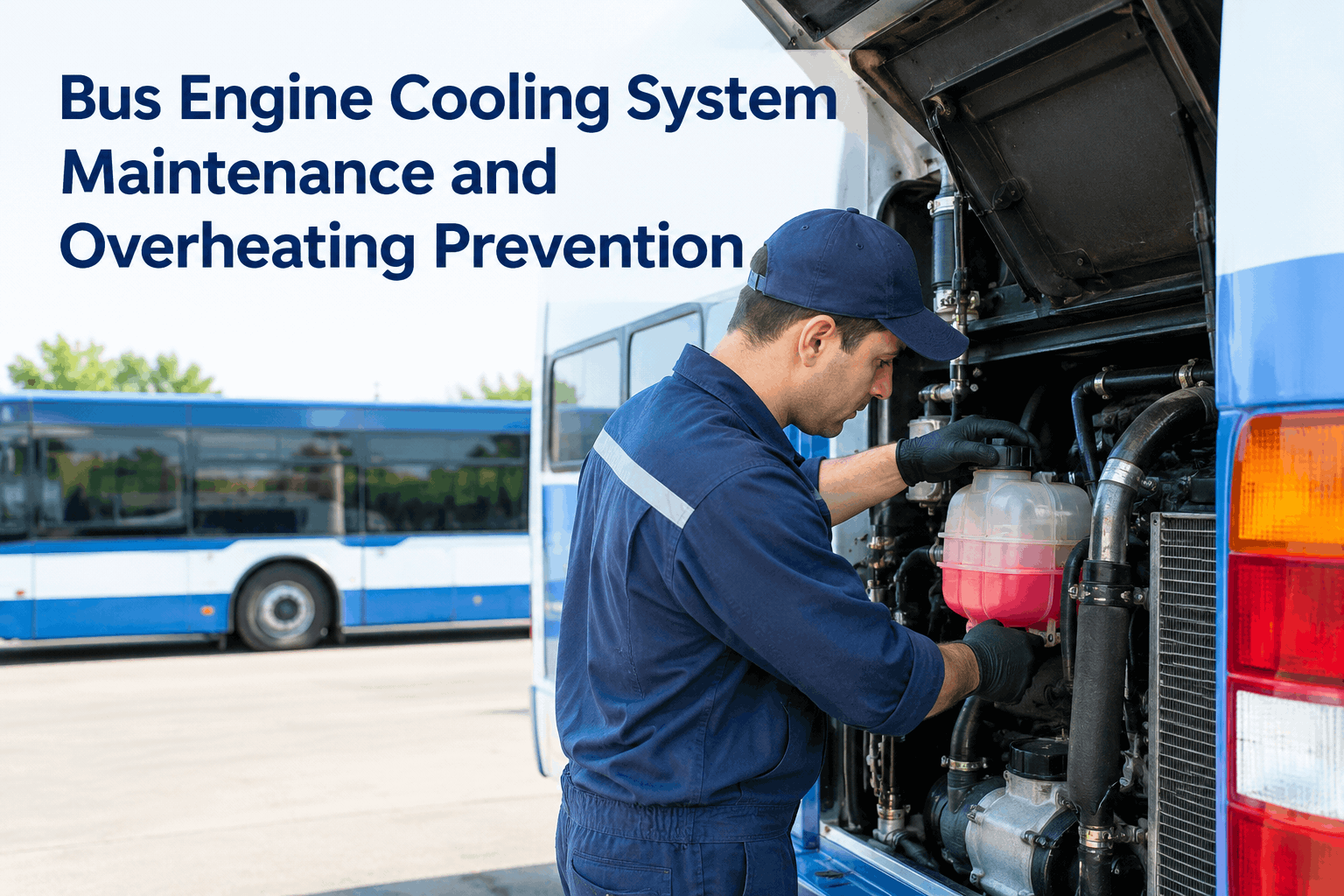
Overheating is the most common roadside breakdown for buses on congested routes, followed closely by brake failures and transmission problems. According to industry data, 90% of automatic transmission failures trace back to overheating—primarily from stop-and-go driving. For Philippine fleets, cooling system maintenance (radiator, fan, coolant, thermostat) should be treated as safety-critical, not routine.
Can CMMS software actually help with congestion-related maintenance?
Yes—digital CMMS like BusCMMS allows you to create route-specific maintenance templates with different intervals for different operating conditions. You can tag buses by route type, set shorter PM intervals for EDSA buses versus Batangas buses, track engine hours alongside kilometers, and receive automatic alerts when driver reports indicate congestion-related symptoms (overheating, brake noise, transmission slip). Paper systems make this level of customization nearly impossible to maintain consistently.