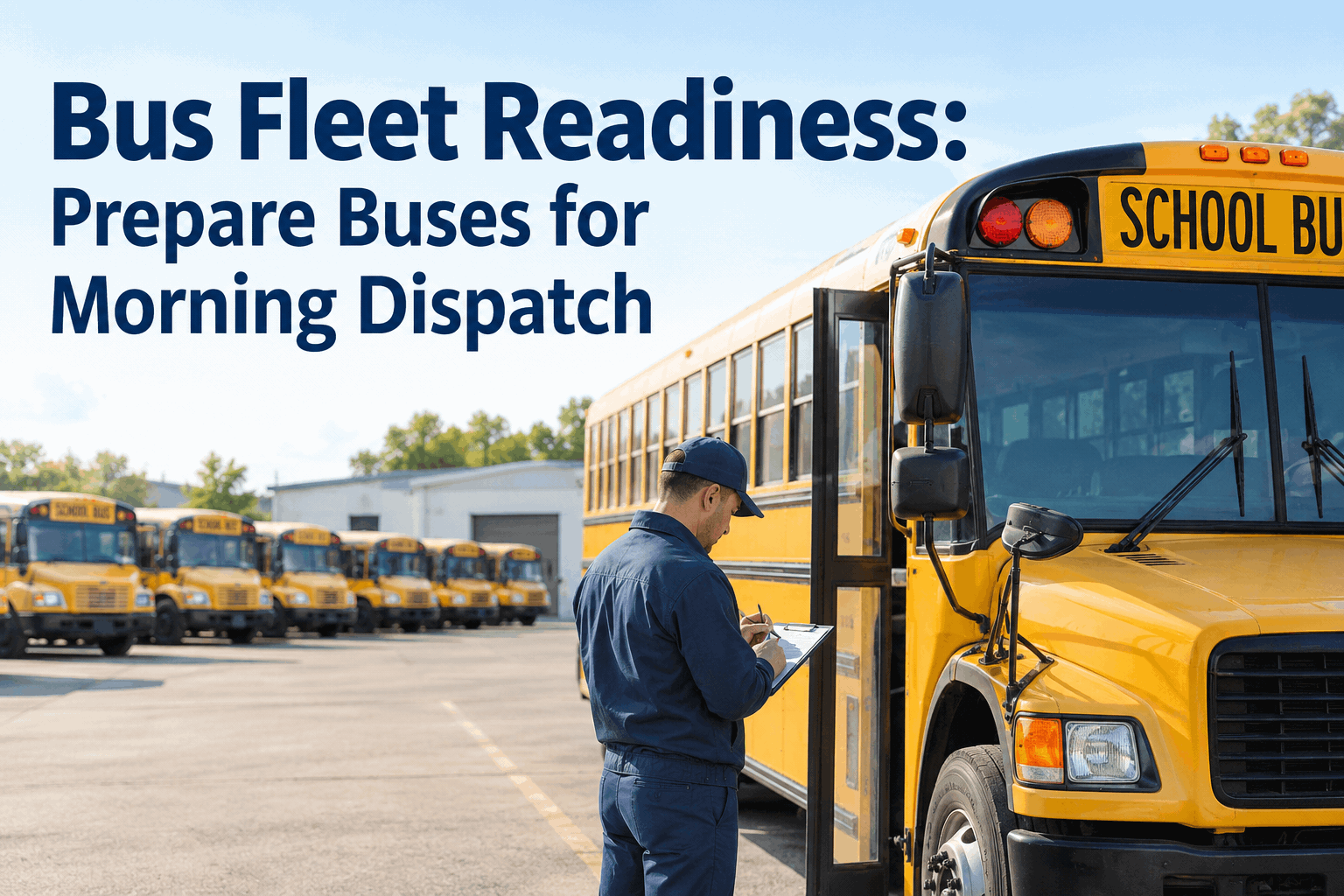
Every morning, your drivers walk around buses with clipboards, checking boxes on paper forms. But here is the uncomfortable truth: those paper checklists are creating an illusion of safety while critical defects slip through unnoticed.
43%
Critical defects missed on paper but caught digitally
68%
Of fleets have switched to digital inspections
35%
Reduction in inspection errors with digital workflows
22%
Fewer roadside breakdowns after digital adoption
The Hidden Problem with Paper Inspections
Paper pre-trip inspections have been the industry standard for decades. They're familiar and inexpensive. But familiarity doesn't equal effectiveness and recent data tells a troubling story.
In Minnesota, nearly 24% of school buses failed their annual safety inspections in 2023—almost triple the rate from four years earlier. The violations included fuel leaks, brake failures, and emergency exits that wouldn't open. Yet every one of those buses had completed daily paper pre-trip inspections. Drivers checked boxes. Forms were signed. But the defects persisted.
Why Paper Inspections Fail Your Fleet
01
Checkbox Fatigue
When drivers complete the same form daily, muscle memory takes over. Studies show repetitive checklist tasks reduce attention by 40-60% over time.
02
Communication Delay
Paper forms sit on desks for 24-48 hours before anyone reviews them. By the time maintenance sees issues, the bus may have completed several routes.
03
No Photo Evidence
When a driver writes "tire wear," what does that mean? Minor tread wear or dangerous sidewall damage? Paper cannot capture visual evidence.
04
Lost Documentation
Paper forms get lost, damaged, or become illegible. When auditors arrive, finding complete records becomes a scramble through filing cabinets.
05
No Verification
A signature proves someone held a pen—nothing more. There's no way to verify the driver actually walked around the vehicle and checked each component.
06
Hidden Trends
When data lives in filing cabinets, pattern recognition is impossible. A brake issue across multiple vehicles might indicate a fleet-wide problem you'd never spot.
What Paper Inspections Commonly Miss
Certain defects slip through paper inspections far more frequently than others—not because drivers are careless, but because paper forms don't guide thorough checking or capture meaningful evidence.
HIGH RISK
Brake System Defects
Air pressure drop rates, service brake response, parking brake holding power. Paper asks pass/fail without measurement criteria. Digital prompts for specific PSI readings.
HIGH RISK
Emergency Equipment
Fire extinguisher charge levels, first aid kit completeness, emergency exit operation. Often checked visually without physical testing. Digital requires photo documentation.
MEDIUM RISK
Tire Condition
Tread depth below 4/32", sidewall damage, inner dual tire issues. Visual checks miss measurements. Digital prompts for depth readings and photos.
MEDIUM RISK
Fluid Leaks
Fuel, oil, coolant, brake fluid leaks under vehicle. Detecting leaks requires looking underneath—rarely done without digital prompts.
Stop Missing Critical Defects
See how digital inspections guide your drivers through comprehensive checks with photo documentation and instant maintenance alerts.
How Digital Inspections Transform Fleet Safety
Digital pre-trip inspection platforms don't simply digitize paper forms—they fundamentally redesign how inspections happen with accountability, guidance and real-time communication.
The Digital Inspection Workflow
Driver Opens App
Selects assigned bus. App loads customized checklist specific to that vehicle type with all required checkpoints.
Guided Walk-Around
App guides driver through systematic inspection. GPS confirms location. Each checkpoint must be completed before moving to next.
Photo Documentation
Critical items require photo evidence. Driver captures images creating timestamped visual records for maintenance review.
Defect Found → Instant Alert
Driver discovers slow air pressure build. Logs defect with photo. Maintenance receives instant notification—no 24-hour delay.
Automatic Work Order
System generates high-priority work order. Bus marked "out of service"—cannot be dispatched until repaired.
Verified & Released
Repair completed. Post-repair verification confirms brake system operates correctly. Bus released to service safely.
Digital vs. Paper: Side by Side
The Results Fleets Are Seeing
The benefits of digital inspections are measurable. Fleets that make the switch see immediate improvements in safety, compliance, and maintenance efficiency.
22%
Fewer Roadside Breakdowns
Defects caught before they cause failures
35%
Fewer Inspection Errors
Guided workflows eliminate missed steps
95%
Inspection Accuracy
Photo evidence ensures completeness
30%
Lower Maintenance Costs
Early detection prevents expensive repairs
"When a driver reports an issue, the fleet manager sees it in real-time. Unsafe vehicles can be taken off the road immediately. Timestamps and signatures prevent false reporting, giving managers confidence in inspection accuracy."
— Fleet Safety Industry Report, 2025
Complete Pre-Trip Inspection Checklist
Digital platforms ensure drivers don't skip any of these essential categories—and provide evidence that each check was completed properly.
Exterior Walk-Around
Headlights & taillights • Brake lights & turn signals • Stop arm & crossing arm • All tires (tread, inflation, damage) • Mirrors • Body damage & glass • Fluid leaks underneath
Brake System
Air pressure build to 120-140 PSI • Static pressure drop test • Low air warning at 55-75 PSI • Spring brake activation • Parking brake hold • Service brake response
Interior Safety
Emergency exit operation • Fire extinguisher (charged) • First aid kit (complete) • Reflective triangles • Seat condition & security • Floor condition • Interior lighting
Engine & Operations
Oil & coolant levels • Power steering fluid • Belt & hose condition • Battery connections • Horn operation • Steering wheel play • Gauges & warning lights • Heater/defroster
100% DOT Compliant
Digital DVIRs are fully approved by FMCSA under 49 CFR 396.11 and 396.13. Electronic records meet all federal documentation requirements with better audit protection than paper—including timestamps, GPS verification, and tamper-proof storage.
Non-compliance fines
$1,270
per violation
Getting Started Is Simple
Most fleets are fully operational within days—not months. Modern digital inspection platforms are designed for rapid deployment with minimal training required.
Create Account
Sign up in under 2 minutes. No credit card required.
Add Your Fleet
Import buses using VIN decoder. Specs populate automatically.
Configure Checklists
Use pre-built DOT templates or customize to your needs.
Train Drivers
Most learn the app in under 10 minutes.
Go Live
Start catching defects from day one.
Ready to Prevent Your Next Breakdown?
Join the 68% of fleets already using digital inspections. See why they never went back to paper.
No credit card required • Setup in minutes • Cancel anytime
Frequently Asked Questions
Are digital DVIRs legally acceptable for DOT compliance?
Yes. FMCSA fully approves electronic DVIR systems as compliant with 49 CFR 396.11 and 396.13. Digital inspections provide superior compliance protection with GPS verification, timestamps, and tamper-proof cloud storage that paper cannot match.
How long does a digital pre-trip inspection take?
About the same as thorough paper inspections—30 to 45 minutes. The difference is digital ensures drivers actually perform all required checks. Many drivers find it faster because guided workflows eliminate uncertainty about what to check next.
What happens when a driver finds a critical defect?
The system immediately alerts maintenance supervisors via push notification. For critical items (brakes, steering, fuel), it automatically generates a work order and marks the vehicle "out of service" until repairs are completed and verified.
What if there's no internet connection?
Quality digital inspection apps work fully offline. Drivers complete inspections normally, and data syncs automatically when connectivity is restored. Timestamps reflect when the inspection actually occurred.
Will our drivers actually adopt digital inspections?
Most drivers learn the app in under 10 minutes and prefer it to paper after their first few inspections. Starting with tech-comfortable drivers as champions helps accelerate adoption across your team.