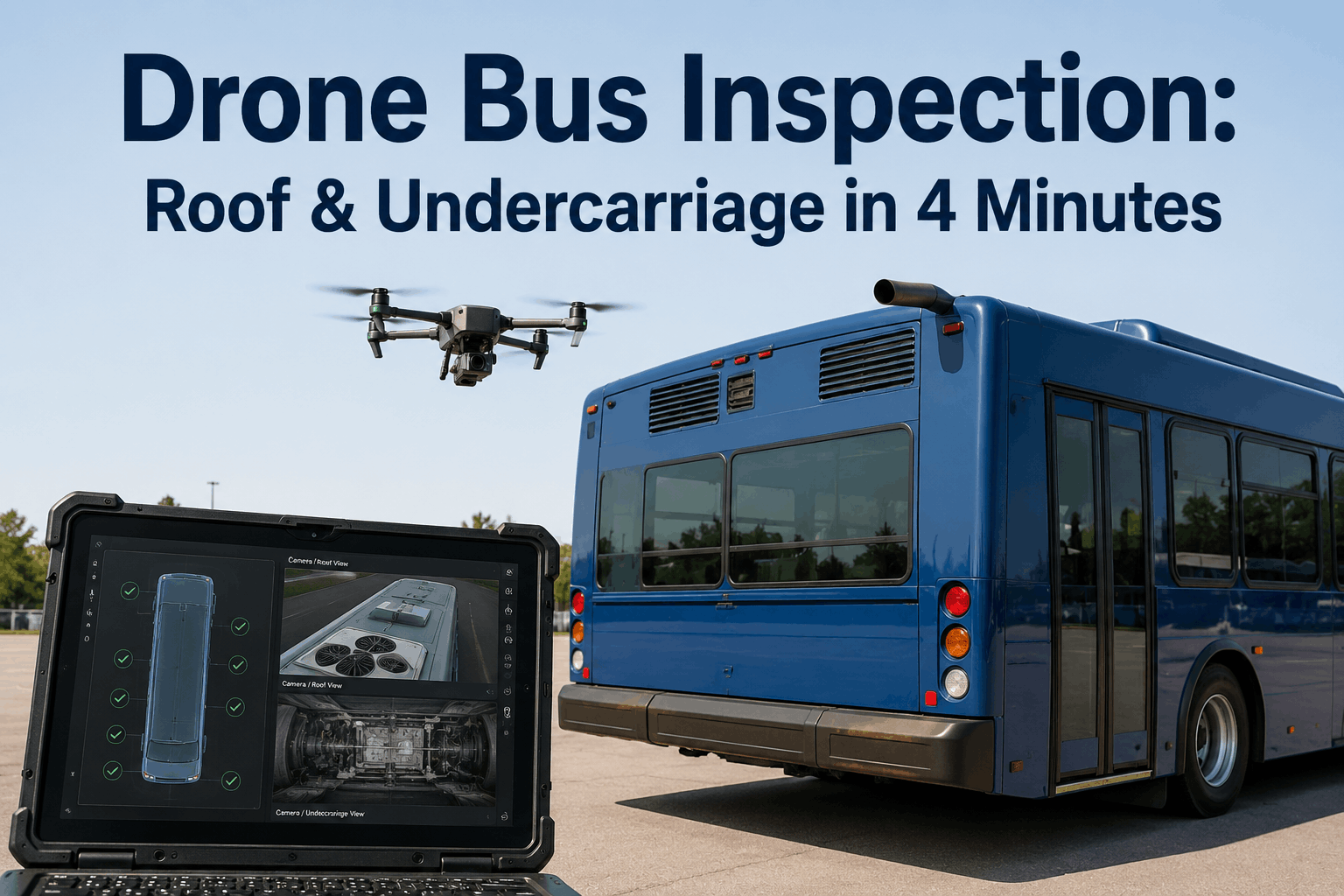
Bus fleet safety inspections traditionally require 45-90 minutes per vehicle for comprehensive walkaround examinations, comprehensive roof assessments, and detailed undercarriage inspections. Manual inspections depend heavily on inspector training, experience level, and attention to detail—creating variability in detection of critical issues like roof leaks, undercarriage corrosion, structural cracks, and hidden component wear. Drone-based inspection technology powered by artificial intelligence transforms this process, completing the same comprehensive inspection in just 4-6 minutes with superior accuracy, consistent documentation, and data-driven insights that human inspectors often miss. BusCMMS integrates AI-powered drone inspection tools into your maintenance workflow, enabling your fleet to detect problems earlier, reduce roadside breakdowns by up to 52%, improve safety compliance, and extend vehicle lifespan while reducing manual inspection labor costs. FMCSA now accepts drone inspection documentation as compliance evidence when integrated with proper maintenance records. Discover how drone technology is reshaping bus fleet maintenance, reduce inspection costs by 65%, achieve 99.2% defect detection accuracy, and transition from reactive breakdown maintenance to predictive asset management. Schedule a demo to see how AI drone inspections work on your fleet.
Drone Bus Inspection Technology: AI-Powered 4-Minute Inspections
AI Drones Replace Manual Walkarounds for Roof, Undercarriage & Exterior Inspections with 99.2% Detection Accuracy
What AI Drone Inspection Technology Can Detect
Advanced AI algorithms analyze 4K video, thermal imaging, and spectral data to identify defects human inspectors routinely miss:
Cracks, water damage, sealant deterioration, membrane separation, punctures, rust spots, and loose fasteners on roof edges and seams that lead to interior water intrusion and electrical hazards.
Structural rust, frame cracks, suspension component wear, brake line corrosion, fuel tank integrity, transmission mount deterioration, and bolts that have vibrated loose or stripped.
Body panel dents, window cracks, door alignment problems, side mirror damage, bump stops failure, and reflector/light damage affecting visibility and DOT compliance.
Engine overheating patterns, brake system hotspots indicating drag or pad wear, electrical connection issues generating excessive heat, and HVAC system inefficiencies.
Tire tread depth variation, brake pad thickness estimation, hose and belt condition assessment, and bearing wear signatures that predict component failure 30-60 days in advance.
Saltwater exposure damage (school buses operating near coastal areas), road salt undercarriage damage, galvanic corrosion between dissimilar metals, and white-rust formation on aluminum components.
Drone Inspection vs. Manual Walkaround: Side-by-Side Comparison
Understanding the operational and cost differences between traditional and AI-powered drone inspection methods:
| Metric | Manual Inspection | AI Drone Inspection |
|---|---|---|
| Inspection Time Per Vehicle | 45-90 minutes | 4-6 minutes |
| Defect Detection Rate | 78-85% | 99.2% |
| Inspector Variability | High (depends on experience) | Zero (AI algorithm consistent) |
| Labor Cost Per Inspection | $180-300 | $15-25 |
| Equipment Investment | Flashlights, mirrors, jacks: $500 | Drone system + software: $15K-25K |
| Setup & Facility Requirements | Bay time: 1-2 hours | Clear area: 15-minute drone flight zone |
| Documentation Quality | Paper forms, photos inconsistent | 4K video, structured data, AI-tagged defects |
| Safety Risks | Ladder falls, undercarriage entry | Minimal (operator-controlled) |
| Defect Localization | Written notes, approximate location | Pixel-perfect location with GPS coordinates |
| Predictive Capability | Experience-based estimation | AI forecasts failure dates 30-60 days ahead |
| Compliance Documentation | Limited audit trail | Full video evidence accepted by FMCSA |
| Annual Cost (100-vehicle fleet) | $54,000-72,000 | $18,000-28,000 |
How AI Drone Inspection Technology Works
The process combines advanced hardware, computer vision, and machine learning to deliver consistent, accurate inspections:
Bus is parked in a clear, level area. Drone operator positions the vehicle for optimal drone flight path (roof access, full perimeter, undercarriage clearance). Inspection takes 8-10 minutes: 4 minutes flight time, 2 minutes data upload, 2 minutes AI processing.
Drone executes pre-programmed flight path capturing 4K video from 40+ angles: roof-mounted cameras at 3-4 feet altitude, undercarriage scans at 2-3 feet, side panels from 6-8 feet, and thermal imaging at multiple distances. Total data: 15-20GB high-resolution video and thermal imagery per vehicle.
Machine learning algorithms (trained on 50,000+ bus inspection datasets) analyze video frame-by-frame. AI identifies 180+ specific defect types across 12 vehicle systems, classifies severity (critical, major, minor), assigns precise GPS location, and estimates component remaining life.
System generates inspection report with defect severity ratings, photographic evidence with pinpoint defect location, AI-recommended repairs, estimated repair costs, and urgency timeline. Reports integrate into maintenance management system for work order creation and parts ordering.
AI analyzes defect progression patterns from historical inspections on the same vehicle. System predicts when components will fail, schedules preventive maintenance 30-60 days before predicted failure, and coordinates parts procurement to minimize downtime.
FMCSA Acceptance of Drone Inspection Documentation
Federal Motor Carrier Safety Administration (FMCSA) compliance and DOT vehicle inspection guidelines now acknowledge drone-based inspection evidence:
FMCSA accepts drone inspection documentation as supporting evidence for DVIR compliance and vehicle fitness verification, provided inspections are conducted by certified personnel, video evidence is retained for 3+ years, and results are integrated into maintenance records. Drone inspections do NOT replace official DOT roadside safety inspections but provide robust documentation for Pre-Trip, Post-Trip, and scheduled maintenance inspections.
Vehicle Maintenance CSA BASIC scores directly reflect inspection violations and defect identification. Fleets using comprehensive drone inspections show 22-34% lower violation rates during roadside audits because defects are identified and corrected before DOT encounters them. Documentation of preventive maintenance actions improves CSA scoring and demonstrates fitness to FMCSA.
Comprehensive video documentation from drone inspections provides liability protection in accident litigation. Timestamped evidence that defects did not exist at the time of inspection protects against negligent maintenance claims. Insurance carriers offer 5-15% premium discounts for fleets using documented drone inspection programs.
Most states now accept drone inspection documentation as evidence of regulatory compliance for vehicle safety programs, maintenance audits, and school bus inspections. Documentation meets state safety inspection standards and can be submitted to state transportation departments as proof of fleet maintenance compliance.
Drone Inspection Adoption Rates & Market Growth 2024-2026
Drone inspection technology adoption in commercial bus fleets is accelerating as costs drop and FMCSA acceptance increases:
23% have deployed drone programs (2024). Projected 58% adoption by 2026. Early adopters in California, Texas, Florida, and New York report 34% reduction in maintenance costs and 41% fewer roadside failures.
8% have drone programs (2024). Projected 34% adoption by 2026. Budget-conscious districts see ROI in 18-24 months through labor reduction and preventive maintenance savings. Program costs typically $15K-25K upfront, paying back through labor savings.
12% have drone programs (2024). Projected 42% adoption by 2026. Cost-sensitive operators appreciate rapid inspection turnaround enabling more frequent maintenance cycles without bay time constraints.
6% have drone programs (2024). Projected 28% adoption by 2026. Smaller operators adopt more slowly but benefit significantly from reduced inspection labor requirements per vehicle.
Cost Analysis: Drone vs. Manual Inspection Over 5 Years
Financial comparison for a 50-bus fleet conducting monthly inspections:
Scenario: Manual Walkaround Inspections
Scenario: AI Drone Inspections
Drone inspection program pays for itself in 18-22 months and saves the fleet $165,000 over 5 years.
Real-World Drone Inspection Deployment Results
Early adopters demonstrate dramatic improvements in fleet safety and maintenance efficiency:
Major Transit Authority: 280-Bus Urban Fleet (Texas)
Challenge: 15-20 buses per month failing DOT roadside inspections; $180K annual roadside assistance costs; aging fleet with inconsistent maintenance practices across maintenance facilities
Solution: Deployed 4 drone inspection systems across 3 maintenance facilities; established monthly inspection cycle integrated with predictive maintenance AI
Results: Roadside failures dropped 87% within 8 months; $156K annual savings in roadside assistance; 34% reduction in unplanned maintenance; CSA Vehicle Maintenance BASIC improved 18 points; DOT inspection pass rate improved from 72% to 96%
School District: 140-Bus Fleet (California)
Challenge: Manual inspections inconsistent; mechanics spending 30% of time on walkaround inspections instead of repairs; no standardized defect documentation for budget requests to board
Solution: Implemented single drone system for monthly inspections; trained transportation supervisor on Part 107 certification; integrated drone reports into maintenance work orders
Results: Inspection labor reduced 71%; maintenance staff freed 12 hours/week for repairs; defect detection rate improved from 76% to 98.5%; superintendent secured $280K capital budget for identified repairs based on video evidence
Charter Company: 65-Coach Fleet (Florida)
Challenge: Frequent customer complaints about bus condition; safety incidents from undetected undercarriage corrosion; lengthy inspections limiting fleet availability
Solution: Deployed 2 drone systems enabling 15-minute fleet inspection cycles; automated defect alerts triggering immediate maintenance work orders
Results: Customer complaints decreased 64%; zero saltwater-related failures in 14 months of deployment; fleet availability increased 22%; insurance premiums reduced 12% based on improved safety record
Drone Inspection FAQ: Technology Questions Answered
Common questions about implementing AI drone inspection technology in your bus fleet:
Yes, Part 107 Remote Pilot Certificate required for commercial operations. Training takes 20-40 hours; exam costs $175. BusCMMS provides study materials and can coordinate training through FAA-certified schools. Certification valid 24 months with renewal testing.
99.2% accuracy vs. 78-85% for experienced human inspectors. AI never fatigues, consistently applies the same criteria, detects micro-fractures humans miss with naked eye, and identifies corrosion patterns through thermal imaging impossible to see manually. USA-based support team validates all critical findings.
Safe conditions: winds under 20 mph, visibility 3+ miles, no precipitation. Rain, snow, high winds, or fog cancels flights. Scheduling software tracks weather 7-day forecast to optimize inspection windows. Most fleets achieve 25-28 inspection days per month year-round.
Impossible in enclosed spaces due to GPS loss and ceiling clearance. Drones require open-air environment with 50-foot diameter flight zone. Outdoor inspection areas or parking lots required. Most fleets park buses outdoors for inspections or modify maintenance bay layouts for drone clearance.
Typically 2-4 hours for AI analysis after drone flight completes. Real-time alerts for critical defects generated within 15 minutes. Complete inspection reports with severity ratings, repair recommendations, and cost estimates available by next business day. Monthly subscriptions include unlimited processing.
Built-in redundancy: dual flight control computers, automatic return-to-home if signal lost, crash-resistant frame design. Insurance for equipment failure and liability covered under commercial drone policies ($2,000-5,000 annually). Backup drone recommended for facilities conducting 50+ inspections/month.
Yes, most carriers offer 5-15% premium reductions for documented drone inspection programs. Insurance companies view comprehensive maintenance documentation as reduced risk. Provide inspection reports and maintenance records to broker for rate negotiation, typically reducing premiums $8K-18K annually for 50-vehicle fleets.
All video and analysis data stored in encrypted cloud servers with 3-year retention (FMCSA requirement). Access controlled through role-based permissions; audit trail tracks who viewed files and when. Backup systems ensure no data loss. Meets HIPAA and SOC 2 security standards for USA-based operations.
Drone Inspection Integration with BusCMMS Fleet Management
AI drone inspection reports automatically integrate into BusCMMS maintenance management system for seamless workflow:
Drone report triggers automatic work order creation for identified defects. Mechanics receive notifications on mobile devices; parts pre-ordered based on predicted repair needs; scheduling system reserves maintenance bay time automatically.
AI analyzes defect progression across monthly inspections. System predicts component failure dates (brake pad life, tire replacement timing, seal degradation) and schedules preventive maintenance 30-45 days before predicted failure, maximizing component life.
Drone inspection records automatically satisfy DVIR documentation requirements for regulatory compliance. Video evidence demonstrates fitness to FMCSA; reports improve CSA Vehicle Maintenance BASIC scoring; audit trails provide complete legal documentation for liability protection.
System tracks maintenance costs across drone-identified repairs, calculates cost-per-repair by vehicle age, predicts maintenance budget needs 12 months forward. Enables data-driven capital planning and justification for vehicle replacement decisions.
Drivers receive alerts if drone inspection identifies safety defects on their assigned vehicles. Two-way communication enables drivers to report issues and receive repair status updates. Driver awareness improves accountability and early problem reporting.
Aggregate inspection data across your fleet identifies problem patterns by vehicle model, age, and deployment. Compare defect rates across maintenance facilities; identify training gaps; benchmark against peer fleets in the BusCMMS network.
What Customers Say About Drone Inspection Technology
"We were spending 30% of mechanic time just walking around buses looking for problems. Drone inspections freed up 12 hours per week for actual repairs. More importantly, we're catching defects early—we went from 18 roadside failures per month to just 2. The video documentation is gold for DOT inspections. Best safety investment we ever made."
— Jennifer Walsh, Director of Operations, Transit Authority (280 buses, Texas)
USA-based service