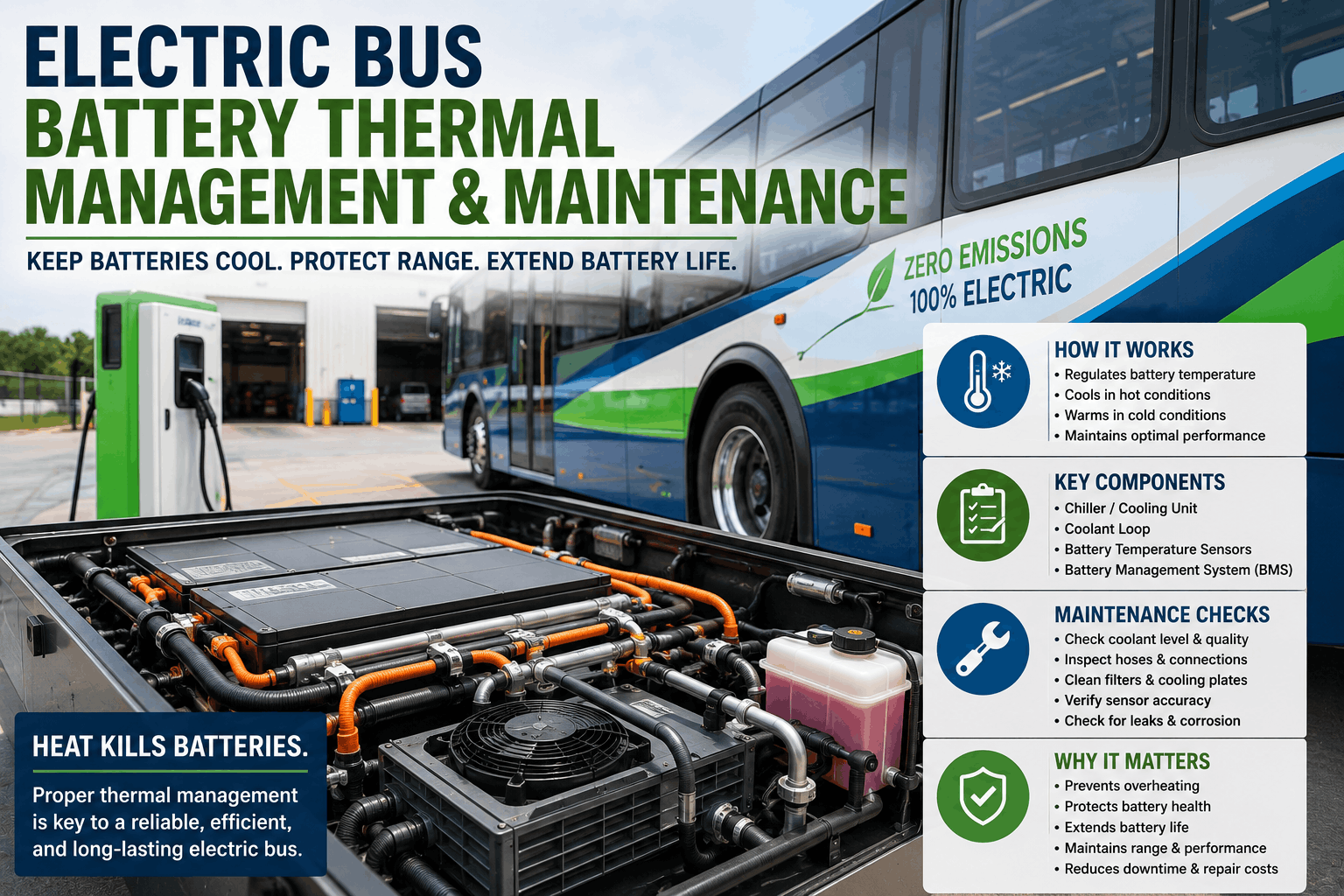
Electric bus batteries are lithium-ion: powerful but temperature-sensitive. A battery running at 25°C might have 5,000+ cycle life. That same battery at 45°C might have 2,000 cycles. High heat degrades the battery permanently, reducing range and total lifespan. An electric bus with poor thermal management might lose 30–40% of its range after 3–4 years. A bus with excellent thermal management maintains range throughout the battery's life. Thermal management systems cool and warm battery packs to optimal temperature. This guide explains how EV thermal management works, what maintenance it needs, how temperature affects battery range and lifespan, and what fleet operators should monitor to keep electric bus batteries healthy.
Electric Buses
Electric Bus Battery Thermal Management & Maintenance
Heat kills batteries. Learn how thermal management works, what maintenance it needs, and how it preserves range and battery life.
Temperature Impact on Battery Life & Range
Lithium-ion batteries perform best at 20–30°C. Outside this window, capacity and lifespan degrade. High temperature accelerates chemical degradation. Low temperature reduces available capacity. An electric bus running in hot climates loses range faster than the same bus in temperate climates.
Optimal 20–30°C
Full range available
Longest battery life
Warm 30–40°C
Slight range reduction
Moderate degradation
Hot 40–50°C
Significant range loss
Rapid degradation
Very Hot Above 50°C
Severe range loss
Battery damage risk
Thermal Management System Components
Liquid Cooling Loops
Coolant circulates through the battery pack, absorbing heat. A radiator, fan, and heat exchanger help transfer heat away from the battery system.
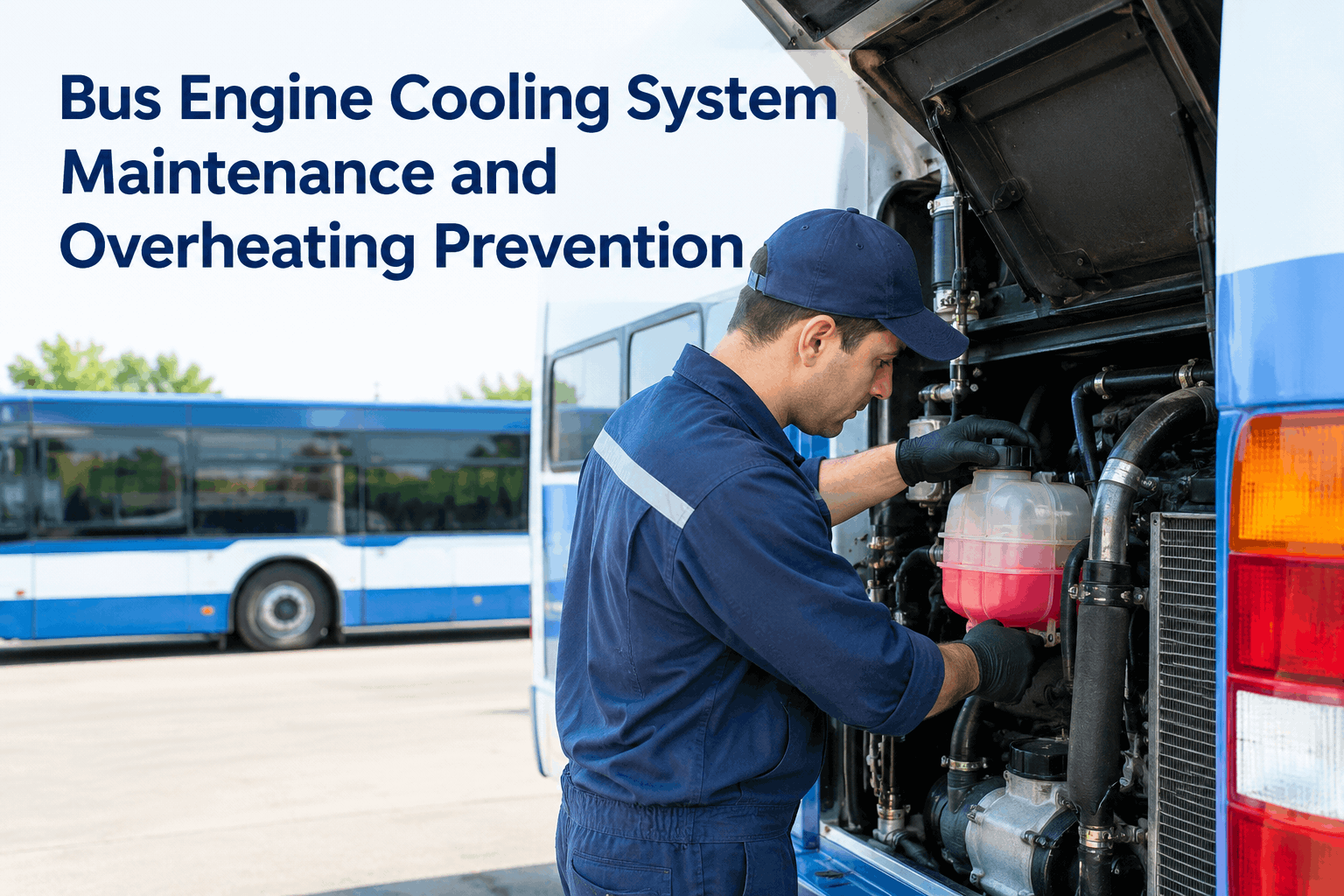
Maintenance: Check coolant level monthly, replace coolant per manufacturer schedule, and inspect hoses for cracks or leaks.
Immersion Cooling
Battery cells are immersed in a non-conductive coolant that removes heat efficiently. This system requires a sealed design.
Maintenance: Monitor seal integrity and contamination risk. Service should be performed by authorized technicians.
Heat Pump
The heat pump helps warm the battery in cold weather and supports temperature control for efficient EV operation.
Maintenance: Inspect refrigerant charge, thermal loop performance, and related components during scheduled service.
Thermal System Maintenance Schedule
Monthly Driver Inspection
Check coolant level when the bus is cold, listen for cooling fan operation, and inspect for visible leaks under the bus.
Quarterly Technician Check
Inspect coolant hoses, check radiator fins for debris, verify fan engagement, and monitor battery temperature through telematics.
Annual Full Service
Analyze coolant condition, check refrigerant charge if heat pump equipped, pressure test the thermal loop, and replace degraded hoses.
Every 2–3 Years Major Service
Flush and replace coolant, clean radiator, flush thermal loop, and complete full system pressure and seal verification.
"We operated electric buses in Phoenix without proper attention to thermal management. Temperatures regularly hit 50°C+ in summer. After 3 years, our buses were down to 60% of original range. New batteries were $300,000+ per bus. Implemented strict thermal management maintenance program: monthly coolant checks, quarterly fan tests, annual full service. New buses maintain strong range even in 5th year. Thermal maintenance costs far less than premature battery replacement."
— Fleet Manager, 20-bus electric fleet, Arizona
Maintain EV Battery Thermal Systems
Keep batteries cool. Preserve range and lifespan. Avoid expensive replacements.