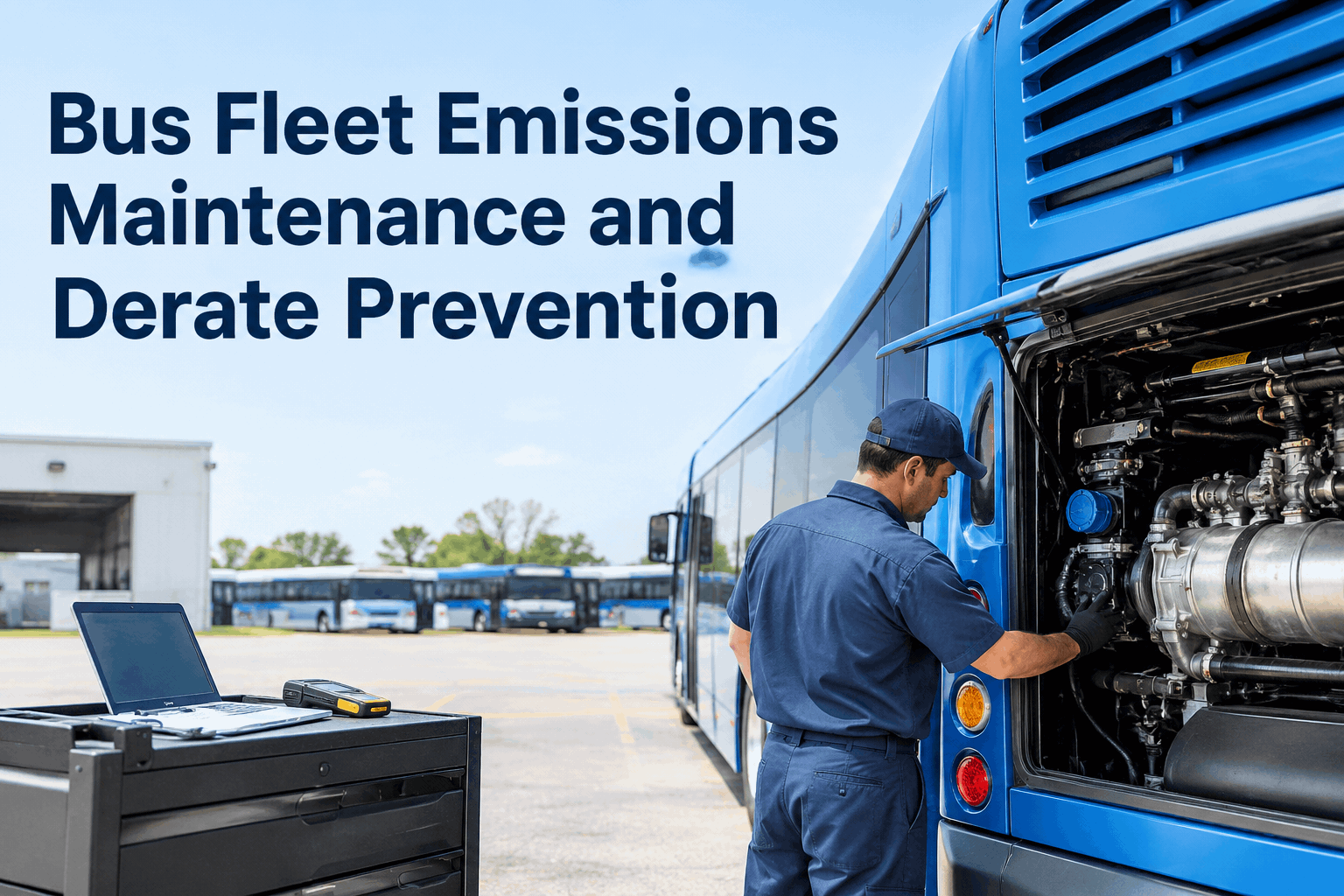
Electric buses cut maintenance costs by 35-50% compared to diesel, but they introduce inspection points that never existed before: high-voltage battery systems, regenerative braking calibration, thermal management loops, and charging port integrity. Skipping these EV-specific checks doesn't just risk breakdowns; it risks FMCSA penalties up to $1,584 per day for missing DVIR records. This guide gives you the exact inspection items for every frequency, from the 5-minute pre-trip walkthrough to the deep-dive monthly audit, so nothing falls through the cracks.
Why Electric Buses Need Their Own Checklist
A diesel bus inspection checklist covers roughly 71 items from tires to tail lights. An electric bus shares most of those, but adds an entirely new layer of systems that require unique attention. High-voltage battery packs operating at 500-800V DC, thermal management systems maintaining battery temperatures between 20-35°C, regenerative braking systems that can actually cause caliper corrosion from underuse, and charging infrastructure that sits at the intersection of vehicle health and depot operations. The standard DOT pre-trip checklist was never designed for these systems. Fleets running generic diesel-era inspection forms on electric buses are almost certainly missing EV-specific defects.
Under 49 CFR §396.11 and §396.13, passenger-carrying vehicle drivers must complete a DVIR after every shift, whether defects are found or not. For electric buses, that DVIR needs to capture EV-specific items alongside traditional safety checks. Create your free Bus CMMS account to access digital EV inspection templates built specifically for electric bus fleets.
What Changes with Electric Bus Inspections
Shared with Diesel
Tires, wheels, lug nuts
Brakes (pads, rotors, air system)
Lights, mirrors, reflectors
Steering and suspension
Doors, windows, emergency exits
Windshield wipers and washers
Horn, fire extinguisher, first aid
~60-70% of checks
EV-Specific Additions
Battery SOC and SOH readings
HV cable and connector integrity
Thermal management coolant levels
Regenerative braking response
Charging port and cable condition
Electric motor warning indicators
HVAC heat pump performance
~30-40% new checks
Daily Inspection Checklist: Pre-Trip & Post-Trip
Daily inspections are the backbone of electric bus safety. The pre-trip happens before the first passenger boards; the post-trip catches anything that developed during service. For passenger-carrying vehicles, FMCSA requires both reports even when no defects are found. With digital DVIR tools, this process takes 5-10 minutes instead of 20+ with paper forms, and the record routes instantly to maintenance for review.
Pre-Trip Inspection (Before First Route)
5-8 minutes with digital DVIR
Battery & Charging Systems
Confirm SOC meets route requirement + 20% reserve
Verify battery temperature indicators are within normal range (20-35°C optimal)
Check for battery-related warning lights or fault codes on dashboard
Inspect charging port: no debris, damage, or scorch marks on connector
Confirm charging cable disconnected and port door secure
Brakes & Drivetrain
Test regenerative braking system responsiveness at low speed
Test service brake pedal feel and stopping power
Check parking brake engagement and release
Verify no unusual motor whine, vibration, or drivetrain noise
Safety & Exterior
All exterior lights functional: headlights, taillights, turn signals, markers
Tires: visual tread check, no bulges, proper inflation at valve stems
Mirrors, windshield wipers, and washer fluid level
Emergency exits, fire extinguisher, first aid kit, reflective triangles
Passenger entry door operates smoothly and seals securely
HVAC & Interior
Test HVAC heating and cooling modes; note energy draw if visible
Seat frames secure, seat belts functional, handrails intact
Dashboard gauges, controls, and warning indicators operational
Post-Trip Inspection (End of Shift)
3-5 minutes with digital DVIR
End-of-Day EV Checks
Record remaining SOC and total energy consumed during shift
Note any new warning lights, fault codes, or unusual behavior
Check for fluid leaks under the bus (coolant, brake fluid)
Confirm charger cable connects properly; charging session initiates
Report all defects or deficiencies on DVIR (mandatory for passenger vehicles)
Weekly Inspection Checklist
Weekly checks fill the gap between daily driver walkarounds and monthly deep dives. These are typically performed by a lead driver or maintenance technician and take 20-30 minutes per bus. The focus shifts to systems that degrade gradually, especially the EV-specific maintenance challenges that don't show up in a quick pre-trip pass.
Tire Deep Check
Measure tread depth with gauge (not visual). Check inflation with calibrated gauge against manufacturer spec. EV buses are heavier due to battery packs, so tires wear 10-15% faster than diesel equivalents. Look for uneven wear patterns from torque transfer.
Brake System Assessment
Inspect brake pads and rotors visually for corrosion or glazing. Regenerative braking reduces pad use, but that means conventional brakes sit idle longer, increasing the risk of caliper seizure and disc rust. Apply firm conventional braking during test to clean disc surfaces.
Battery & Thermal Review
Record battery SOH reading from diagnostics. Check thermal management coolant level visually (expansion tank). Inspect coolant lines for leaks or discoloration. Verify battery compartment ventilation is unobstructed. Log any SOC anomalies across the week.
HV Cable & Connector Integrity
Visual inspection of accessible high-voltage cabling for abrasion, cracking, or rodent damage. Check that HV warning labels are intact and visible. Verify HV interlock connectors are fully seated. Note: Do NOT open HV enclosures without proper PPE and certification.
Charging Infrastructure Check
Inspect depot charging cables for wear, fraying, or connector damage. Verify charger display shows no error codes. Log first-try charge success rate. Clean connector contacts if contaminated. Report any charger that required multiple attempts to initiate session.
HVAC Performance Test
Run both heating and cooling modes for 3-5 minutes. Check cabin temperature response time. Listen for unusual compressor or heat pump noise. With no waste engine heat, HVAC is the biggest daily energy draw on electric buses, so efficiency drops signal problems early.
Managing six additional weekly checks across a fleet of 20+ buses means tracking hundreds of data points. Fleets that still use clipboards for this are the ones where 20-30% of defects go undetected. Schedule a Bus CMMS demo to see how automated weekly inspection workflows keep every bus covered.
Monthly Inspection Checklist
Monthly inspections are the deep preventive maintenance audit. These are shop-level checks performed by certified technicians, typically taking 1-2 hours per bus. For electric buses, monthly checks catch degradation that happens below the threshold of daily or weekly detection, especially in high-voltage systems, battery health trends, and structural components under the added weight of battery packs.
System
Inspection Items
Action Threshold
Battery Pack
Record SOH %. Compare against previous month. Inspect pack mounting bolts for torque. Check for swelling, discoloration, or unusual odor from cells. Verify BMS software version is current.
SOH drop >2% in one month: escalate to OEM. Below 85%: trigger warranty review.
Thermal Management
Coolant level and condition test. Inspect radiator/heat exchanger for blockage. Check water pump operation. Verify expansion tank cap seal. Test coolant freeze protection in cold-climate fleets.
Coolant below minimum: refill with OEM-spec fluid only. Discolored coolant: flush and replace.
Electric Motor
Listen for bearing noise during operation. Check motor mounting bolts. Inspect motor cooling lines and connections. Review motor temperature logs from diagnostics for anomalies.
Bearing noise: schedule replacement before failure. Overtemp events: investigate cooling circuit.
Brakes (Full)
Measure pad thickness. Check rotor runout and surface condition. Inspect calipers for seizure. Test air brake compressor performance. Check brake fluid level and moisture content.
Pad <4mm: replace. Glazed rotors: resurface or replace. Brake fluid moisture >3%: flush.
Suspension & Structure
Inspect shock absorbers and air springs. Check frame and crossmembers for cracks. EV buses are 10-15% heavier from batteries, so suspension fatigue occurs faster. Verify battery tray structural bolts.
Cracked frame members: out of service immediately. Leaking shocks: replace same-week.
HVAC System
Replace cabin air filters (quarterly minimum). Check heat pump refrigerant charge. Inspect condenser coils for debris. Test defroster performance. Log HVAC energy consumption vs. baseline.
Energy draw >15% above baseline: service heat pump. Weak defrost: check heater element.
Electrical (12V) & Software
Test 12V auxiliary battery voltage. Check all fuses and relays. Verify OBD/diagnostic connectivity. Install pending OEM software updates. Test all dashboard warning indicators.
12V battery below 12.2V: replace. Pending critical software update: install immediately.
Digitize Your Entire Inspection Workflow
Daily, weekly, and monthly checklists in one platform. Automated scheduling, photo documentation, instant defect routing, and audit-ready DVIR records designed specifically for electric bus fleets.
Paper vs. Digital: The Compliance Gap
FMCSA explicitly permits electronic DVIRs under 49 CFR 390.31, and for electric bus fleets, the case for going digital is even stronger than it is for traditional vehicles. EV-specific inspection points (SOC readings, battery temperatures, thermal system checks) produce numerical data that paper forms can't practically capture or trend over time. Here's where the real gap shows up
Paper DVIR
20+ minutes per inspection
Handwriting errors and incomplete fields
Lost forms (up to $1,584/day penalty)
No photo evidence of defects
Delayed mechanic notification
Cannot trend SOC/SOH over time
Digital DVIR
5-10 minutes with guided checklist
Mandatory fields prevent skipped items
Cloud storage with 3-month auto-retention
Photo evidence on every check point
Instant defect alerts to maintenance
Automated SOC/SOH trend tracking
The difference matters most during DOT audits. Only 7% of motor carriers pass without a single violation, and vehicle maintenance is the largest violation category by volume. Fleets using digital inspection platforms built for bus operations can produce audit-ready records in seconds instead of digging through filing cabinets.
Expert Review: Building an Inspection Culture, Not Just a Checklist
The biggest misconception about electric bus inspections is that they're simpler because there are fewer moving parts. Fewer moving parts means fewer things break, but the things that do break are more expensive and more dangerous. A seized brake caliper on a diesel bus is a bad day. An undetected thermal management failure on a 600V battery pack is a potential safety incident.
The fleets getting inspections right in 2026 aren't just following better checklists. They're building inspection culture. That means drivers understand why they're checking battery temperature, not just that it's a box to tick. It means maintenance supervisors review every DVIR the same day, not the same week. And it means the data from inspections actually feeds back into preventive maintenance schedules, so the weekly coolant check that catches low levels triggers a PM work order automatically.
Digital inspection tools aren't a nice-to-have anymore. For electric buses specifically, the inspection data is richer (numerical readings, diagnostic codes, photo evidence) and the compliance stakes are higher (mandatory DVIRs for every shift, regardless of defect status). The fleets that treat inspections as a data pipeline rather than a paperwork obligation are the ones reducing both breakdowns and audit risk simultaneously.
Conclusion
Electric bus inspections in 2026 aren't about adding more paperwork to an already overloaded process. They're about covering the 30-40% of check points that are genuinely new, from battery SOC verification and thermal coolant checks to regenerative braking response and charging port integrity, alongside the standard safety items every bus has always needed. The daily, weekly, and monthly cadence outlined above gives your team a clear framework for catching defects at the right frequency, before they cause service disruptions, compliance violations, or safety incidents.
The single biggest upgrade most fleets can make is moving from paper DVIRs to a digital inspection platform that captures EV-specific data, routes defects instantly to maintenance, and builds the audit trail that 93% of fleets are failing to maintain at DOT reviews. Book a 15-minute Bus CMMS demo to see how the platform handles daily, weekly, and monthly EV inspections with guided checklists and automated compliance tracking.
Ready to Modernize Your Electric Bus Inspections?
From pre-trip walkarounds to monthly deep audits, Bus CMMS gives your team EV-specific inspection templates, automated scheduling, photo-documented DVIRs, and instant defect routing, all in one platform built for electric and mixed-fleet operations.
Frequently Asked Questions
Q1
What is the difference between an electric bus inspection and a diesel bus inspection?
About 60-70% of inspection items overlap: tires, brakes, lights, steering, emergency equipment, doors, and mirrors. Electric buses add 30-40% new check points including battery state of charge and health, high-voltage cable integrity, thermal management coolant levels, regenerative braking response, charging port condition, and HVAC heat pump performance. A diesel-era checklist will miss all of these EV-specific systems.
Q2
Are DVIRs required for electric buses even when no defects are found?
Yes. Under FMCSA regulation 49 CFR §396.11, drivers of passenger-carrying commercial motor vehicles must complete a DVIR at the end of every shift, regardless of whether defects were discovered. This requirement applies equally to electric and diesel buses. Motor carriers must retain DVIRs for a minimum of three months and produce them on demand during DOT audits.
Q3
Why do electric bus brakes corrode if they have regenerative braking?
Regenerative braking handles most routine deceleration, which means conventional brake pads and rotors are used far less frequently. While this extends pad life significantly (often to 60,000-100,000 miles), the reduced contact allows moisture and road salt to corrode rotor surfaces and cause calipers to seize. Regular conventional brake applications during weekly checks help keep disc surfaces clean and calipers free.
Q4
How often should battery state of health be checked on electric buses?
SOC should be verified before every trip (daily pre-trip). SOH should be formally recorded at least monthly during shop-level inspections, with weekly spot checks in between. Consistent SOH tracking across months reveals degradation trends that single readings can't capture. If any bus drops more than 2% SOH in a single month or falls below 85% overall, escalate to the OEM for warranty review.
Q5
Can a CMMS platform handle EV-specific inspections alongside standard bus checks?
Yes. A purpose-built bus CMMS like Bus CMMS lets you create custom inspection templates that include both standard DOT check points and EV-specific items (battery readings, thermal checks, regen braking tests) in a single digital form. Drivers complete one guided checklist covering everything, defects route instantly to maintenance, and the system auto-schedules weekly and monthly inspections per bus. Sign up free to see how it works.