Your diesel bus just rolled back into the shop for its third unscheduled repair this month. Another $1,800 in parts, another missed afternoon route, another call to a parent explaining why the bus was late. Now picture the electric bus parked two bays over. It skipped its last oil change because it does not need one. Its brakes have 60,000 miles on them and still measure above spec because regenerative braking does the heavy lifting. Its electric bus maintenance cost per mile is running at $0.31 compared to the diesel sitting at $0.72. That is not a projection from a manufacturer brochure. That is what districts with both fuel types on the same lot are actually seeing in 2026. The question is no longer whether electric buses cost less to maintain. The question is whether you have the systems in place to capture, track, and prove those savings before your next board meeting or FTA review.
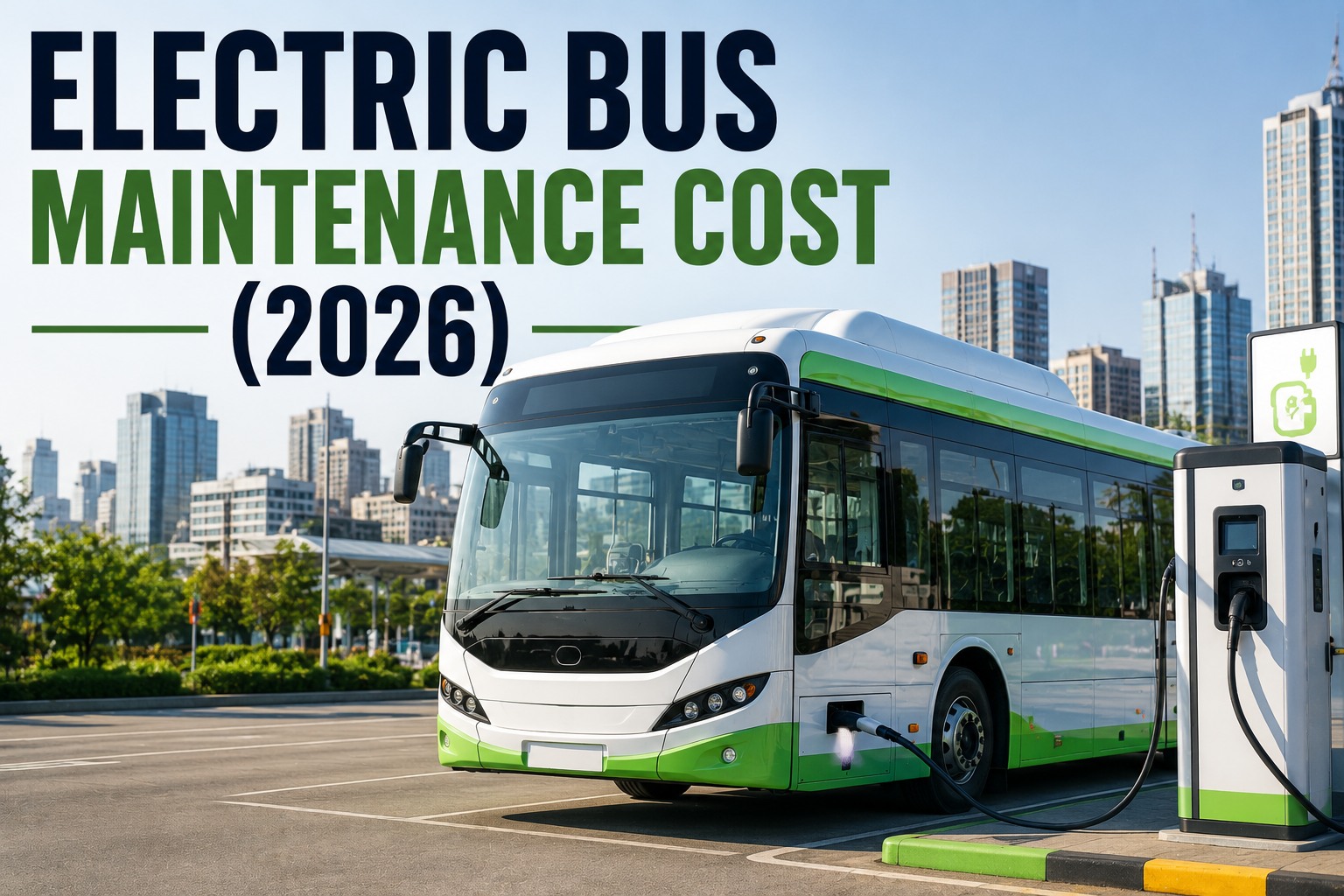
Electric Bus Maintenance Cost Per Mile in 2026: Real Numbers, Real Savings, Real Tracking
What districts and transit agencies actually spend to maintain electric vs. diesel buses -- and how to prove it
- $0.25-$0.40 /mile EV maintenance
- 60-75% fuel savings
- 30-50% lower maintenance
Electric Bus Maintenance Cost vs. Diesel: The 2026 Numbers
The maintenance cost gap between electric and diesel buses is not marginal. It is structural, and it compounds every single year a bus stays in service. An internal combustion engine has roughly 2,000 moving parts. An electric motor has about 20. That 99% reduction in mechanical complexity is the reason electric buses consistently cost 30-50% less to maintain per mile than their diesel equivalents.
Here is what districts and transit agencies are actually reporting in 2026:
Electric Bus
- $0.25-$0.40 /mile maintenance
- $2K-$4K /bus annually
- $0.14-$0.28 /mile fuel cost
Diesel Bus
- $0.60-$0.90 /mile maintenance
- $8K-$12K /bus annually
- $0.49-$0.82 /mile fuel cost
Twin Rivers Unified School District in Sacramento reported operating costs of $0.19/mile for electric buses versus $0.82/mile for diesel -- an operating cost reduction of more than 75%. A transit agency comparison found maintenance costs of $0.55/mile for electric versus $1.53/mile for diesel, according to data cited by the American Public Power Association. These are not cherry-picked outliers. They reflect the reality of what happens when you remove oil changes, transmission service, exhaust aftertreatment, DEF refills, and fuel filter replacements from every PM schedule on the lot.
Thomas Built Buses estimates electric school buses save approximately $2,000 per year in fuel costs and $4,400 per year in maintenance costs compared to diesel equivalents. Over a 12-year service life, that adds up to $76,800 in operational savings per bus. For a 50-bus fleet going fully electric, that is $3.84 million in savings that never shows up if you are not tracking it at the vehicle level. Book a demo to see per-bus EV cost tracking in action.
What You Stop Paying For When a Bus Goes Electric
The maintenance savings from electric buses are not incremental improvements on diesel costs. They are entire expense categories that disappear from your shop's workload. Understanding exactly which line items go away helps your maintenance team plan labor allocation, parts inventory, and PM schedules for a mixed fleet. Want to see what your specific fleet would save? Book a 20-min demo with your actual fleet data.
-
Eliminated
Oil Changes
Electric motors need no engine oil. Saves $750-$2,500 per bus annually.
Save $2,500/yr -
Eliminated
Transmission Service
Single-speed direct drive. No fluid changes, no $5K-$8K rebuild at 150K miles.
Save $8,000+ -
Eliminated
Exhaust & Aftertreatment
No DPF, no DEF fluid, no catalytic converter, no EGR valve failures.
Save $3,000/yr -
Eliminated
Fuel System Parts
No injectors, fuel pumps, fuel filters, or fuel lines to replace.
Save $1,500/yr -
80% Reduced
Brake Wear
Regenerative braking does the heavy lifting. Pads last 3-5x longer.
Save $1,200/yr -
Reduced
Cooling System
Electric motors generate far less heat. Battery thermal is simpler.
Save $600/yr
Here is the catch that does not show up in marketing materials: you also pick up new maintenance categories that your diesel techs may not be trained for. High-voltage battery system inspections, battery thermal management, inverter diagnostics, and 12V auxiliary battery monitoring all require sign up free to get EV-specific PM templates on day one. The net cost is still dramatically lower, but only if your maintenance system knows the difference between a diesel PM schedule and an electric PM schedule.
Electric Bus Total Cost of Ownership: The Full TCO Picture
Purchase price is the number most people fixate on. A new diesel school bus costs approximately $110,000-$130,000. A new electric school bus costs $300,000-$400,000. On sticker price alone, diesel wins by a wide margin. But that purchase price represents roughly 26% of what you will actually spend on a diesel bus over its 12-15 year service life. Fuel accounts for 53% of diesel TCO on average. Electricity accounts for only 15-20% of an electric bus's TCO.
Purchase Price
12-Year Fuel Cost
12-Year Maintenance
Federal funding changes the purchase price equation dramatically. The EPA's Clean School Bus Program, authorized at $5 billion under the Bipartisan Infrastructure Law, has already awarded nearly $3 billion funding approximately 8,500 bus replacements -- 95% of which are zero-emission electric buses. Priority districts (low-income, rural, Tribal) can receive up to $325,000 per bus, which can cover the entire cost of an electric school bus and its charging infrastructure. Even non-priority districts can receive up to $170,000 per bus.
It is worth noting that in February 2026 the EPA announced a revamp of the program under the current administration, cancelling the 2024 rebate round and expanding eligibility to include CNG, propane, hydrogen, and biofuels alongside electric. However, the law still requires at least 50% of funding to go to zero-emission buses. A new Notice of Funding Opportunity is expected later in 2026. Whether your district pursues electric or alternative fuel buses, the strongest grant applications are backed by real fleet data, not guesswork. Book a demo to see how BusCMMS builds grant-ready fleet reports.
The Hidden Costs That Can Erode Electric Bus Savings
Electric bus maintenance costs are genuinely lower, but the savings are not automatic. Several cost categories are unique to electric fleets, and if you are not tracking them, they can quietly eat into your ROI.
-
01
HV Technician Training
High-voltage certification: $2,000-$5,000 per technician + $10,000-$25,000 in specialized shop tools. Most fleets recover this within 12-18 months through labor savings.
-
02
Tire Wear (20-30% Faster)
Battery weight and instant torque stress tires. EVs wear tires 20-30% faster. Rotate every 5,000-7,500 miles and inspect more frequently.
-
03
HVAC System Costs
No waste engine heat for cabin heating. Electric heaters draw from the battery in cold climates. HVAC is the top day-to-day EV maintenance expense.
-
04
Battery Replacement
Packs last 12+ years / 500,000+ miles before 70% capacity. Replacement: $80K-$150K, but most warranty-covered for the first cycle. Track SOH per bus.
-
05
Charger Infrastructure PM
EVSE units need periodic inspection, firmware updates, and occasional repairs. Include charger PM in your maintenance schedule alongside the buses.
The Department of Energy's Alternative Fuels Data Center notes that while electric school buses reduce maintenance requirements overall, fleets should expect a learning curve for technicians and should plan for additional upfront costs for PPE and high-voltage tools. Tracking maintenance costs by system category, something a purpose-built CMMS handles automatically, is the most reliable way to identify which specific costs are climbing and address them before they compound. Book a demo to see cost-by-system tracking for your EV fleet.
Why Electric Bus Maintenance Cost Tracking Requires a Bus-Specific CMMS
Generic fleet management software was built for trucking and construction fleets. It does not understand that your electric bus needs a different PM schedule than your diesel bus. It does not know that a failed DVIR item on an electric bus requires an HV-certified technician, not your standard mechanic. And it definitely does not auto-adjust brake inspection intervals for regenerative braking wear patterns.
This is where the gap between theoretical EV savings and actual EV savings shows up. A district can have 30 electric buses saving $4,400/year each in maintenance over diesel, but if those savings are invisible because the CMMS lumps all vehicles into one generic PM schedule, the board never sees the ROI, and the case for expanding the EV fleet stalls. Sign up free and see EV vs. diesel cost-per-mile on your first bus.
How BusCMMS Captures Electric Bus Maintenance Savings
-
EV-Specific PM Templates
Pre-built schedules that eliminate diesel-only items and add HV battery, inverter, and thermal management checks.
-
Per-Mile Cost by Fuel Type
Auto-calculates cost-per-mile separately for electric and diesel so you see real savings by vehicle, route, and segment.
-
Battery SOH Monitoring
Track State of Health per bus over time, catch degradation trends, and manage warranty claims before thresholds drop.
-
HV Technician Routing
Auto-routes HV work orders to certified technicians only. Tracks cert expiration dates and training status.
-
Charger PM Scheduling
EVSE equipment in your maintenance schedule. Track charger uptime, firmware updates, and inspection cycles.
-
Warranty Management
Track battery warranty terms, capacity guarantees, and replacement triggers. Never miss a claim worth $80K-$150K.
BusCMMS reports that fleets using its platform achieve 15-25% additional maintenance savings beyond the inherent EV cost advantage, through better PM compliance, parts optimization, and warranty capture. For a 50-bus electric fleet, that translates to roughly $37,500-$62,500 in additional annual savings on top of the diesel-to-electric differential. Those are real dollars that show up in your next board presentation as proof that the EV investment is paying off. Book a demo to see electric vs. diesel cost reports side by side.
What Fleet Managers Say About Electric Bus Maintenance Costs
"After transitioning 30 buses to electric, our maintenance cost dropped from $0.72/mile to $0.31/mile. The annual savings hit $615,000, but honestly, what surprised us most was the reduction in unplanned downtime. Our electric buses just do not break down on routes the way diesel does."
Fleet Manager -- 95-bus transit agency, California
"We were running separate spreadsheets for our electric and diesel PM schedules. Missing HV inspections, losing track of which techs had HV certs, not tracking battery health. Once we moved to BusCMMS, all of that landed on one dashboard. Now I can show the board exact cost-per-mile by fuel type."
Transportation Director -- 68-bus school district, Texas
These results are not unusual. Districts running mixed diesel and electric fleets consistently find that the cost-per-mile difference becomes undeniable once they start tracking it properly. Book a demo to see how BusCMMS tracks EV savings for your fleet size.
Electric Bus Preventive Maintenance: What Stays, What Changes
Electric buses are not maintenance-free. They still carry 40+ students over potholes twice a day. They still need DOT-compliant annual inspections. They still have stop arms, crossing gates, emergency exits, and student mirrors that must be inspected and documented on every DVIR. What changes is the propulsion system maintenance, and that change requires a fundamentally different PM schedule.
- Tires (inspect more often -- 20-30% faster wear)
- Suspension bushings, shocks, springs
- Steering components
- Lights, mirrors, wipers, horn
- Stop arm, crossing gate, emergency exits
- Cabin air filters and body maintenance
- Battery SOC/SOH checks + BMS fault codes
- HV cable integrity + insulation resistance
- Battery thermal management system
- Inverter + motor controller diagnostics
- Regenerative braking calibration
- OTA software + firmware updates
The key takeaway for maintenance teams: your electric buses need a genuinely different checklist, not just a shorter version of the diesel one. Items involving the HV system (orange cables, main battery pack, drive motor, inverter) require HV-certified technicians with proper PPE. Everything else, including tires, friction brakes, suspension, steering, lights, body, and all standard school bus safety equipment, can be serviced by any trained mechanic. A CMMS that understands this distinction routes the right work to the right people automatically. Book a demo to see HV technician routing and EV PM scheduling live.
The Bottom Line on Electric Bus Maintenance Cost in 2026
Whether you are adding your first five electric school buses through an EPA Clean School Bus grant or managing a 200-bus transit fleet mid-electrification, the maintenance cost advantage of electric buses is the single strongest financial argument for the transition. Track it properly, report it accurately, and the numbers make the case for you. Sign up free and start tracking your EV maintenance savings today.
What is the average electric bus maintenance cost per mile in 2026?
Electric buses average $0.25-$0.40 per mile in maintenance costs, compared to $0.60-$0.90 per mile for diesel buses. This 30-50% reduction comes primarily from eliminating oil changes, transmission service, exhaust aftertreatment, and fuel system component replacements, plus significantly reduced brake wear due to regenerative braking. Well-managed EV fleets using CMMS-driven preventive maintenance can push costs below $0.25 per mile.
How much does an electric bus save in maintenance per year compared to diesel?
Electric buses save approximately $4,000-$8,000 per bus per year in maintenance costs compared to diesel equivalents. Thomas Built Buses estimates approximately $4,400 annually in maintenance savings alone. Over a 12-year service life, that translates to $48,000-$96,000 in maintenance savings per bus before accounting for fuel savings. Combined fuel and maintenance savings can reach $6,000-$11,000 per bus annually.
How long do electric bus batteries last and what does replacement cost?
Electric bus batteries typically last 12+ years or 500,000+ miles before dropping below 70% capacity. Most manufacturers offer 8-12 year battery warranties. Replacement costs $80,000-$150,000, but most are warranty-covered for the first lifecycle. Proper charging habits (maintaining 20-80% state of charge) and thermal management extend battery life 15-20%. Tracking battery State of Health (SOH) trends in a CMMS catches degradation early and supports warranty claims.
Do electric buses need special maintenance technicians?
Yes, for high-voltage system work. Anything involving HV components (orange cables, main battery pack, drive motor, inverter) requires HV-certified technicians with proper PPE. Training costs $2,000-$5,000 per technician, plus $10,000-$25,000 in specialized shop tools. However, most routine maintenance items (tires, friction brakes, suspension, steering, lights, body, bus safety equipment) can be performed by any trained mechanic. Most fleets recover the HV training investment within 12-18 months through labor savings.
How does a CMMS help reduce electric bus maintenance costs?
A bus-specific CMMS reduces electric bus maintenance costs by providing EV-specific PM schedules that eliminate unnecessary diesel-style service items, tracking cost-per-mile separately for electric and diesel buses, monitoring battery SOH and warranty terms, routing HV work orders to certified technicians only, and including charger infrastructure in the maintenance schedule. BusCMMS reports that fleets achieve 15-25% additional savings beyond inherent EV advantages through better PM compliance, parts optimization, and warranty capture.