Electric buses operate at 400-800 volts—enough to be fatal on contact. Unlike diesel buses where the biggest maintenance hazard is a hot engine, electric buses require an entirely different safety mindset. This guide covers the essential safety checks every technician must know before touching an electric bus.
⚡ High Voltage Reality
Electric buses contain energy systems that remain energized even when the vehicle is "off." A single mistake can result in severe injury or death. Every safety protocol exists for a reason.
The 5-Point Pre-Work Safety Check
Before any maintenance work on an electric bus, complete this mandatory safety sequence:
Vehicle Power Down
Turn off vehicle completely. Remove key. Engage parking brake. Verify "ready" light is OFF.
High-Voltage Disconnect
Locate and pull the service disconnect plug (orange manual service disconnect). Store in a secure location.
Wait for Discharge
Allow minimum 5-10 minutes for capacitors to discharge. Check manufacturer specs—some require longer.
Verify Zero Energy
Use CAT III rated multimeter to verify no voltage present. Test at multiple points.
Lock-Out Tag-Out
Apply your personal lock to service disconnect. Attach dated tag with your name. Never remove another person's lock.
This sequence isn't optional. It's the difference between going home safely and becoming a statistic. Digital CMMS systems can enforce these pre-work safety checklists, ensuring no steps are skipped.
High-Voltage Component Safety Zones
Electric buses have clearly marked high-voltage components. Know where they are—and stay away unless qualified.
DANGER ZONE
HV Components
• Battery pack (400-800V)
• Traction inverter
• DC-DC converter
• HV junction box
• Orange cables/connectors
Trained HV technicians only
CAUTION ZONE
Auxiliary Systems
• 12V/24V battery
• HVAC compressor
• Power steering pump
• Air compressor
• Charging port area
Verify isolation before work
STANDARD ZONE
Non-HV Areas
• Brakes & suspension
• Tires & wheels
• Body & glass
• Interior components
• Doors & mirrors
Standard procedures apply
Orange = Danger. All high-voltage cables and components are marked with orange covering and warning labels. If you see orange, stop and verify the system is de-energized before proceeding.
Required PPE for Electric Bus Work
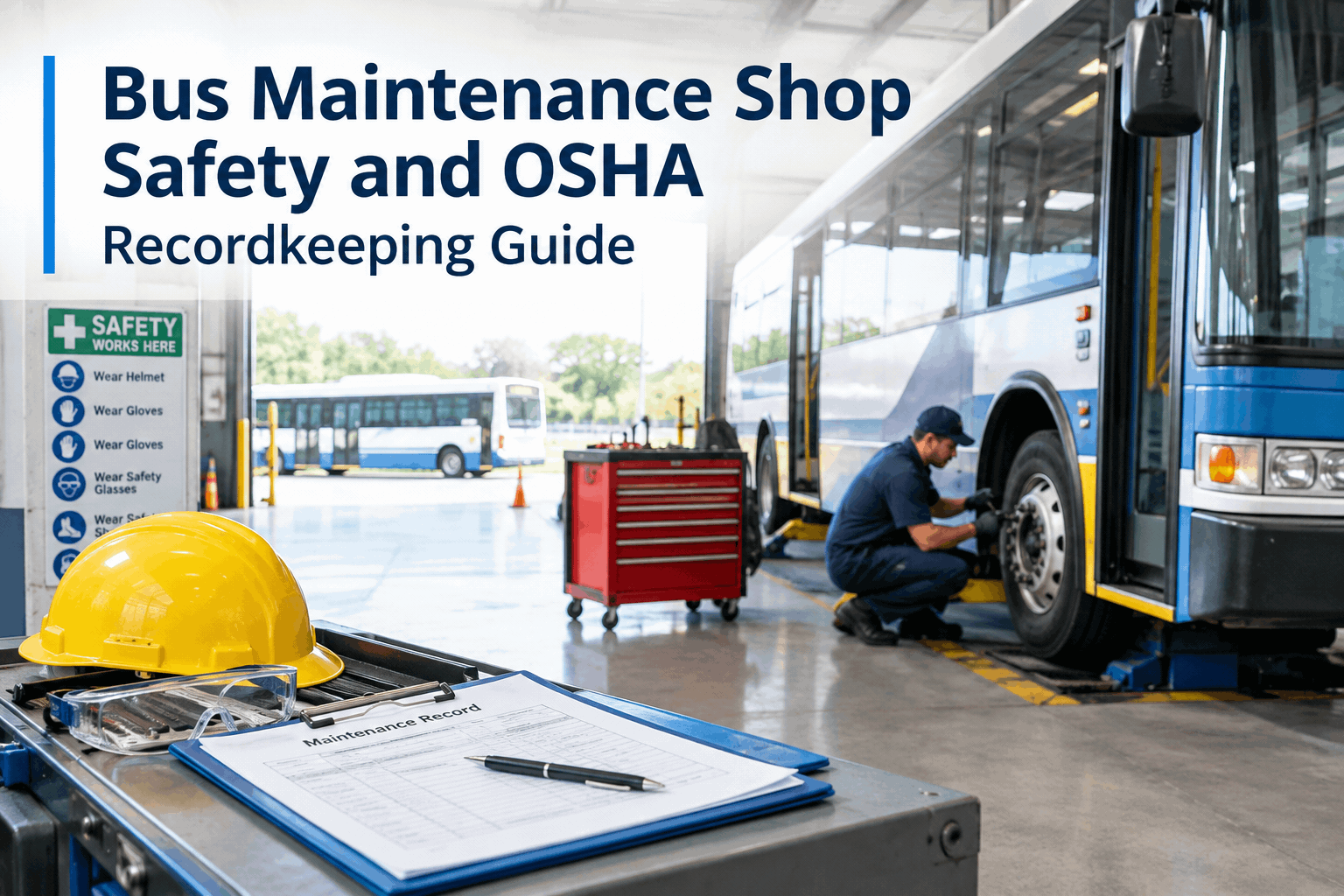
NFPA 70E and OSHA require specific personal protective equipment when working near high-voltage systems. Here's what you need:
Insulating Gloves
Class 0 minimum (1,000V rated)
With leather protectors. Test every 6 months.
Face Shield
Arc-rated (8+ cal/cm²)
Full face and chin coverage required.
Arc-Rated Clothing
Minimum 8 cal/cm² rating
Long sleeves, no synthetic fibers underneath.
Safety Footwear
EH-rated leather boots
Electrical hazard rated, non-conductive soles.
PPE Inspection Required
Inspect all PPE before each use. Check gloves for holes, tears, or contamination. Remove damaged equipment from service immediately. Schedule a demo to see how CMMS software tracks PPE inspection and replacement schedules.
Battery Safety Inspection Points
Battery thermal runaway is rare but catastrophic. Early detection prevents disasters. Check these points regularly:
Thermal runaway can occur while driving, charging, or even when parked. Damaged vehicles should be isolated at least 50 feet from buildings and other vehicles. Never store damaged batteries in enclosed spaces.
Workshop & Charging Depot Safety
Your maintenance facility needs specific safety infrastructure for electric buses:
Ventilation
Mechanical ventilation capable of 10+ air changes per hour. Critical for removing gases during thermal events.
Fire Suppression
Water-based systems preferred for battery fires. Have large water supply available—EV fires require sustained cooling.
Emergency Shutoff
Knox Remote Power Boxes at charging stations. Allows emergency responders to immediately kill power.
Isolation Parking
Designated area 50+ feet from buildings for damaged or suspect vehicles. Outdoor, well-ventilated location.
Track Every Safety Check
Electric bus safety requires documentation. BusCMMS provides digital safety checklists, PPE tracking, training verification, and incident reporting in one platform.
Start Free Trial Book a DemoEmergency Response Protocol
Know what to do before something goes wrong:
If you suspect thermal runaway:
Evacuate immediately. Do not attempt to fight the fire. Call 911. Alert fire department that lithium-ion batteries are involved.
If electrical shock occurs:
Do not touch the victim directly. De-energize the source. Call 911. Begin CPR if trained and victim is unresponsive.
If arc flash event occurs:
Move victim away from source. Call 911. Cover burns loosely. Do not remove burned clothing stuck to skin.
Local fire departments should be briefed on your electric fleet. Many agencies offer training on EV emergency response. Coordinate with them before an incident occurs.
Training Requirements Checklist
Not everyone should work on every system. Here's the training breakdown:
All Technicians
• EV awareness training
• Hazard identification
• Emergency procedures
• When NOT to touch
Qualified Technicians
• HV system fundamentals
• De-energization procedures
• PPE selection and use
• Lock-out/tag-out
HV Certified
• OEM-specific certification
• Battery diagnostics
• HV component repair
• Annual recertification
Track certifications and expiration dates with fleet management software to ensure only qualified personnel work on high-voltage systems.
Frequently Asked Questions
Q: What voltage makes an electric bus dangerous?
A: Electric buses typically operate at 400-800V DC. Voltages above 60V DC are considered high voltage and potentially lethal. All electric bus HV systems fall into this dangerous category and require specific safety protocols and training.
Q: How long should I wait after disconnecting before working on HV components?
A: Minimum 5-10 minutes for capacitors to discharge, but always check manufacturer specifications. Some systems require longer wait times. Always verify zero voltage with a CAT III rated meter before proceeding.
Q: What PPE is required for electric bus maintenance?
A: At minimum: Class 0 insulating gloves with leather protectors, arc-rated face shield (8+ cal/cm²), arc-rated clothing, EH-rated footwear, and hearing protection. PPE must be inspected before each use and gloves tested every 6 months.
Q: Can regular technicians work on electric buses?
A: Many non-HV systems (brakes, suspension, tires, body) can be serviced by technicians with basic EV awareness training. High-voltage components require OEM-specific certification. All technicians should know hazard identification and emergency procedures.
Q: What are signs of battery thermal runaway?
A: Warning signs include unusual heat, sweet or chemical odors, smoke or vapor, hissing sounds, battery swelling, and BMS fault codes. If you observe any of these, evacuate the area immediately and call emergency services.
Safety Is Non-Negotiable
Electric bus technology is proven and safe—when proper procedures are followed. The difference between diesel and electric maintenance isn't difficulty; it's consequence. A mistake on a diesel bus might mean a repair. A mistake on a high-voltage system can mean a funeral. Take the training seriously. Follow every protocol. Document every check.