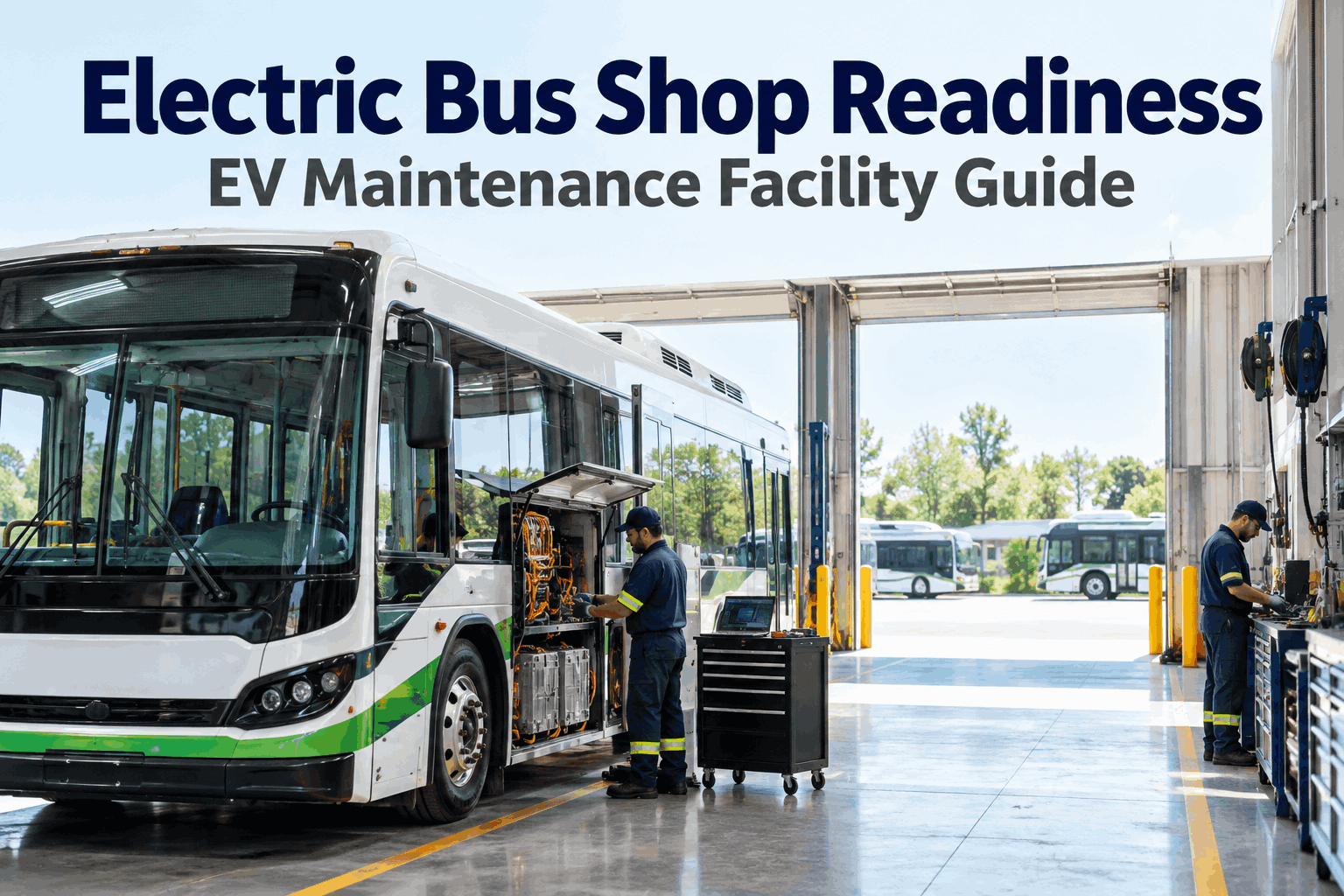
The electric buses you ordered arrive on a truck in a few months, ready or not. If your technicians are not high-voltage qualified, your bays are not set up, and your workflow still assumes a diesel, those buses do not start saving money — they sit, parked and insured, waiting on a shop that is not ready. Electric bus shop readiness is the work you do before delivery day, and fleets that skip it learn the cost the hard way. You can see how to track your readiness and qualified techs in a demo while there is still time to close the gaps.
Electric Bus Shop Readiness: Prepare the Shop Before the Buses Arrive
Qualified technicians, the right tooling, safe high-voltage bays, and an EV-ready workflow — the four things in place before your first electric bus rolls in. Here is how to check where you stand.
Why an Unready Shop Is an Expensive Problem
An electric bus that cannot be serviced is worse than no bus at all — you paid a premium and it is not earning. Three costs hit a shop that was not ready.
The buses sit, not save
A new electric bus that cannot be inspected, charged, or repaired in-house is a parked asset. The savings you bought it for do not start until the shop can keep it running.
High voltage is a safety line
Electric bus systems carry lethal voltage. An untrained tech on one is a real safety and liability exposure — qualification comes first.
Warranty and OEM rules
Manufacturers tie warranty to qualified technicians and approved procedures. Unqualified work can void coverage on your most expensive component: the battery.
Readiness is not a nice-to-have — it decides whether those buses are an asset or an expensive liability on day one.
The Four Pillars of Electric Bus Shop Readiness
Readiness breaks into four areas, all of which must be in place — a fully tooled shop with untrained techs is no more ready than a trained crew with no tools. Here is what "ready" looks like in each.
Workforce & training
Technicians qualified for high-voltage work, certifications current and tracked — not a binder no one can find during an audit.
Ready looks like: every EV job goes to a qualified, in-date technician, automatically.Tooling & equipment
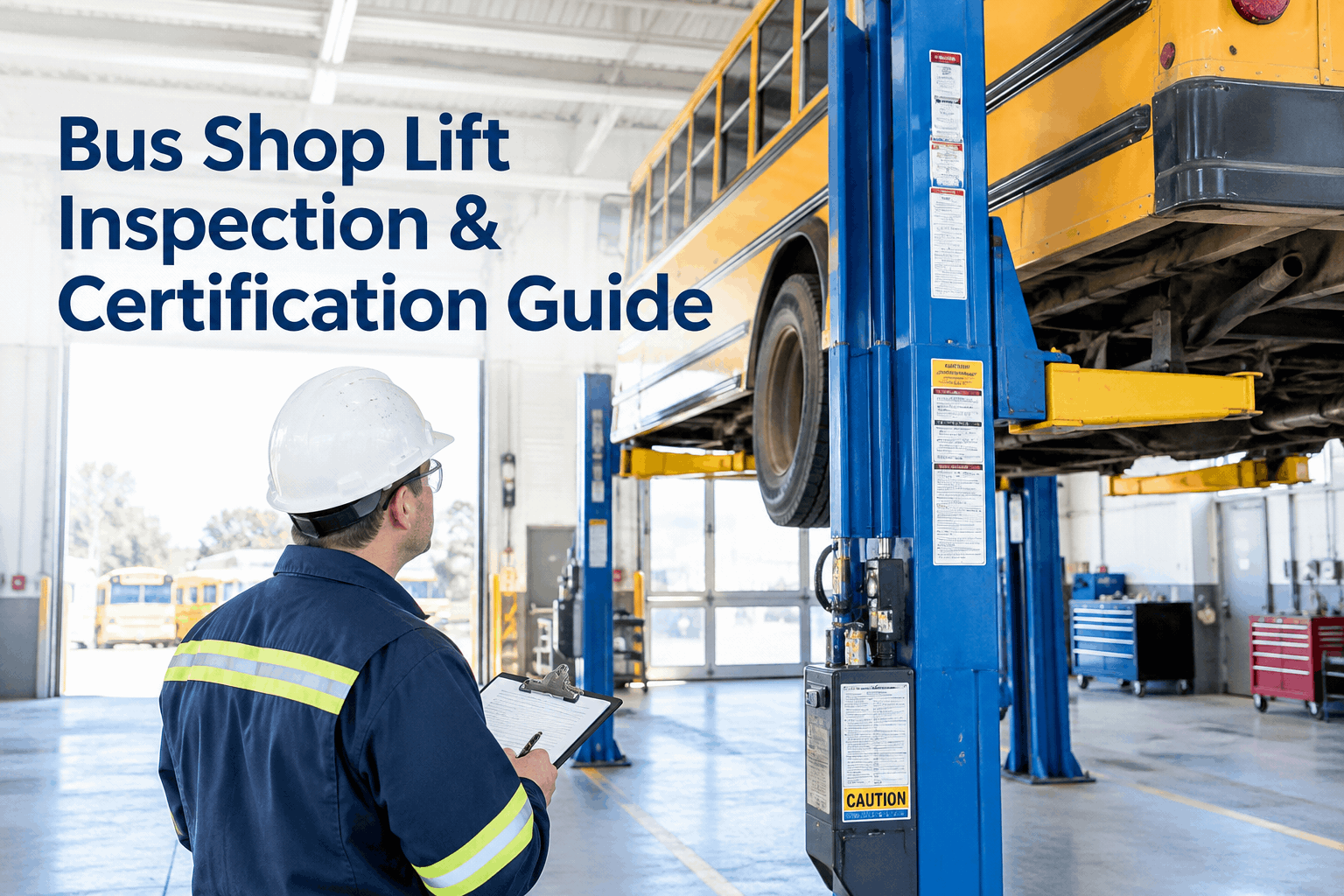
Insulated tools, HV-rated PPE, EV diagnostics, and lifts for heavier battery packs — on hand and inspected before the first bus, not ordered after it breaks.
Ready looks like: the EV toolset is in the bay with inspection dates tracked.Bay & high-voltage safety
A designated HV work area, lockout/tagout and de-energize procedures, barriers and signage, and code-compliant charging — the setup that keeps work safe.
Ready looks like: a marked HV bay with posted procedures everyone follows.Maintenance workflow
PM built for an EV's service profile, charging and battery checks in the plan, and work orders routing EV jobs only to qualified techs.
Ready looks like: EV PM is scheduled and assigned the day the bus is commissioned.For the specific gear in pillar two, our team details every item in the guide to essential EV maintenance tools and equipment. This page is the whole-shop readiness check around it.
Your Pre-Arrival Readiness Checklist
Run this list against your shop and mark each item honestly. The gaps are your to-do list; the items still open closest to delivery are the ones that park a bus.
- Technicians HV-qualified and currentAt least one qualified tech per shift, certs in date and tracked.CRITICAL
- Insulated tools & HV-rated PPE on handFull EV toolset in the bay, PPE inspected and in test interval.ORDER EARLY
- Designated HV bay with safe proceduresMarked work area, lockout/tagout steps posted, barriers in place.CRITICAL
- Charging installed and code-compliantChargers energized and inspected, with the capacity the fleet needs.LONG LEAD
- EV PM schedules built in the systemIntervals and battery/charging checks set before commissioning.SET UP
- Work orders route EV jobs to qualified techsHV work assigned only to in-date technicians, automatically.SET UP
The two critical items — qualified people and a safe HV bay — make the work legal and safe, so start there; you can see your readiness status in a demo or sign up free and track every item to done.
Get Ready Before Delivery Day: Four Steps
Readiness is a project with a hard deadline: the delivery date. Work it backward in four moves and nothing gets discovered too late.
Start training on the longest lead
Technician qualification takes the most time to arrange. Book it first and track who is certified against your delivery date, so you are never short a qualified tech on a shift.
Order tooling and PPE early
Insulated tools, HV PPE, and EV diagnostics have real lead times. Order against your checklist so the gear is in the bay and inspected before the first bus.
Set up the bay and charging
Electrical work and charger installation are the longest physical lead. Mark the HV bay, post procedures, and get chargers energized and inspected well ahead of delivery.
Build the workflow before commissioning
Configure EV PM schedules and qualified-tech routing so the moment a bus is commissioned, its maintenance is already scheduled and assignable to the right people.
Worked backward from delivery, readiness is a checklist with dates, not a week-of scramble. You can sign up free and run your readiness plan to the deadline.
How BusCMMS Keeps Your Shop EV-Ready
Readiness is mostly a people-and-process problem — exactly what a bus-built CMMS manages. BusCMMS makes the human and workflow pillars visible and enforceable, so "ready" is a status you check, not a hope.
Technician certification tracking
Every tech's HV qualifications and expiry dates in one place, so you always know who is cleared to work an electric bus.
Qualified-only work routing
HV work orders are assignable only to in-date qualified technicians, keeping unqualified hands off high-voltage systems.
EV PM scheduled from day one
Electric-specific PM and battery checks configured before commissioning, so the first service is planned, not improvised.
A readiness picture you can show leadership before the buses land. To set it up, book a demo and bring your delivery date.
A Shop Manager's Take
Key Takeaways on Electric Bus Shop Readiness
Electric bus shop readiness is work you finish before delivery, not after. Four things for your prep.
Four pillars, weakest wins
People, tooling, bay safety, workflow — the weakest sets the date.
An unready shop parks the buses
A bus that cannot be serviced is a paid-for liability, not asset.
People are the longest lead
Start HV training first; it takes the most time to complete.
Work backward from delivery
Readiness is a dated checklist, not a week-of scramble.
Treat electric bus shop readiness as a project with a deadline — qualified people, right tools, a safe bay, and an EV-ready workflow in place before the truck arrives — and your new buses earn from day one instead of sitting idle. The buses are the easy part; a ready shop makes them worth buying.