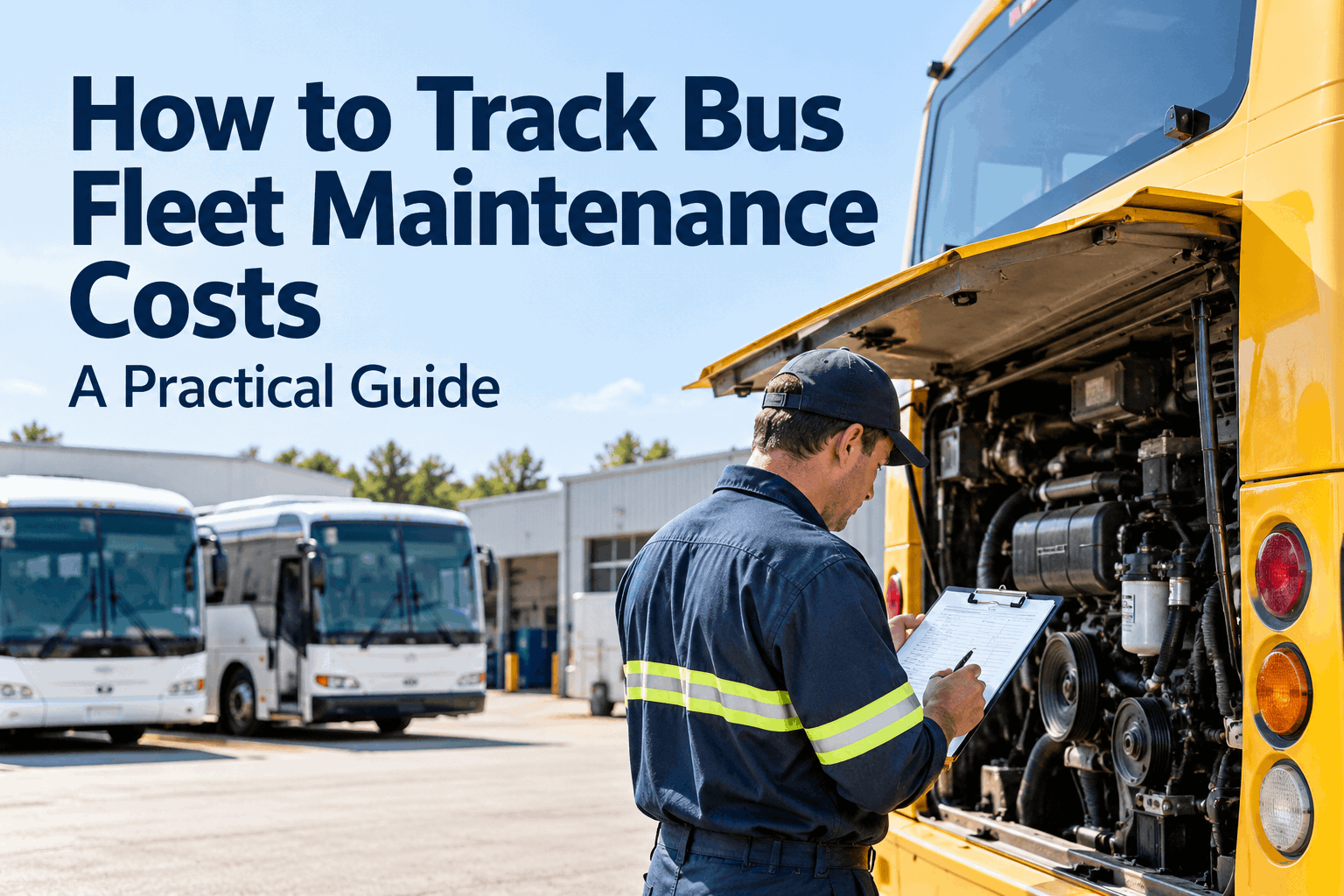
Bus fleet maintenance schedules determine safety, reliability, and total cost of ownership. Yet most school districts, transit agencies, and charter operators manage preventive maintenance using inconsistent spreadsheets, outdated manuals, or incomplete schedules handed down through institutional memory. This free bus maintenance schedule template provides comprehensive preventive maintenance intervals for school buses, transit buses, charter coaches, and motorcoaches based on original equipment manufacturer (OEM) specifications. The template is available in Excel and PDF formats, covers all major bus systems and components, includes both calendar-based and mileage-based intervals, tracks maintenance history, and integrates with digital fleet management systems. Whether your fleet uses paper maintenance logs or modern CMMS software, this free bus PM template establishes the foundation for organized, compliant, cost-effective fleet maintenance planning and execution.
Free Bus Maintenance Schedule Template: Download Excel & PDF
Comprehensive preventive maintenance schedule template for school buses, transit buses, and charter coaches. Includes OEM-recommended intervals, component-specific PM tasks, maintenance history tracking, and cost estimates. Available free for download in Excel and PDF formats.
Template Includes
School Bus Schedule
Thomas, IC Bus, Blue Bird models
Transit Bus Schedule
New Flyer, Gillig, Orion specs
Motorcoach Schedule
MCI, Prevost, Setra compliance
Component Library
60+ major systems and parts
Why Standardized Bus Maintenance Schedules Matter: Safety, Compliance, Cost Control
Bus fleet maintenance is not optional—it's a federal and state requirement. School bus operators must comply with Federal Motor Carrier Safety Administration (FMCSA) regulations and state transportation department standards. Transit agencies receiving federal funding must demonstrate compliance with Federal Transit Administration (FTA) asset management standards. Charter and motorcoach operators must maintain documentation supporting roadworthiness and insurance requirements. A bus maintenance schedule template establishes the framework for meeting these requirements. Without a standardized schedule, maintenance becomes inconsistent—some buses receive complete preventive maintenance while others run beyond safe intervals. Components wear unevenly. Breakdowns occur at unpredictable times. Documentation gaps invite regulatory findings. Emergency repairs spike costs. A well-designed bus PM schedule ensures consistent execution across the entire fleet, extends component useful life, reduces unexpected failures, and demonstrates compliance capability to auditors and regulators. This free template provides that foundation.
The economics of preventive maintenance are straightforward. A school bus engine oil change costs $150 when performed during scheduled PM. The same oil change performed during an emergency roadside breakdown costs $400-$500 (roadside service premium, towing, delay costs). An engine bearing replacement costs $800 when done proactively based on maintenance schedule. The same replacement costs $3,200 when the bearing seizes at highway speed and requires full engine rebuild. A brake system overhaul costs $1,200 when scheduled during preventive maintenance. The same overhaul costs $4,500 when brakes fail in service and require emergency roadside repair. Across a 100-bus fleet, the difference between consistent preventive maintenance and reactive emergency repairs is typically $150,000-$250,000 annually. This free bus maintenance schedule template helps school districts, transit agencies, and charter operators realize these savings by establishing the schedule discipline that enables consistent, cost-effective maintenance execution.
Why This Bus Maintenance Schedule Template Is Essential
Regulatory Compliance
School bus operators must comply with FMCSA regulations. Transit agencies must satisfy FTA asset management standards. This free bus maintenance schedule template provides documented evidence of preventive maintenance execution. Auditors can verify that scheduled maintenance occurred on schedule. Inspectors confirm regulatory compliance through maintenance records.
Impact: Eliminates audit findings for maintenance documentation
Consistent Fleet Performance
Without a standardized schedule, maintenance execution varies. Some buses receive complete PM while others skip intervals. This bus PM template ensures consistent maintenance across all vehicles. Every bus of the same model receives the same preventive care at the same intervals. Fleet reliability improves. Unexpected breakdowns decline.
Impact: 35-45% reduction in unplanned downtime
Cost Predictability
This free bus maintenance schedule includes estimated costs for each maintenance task based on industry averages. School districts and transit agencies can predict annual maintenance budgets with confidence. Cost surprises from emergency repairs decrease. Budget planning becomes data-driven instead of guesswork.
Impact: Maintenance budget forecasting accuracy improves 60%+
Component Useful Life Extension
Proactive maintenance following the PM schedule means components are serviced before degradation begins. Oil changes prevent engine sludge. Brake service prevents pad wear damage. Fluid flushes prevent corrosion. Components last longer. Assets generate more service years. Capital replacement cycles extend 18-24 months.
Impact: $45K-$80K value per bus from extended asset life
Get Your Free Bus Maintenance Schedule Template Now
This template is free, ready to download, and immediately usable for school districts, transit agencies, and charter operators of all sizes. Available in Excel for customization and PDF for distribution to mechanics. Covers school buses, transit buses, motorcoaches, and route-specific maintenance variations.
What's Included in This Free Bus Maintenance Schedule Template
This free bus maintenance schedule template includes comprehensive preventive maintenance specifications for multiple bus types and operating models. The school bus maintenance schedule section covers Thomas, IC Bus, Blue Bird, and other major school bus manufacturers. Intervals follow FMCSA requirements and manufacturer specifications. The template includes oil change intervals (typically 15,000 miles or 12 months, whichever comes first for diesel school buses), filter replacement (air, fuel, cabin air every 25,000-50,000 miles depending on operating conditions), brake service (annual inspection minimum, complete overhaul at 150,000-200,000 miles), transmission service (fluid change every 50,000-100,000 miles depending on transmission type and duty cycle), coolant flushing (every 3-4 years or per OEM spec), belt and hose inspection (annual visual, replacement as needed based on condition), tire rotation and pressure checks (monthly minimum, documented in template), and battery service and replacement (annually for testing, typically 3-5 year replacement cycle).
The transit bus maintenance schedule section addresses New Flyer, Gillig, Orion, and other urban transit bus models. Transit buses operate higher utilization (40,000-50,000 miles annually is common), so maintenance intervals are more aggressive than school bus schedules. The template includes engine maintenance at 20,000-mile intervals for high-utilization operations, transmission service at 40,000-mile intervals, brake service at 60,000-mile intervals with detailed pad and rotor specification guidance, suspension and steering system inspections quarterly, electrical system testing (critical for transit bus door systems, lift systems, and passenger safety features), HVAC system maintenance (essential for year-round passenger comfort), and accessibility feature maintenance including wheelchair lift service, audible announcement system testing, and door sensor function verification. The motorcoach maintenance schedule section covers MCI, Prevost, and Setra coaches operating long-distance routes with 40,000-50,000 miles annually and high passenger comfort expectations. This section emphasizes passenger safety systems, comprehensive engine diagnostics, transmission fluid analysis programs, and extended useful life management for expensive coach assets.
How to Use This Bus Maintenance Schedule Template Effectively
This free bus maintenance schedule template is designed for immediate use. Download the Excel version if you want to customize intervals based on your specific operating conditions. School districts operating buses in severe-duty environments (lots of starts/stops, mountain driving, dusty conditions) should shorten intervals from the baseline template. Charter operators running long-distance highway routes with minimal cold starts can extend some intervals slightly. The template provides baseline recommendations; your fleet's specific duty cycle may warrant adjustments. Download the PDF version if you want to print the schedule and post it on your fleet management office wall or distribute to mechanic teams.
Implementation is straightforward. First, identify the bus types in your fleet and note the corresponding PM schedules in the template. Second, list each bus by unit number and model type. Third, for each bus, note the current mileage and date. Fourth, calculate when each preventive maintenance interval comes due (for example, if a school bus is at 45,000 miles and an oil change is due every 15,000 miles, the next oil change is due at 60,000 miles). Fifth, create a maintenance calendar showing which buses need which services in which months. Sixth, assign mechanics or contractors to perform the work. Seventh, track completion by recording actual mileage and date when work is completed. Eighth, update the running calendar so the next maintenance interval is visible. This discipline ensures no bus slips past its maintenance schedule. Digital fleet management software like BusCMMS automates this entire process—calculating due dates automatically, sending alerts to mechanics, and tracking completion. But the foundation is a comprehensive, well-designed bus PM schedule, which this free template provides.
FAQ: Bus Maintenance Schedules, Templates, and Best Practices
Is this free bus maintenance schedule template suitable for my specific bus fleet, or do I need to customize the intervals?
The template provides OEM baseline intervals. You should customize for your fleet's duty cycle: school buses in severe-duty (mountains, cold, dust) should shorten intervals; highway coaches can extend some intervals. Use the template as a starting point and adjust based on your operating environment and maintenance history.
How often should I review and update my bus maintenance schedule template once deployed?
Review the schedule quarterly to ensure intervals are working (buses staying reliable, components lasting expected useful life). Update annually to reflect fleet changes (new buses added, old units retired). If you see early component failures, shorten the interval for that component. If components consistently last longer, you may extend intervals slightly.
Can I use the same maintenance schedule template for different bus manufacturers and models operating in my fleet?
No—different manufacturers specify different intervals. This free template includes separate schedules for Thomas, IC Bus, Blue Bird (school bus section), New Flyer, Gillig, Orion (transit section), and MCI, Prevost, Setra (motorcoach section). Use the schedule corresponding to each bus model.
Does this bus maintenance schedule template include ADA accessibility feature maintenance requirements?
Yes—the transit bus section includes wheelchair lift maintenance intervals, audible announcement system checks, visual display verification, and door sensor function testing. These are critical for legal compliance and passenger safety. Schedule these checks monthly minimum.
How do I integrate this bus maintenance schedule with my existing digital fleet management software or CMMS?
This free Excel template can be imported into most fleet management platforms. If you're using BusCMMS, upload the template during setup and the system automatically configures maintenance intervals, creates mechanic work queues, and generates due-date alerts. Other CMMS platforms may require manual data entry.
What happens if my bus fleet doesn't follow the maintenance schedule template intervals—how does that affect compliance and safety?
Regulatory auditors expect maintenance documentation showing scheduled intervals were followed. Skipped or delayed maintenance creates audit findings and safety risks. This template helps ensure regulatory compliance, passenger safety, and extended asset useful life. Deviations should be documented and justified.
Can I use this bus maintenance schedule template for preventive maintenance cost budgeting and forecasting?
Yes—the template includes estimated labor hours and parts costs for each maintenance task. Calculate total annual cost by summing all PM tasks times fleet size. This provides budget baseline. Add 15-20% contingency for unexpected repairs. Most school districts and transit agencies find this budgeting method accurate within 10-15%.
Is there a difference between the free Excel template and the PDF template, or are they the same information in different formats?
Both contain the same bus maintenance schedule information. The Excel template is editable—you can customize intervals, add your fleet data, and track completion. The PDF template is for printing and distribution to mechanics. Download both: use Excel for planning and digital tracking; use PDF for on-site mechanic reference.
Download Your Free Bus Maintenance Schedule Template Now
This comprehensive bus maintenance schedule is free, ready to use, and immediately applicable to school bus fleets, transit agencies, and motorcoach operations. Available in Excel for customization and PDF for printing. Covers all major bus types, includes OEM-recommended intervals, component-specific tasks, and cost estimates.
Scaling Bus Maintenance Schedules: From 20-Bus Rural Districts to 500-Bus Metro Agencies
This free bus maintenance schedule template is designed for fleets of all sizes. A 20-bus rural school district can download the template, assign it to a single maintenance coordinator, track completion in a spreadsheet, and manage the entire process manually. A 500-bus metro transit agency can import the template into their digital fleet management system, configure automated alerts for 100+ mechanics, generate compliance reports for FTA auditors, and integrate maintenance scheduling with asset retirement planning. The template scales because the foundational principle—systematic preventive maintenance at defined intervals—applies regardless of fleet size. Smaller fleets benefit from the template's structure and consistency discipline. Larger fleets benefit from automation and integration with digital systems. This free template is the starting point for both.
For school districts and transit agencies implementing this template, the first quarter is typically an adjustment period. Mechanics may not have been following formal schedules previously. The template introduces discipline and consistency. By quarter two, the fleet shows measurable improvements: fewer unexpected breakdowns, more predictable maintenance costs, better compliance documentation. By quarter three, the benefits are clear: reliability improves, emergency repair spending drops, and audit readiness improves. By year two, school districts and transit agencies report 25-35% reduction in total maintenance spending (combining reduced emergency repairs with better parts purchasing and labor efficiency). The free template investment (time to download, review, and implement) returns multiples in cost savings and operational reliability improvements.
"We were managing our 87-bus fleet with five different spreadsheets and no clear preventive maintenance schedule. Buses would break down unpredictably. Our budget had no accountability. We downloaded this free bus maintenance schedule template, customized it for our three main bus models (Thomas, Gillig, and a few older Bluebirds), and committed to following it. Within 6 months, our roadcalls dropped 38%. Within 12 months, we'd cut total maintenance spending from $285K to $198K annually—a $87K reduction that went directly to bus driver salaries and route expansion. The audit found zero maintenance documentation deficiencies for the first time in our agency's history. The template costs nothing but provides absolute clarity on what should be done, when it should be done, and how much it should cost. Every school district and transit agency should start here."
Bus fleet maintenance should not be reactive, ad-hoc, or based on individual mechanic preferences. It should be systematic, scheduled, and documented. This free bus maintenance schedule template establishes that foundation. It covers school buses, transit buses, and motorcoaches. It includes OEM-recommended intervals. It provides cost estimates. It's ready to download in Excel or PDF. Whether you're a 20-bus rural district, a 100-bus regional transit agency, or a 500-bus metro system, implementing a formal maintenance schedule reduces costs 25-35%, improves reliability, extends asset useful life, and demonstrates regulatory compliance. The template is free. Implementation is straightforward. The benefits are measurable within weeks.
Implement Systematic Bus Maintenance Starting Today
Download this free bus maintenance schedule template (Excel and PDF) and establish preventive maintenance discipline in your fleet. The template covers school buses, transit buses, and motorcoaches with OEM-recommended intervals, cost estimates, and implementation guidance. Combine the template with BusCMMS digital fleet management for automated interval tracking, mechanic alerts, and compliance documentation that auditors require.