Fuel is the second-largest expense in any bus fleet. For diesel operations, it's often the first. A single diesel bus running 12,000 miles per year burns through over $5,700 in fuel alone — multiply that across 50 buses and you are managing nearly $300,000 in annual fuel spend. Yet most fleet operators can't answer two basic questions about that number: which buses are the worst fuel performers, and how much of that spend is legitimate? The answer to both lives in your fuel card data — but only if that data is connected to your maintenance system. This guide explains exactly what bus fleet fuel card integration does, which cards BusCMMS connects with, and why the fleet operators using it are finding $20,000–$40,000 in recoverable waste they didn't know existed.
Where Your Fuel Budget Is Leaking Right Now
Fuel waste doesn't come from one big problem — it comes from five smaller ones happening simultaneously across every bus, every route, every day. Without fuel card integration, none of them are visible until the monthly invoice arrives and it's too late to act.
Every one of these leaks becomes detectable the moment your fuel card data flows automatically into BusCMMS. The system cross-references purchases against odometer readings, consumption patterns, and maintenance records — and flags anomalies before they become annual losses. Curious what your fleet is losing right now? Book a demo and we'll show you exactly how the fuel anomaly detection works on a fleet your size.
Fuel Cards BusCMMS Connects With Natively
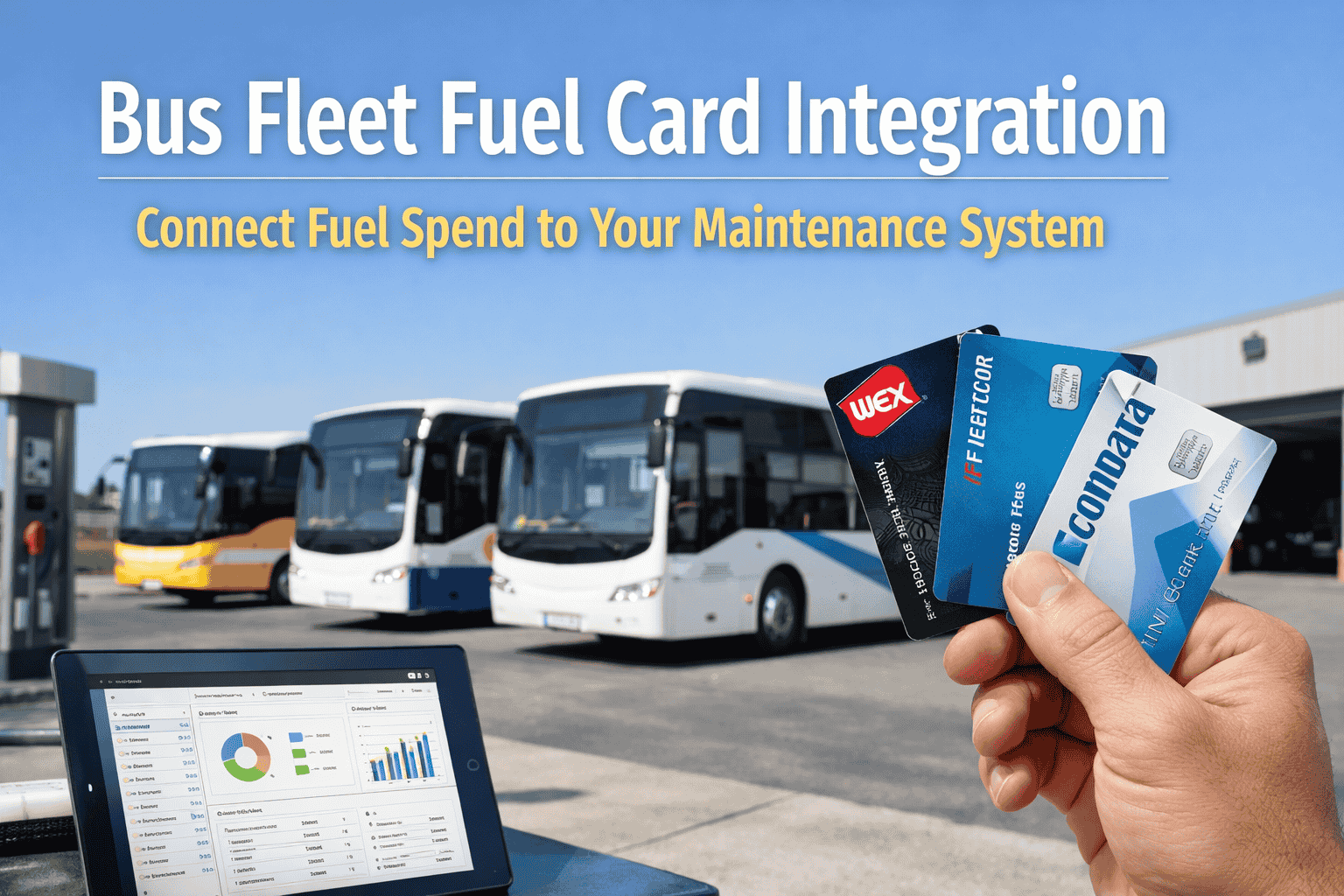
BusCMMS integrates directly with the three major fuel card networks used by bus fleets across the US. No CSV uploads. No manual imports. Transaction data flows automatically into your fleet dashboard the moment a card is swiped.
Already using one of these cards? The connection takes minutes to configure — no new contracts, no card changes, no driver retraining. Tell us which fuel card you're on and we'll walk through the exact integration setup in your demo call.
What BusCMMS Does With Your Fuel Card Data
Connecting your fuel card is just the start. The real value is in what BusCMMS does with that data automatically — cross-referencing purchases against odometer readings, consumption benchmarks, maintenance history, and operating schedules to surface insights no spreadsheet could find on its own.
Fleets implementing per-vehicle fuel tracking with connected maintenance data typically reduce fuel costs 10–15% in year one. For a 50-bus diesel fleet spending $288,000 annually, that's $28,800–$43,200 in savings — from data that was already being collected by your fuel cards but never connected to anything. See the fuel analytics dashboard live — book a walkthrough and we'll show you exactly what your fleet would see.
Expert Review: Manual Fuel Tracking vs. Integrated Fuel Card System
Fleet managers who've made this switch consistently report the same outcome: they didn't just save on admin time — they found money they didn't know was missing. Here's the complete comparison.
The fleets recovering 10–15% of their fuel budget aren't spending more — they're simply seeing what was always there. Sign up free and connect your first fuel card today — no contract, no setup fee, no IT team needed.
How Fuel Card Integration Sets Up in Under 30 Minutes
Fleet operators often assume connecting a fuel card to their management system requires a technical project. With BusCMMS, the entire process happens in three steps — and once it's live, everything runs automatically without anyone on your team touching it.
Most fleets are fully live within a single afternoon. If you want someone to walk through your specific fuel card setup before connecting, our team covers the exact configuration in every demo call — 30 minutes and you'll know exactly what your dashboard would look like.
Conclusion: The Data Is Already There — Connect It
Your fuel cards are already generating detailed transaction data every time a driver fills up — the fuel grade, quantity, price, location, and time of every purchase. That data exists whether or not you're using it. The question is whether it's sitting in your fuel card provider's portal doing nothing, or whether it's flowing into BusCMMS and actively finding the $20,000–$40,000 in waste that exists in almost every 50-bus fleet. Fleet operators who've made this connection don't describe it as a technical project — they describe it as the moment their fuel budget finally made sense. Real numbers per bus. Real fraud detection. Real alerts before overruns happen. The integration takes under 30 minutes. The savings start with the next fill-up.
Frequently Asked Questions
Which fuel cards does BusCMMS integrate with?
BusCMMS integrates natively with WEX, Fleetcor (including Fuelman and CFN FleetWide brands), and Comdata. These three providers cover the vast majority of fuel cards used by US bus fleets, school districts, and transit agencies. If you're using a different fuel card provider, BusCMMS also supports API-based integrations — contact the team during your demo to confirm compatibility with your specific card.
How does BusCMMS detect fuel theft and fraud?
BusCMMS cross-references every fuel card transaction against three data points: vehicle location at the time of purchase, the vehicle's configured operating hours, and expected fuel consumption based on odometer data. A transaction that occurs outside operating hours, at a location inconsistent with the vehicle's route, or for a volume that exceeds the vehicle's tank capacity triggers an immediate alert to the fleet manager. Industry data shows up to 6% of fleet fuel spend is lost to theft and fraud — most of it undetectable without this kind of automated cross-referencing.
Do I need to change fuel card providers to use BusCMMS?
No. BusCMMS connects to your existing WEX, Fleetcor, or Comdata account — there's no need to switch providers, change card programs, or renegotiate contracts. Your drivers keep using the same cards they use today. The only change is that transaction data now flows automatically into BusCMMS rather than sitting in your fuel card provider's portal.
How does fuel card integration connect to maintenance records?
When BusCMMS detects a drop in a vehicle's fuel efficiency — for example, a 8% week-over-week decrease in MPG — it automatically checks that vehicle's maintenance record. If the air filter service is overdue, or if injectors were last serviced outside the recommended interval, BusCMMS flags a likely mechanical cause and can trigger a preventive maintenance work order. This connection catches maintenance-related fuel drain 3–5 weeks before it typically becomes a breakdown, turning a fuel anomaly into an early warning system.
What fuel savings can a bus fleet realistically expect after integration?
Fleets implementing per-vehicle fuel tracking connected to maintenance data typically reduce fuel costs 10–15% in their first year. For a 50-bus diesel fleet spending approximately $288,000 annually on fuel, that's $28,800–$43,200 in recoverable savings. The biggest contributors are idle reduction (typically 35–50% after driver scoring is introduced), early detection of maintenance-related MPG drops, and fraud elimination. Route optimisation adds further savings on top of these figures.