School bus safety technology — stop-arm cameras, onboard video, and the fleet software that ties it together — is increasingly fundable through federal and state grants rather than a district's stretched general budget. This page maps the real funding sources, what these grants typically cover (software and supporting systems included in many programs), and how to plan an application that actually wins — so safer transportation doesn't have to wait for next year's budget cycle.
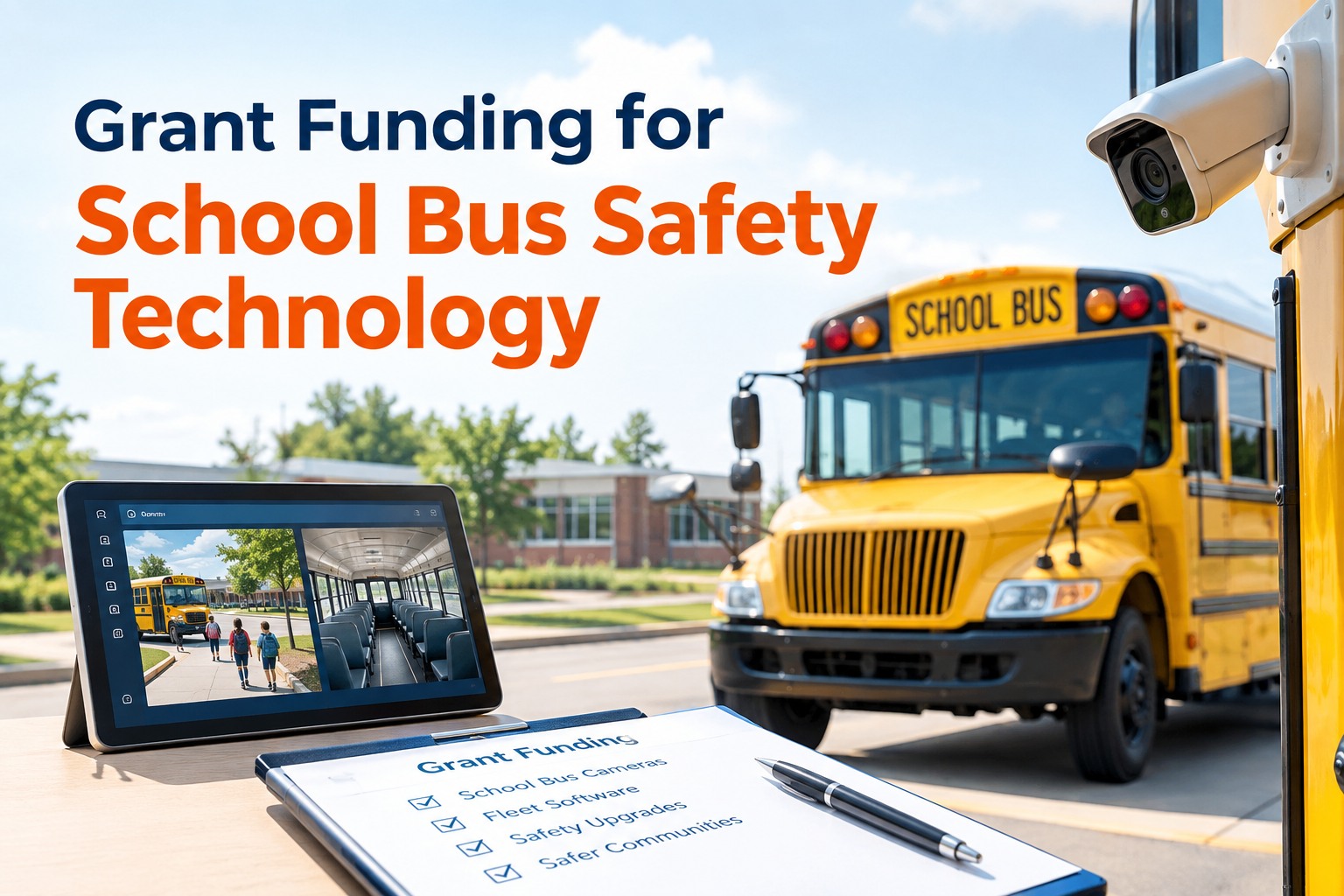
Grant Funding for School Bus Safety Technology
Fund cameras, safety tech, and fleet software through grants — and run it all in BusCMMS, the platform that turns safety events, inspections, and maintenance into one auditable record.
- Federal+ state grant sources
- SoftwareOften an allowable cost
- 1 recordGrant-ready reporting
Why Grants Matter for School Bus Safety Budgets
Every transportation director knows the bind: the safety technology that protects students — stop-arm cameras, onboard video, GPS, and the software to manage it — competes for the same dollars as buses, fuel, and drivers. When it's a line item in a tight general budget, it loses, and the district goes another year with the same blind spots. Grant funding changes that math by putting safety tech on a separate, purpose-built funding track.
That's why school bus safety grants have become a serious budget strategy, not a nice-to-have. A well-timed grant can fund equipment and supporting software a district couldn't otherwise justify, and the recurring nature of many state programs means a district that misses one round can plan for the next. The reader this page is written for — a director, CFO, or superintendent weighing how to pay for safer transportation — needs two things: to know where the money is, and to be ready to apply when a window opens. Let's cover both. If you'd like to see the platform your funded tech would run on, you can book a walkthrough of the unified safety and maintenance record.
Where the Funding Actually Comes From
School bus safety funding flows from several distinct sources, each with its own focus and rules. Knowing which one fits your need is the first move — a camera program and a clean-bus program are funded through completely different doors.
State stop-arm camera grants
Many states run recurring grant projects that reimburse districts and contractors for purchasing and installing stop-arm camera systems — and, in a number of programs, the supporting software that runs them.
Federal safety & transportation programs
Federal agencies fund transportation safety initiatives, and proposed legislation has specifically targeted stop-arm camera grants. Availability and scope shift year to year — check what's currently open.
Clean / electric bus funding
The EPA Clean School Bus Program and similar efforts fund cleaner and electric buses. Not safety-tech specific, but relevant to any district modernising its fleet, sometimes alongside onboard technology.
State & local safety initiatives
State DOTs, offices of traffic safety, and local programs periodically fund pupil-transportation safety. Your state's pupil-transportation office is the best single starting point.
One detail worth underlining for the software question: several state stop-arm camera programs have explicitly reimbursed not just the camera hardware but the supporting software programs that operate it. That matters, because the platform that manages your safety events and maintenance can, in some programs, be part of the funded package rather than a separate out-of-pocket cost — always confirmed against that specific grant's allowable-cost list. It's worth a conversation to scope how BusCMMS fits, and you can talk to us about aligning it with a grant you're pursuing.
What These Grants Typically Cover
Allowable costs vary by program, but school bus safety grants commonly fund a recognisable set of items. Use this as a checklist of what to look for — and always match it against the specific grant's own rules.
Stop-arm camera systems
The hardware that captures illegal-passing violations — the core of most camera-focused grant programs.
Installation
Many programs reimburse the cost of installing the systems, not just buying them.
Supporting software
A number of programs explicitly fund the software that operates the cameras and manages the evidence — confirm per grant.
Onboard video & safety equipment
Interior/exterior cameras and related safety hardware, depending on the program's scope.
Maintenance & repair of tech
Some programs allow ongoing maintenance and repair of the funded technology, not only the initial purchase.
Education & awareness
Certain programs also fund driver-accountability outreach and public awareness efforts alongside the equipment.
The pattern to notice: the strongest programs fund a whole safety system — hardware, installation, software, and sometimes upkeep — not just a box of cameras. That's an argument for choosing a platform that unifies the pieces, so your grant dollars buy a working program rather than parts you still have to stitch together. Where a grant allows supporting software, that's exactly where a system like BusCMMS fits.
Building an Application That Wins
Grants are competitive, and the districts that win tend to do the same things well. This is the practical sequence — each step is one that reviewers actually reward.
- 1
Find the right program
Start with your state's pupil-transportation office and office of traffic safety, then check federal opportunities. Match the program's purpose to your actual need before anything else.
- 2
Confirm eligibility & allowable costs
Read the current guidelines for who can apply, what's covered, and the deadline. Verify whether software is an allowable cost for that specific grant — don't assume.
- 3
Demonstrate need with data
Many programs want evidence — stop-arm violation counts, incident history, fleet age. A district that can pull real numbers makes a far stronger case than one that can't.
- 4
Gather support & quotes
Some grants require law-enforcement support letters and a price quote. Line up partners and vendor pricing early, not the night before the deadline.
- 5
Plan the reporting up front
Grants expect outcomes. Decide now how you'll show the tech is used and working — the system that runs it should also produce that proof.
Step three and step five are where a good platform quietly wins you the grant — and helps you keep it. Demonstrating need takes real data (violation counts, incident and maintenance history), and reporting outcomes takes a system that captures how the funded tech is actually used. A fleet running on paper struggles with both; a fleet on a connected platform produces them as a by-product. You can start free and see what that reporting looks like before you even apply.
How BusCMMS Fits a Grant-Funded Safety Program
Winning a grant is the start; running the program and proving it worked is the rest. That's where BusCMMS earns its place in the plan — before, during, and after the award.
Before: build the case
Track stop-arm events, incidents, and fleet condition so your application can demonstrate need with real numbers instead of estimates.
During: run the funded tech
Manage stop-arm and onboard-camera events, inspections, and maintenance on one bus record — the working system your grant dollars are meant to create.
After: report the outcomes
Produce the usage and safety records grants expect, so renewals and future rounds are backed by evidence, not anecdotes.
Works with your hardware
Hardware-agnostic, so it connects the cameras and systems you fund — no lock-in to one vendor's box, and no rip-and-replace later.
That's the role BusCMMS plays. BusCMMS is the AI-native bus fleet operations platform that unifies stop-arm and camera events, inspections, defects, work orders, and maintenance on one bus record — hardware-agnostic, so it runs the safety tech you fund rather than replacing it. Where a grant's allowable costs include supporting software, BusCMMS can be part of the funded program; and either way, it produces the need-demonstration data and outcome reporting that grant applications and renewals depend on. No page can promise a specific grant will cover a specific cost — always confirm with the administering agency — but the safety program you build on top should be one you can run and prove. To scope that for your district, book a walkthrough and bring the grant you're considering.
The Bottom Line on Funding Safer Buses
School bus safety technology no longer has to wait for room in a tight general budget. Between recurring state stop-arm camera grants, federal safety and transportation programs, and clean-bus funding, there are real doors to walk through — and many of them fund not just cameras but installation, supporting software, and sometimes upkeep. The districts that benefit are the ones that know where the money is and are ready to apply with data when a window opens.
The through-line from application to renewal is the same: you need to demonstrate need and report outcomes, and both come far easier from a connected platform than from paper. Fund the tech, run it in one place, and prove it works — that's a safety program that keeps earning its funding. If you're ready to see the platform that ties it together, start free and explore it on your own fleet. And remember: confirm every grant's current eligibility, deadlines, and allowable costs with the administering agency before you apply.
What grants fund school bus safety technology?
Funding comes from several sources: recurring state stop-arm camera grant programs run by state agencies (which in many cases reimburse cameras, installation, and supporting software), federal transportation and safety programs, and clean or electric bus funding such as the EPA Clean School Bus Program for fleet modernisation. Programs, amounts, and rules change frequently and vary by state, so the best starting point is your state's pupil-transportation office and office of traffic safety, and you should confirm current eligibility and deadlines with the administering agency before applying.
Do school bus grants cover software, or only cameras?
It depends on the specific program, but a number of state stop-arm camera grants have explicitly reimbursed the supporting software that operates the cameras and manages the evidence, not just the hardware. That means a platform like BusCMMS can, in some programs, be part of the funded package rather than a separate cost. This is never guaranteed, though, so always check the individual grant's allowable-cost list and confirm with the administering agency before assuming software is covered.
How do we make our grant application competitive?
Match the program to a real need, confirm eligibility and allowable costs against current guidelines, and then demonstrate need with data such as stop-arm violation counts, incident history, and fleet age. Many programs also require law-enforcement support letters and a price quote, so line those up early. Finally, plan how you'll report outcomes, because grants expect proof the technology is used and working. Districts that can produce real numbers for both need and outcomes consistently write stronger applications than those relying on estimates.
Can BusCMMS help with the grant process?
BusCMMS isn't a grant-writing service, but it supports the parts of the process that depend on data. Before applying, it tracks stop-arm events, incidents, and fleet condition so you can demonstrate need with real figures. After an award, it runs the funded cameras and safety tech alongside inspections and maintenance on one record, and produces the usage and outcome reporting that grants and renewals expect. Because it's hardware-agnostic, it works with the equipment you fund rather than locking you into one vendor.
Where should a district start looking for funding?
Begin with your state's pupil-transportation office and state office of traffic safety, which administer or track most school-bus-specific safety grants and can point you to open opportunities. From there, check federal transportation and safety programs and, for fleet modernisation, clean and electric bus funding. Because deadlines and allowable costs shift year to year, verify the current details directly with each administering agency rather than relying on last cycle's information, and prepare your need data in advance so you can move quickly when a window opens.