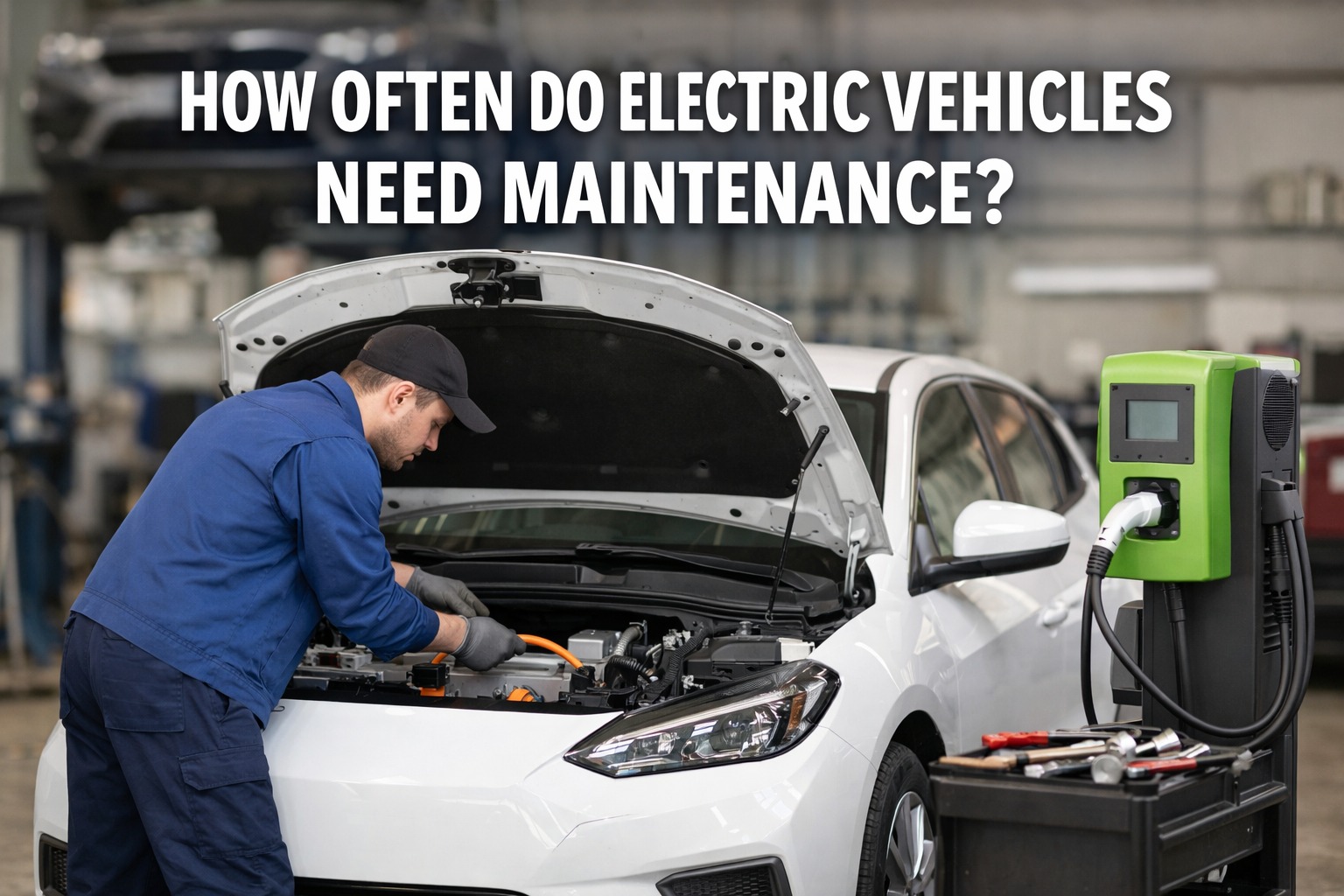
The short answer: EVs need service less frequently than traditional vehicles, but they still require regular attention. Most manufacturers recommend service every 10,000-15,000 miles or annually, compared to 5,000-7,500 miles for conventional vehicles. However, the nature of that service is fundamentally differentand far simpler.
For fleet managers, this translates directly to reduced downtime and lower operating costs. According to the U.S. Department of Energy, battery electric vehicles cost approximately $0.093 per kilometer in scheduled maintenance versus $0.154 for gasoline vehicles—a 40% reduction. Over a 200,000-mile vehicle lifetime, that difference adds up to thousands of dollars per vehicle.
But understanding when to service your EVs—and what actually needs attention—requires moving beyond the traditional oil-change-centric maintenance mindset. This guide breaks down exact service intervals by manufacturer, component, and mileage so you can build an effective preventive maintenance program for your electric fleet.
Why EVs Need Less Maintenance
Before diving into specific intervals, it's worth understanding why electric vehicles require less frequent service. The difference comes down to mechanical simplicity: a typical internal combustion engine has over 2,000 moving parts, while an electric motor has fewer than 20.
Maintenance Items EVs Eliminate
Oil changes (no engine oil)
Transmission fluid service (single-speed reducer)
Spark plug replacement
Timing belt/chain service
Fuel filter replacement
Engine air filter replacement
Exhaust system repairs
Emission system service
Radiator coolant flush (engine)
Serpentine belt replacement
Alternator service
Starter motor replacement
Maintenance Items EVs Still Need
Tire rotation and replacement
Brake inspection and service
Cabin air filter replacement
Wiper blade replacement
12V auxiliary battery service
Battery coolant service
Brake fluid inspection/replacement
Suspension and steering inspection
HVAC system service
Washer fluid refill
Wheel alignment
Software updates
EV Maintenance Schedule by Interval
The following schedule represents typical maintenance intervals across major EV manufacturers. Always consult your specific vehicle's owner's manual, as intervals vary by make, model, and driving conditions.
Every 6,250-7,500 Miles
~Every 2-3 months for fleet vehicles
Tire Rotation
Tesla recommends rotation every 6,250 miles or when tread depth difference reaches 2/32". EVs are harder on tires due to instant torque and heavier weight from battery packs.
Multi-Point Inspection
Visual inspection of tires, lights, wipers, fluid levels. Many fleet operators perform these during routine daily inspections.
Every 10,000-15,000 Miles / Annually
Standard service interval for most EVs
Comprehensive Inspection
Battery health check, HV system inspection, brake system inspection, suspension check, software updates.
Brake Caliper Service
Clean and lubricate brake calipers every 12 months or 12,500 miles if operating in areas with salted winter roads (Tesla, GM recommendations).
Wheel Alignment Check
Verify alignment and adjust as needed. EVs can experience faster tire wear with improper alignment.
Every 20,000-25,000 Miles / 2 Years
Extended service items
Cabin Air Filter Replacement
Replace every 2 years (Tesla, BMW) or 20,000 miles. HEPA filters may last 3 years. More frequent in dusty or high-pollen environments.
Brake Fluid Inspection
Inspect brake fluid quality. Some manufacturers recommend replacement every 2 years regardless of mileage (BMW, VW).
A/C Desiccant Bag
Tesla vehicles manufactured before 2021 require replacement every 6 years.
Every 30,000-40,000 Miles / 3-4 Years
Major service items
Brake Fluid Replacement
Full brake fluid flush. Tesla recommends health check every 4 years with replacement if necessary.
HEPA Filter Replacement
If equipped, replace every 3 years (annually in high-pollution environments).
Reduction Gear Fluid Inspection
Some manufacturers recommend inspection of electric drive unit fluid at this interval.
Every 100,000-150,000 Miles / 5+ Years
Long-term service items
Battery Coolant Replacement
Ford recommends battery coolant replacement at 200,000 miles. Chevrolet recommends Dexcool coolant replacement at 150,000 miles or 5 years.
Electric Drive Assembly Fluid
Ford recommends replacement at 100,000 miles. Some fleets follow severe-service interval of 45,000 miles.
Brake Pad Replacement
Due to regenerative braking, pads may last 70,000-100,000+ miles. Replace based on inspection, not fixed intervals.
Manufacturer-Specific Service Schedules
While the general intervals above apply across most EVs, each manufacturer has specific recommendations. Here's what the major EV makers recommend:
Tesla (Model 3, Model Y, Model S, Model X)
Tire rotation: Every 6,250 miles or 2/32" tread difference
Cabin air filter: Every 2 years (3 years for HEPA/carbon)
Brake fluid: Health check every 4 years, replace if needed
Brake calipers: Clean/lubricate annually (salted roads)
Wiper blades: Replace annually
A/C desiccant: Every 6 years (pre-2021 vehicles)
Tesla recommends "as-needed" service rather than fixed intervals for most items.
Ford (Mustang Mach-E, F-150 Lightning)
Tire rotation: Every 10,000 miles
Cabin air filter: Every 20,000 miles
Brake fluid: Inspect every 3 years
Electric drive fluid: Replace at 100,000 miles
Battery coolant: Replace at 200,000 miles
5-year estimated maintenance cost: Mach-E $3,551, F-150 Lightning $3,573
Chevrolet / GM (Bolt, Equinox EV, Silverado EV)
Tire rotation: Every 7,500 miles
Multi-point inspection: Every 7,500 miles
Cabin air filter: Every 22,500 miles or 2 years
Coolant circuits: Every 150,000 miles or 5 years
Electric drive fluid: Every 45,000 miles (severe service)
GM uses condition-based service indicators for many maintenance items.
BMW (iX, i4, i7)
Service interval: Every 10,000 miles or annually
Tire rotation: Every 10,000 miles
Cabin/pollen filter: Every 20,000 miles or 2 years
Brake fluid: Every 30,000 miles or 3 years
Uses Condition Based Service (CBS) system to monitor maintenance needs.
Hyundai / Kia (Ioniq 5, Ioniq 6, EV6, EV9)
Service interval: Every 7,500 miles (12,000 km)
Tire rotation: Every 7,500 miles
Reduction gear fluid: Inspect at specific intervals
Brake fluid: Inspect/replace as needed
Service #1, #2, #3 rotate at 12,000 km intervals after 72,000 km.
Volkswagen (ID.4, ID.Buzz)
Tire rotation: Every 10,000 miles
Cabin air filter: Every 20,000 miles or 2 years
Brake fluid: Every 20,000 miles or 2 years
Battery coolant: Lifetime (replace only if needed)
Standard 4-year/50,000-mile new vehicle warranty.
Managing different maintenance schedules across multiple EV makes and models? Automate service reminders, track intervals by vehicle, and never miss a PM again.
Start Free Trial Book a DemoEV Brake Maintenance: The Regenerative Braking Factor
One of the most significant maintenance differences between EVs and conventional vehicles is brake system longevity. Thanks to regenerative braking—which uses the electric motor to slow the vehicle while recovering energy—EV brake pads can last 70,000 to 100,000+ miles compared to 30,000-50,000 miles for ICE vehicles.
Why EV Brakes Last Longer
Regenerative braking handles 70-90% of normal deceleration. The electric motor reverses function to act as a generator, converting kinetic energy back to electricity stored in the battery. This dramatically reduces reliance on friction brakes.
The Rust Problem
Because EV brake components are used less frequently, rust can accumulate on rotors and brake hardware—especially in wet or salt-prone climates. Unlike ICE vehicles where frequent braking burns off rust, EV rotors may need cleaning or replacement due to corrosion rather than wear.
100,000+
Potential miles before brake pad replacement
83%
Less brake dust emissions vs. gas vehicles
70%
Kinetic energy recovered through regen braking
Fleet Recommendation
For EVs in salted-road environments, follow Tesla's guidance: clean and lubricate brake calipers every 12 months or 12,500 miles. Periodically apply firm brake pedal pressure during low-speed driving to scrub rust from rotors. Inspect brakes annually regardless of pad thickness to check for corrosion.
Tire Maintenance: More Critical for EVs
While EVs need less brake service, they typically require more attention to tires. The combination of heavier vehicle weight (due to battery packs) and instant torque delivery accelerates tire wear compared to conventional vehicles.
Why EV Tires Wear Faster
Increased Weight
Battery packs add 1,000-2,000+ lbs to vehicle weight, increasing load on tires
Instant Torque
Electric motors deliver 100% torque from 0 RPM, increasing friction and wear
Regenerative Braking
Frequent deceleration through regen adds wear patterns different from ICE
Weight Distribution
Underfloor batteries create different wear patterns requiring specific rotation schedules
EV Tire Maintenance Best Practices
Rotation frequency: Every 5,000-7,500 miles (more frequent than ICE)
Pressure checks: Monthly—proper inflation critical for range and wear
Alignment: Check annually or when uneven wear observed
EV-specific tires: Consider tires designed for EVs (reinforced sidewalls, low rolling resistance)
Tread monitoring: Replace when any position reaches 2/32" tread depth
EV vs. ICE: Maintenance Cost Comparison
The financial impact of reduced EV maintenance is substantial over vehicle lifetime. Here's how the numbers compare:
Cost Metric
Electric Vehicle
Gas Vehicle
Savings
Lifetime maintenance cost
$4,600
$9,200
50%
Cost per mile
$0.031
$0.061
49%
Annual maintenance
$950
$1,850
49%
Days between service visits
+21 days
Baseline
More uptime
10-year maintenance (Model 3)
$3,258
$9,790*
67%
Sources: Consumer Reports, AAA Your Driving Costs 2025, CarEdge, U.S. Department of Energy. *Luxury sedan average.
Fleet-Specific EV Maintenance Considerations
Commercial and fleet EVs often have different maintenance requirements than personal vehicles due to higher utilization, specific duty cycles, and regulatory compliance needs.
Transit Bus EVs
Transit agencies typically follow manufacturer recommendations for quarterly maintenance checks and service at intervals like every 6,000 miles. Key focus areas include battery health monitoring, charging system inspection, and HVAC performance for passenger comfort.
"Preventive maintenance is key to maintaining a safe and efficient fleet." — Ben Varner, Director of Assets and Planning, FCRTA
Commercial Delivery Fleets
High-mileage delivery vehicles may require more frequent tire service due to constant stop-and-go operation. Regenerative braking is heavily utilized, extending brake life significantly, but careful attention to charging infrastructure maintenance is essential.
School Bus Fleets
Electric school buses benefit from lower maintenance costs, but require specific attention to battery thermal management systems, especially in extreme climate regions. Follow EPA Clean School Bus Program requirements for inspection documentation.
Fleet Management Tip
According to Utilimarc's Electric Vehicle Consortium data, EVs average 21 more days between maintenance visits compared to their ICE counterparts. Use this extended interval to focus on predictive maintenance—monitoring battery health trends, tracking range degradation, and optimizing charging schedules. Modern fleet management software can automate these monitoring tasks across your entire EV fleet.
Creating Your EV Maintenance Schedule
Based on manufacturer recommendations and fleet best practices, here's a practical maintenance schedule template for your EV fleet:
Daily / Pre-Trip
Check tire condition and pressure visually
Verify charge level adequate for route
Test lights and signals
Check wiper operation
Note any warning lights or messages
Monthly
Verify tire pressure with gauge
Check washer fluid level
Inspect charging cables for damage
Review battery health data
Check 12V auxiliary battery voltage
Every 5,000-7,500 Miles
Rotate tires
Multi-point inspection
Check brake system (visual)
Inspect suspension components
Apply software updates
Annually / 10,000-15,000 Miles
Comprehensive vehicle inspection
Battery diagnostic test
Brake caliper cleaning (salt areas)
Cabin air filter inspection
Wheel alignment check
HV system inspection
Every 2 Years / 20,000-25,000 Miles
Replace cabin air filter
Inspect brake fluid
Inspect/replace wiper blades
Comprehensive brake inspection
Battery coolant inspection
The Bottom Line on EV Maintenance
Electric vehicles require significantly less maintenance than gasoline-powered vehicles—but they're not maintenance-free. Most EVs need service every 10,000-15,000 miles or annually, focused primarily on tires, brakes, cabin air filters, and battery system health. The 50% reduction in maintenance costs and 21 additional days between service visits translate directly to lower operating costs and increased vehicle availability for fleet operators.
The key to maximizing EV maintenance savings is understanding what actually needs service and when. Avoid over-servicing based on ICE vehicle habits, but don't neglect the items that do require attention—especially tires, brake system inspections, and battery coolant service at manufacturer-specified intervals.
Ready to streamline your EV fleet maintenance? Track service intervals, monitor battery health, and automate PM scheduling across your entire fleet.
Get Started Free Schedule DemoFrequently Asked Questions
Q: Do EVs really need less maintenance than gas cars?
A: Yes. EVs have fewer moving parts (under 20 vs. over 2,000 in an ICE engine), no oil to change, no transmission fluid service, and no exhaust system to maintain. Consumer Reports data shows EVs cost about 50% less to maintain over their lifetime, averaging $4,600 total versus $9,200 for gas vehicles.
Q: How often should I service my electric vehicle?
A: Most manufacturers recommend service every 10,000-15,000 miles or annually, whichever comes first. This is less frequent than the typical 5,000-7,500 mile interval for gas vehicles. However, tire rotation is often recommended more frequently (every 5,000-7,500 miles) due to increased vehicle weight and torque.
Q: Do EV brakes need to be replaced as often?
A: No. Thanks to regenerative braking, EV brake pads typically last 70,000-100,000+ miles compared to 30,000-50,000 miles for gas vehicles. However, EVs may need brake service for rust and corrosion issues (especially in salt-prone areas) rather than pad wear. Tesla recommends cleaning and lubricating calipers annually in salted-road environments.
Q: How often should I rotate tires on an electric vehicle?
A: Most manufacturers recommend tire rotation every 5,000-7,500 miles for EVs—more frequently than some ICE vehicles. Tesla specifically recommends rotation every 6,250 miles or when tread depth difference reaches 2/32". EVs are harder on tires due to heavier weight and instant torque delivery.
Q: What maintenance do EVs still need?
A: EVs still require tire rotation and replacement, brake inspections and periodic service, cabin air filter replacement (every 2 years), wiper blade replacement (annually), brake fluid inspection/replacement (every 2-4 years), 12V auxiliary battery service, and battery coolant service at extended intervals (100,000-200,000 miles). Software updates are also important for optimal performance.
Q: How much does EV maintenance cost compared to gas vehicles?
A: According to Consumer Reports and DOE data, EVs cost approximately $0.031 per mile in maintenance versus $0.061 for gas vehicles—about 50% less. Annual maintenance averages around $950 for EVs compared to $1,850+ for ICE vehicles. A Tesla Model 3 costs approximately $3,258 in maintenance over 10 years.
Q: Does the EV battery require maintenance?
A: The high-voltage battery itself requires minimal owner maintenance—most EVs have sophisticated battery management systems that handle charging optimization automatically. However, the battery thermal management system (coolant) should be serviced at manufacturer intervals, typically 100,000-200,000 miles. Monitoring battery health through diagnostics is recommended for fleet vehicles.
Q: Can I service my EV at any mechanic?
A: Basic maintenance like tire rotation, wiper blades, and cabin air filters can be performed by any qualified mechanic. However, high-voltage system work (battery, motor, charging system) requires technicians with specialized training and safety certifications. Work performed by non-certified technicians on HV systems may void warranties and poses safety risks.







