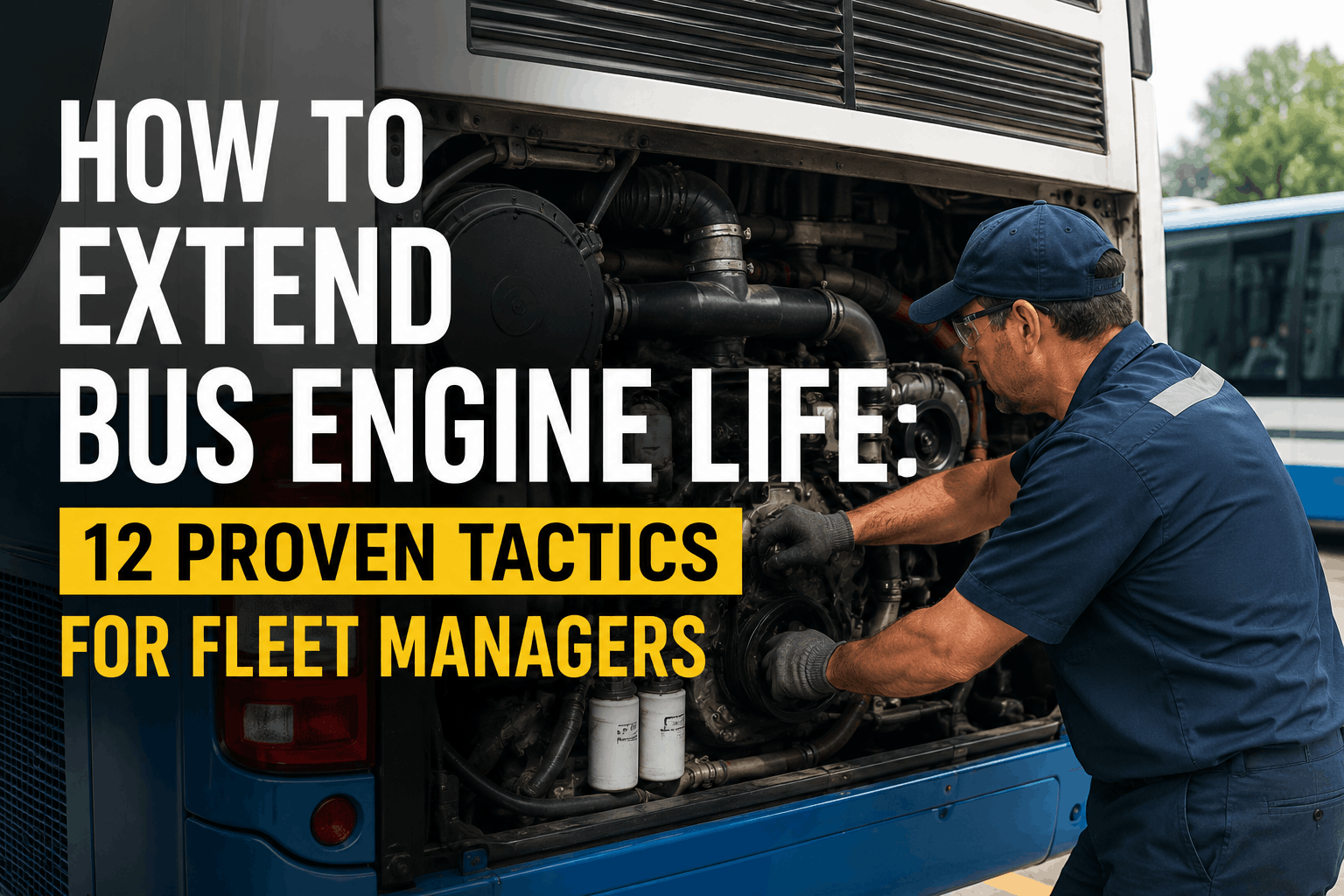
The engine is the most expensive component to replace in any bus—a major failure costs $20,000–$45,000 and removes the bus from service for days or weeks. Yet many fleets replace engines prematurely because of preventable failures: poor oil quality, cooling system neglect, excessive idling, and driver habits that accelerate wear. The good news is that extending bus engine life by 50% is achievable with systematic maintenance and driver practices. This guide delivers 12 proven tactics to extend bus engine life, backed by real fleet data. Implement them and watch your engine life increase from 500,000 to 750,000+ miles.
Engine Life Extension Guide 2026
How to Extend Bus Engine Life: 12 Proven Tactics for Fleet Managers
12 proven tactics to extend bus engine life. Oil quality, cooling system, driver habits, idle reduction, load management and predictive maintenance.
The Engine Life Reality: What 500,000 Miles Really Costs
A diesel bus engine typically lasts 500,000–700,000 miles with proper maintenance. Without it, major failures occur at 300,000–400,000 miles—a 40% reduction in service life. The cost difference is staggering: an engine that lasts 750,000 miles instead of 500,000 saves $30,000–$60,000 in replacement costs and adds 2-3 years of service life.
$20K–$45K
Engine replacement cost
500K–750K
Miles with proper maintenance
40%
Life reduction without PM
$30K–$60K
Savings per extended life
The data shows that every $1 spent on preventive engine maintenance saves $8–$12 in future repairs. Oil analysis, cooling system maintenance, and driver coaching are the highest ROI activities.
Engine Life Extension Impact: Miles vs. Maintenance Investment
The trend is clear: each layer of maintenance investment extends engine life. Fleets that implement oil analysis, cooling system maintenance, driver coaching, and predictive maintenance achieve 750,000+ miles from their engines—40-50% longer than reactive fleets.
12 Proven Tactics to Extend Bus Engine Life
1. Use Premium Oil and Extend with Analysis
Use CJ-4 or CK-4 spec oil and extend intervals based on oil analysis. Oil analysis detects wear metals, fuel dilution, and coolant contamination before they cause damage. One analysis costs $25–$50 and can save a $20,000 engine.
2. Maintain Cooling System Religiously
Overheating is the #1 killer of diesel engines. Test coolant pH and SCA levels every 15,000 miles. Replace coolant at 50,000-60,000 miles or 5 years. A $25 thermostat can prevent a $12,000 head gasket.
3. Coach Drivers on Idle Reduction
Excessive idling causes cylinder wash-down, fuel dilution, and increased wear. One hour of idling equals 25-30 miles of engine wear. Limit idling to 5 minutes where possible. Idle reduction saves fuel and extends engine life.
4. Monitor Air Filter Condition
A clogged air filter reduces power and increases fuel consumption. Replace air filters at manufacturer intervals. Use filter restriction gauges to optimize replacement timing. In dusty conditions, increase filter change frequency.
5. Use Proper Fuel and Fuel Additives
Low-quality fuel causes injector deposits and reduced performance. Use fuel additives to improve lubricity and cetane. Change fuel filters at manufacturer intervals. Use biodiesel blends only within OEM specifications.
6. Maintain Turbocharger Health
Turbocharger failure often precedes engine failure. Allow turbo to cool before shutdown (1-2 minutes idle). Check for oil leaks and boost pressure. Replace turbo at first signs of wear.
7. Monitor EGR System Performance
EGR system issues cause power loss and increased emissions. Clean EGR valve and cooler at manufacturer intervals. Monitor EGR differential pressure. Replace EGR components at first signs of failure.
8. Address Fuel System Issues Immediately
Fuel system issues cause injector failure and engine damage. Monitor fuel pressure and injector balance rates. Replace injectors at manufacturer intervals. Use fuel system cleaners regularly.
9. Manage Engine Load and Lugging
Avoid lugging the engine at low RPM. Downshift before the engine lugs. Use engine brake on descents. Avoid overloading the bus.
10. Use Predictive Maintenance Technology
Use engine ECM data to predict component failure. Monitor oil pressure, coolant temperature, and fuel pressure trends. Address issues before they cause failure.
11. Train Technicians on Engine Diagnostics
Diagnostic training catches issues early. Train technicians on ECM data interpretation. Use diagnostic tools regularly. Address fault codes immediately.
12. Track Engine Life Metrics
Track oil analysis results, fuel consumption, and component life. Use data to identify improvement areas. Share results with drivers and technicians. Celebrate successes.
Engine Life Extension: Oil Analysis Impact
Oil analysis delivers 45% of engine life extension by catching wear before it causes failure. Cooling system maintenance adds 30%, and driver habit improvement adds 25%. Implementing all three strategies delivers the maximum 40-50% engine life extension.
Engine Maintenance Checklist: What to Track
Use this checklist during every engine PM inspection to ensure you're capturing the data needed to extend engine life.
We implemented oil analysis, cooling system maintenance, and driver coaching across our 95-bus fleet. In the first year, we extended engine life by an average of 150,000 miles per bus. Oil analysis caught 3 EGR cooler leaks before they caused engine damage. Cooling system maintenance prevented 5 head gasket failures. Driver coaching reduced idle time by 60%, saving fuel and reducing cylinder wear. Our engine replacement frequency dropped from 6 per year to 1 per year.
Digitize Your Engine Life Extension Program
BusCMMS tracks oil analysis results, cooling system test data, filter replacement intervals, idle time, and ECM fault codes. Auto-schedule engine PM intervals based on mileage. Complete audit trail for every engine component. Start extending engine life and reducing replacement costs today.
Bus Engine Life Extension FAQs
How many miles should a bus engine last?
A well-maintained diesel bus engine should last 500,000–700,000 miles. With oil analysis, cooling system maintenance, and driver coaching, engines can reach 750,000+ miles. Without proper maintenance, major failures occur at 300,000–400,000 miles.
What is the single most effective way to extend engine life?
Oil analysis is the single most effective tactic—it catches wear metals and contamination before they cause catastrophic failure. One $25–$50 analysis can save a $20,000 engine by identifying issues early.
How does idling affect engine life?
Excessive idling causes cylinder wash-down, fuel dilution, and increased wear. One hour of idling equals 25-30 miles of engine wear. Limiting idling to 5 minutes can extend engine life by 15-20%.
How often should engine coolant be tested?
Engine coolant pH and SCA levels should be tested every 15,000–20,000 miles. Coolant should be replaced every 50,000–60,000 miles or 5 years. Low pH causes liner pitting and cavitation damage.
What are the signs of a failing diesel engine?
Signs include: excessive exhaust smoke (white = coolant, blue = oil, black = over-fueling), unusual engine noise, rough idle, reduced power, high oil consumption, coolant consumption, and illuminated warning lights. Any of these symptoms should trigger immediate diagnostic action.
Can BusCMMS track engine life extension?
Yes. BusCMMS tracks oil analysis results, cooling system test data, filter replacement intervals, idle time, and ECM fault codes. This creates a complete engine history for each bus, helping you measure the effectiveness of your engine life extension strategies.
The Bottom Line
Extending bus engine life is the single most impactful way to reduce replacement costs and improve fleet reliability. Oil analysis catches wear before it causes failure. Cooling system maintenance prevents overheating and head gasket damage. Driver coaching reduces wear from idling and lugging. When you combine all 12 tactics, you can extend engine life by 40-50%, saving $30,000–$60,000 per engine replacement avoided. This guide provides the step-by-step tactics your technicians and drivers need to extend engine life across your fleet. When combined with BusCMMS digital inspection forms, auto-scheduled PM intervals, and complete engine history tracking, your engine maintenance program becomes proactive—catching issues before they cause catastrophic failure.