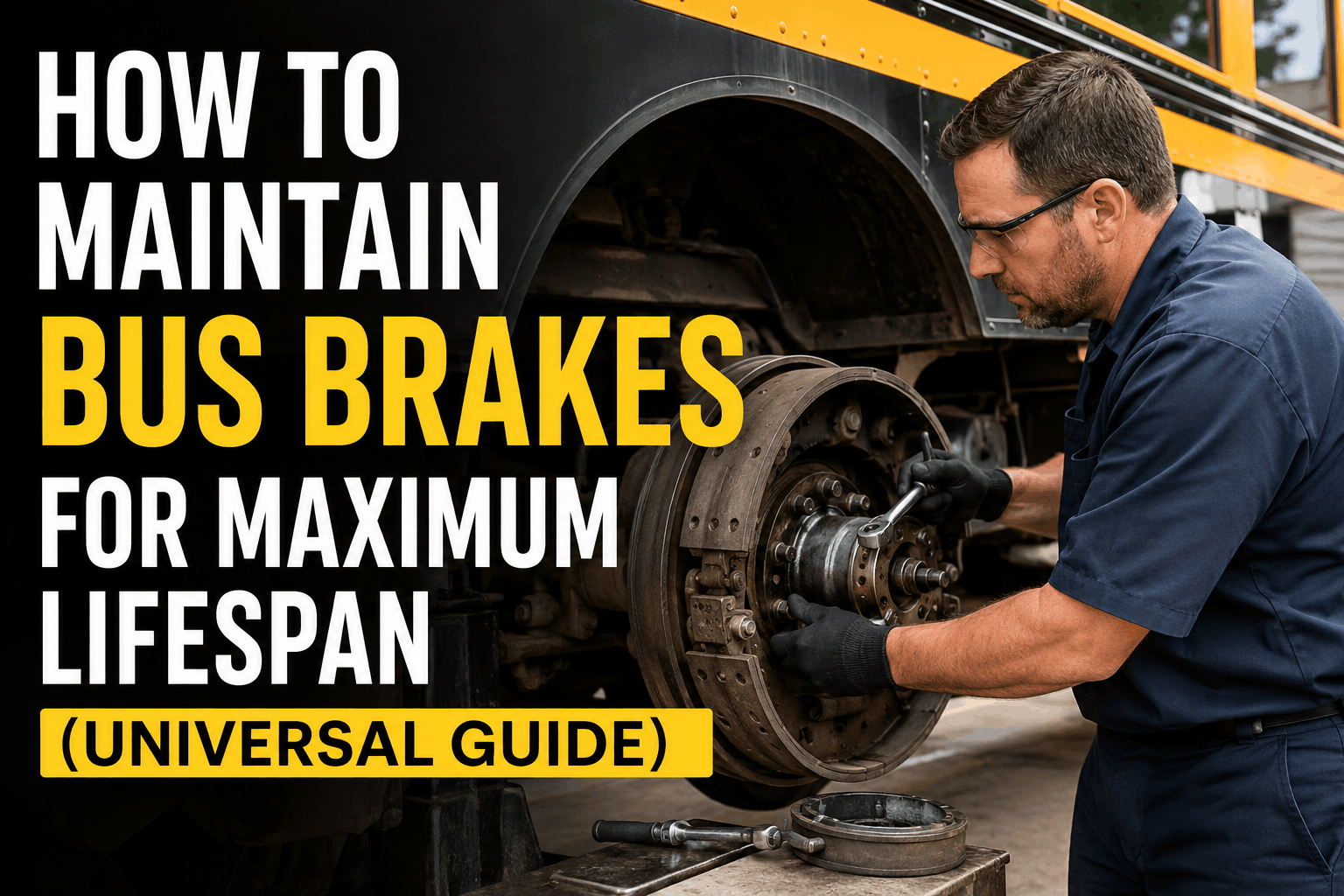
Brakes are the most critical safety system on any bus—and they are also one of the most expensive systems to maintain. A full brake job on a transit bus can cost $4,000–$8,000 per axle. Yet many fleets replace brakes prematurely because they rely on guesswork rather than data. Others replace them too late, risking roadside violations and safety incidents. This guide shows you how to extend bus brake life by 20-40% through systematic wear monitoring, stroke trending, friction selection, axle rotation, and driver coaching. The result: fewer brake jobs, lower maintenance costs, and safer buses.
Brake Life Extension Guide 2026
How to Maintain Bus Brakes for Maximum Lifespan
Bus brake maintenance guide. Pad/shoe wear monitoring, brake stroke trending, friction selection, axle rotation and driver coaching to extend brake life.
Why Brake Life Matters: The Cost of Brake Wear
Brake maintenance is the single largest variable cost in most bus fleets—often exceeding tire costs and rivaling fuel in annual spend. A 100-bus fleet typically spends $120,000–$200,000 annually on brake parts and labor. Extending brake life by just 20% saves $24,000–$40,000 per year.
$4,000–$8,000
Cost per brake job (per axle)
20-40%
Potential brake life extension
$24K–$40K
Annual savings per 100-bus fleet
80%
Brake wear from driver behavior
The single biggest factor in brake wear is driver behavior—up to 80% of brake wear comes from how the bus is driven, not component quality or road conditions. Aggressive braking, late braking, and riding the brakes all accelerate wear. The single cheapest way to extend brake life is driver coaching.
Brake Life vs. Driver Behavior: The Data
The data is clear: buses with frequent hard braking events get 30-50% fewer miles per brake job. Reducing hard braking events through driver coaching is the single most effective way to extend brake life. Fleets that implement driver coaching programs report 20-40% longer brake life within 6-12 months.
Six Strategies to Extend Bus Brake Life
1. Monitor Brake Stroke Trends
Record pushrod stroke at every brake inspection. Trend stroke measurements over time to identify brakes that are out of adjustment or wearing faster than expected. Stroke should be measured at 80-90 PSI. Replace brake components when stroke reaches 80% of the maximum allowable limit, not when it hits the limit.
2. Choose the Right Friction Material
Different friction materials perform differently. Longer-lasting materials may cost more upfront but deliver lower cost per mile. Extreme service materials can last 40-60% longer than standard formulations. Analyze your duty cycle and choose the right material for your operation.
3. Implement Axle Rotation
Brakes wear faster on some axles than others. Rotation patterns spread wear across all axle positions, extending component life by 15-25%. Document rotation in your CMMS to ensure compliance and track effectiveness.
4. Coach Drivers on Braking Technique
Driver behavior accounts for up to 80% of brake wear. Coach drivers to anticipate stops and brake gradually. Reduce hard braking events. Provide feedback on braking performance through telematics or driver scorecards. Many fleets report 20-40% longer brake life from coaching alone.
5. Use Brake Retarders and Engine Brakes
Train drivers to use retarders and engine brakes effectively. A properly used retarder can reduce service brake wear by 40-60%. Ensure all drivers understand when and how to use auxiliary braking systems.
6. Address Alignment and Air System Issues
Misalignment causes uneven brake wear. Air system leaks reduce brake performance and cause uneven application. Regular alignment checks and air system leak testing prevent uneven wear and extend brake life.
Brake Wear Comparison: Standard vs. Optimized
Driver coaching alone can extend brake life by 40%, making it the most cost-effective strategy. Friction selection contributes 35%, axle rotation and alignment 25%. Implementing all three strategies delivers the maximum 20-40% brake life extension.
Brake Maintenance Checklist: What to Track
Use this checklist during every brake PM inspection to ensure you're capturing the data needed to extend brake life.
We implemented brake stroke trending, axle rotation, and driver coaching across our 85-bus fleet. In the first year, we extended brake life by 28%—from an average of 95,000 miles per brake job to 122,000 miles. The driver coaching program alone accounted for half of the improvement. We saved $42,000 in brake parts and labor in year one. The data told us exactly which drivers needed coaching and which buses had alignment or air system issues contributing to uneven wear.
Digitize Your Brake Maintenance Program
BusCMMS tracks pushrod stroke measurements, lining thickness trends, axle rotation history, and driver braking behavior. Auto-schedule brake PM intervals based on mileage. Complete audit trail for every brake job. Start extending brake life and reducing maintenance costs today.
Bus Brake Maintenance FAQs
How long should bus brakes last?
Bus brake life varies widely based on duty cycle, driver behavior, and maintenance. Typical brake life: 80,000-120,000 miles for urban transit buses, 120,000-180,000 miles for highway motorcoaches, and 100,000-150,000 miles for school buses. With optimized maintenance programs, brake life can be extended by 20-40%.
What is brake stroke trending?
Brake stroke trending is the practice of recording pushrod stroke measurements at every brake inspection and tracking them over time. Increasing stroke indicates brake wear or adjustment issues. Stroke trending helps identify brakes that need service before they reach the out-of-service limit.
How does driver behavior affect brake life?
Driver behavior accounts for up to 80% of brake wear. Aggressive braking, late braking, and riding the brakes all accelerate wear. Coaching drivers to anticipate stops and brake gradually can extend brake life by 20-40%.
What is axle rotation and why does it matter?
Axle rotation moves tires and brakes between axle positions to distribute wear more evenly. Brakes wear faster on some axles (typically steer and drive) than others. Regular rotation extends brake life by 15-25% and reduces the frequency of brake jobs.
How do I choose the right brake friction material?
Choose friction material based on duty cycle. Standard for mixed-use, severe service for urban/stop-and-go, and extended life for highway applications. Longer-lasting materials may cost more upfront but deliver lower cost per mile. Work with your parts supplier to select the right material for your operation.
Can BusCMMS track brake life extension?
Yes. BusCMMS tracks pushrod stroke measurements, lining thickness, brake job frequency, and cost per mile. This creates a complete brake history for each bus, helping you measure the effectiveness of your brake life extension strategies and identify areas for improvement.
The Bottom Line
Extending bus brake life is the single most impactful way to reduce maintenance costs and improve safety. Driver coaching alone can extend brake life by 40%. Stroke trending catches wear before it becomes critical. Axle rotation distributes wear across axle positions. Choosing the right friction material delivers lower cost per mile. When you combine all six strategies, you can extend brake life by 20-40%, saving $24,000–$40,000 annually per 100-bus fleet. This checklist provides the step-by-step procedure your technicians need to extend brake life across your fleet. When combined with BusCMMS digital inspection forms, auto-scheduled PM intervals, and complete brake history tracking, your brake maintenance program becomes proactive—catching wear before it causes safety issues or costly breakdowns.