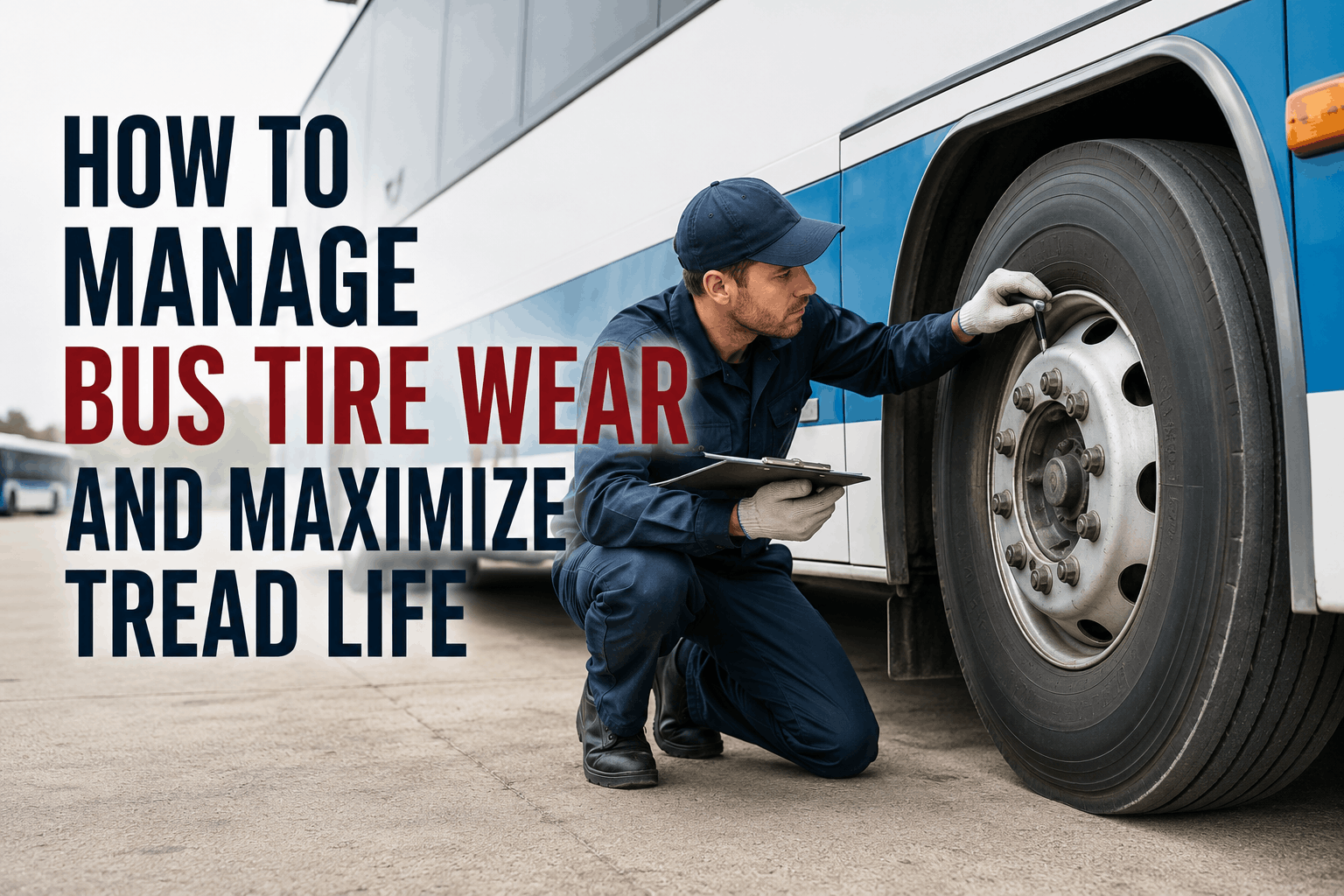
Tires are the second largest operating expense for most bus fleets—behind only fuel. A 100-bus fleet typically spends $120,000–$200,000 annually on tire replacement. Yet most fleets leave 15-25% of tire life on the table through poor pressure management, inconsistent rotation, and alignment issues. This guide delivers proven tactics to manage bus tire wear and maximize tread life—rotation patterns, pressure discipline, alignment checks, retread strategy, and driver behavior coaching. Implement them and extend tire life by 25-40%, saving $30,000–$80,000 per year per 100-bus fleet.
Tire Life Extension Guide 2026
How to Manage Bus Tire Wear and Maximize Tread Life
Manage bus tire wear with these proven tactics. Rotation patterns, pressure discipline, alignment checks, retread strategy and driver behavior coaching.
The Tire Cost Reality: What $200,000 in Annual Spend Really Means
Tires are a fleet's second largest operating expense. A 100-bus fleet spends $120,000–$200,000 annually on tire replacement. Extending tire life by just 25% saves $30,000–$50,000 per year—money that goes directly to the bottom line.
$120K–$200K
Annual tire spend (100-bus fleet)
25-40%
Potential tire life extension
$30K–$80K
Annual savings opportunity
35%
Wear from underinflation
The single biggest factor in tire wear is air pressure—underinflation causes 35% of premature tire wear. Alignment issues cause 20%, and poor rotation practices cause 15%. These are all preventable with systematic management.
Five Key Tactics to Maximize Tire Life
1. Implement Pressure Discipline
Check tire pressure weekly—cold. Underinflation causes shoulder wear and heat buildup. Overinflation causes center wear. Target pressure: check manufacturer placard. 35% of tire wear is from improper inflation. Invest in automatic tire inflation systems for 24/7 pressure management.
2. Establish Rotation Patterns
Rotate tires every 15,000–20,000 miles. Follow manufacturer pattern based on axle position and directional/non-directional tires. Rotation evens out wear and extends life by 15-25%. Document rotations in your CMMS to ensure compliance.
3. Check Alignment and Suspension
Misalignment causes feathering, diagonal wear, and cupping. Inspect alignment every 25,000–30,000 miles. Check suspension components for wear. Alignment and suspension issues cause 20% of premature tire wear.
4. Use Retread Strategy
Retreads cost 30-50% less than new tires and deliver comparable life. Use high-quality retreads for drive and tag axles. New tires for steer axles. A 100-bus fleet saves $40,000–$60,000 annually with retreads.
5. Coach Drivers on Tire Care
Driver behavior impacts tire life—hard cornering, curb strikes, and aggressive braking accelerate wear. Coach drivers on tire preservation. Provide feedback through scorecards. Driver coaching can extend tire life by 10-15%.
Financial Impact: Tire Life Extension Savings
Pressure discipline alone delivers 35% of tire life extension. Alignment adds 25%, rotation adds 20%, and retread strategy and driver coaching add the remaining 20%. Implementing all five tactics delivers the maximum 25-40% tire life extension.
Tire Management Scorecard: Key Metrics to Track
Track these five metrics monthly to measure your tire management program effectiveness:
Cost Per Mile (Tires)
Target: $0.12–$0.18 per mile. Track by axle position. Identify buses with high tire cost for investigation.
Average Tread Life (Miles)
Target: 80,000–100,000 miles for steer, 100,000–150,000 for drive. Track trends to measure improvement.
Retread Utilization Rate
Target: 40-60% of drive axle tires. Track retread count vs. new tire count. Increase retread usage to reduce cost.
Pressure Check Compliance
Target: 95%+ weekly pressure checks. Track compliance by bus and technician. Address low compliance areas.
Rotation Compliance
Target: 90%+ rotation compliance at scheduled intervals. Track rotation dates by bus. Document all rotations.
We implemented weekly pressure checks, systematic rotation, and alignment checks across our 95-bus fleet. In the first year, we extended tire life by 32%—from an average of 95,000 miles to 125,000 miles per tire. The weekly pressure checks alone contributed 15% of the improvement. We saved $58,000 in tire replacement costs in year one. The data told us exactly which buses had alignment issues and which drivers needed coaching on curb strikes.
Digitize Your Tire Management Program
BusCMMS tracks tire pressure checks, rotation schedules, alignment inspections, retread history, and cost per mile. Auto-schedule tire PM intervals based on mileage. Complete audit trail for every tire in your fleet. Start maximizing tire life and reducing costs today.
Bus Tire Management FAQs
How long should bus tires last?
Bus tire life varies based on axle position, duty cycle, and maintenance. Typical tire life: 80,000-100,000 miles for steer axles, 100,000-150,000 miles for drive axles, and 80,000-120,000 miles for tag axles. With proper management, tires can last 25-40% longer.
How often should tire pressure be checked?
Tire pressure should be checked weekly—cold. Underinflation causes 35% of premature tire wear. Invest in automatic tire inflation systems for 24/7 pressure management. Manual checks should be documented in your CMMS.
What causes uneven tire wear on buses?
Uneven wear is caused by: improper inflation (center wear = overinflation, edge wear = underinflation), misalignment (diagonal wear), worn suspension components (cupping), and lack of rotation. Regular inspection catches these issues early.
How often should bus tires be rotated?
Tires should be rotated every 15,000–20,000 miles. Rotation patterns depend on axle position and directional/non-directional tires. Document rotations in your CMMS to ensure compliance and track effectiveness.
Are retreads safe for buses?
Yes—high-quality retreads from certified retreaders are safe and deliver comparable life to new tires. Retreads cost 30-50% less than new tires. Use new tires for steer axles and retreads for drive and tag axles.
Can BusCMMS track tire life extension?
Yes. BusCMMS tracks tire pressure checks, rotation history, alignment inspections, retread records, and cost per mile. This creates a complete tire history for each tire, helping you measure the effectiveness of your tire management strategies.
The Bottom Line
Managing bus tire wear is the single most impactful way to reduce operating costs and improve fleet reliability. Pressure discipline alone can extend tire life by 35%. Alignment and rotation add 25% and 20% respectively. Retread strategy and driver coaching complete the picture. When you combine all five tactics, you can extend tire life by 25-40%, saving $30,000–$80,000 annually per 100-bus fleet. This guide provides the step-by-step tactics your technicians and drivers need to maximize tire life across your fleet. When combined with BusCMMS digital inspection forms, auto-scheduled PM intervals, and complete tire history tracking, your tire management program becomes proactive—catching issues before they cause premature wear or costly failures.