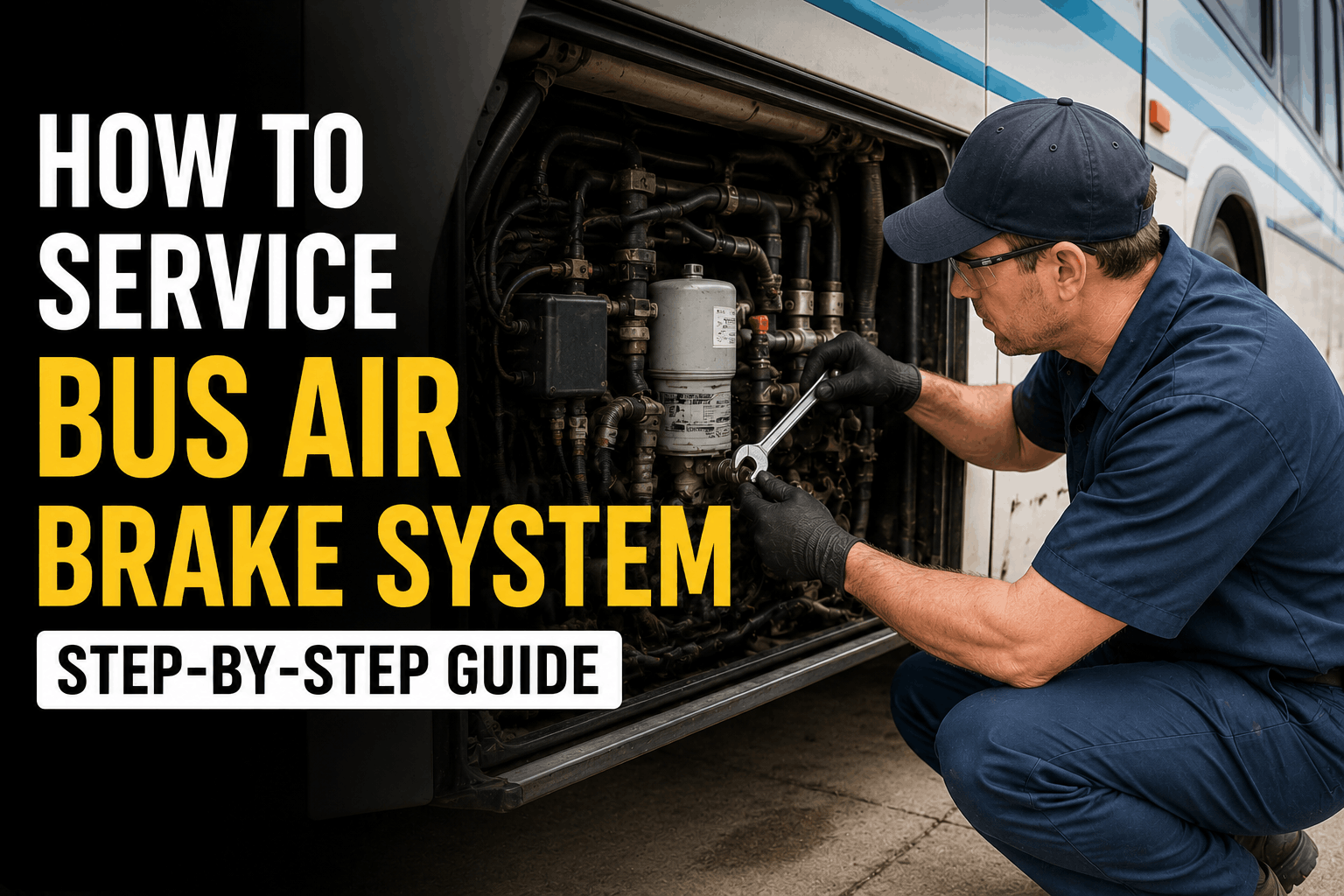
The air brake system is the most critical safety system on any bus—and it is also one of the most maintenance-intensive. A full air brake service includes inspecting lines, adjusting slack adjusters, replacing the air dryer cartridge, testing the governor, and checking brake stroke. Neglecting any of these tasks can lead to brake failure, roadside violations, and out-of-service orders. This step-by-step guide covers the complete air brake service procedure for bus fleets—from inspection through adjustment, testing, and documentation. Use it as your standard procedure for every air brake PM service and DOT inspection.
Air Brake Service Guide 2026
How to Service Bus Air Brake System (Step-by-Step Guide)
Service a bus air brake system step-by-step. Inspect lines, adjust slack adjusters, replace air dryer cartridge, test governor and check brake stroke.
Air Brake Service Frequency: What the Data Shows
Understanding how often each air brake component needs service helps prioritize maintenance efforts and prevent failures. Data from fleet service records reveals clear patterns:
Air dryer cartridges require the most frequent replacement—every 25,000 miles. Slack adjuster checks are needed every 35,000 miles. Full air brake service is recommended every 60,000 miles or annually, whichever comes first. Fleets that follow these intervals experience 75% fewer brake-related roadside violations.
Complete Air Brake Service: 10-Step Procedure
This procedure covers the complete air brake service—from inspection through adjustment and testing.
Step 1: Visual Inspection
Inspect all air lines for chafing, cracks, or leaks. Check brake chambers for damage or leaks. Look for oil contamination indicating compressor issues. Document all findings.
Step 2: Drain Air Tanks
Drain all air tanks—wet tank, primary, and secondary. Check for excessive water or oil accumulation. Excessive water indicates air dryer failure. Record tank condition.
Step 3: Replace Air Dryer Cartridge
Replace the air dryer cartridge at manufacturer interval (typically 25,000 miles). Inspect purge valve operation. Check for oil contamination. Record cartridge replacement date.
Step 4: Test Governor Operation
Verify governor cut-out pressure (120-140 psi) and cut-in pressure (100-115 psi). Listen for unusual cycling. Replace governor if pressures are outside specification.
Step 5: Measure Pushrod Stroke
Measure pushrod stroke at 80-90 psi applied. Record left and right side measurements separately. Compare to maximum allowable stroke for chamber type.
Step 6: Adjust Slack Adjusters
Verify automatic slack adjuster function. Adjust manual slack adjusters to specification. Mark adjustment with torque seal. Record adjustment.
Step 7: Inspect Brake Linings
Measure lining thickness through inspection slot. Record thinnest point. Replace linings below 1/4" or wear indicator. Document lining condition.
Step 8: Check Brake Drums
Inspect drums for scoring, cracks, or heat damage. Measure drum thickness. Replace drums with cracks or out-of-round condition. Record drum condition.
Step 9: Perform Static Leak-Down Test
Engine off, parking brake released, service brake applied. Pressure drop must not exceed 3 psi in 1 minute. Repair all leaks found.
Step 10: Road Test
Test drive bus at 25-30 mph and apply firm braking. Check for brake pull, vibration, or unusual noise. Record road test results.
Slack Adjuster Adjustment: The Critical Step
1
Chock wheels and release parking brake
2
Apply 80-90 PSI service brake pressure
3
Measure pushrod stroke from clevis pin center
4
Manual adjust: turn adjusting bolt until brake drags, then back off 1/4 turn
5
Automatic adjust: stroke should return to same measurement after 3 applications
Pushrod stroke is the single most important measurement in air brake service. A stroke that exceeds maximum allowable for its chamber type is an automatic out-of-service violation. Record stroke measurements at every service to trend wear and predict adjustment needs.
Air Brake Service KPIs
Track these six metrics to measure your air brake service program effectiveness:
Stroke Measurement Compliance
Target: 100% at every PM. Track by bus. Address non-compliance immediately.
Air Dryer Cartridge Replacement
Target: 100% at interval (25K miles). Track by bus. Late replacements cause moisture issues.
Leak-Down Pass Rate
Target: 95%+ pass rate. Track by bus. Leaks indicate line or component failure.
Governor Cut-Out Pressure
Target: 120-140 psi. Track each bus. Out-of-spec indicates governor failure.
Brake Lining Life (Miles)
Target: 80,000-120,000 miles. Track trends. Short life indicates driver or alignment issues.
Brake-Related Roadside Violations
Target: Zero. Track by month. Spike indicates PM gaps or training needs.
We implemented this 10-step air brake service procedure across our 95-bus fleet. In the first year, we caught 27 leaky air brake chambers, replaced 18 air dryer cartridges on schedule, identified 12 governor issues, and found 8 slack adjusters out of adjustment. Our brake-related roadside violations dropped to zero, and our average pushrod stroke improved from 1.75" to 1.4". The step-by-step procedure ensures no task is skipped and every measurement is documented.
Digitize Your Air Brake Service Process
BusCMMS guides technicians through every air brake service step—line inspection, tank drainage, air dryer replacement, governor testing, stroke measurement, slack adjuster adjustment, lining inspection, leak-down testing, and road test verification. Auto-schedule brake PM intervals based on mileage. Complete audit trail for every brake service in your fleet.
Bus Air Brake Service FAQs
How often should air brake systems be serviced?
Full air brake service should be performed every 60,000 miles or annually, whichever comes first. Components should be serviced at different intervals: air dryer cartridge every 25,000 miles, slack adjuster check every 35,000 miles, and brake stroke measurement every 45,000 miles.
What is the maximum allowable pushrod stroke?
Maximum stroke depends on chamber type: Type 30 = 2.25", Type 16 = 2.0", Type 20 = 2.0", Type 24 = 2.25", Type 36 = 2.5". Exceeding these limits is an out-of-service violation. Always measure stroke with service brakes fully applied at 80-90 PSI.
What causes air brake system leaks?
Air brake leaks are caused by: worn seals, cracked lines, loose fittings, failed brake chambers, and damaged air bags. Use soapy water or ultrasonic leak detectors to identify leaks. Repair all leaks found. Static leak-down should not exceed 3 psi in 1 minute.
How do I adjust an automatic slack adjuster?
Automatic slack adjusters do not require manual adjustment. Verify function by applying service brake and measuring stroke. Stroke should return to the same measurement after 3 brake applications. If stroke varies significantly, the slack adjuster may be malfunctioning and requires replacement.
What are the signs of a failing air dryer?
Signs include: water in air tanks, ice in air system during winter, purge valve not cycling properly, oil in air system, and frequent tank draining. Replace air dryer cartridge at manufacturer interval (typically 25,000 miles) to prevent moisture damage to brake components.
Can BusCMMS track air brake service history?
Yes. BusCMMS tracks pushrod stroke measurements, air dryer cartridge replacements, governor test results, slack adjuster adjustments, leak-down test results, and brake lining measurements. This creates a complete air brake history for each bus, helping identify wear patterns and predict service needs.
The Bottom Line
Servicing bus air brake systems is the single most important maintenance activity for passenger safety and fleet compliance. The 10-step procedure covers every critical component—air lines, tanks, air dryer, governor, slack adjusters, linings, drums, leak-down, and road test. Regular service intervals prevent brake-related roadside violations, extend component life, and ensure stopping power when it matters most. This guide provides the step-by-step procedure your technicians need to service every air brake system in your fleet. When combined with BusCMMS digital inspection forms, auto-scheduled PM intervals, and complete brake history tracking, your air brake maintenance program becomes proactive—catching issues before they compromise safety or compliance.