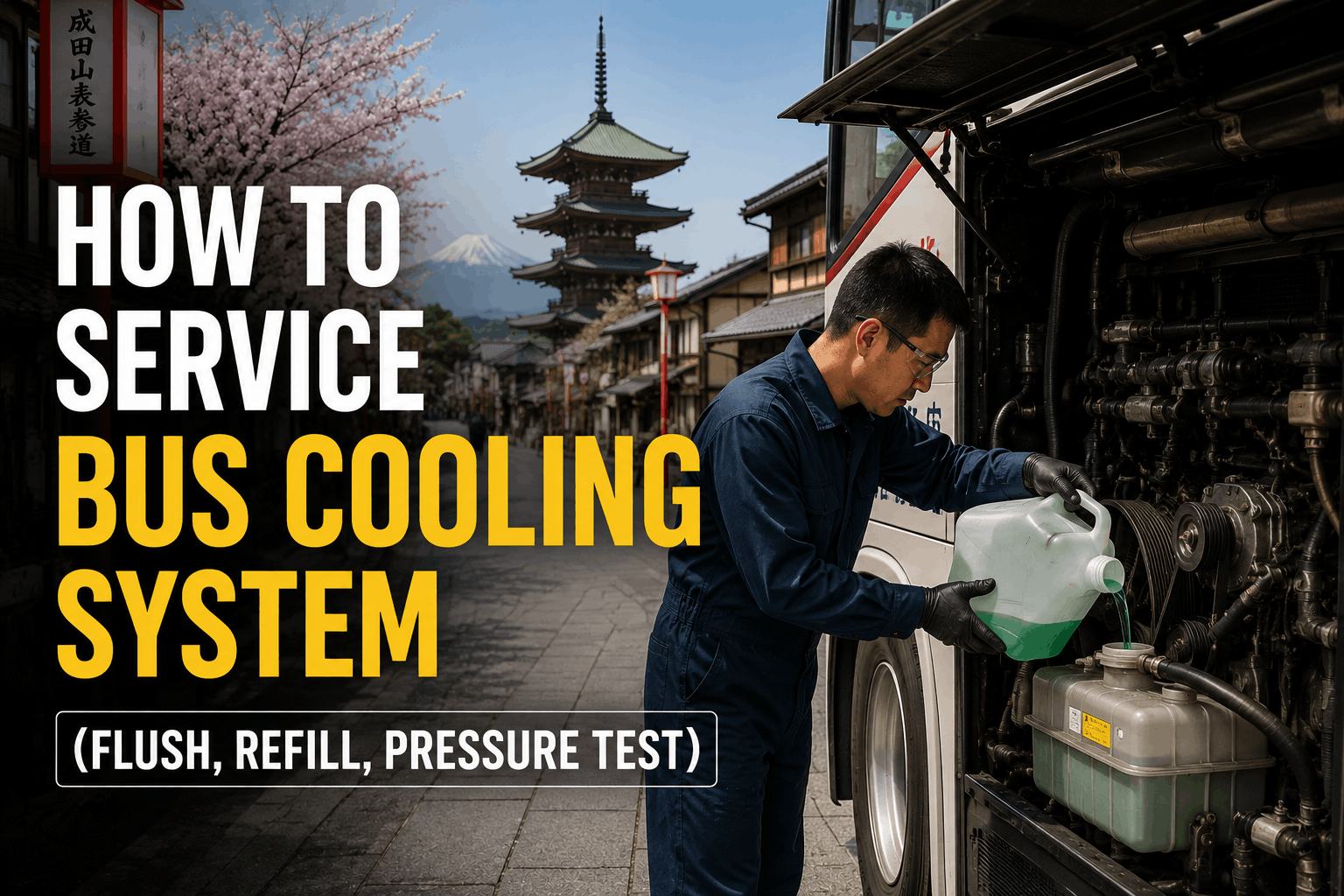
The cooling system is the unsung hero of bus engine reliability—and it is also one of the most neglected systems in fleet maintenance. A properly serviced cooling system keeps engine temperatures stable, prevents overheating, and extends engine life by hundreds of thousands of miles. This step-by-step guide covers the complete cooling system service procedure: draining, flushing, refilling with correct coolant, pressure testing the system, and verifying SCA (Supplemental Coolant Additive) levels for diesel engines. Use it as your standard procedure for every cooling system PM service.
Cooling System Service Guide 2026
How to Service Bus Cooling System (Flush, Refill, Pressure Test)
Service a bus cooling system properly. Drain, flush, refill with correct coolant, pressure test the system and verify SCA levels for diesel engines.
The Cooling Service Impact: What Proper Service Delivers
Cooling system service is one of the highest-ROI maintenance activities in any fleet. A properly serviced cooling system prevents overheating, head gasket failure, and engine damage that costs $4,200–$12,000+ to repair.
$4,200–$12,000+
Engine damage from overheating
50-60K miles
Coolant change interval
25%
Engine life extension
15-20%
Fewer overheating events
Cooling System Service: Step-by-Step Progress
1
System Inspection
Inspect hoses, clamps, radiator, water pump, and thermostat for visible issues before draining.
2
Drain Coolant
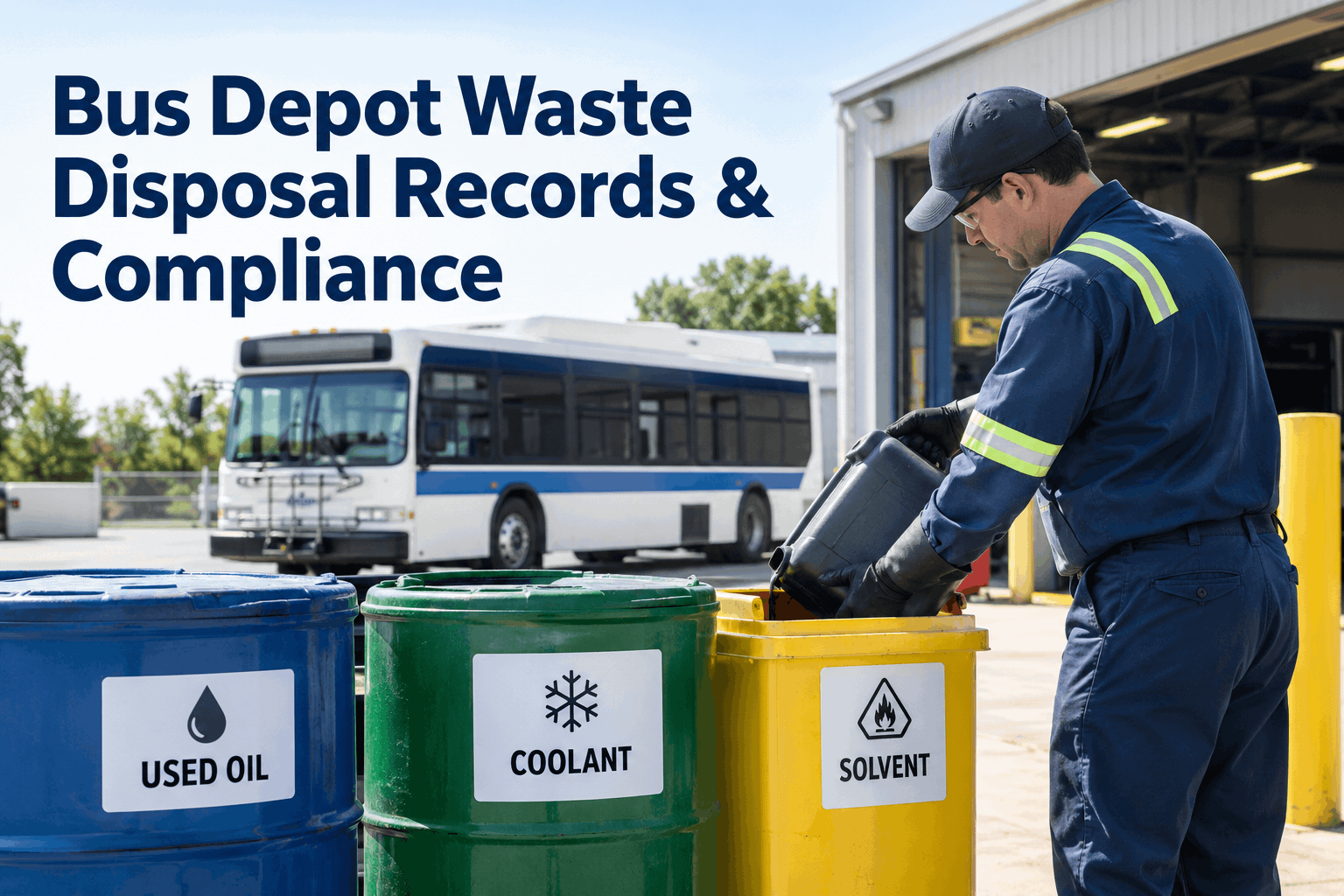
Drain coolant from radiator and block. Collect in approved container for recycling. Dispose of properly.
3
Flush System
Flush system with water or chemical cleaner. Run engine with flush to remove deposits and old coolant.
4
Pressure Test
Pressure test system to 13-16 PSI. Hold for 15 minutes with no drop. Repair leaks before refilling.
5
Refill Coolant
Refill with 50/50 antifreeze/water mix. Use correct coolant type for your engine. Bleed air from system.
6
Verify SCA Levels
Test coolant pH and SCA levels. Add SCA as needed. Record test results. Verify freeze point.
Coolant Types and Compatibility
Extended Life Coolant (ELC)
Longer service life, requires SCA monitoring. Compatible with most diesel engines. Service life: 600,000 miles or 5-6 years.
Conventional Coolant
Shorter service life, requires SCA replenishment. Typical interval: 50,000-100,000 miles. More frequent testing required.
OAT / HOAT Coolant
Organic Acid Technology. Longer life, different additive package. Check OEM compatibility before use.
Heavy-Duty Coolant
Specifically formulated for diesel engines. Contains SCA package for liner pitting protection. OEM-recommended for most buses.
Coolant Service Intervals by Engine Type
ELC coolant provides the longest service life—5-6 years or 600,000 miles. Conventional coolant requires replacement every 2-3 years or 50,000-100,000 miles. OAT coolant lasts 4-5 years. Heavy-duty coolant lasts 3-4 years with proper SCA maintenance.
Cooling System Service KPIs
Track these five metrics to measure your cooling system service program effectiveness:
Coolant Change Compliance
Target: 100% at interval. Track by engine type. Late changes cause corrosion and liner pitting.
SCA Level Compliance
Target: 95%+ within spec. Track by bus. Low SCA causes cylinder liner pitting and cavitation damage.
Pressure Test Pass Rate
Target: 95%+ first pass. Track by bus. Leaks indicate component failure requiring immediate repair.
pH Level Compliance
Target: 9.0-11.0. Track by bus. Low pH causes acid corrosion of engine components.
Overheating Events
Target: Zero. Track monthly. Spike indicates cooling system gaps requiring attention.
We implemented this cooling system service procedure across our 95-bus fleet. In the first year, we caught 27 coolant leaks during pressure testing, replaced 18 thermostats, and identified 12 radiators that needed cleaning or replacement. We also found 8 buses with low SCA levels that would have caused liner pitting. Our overheating events dropped from 14 per year to 2. The procedure ensures every cooling system component is inspected and every bus leaves the shop with properly conditioned coolant.
Digitize Your Cooling System Service Process
BusCMMS guides technicians through every cooling system service step—inspection, draining, flushing, pressure testing, refilling, and SCA verification. Auto-schedule cooling system PM intervals based on mileage and coolant type. Complete audit trail for every cooling system service in your fleet.
Bus Cooling System Service FAQs
What is SCA and why is it important?
SCA (Supplemental Coolant Additive) prevents cylinder liner pitting and cavitation damage in diesel engines. Low SCA levels allow microscopic bubbles to collapse against cylinder walls, causing pitting that leads to coolant leaks and engine failure. Test SCA levels at every PM service and replenish as needed.
How often should engine coolant be changed?
ELC coolant typically lasts 600,000 miles or 5-6 years with regular SCA maintenance. Conventional coolant requires replacement every 50,000-100,000 miles or 2-3 years. Always follow manufacturer recommendations and test coolant condition regularly.
What is the correct coolant concentration for a bus?
Target concentration is 50/50 antifreeze/water, providing -34°F freeze protection. Use a refractometer to test concentration. Do not exceed 60% antifreeze, as this reduces heat transfer efficiency and can cause overheating.
What causes coolant to turn dark or brown?
Dark or brown coolant indicates contamination from oil, fuel, or rust. Oil contamination suggests head gasket or oil cooler failure. Fuel contamination suggests injector cup or cylinder head issues. Rust indicates corrosion from improper coolant maintenance.
How do I pressure test a bus cooling system?
Use a cooling system pressure tester connected to the radiator or overflow tank. Pressurize the system to 13-16 PSI (or manufacturer specification). Observe for pressure drop—any drop indicates a leak. Check all hoses, connections, the radiator, heater core, and water pump for leaks. Hold pressure for 15 minutes with no drop to pass.
Can BusCMMS track cooling system service history?
Yes. BusCMMS tracks coolant change dates, SCA test results, pH levels, pressure test results, and cooling system repairs. This creates a complete cooling system history for each bus, helping identify patterns and predict maintenance needs.
The Bottom Line
Servicing bus cooling systems is essential for engine reliability and long life. The 6-step procedure covers every critical component—inspection, draining, flushing, pressure testing, refilling, and SCA verification. Regular service intervals prevent overheating, head gasket damage, and cylinder liner pitting that cost $4,200–$12,000+ to repair. This guide provides the step-by-step procedure your technicians need to service every cooling system in your fleet. When combined with BusCMMS digital inspection forms, auto-scheduled PM intervals, and complete cooling system history tracking, your cooling system maintenance program becomes proactive—catching issues before they cause overheating or engine damage.