Your first hydrogen bus rolls into the shop and the pre-trip sheet from your diesel fleet is useless. There is no oil to check, but there is a 700-bar tank, a fuel cell stack, high-voltage cables and a leak sensor that has to be working before anyone opens a bay door. Book a demo of hydrogen PM scheduling to see how every check gets tracked in one place.
ZERO-EMISSION FLEET MAINTENANCE
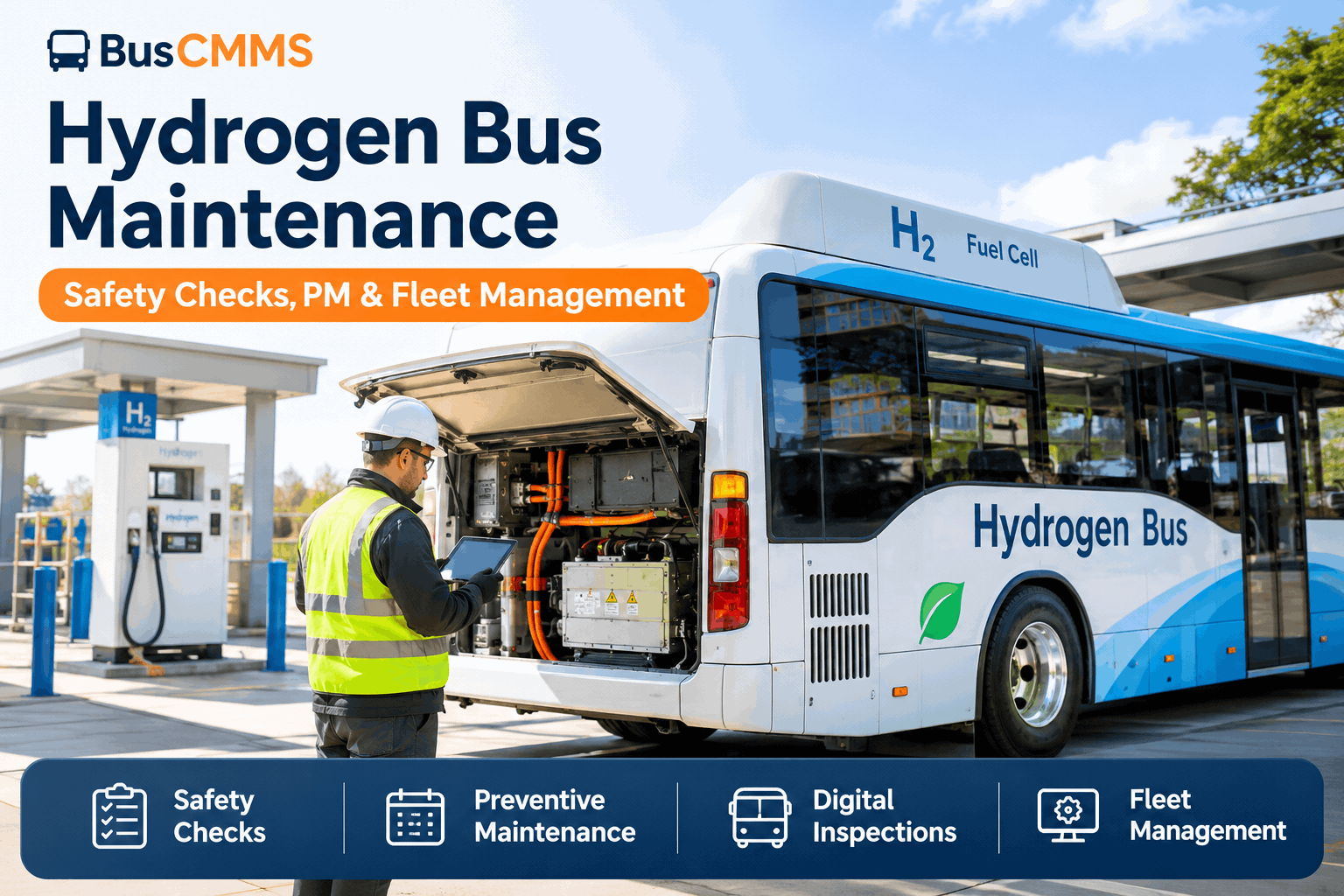
Hydrogen Bus Maintenance: Safety Checks, PM & Fleet Management
A hydrogen fuel-cell bus is four maintenance systems in one vehicle, each on its own cadence. Here is what gets inspected, how often, and how to keep every check, work order, and technician qualification audit-ready.
8,871 miavg distance between fuel-cell roadcalls (NREL, BC Transit)
68%higher maintenance cost vs diesel in early fleets (NREL)
01 · THE SHIFT
What actually changes in hydrogen bus maintenance
If your shop runs diesel or CNG today, most of the chassis work carries over. The powertrain does not. Here is the honest side-by-side so your team knows what is new before the first bus arrives.
Diesel / CNG shop habit
Oil, filters, DEF, and exhaust service on a mileage clock
Fuel leaks you can smell or see pooling
Any tech with the right license works the whole bus
Tank is a fixed asset you rarely think about
Pre-trip is a visual walk-around and a brake check
Hydrogen fuel-cell reality
No oil change — but stack leak-down tests, vent fans, and water traps on a daily/weekly rhythm
Odorless high-pressure hydrogen — detection depends on working H2 sensors, not your nose
Only trained, qualified techs touch the HV and fuel systems
High-pressure tank needs scheduled internal and external inspection, then requalification
Pre-trip adds leak-check status, sensor health, and high-voltage warnings
The tooling is the same — a CMMS. What changes is the content of the schedule, and that is exactly what a bus-specific platform ships pre-loaded.
02 · THE CADENCE
The hydrogen bus preventive maintenance schedule, by interval
Hydrogen bus preventive maintenance is not one big annual service. It is a ladder of checks that get less frequent but more serious as you climb — from daily stack checks to mileage-triggered tank inspections. Early U.S. fuel-cell bus programs at SunLine Transit and the College of the Desert documented this cadence, and it is the backbone of any FCEB PM plan.
Intervals shown are directional, drawn from early U.S. fuel-cell bus program documentation (SunLine Transit / College of the Desert / DOE). Always confirm the exact cadence against your OEM service manual and current standards — a demo of OEM interval scheduling shows how they load into a per-bus PM calendar.
03 · THE CHECKLIST
The hydrogen bus safety and PM checklist your shop needs
Print this, or better, load it as a digital inspection so a failed item becomes a work order on its own. These are the non-negotiables that separate a safe hydrogen bus program from an audit finding.
H2 leak-detection sensors confirmed workingHydrogen is odorless — the sensor is your only warning. Verify it is powered and reading before the bus moves.
CRITICAL
Fuel cell stack leak-down / vent fans checkedDaily stack vent-fan and water-trap checks plus the weekly leak-down test catch small leaks before they grow.
CRITICAL
High-voltage warnings and shutoff access clearConfirm HV labeling, manual shutoff valves, and venting locations are visible and unobstructed before any work.
CRITICAL
Tank inspection due-date on the mileage clockInternal and external high-pressure tank inspections are mileage-triggered — track them per bus so none runs past due.
PLAN
Only qualified techs assigned to HV / fuel workHydrogen and high-voltage systems demand trained, certified technicians — verify the qualification before the work order is assigned.
PLAN
Every check logged with a dated service recordA signed, dated digital record per bus is what turns a chaotic inspection folder into an audit-ready history in seconds.
PLAN
Run this as paper and items get rushed or lost. Run it as a free hydrogen inspection form and a failed line auto-creates a work order, assigns a qualified tech, and timestamps the record — no clipboard, no gaps.
04 · THE PEOPLE
Why technician qualification is a hydrogen maintenance problem
On a diesel bus, any licensed tech works the whole vehicle. On a hydrogen bus, the fuel cell and high-voltage systems need a different, documented skill set — and assigning the wrong person to a high-pressure or HV task is both a safety and a liability event.
Hydrogen work order createdStack, tank, or HV task
Qualification gateIs this tech certified & current?
Qualified → assign & log
Expired → block & flag
BusCMMS tracks each technician's certification and expiry dates, so a hydrogen or HV work order only routes to someone qualified and current — and flags the ones who are not.
05 · THE NUMBERS
What early hydrogen fleets actually experienced
Real-world data keeps hydrogen bus maintenance honest, and a demo of fuel-cell PM tracking shows how those numbers map to your own PM calendar. NREL's evaluation of BC Transit's 20 New Flyer fuel-cell buses in Whistler gives directional numbers worth planning around — not to scare you off, but to show why disciplined PM and records matter so much.
Figures are NREL-reported from one early Canadian demonstration fleet and are directional, not a BusCMMS claim. The takeaway: fuel-cell stacks proved durable, but total maintenance cost ran higher than diesel — so controlling unscheduled work and road calls through tight PM is where the savings live.
57%of early FCEB maintenance cost was propulsion-related (NREL)
"The buses themselves aren't the hard part — it's proving every leak check and tank inspection got done, on time, by the right person. The day an auditor or our safety officer asks for a bus's history, I need it in thirty seconds, not a folder search."
— Transit fleet maintenance director, early zero-emission bus adopter
06 · THE SYSTEM
How BusCMMS runs your hydrogen fleet maintenance
BusCMMS is built for bus fleets, not retrofitted from trucking or manufacturing software. For a hydrogen fleet, that means fuel-type-specific PM scheduling, digital inspections that spawn work orders, technician-qualification tracking, and a dated service and safety record for every bus — the four things that keep an FCEB program safe and audit-ready.
Fuel-type PM schedulingHydrogen gets its own interval logic — daily, weekly, and mileage-based — running alongside any diesel, CNG, or electric buses on the same dashboard.
Digital inspections & work ordersA failed leak check or tank inspection auto-generates a work order, so nothing a tech flags disappears into a paper pile.
Technician qualification trackingCertification and expiry dates per tech, so hydrogen and high-voltage tasks route only to someone qualified and current.
Audit-ready service historyEvery check, repair, and inspection timestamped per bus — pull a full maintenance and safety history in seconds for an FTA or DOT review.
Whether you run one hydrogen pilot bus or a full zero-emission fleet, the platform keeps the cadence, the work orders, and the records in one place. Book a hydrogen fleet walkthrough and we will map it to your exact PM intervals.
07 · THE RECAP
Key takeaways for your hydrogen bus maintenance plan
1
It's four systems, four cadencesStack, tanks, HV battery, and balance-of-plant each run a separate PM clock — your schedule has to hold all four without gaps.
2
The sensor is the safety netOdorless hydrogen means leak-detection and daily stack checks aren't optional extras — they are the whole safety case.
3
Qualified techs only, trackedHV and fuel work needs certified people — tracking who is current keeps assignments safe and liability clean.
4
Records win the auditA dated digital history per bus turns an FTA or DOT review from a folder hunt into a thirty-second export.
Hydrogen bus maintenance FAQs
How is hydrogen bus maintenance different from diesel?
There is no oil or exhaust service, but you add fuel-cell stack leak-down tests, high-pressure tank inspections, and working hydrogen leak sensors. Only trained, qualified technicians should touch the fuel and high-voltage systems.
How often do hydrogen fuel tanks get inspected?
Early U.S. fuel-cell bus programs documented internal tank inspection around 15,000 miles and external inspection around 30,000 miles. Always confirm the exact cadence and any requalification against your OEM manual and current standards.
Why does hydrogen leak detection matter so much?
Hydrogen is odorless and colorless, so you cannot smell or see a leak the way you can with diesel. Functioning H2 sensors in the stack and tank areas are the primary warning, which is why their status is checked before service.
Can one CMMS handle hydrogen, diesel, and electric buses together?
Yes. BusCMMS runs fuel-type-specific PM logic for each propulsion type on one dashboard, so hydrogen intervals, diesel schedules, and electric checks all live in the same system without separate tools.
How does BusCMMS keep hydrogen fleets audit-ready?
Every inspection, work order, and repair is timestamped per bus, and technician certifications are tracked with expiry dates. You can pull a complete, dated maintenance and safety history for any bus in seconds for an FTA or DOT review.