You pull a steer tire at 40,000 miles that should've gone 70,000, and the tread tells the story — worn on the edges, feathered, scrubbed on one side. Meanwhile a drive tire on the same bus looks fine. That's bus tire position wear at work: every position on a bus — steer, drive, tag — carries different loads and forces, so it wears in its own pattern and needs its own kind of tire. Get the position, tread pattern, and rotation right and tires last the miles they should. Get them wrong and you're buying rubber twice as often as you need to.
Bus Tire Position Wear: Matching Position & Tread to Duty
Steer, drive, and tag positions each wear their own way — and each needs the right tread pattern for the job. Here's how to match position and pattern to duty, rotate right, and stop premature tire wear.
Why Premature Tire Wear Happens
Tires are one of the biggest recurring line items in a bus budget, and premature wear quietly inflates it more than almost anything else in the tire program. The frustrating part is that most of it is preventable — it comes not from bad tires but from the wrong tire in the wrong spot, run too long without rotation, with nobody tracking the wear by position until it's too late to save the casing.
Wrong Pattern for the Position
A deep-lug drive tire on a steer axle, or a rib steer tire where traction is needed, wears fast and unevenly. The tread pattern has to match the forces that position actually sees.
No Rotation Schedule
Positions wear at different rates, so leaving a tire in one spot its whole life guarantees uneven wear. Without a rotation routine, tires get scrapped with tread still on them.
Underlying Faults Ignored
Feathering, cupping, or one-sided wear are the tire telling you about alignment, inflation, or a worn component. Read the wear pattern and you catch the real problem; ignore it and you replace tires forever.
No Tracking by Position
If you don't record tread depth by position over time, you can't see a tire wearing too fast until it's already ruined. Position-level tracking is what turns tire wear from a surprise into a managed number.
The unifying idea is that a tire's position determines its fate. The same brand-new tire will live a long, even life or die young depending on where it's mounted, what pattern it is, and whether it gets rotated and tracked. That's why bus tire position wear isn't a tire-quality problem — it's a tire-management problem, and it's solvable. It starts with understanding exactly why each position wears the way it does, so you can put the right rubber in the right place. Keeping tires alive longer is also one of the most reliable levers for extending overall fleet service life and cutting replacement costs. Book a demo to see tread depth tracked by position across your fleet.
Understanding Bus Tire Position Wear: Steer, Drive & Tag
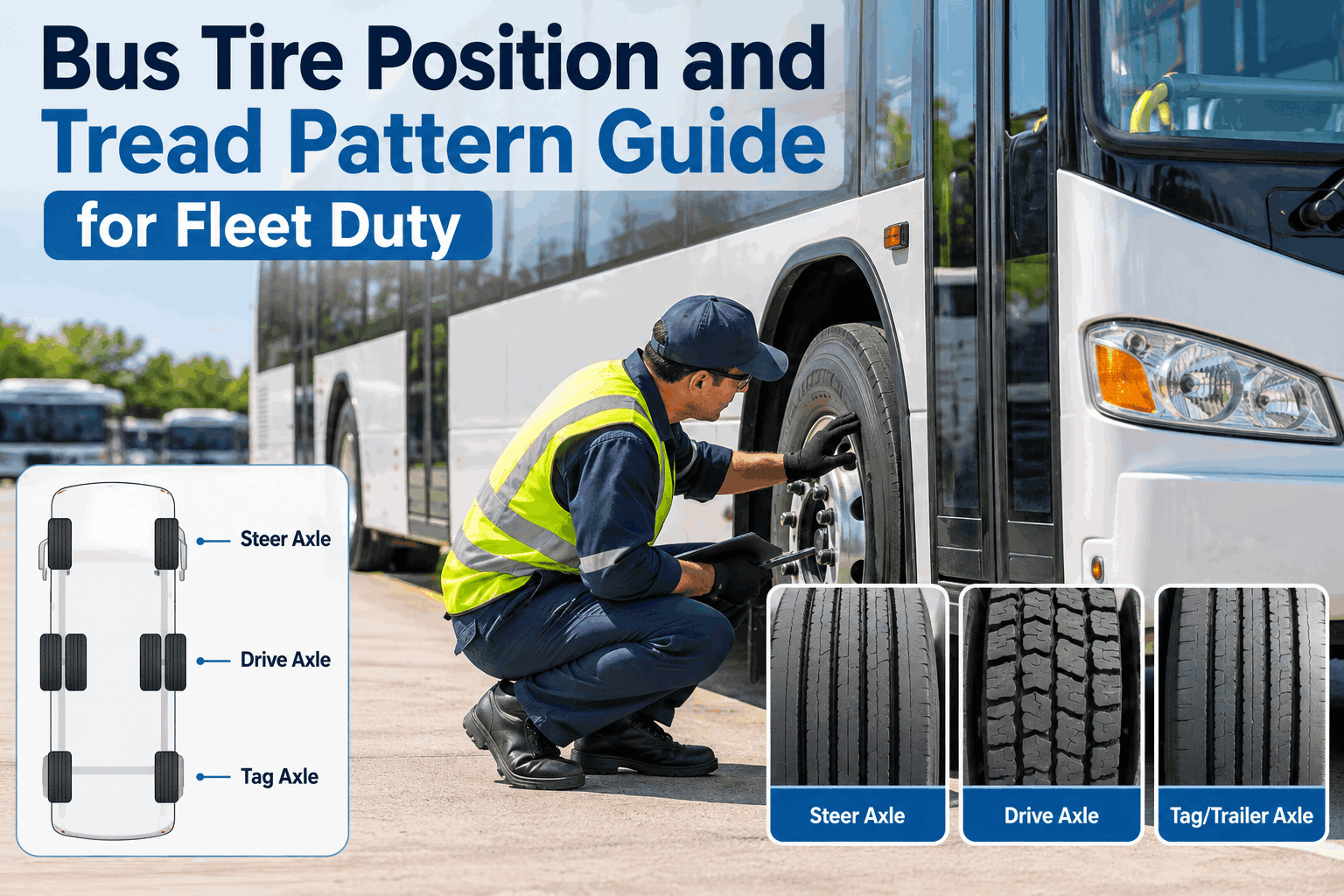
Each axle position does a different job, so each wears in a signature way. Learn to read these patterns and you can diagnose the cause, not just the symptom — and put the right tire where it belongs.
Steer: Precision & Edge Wear
Steer tires carry the front load and do all the turning, so they wear on the shoulders and edges and show feathering fast when alignment or inflation is off. They demand the most attention — and they're the safety-critical position.
Drive: Torque & Traction Wear
Drive tires put the power down, so they wear from torque — center and traction-lug wear as the tread grips and pushes. They need a pattern built for grip and the higher load of the drive axle.
Tag / Trailer: Scrubbing Wear
Tag and trailer positions are dragged through turns rather than driven, so they scrub and wear irregularly, especially on tight urban routes. They call for a free-rolling pattern that resists scuffing.
Reading these patterns is a diagnostic superpower. Even shoulder wear across a steer tire usually means underinflation; wear on one shoulder points to alignment; a feathered edge you can feel with your hand means a toe or worn-component issue. The wear isn't just damage — it's a message about what's happening to the bus, and catching it early on a steer tire is a safety matter, not just a cost one. That diagnostic reading is also the core of a solid tire inspection and wear-pattern routine. Once you know how each position wears, the next question is which tread pattern to put there. Sign up free and log wear patterns by position on every bus.
Matching Tread Pattern to Position and Duty
Tread patterns aren't interchangeable — each is engineered for a job. Putting the right pattern in the right position is the single biggest lever on even wear and tire life. Here's how the main patterns map to bus positions and duty.
Duty matters as much as position. A city transit bus grinding through stop-and-go routes with constant tight turns punishes tires very differently than a suburban school bus running longer, steadier miles, or a highway coach cruising at speed. The scrubbing of an urban route eats tag and steer tires, so a tougher, scrub-resistant tire earns its cost there; a highway coach rewards low-rolling-resistance rib tread that saves fuel. Matching pattern to both the position and the route is what separates a fleet that gets full life out of its tires from one that wonders why they keep wearing out early. This choice also runs alongside the new-versus-retread tire cost decision every fleet weighs. Book a walkthrough to see tire performance by position, pattern, and route.
Rotation and Tracking: The Routine That Extends Tire Life
Even the right tire in the right position wears unevenly if it never moves and nobody watches it. Rotation evens out that wear, and position-level tracking catches problems while there's still casing to save. Four habits make the difference.
Rotate on a Set Schedule
Move tires between positions on a mileage-based cadence so no single tire absorbs one position's wear for its whole life. Regular rotation is the cheapest way to squeeze full, even mileage out of every casing.
Measure Tread Depth by Position
Record tread depth at each position on a regular interval, not just one number per bus. Tracking by position is what reveals which spots are wearing fast and whether a rotation or a fix is due.
Act on Wear-Rate Trends
A tire wearing faster than its neighbors is a signal — check inflation, alignment, and components before you lose the casing. Trends catch the underlying fault while it's still a cheap fix, not a scrapped tire.
Time Replacement by Data, Not Guess
Pull tires at the tread depth that protects the casing for retreading and keeps you legal — not too early (wasted rubber) or too late (ruined casing, safety risk). Data makes that call precise.
The payoff of this routine compounds. Rotation alone can meaningfully extend tire life by evening out wear; adding position-level tracking protects casings for retreading, which is where the real savings live — a good casing can be retreaded and run again at a fraction of new-tire cost. Miss the tread window and that casing is scrap. So the routine isn't busywork; it's the difference between getting one life or two out of every tire you buy, and between catching an alignment problem at inspection or after it's eaten a set of steers. All of it depends on tracking tread depth by position over time, which is exactly where tire lifecycle tracking earns its keep. Sign up free and put your tire rotations and tread checks on schedule.
How BusCMMS Manages Tire Position and Wear
Matching position and pattern to duty only pays off if you can track wear by position, keep rotations on schedule, and catch a fast-wearing tire early — none of which survives on a clipboard. BusCMMS tire management turns the whole program into a tracked, alert-driven system, so premature wear becomes a number you manage instead of a surprise you pay for.
-
Tread Depth by Position
Record and trend tread depth at each wheel position, not just per bus — so you see exactly which positions are wearing fast and why, the foundation of managing position wear.
-
Rotation Scheduling
Schedule and track tire rotations on a mileage cadence, so no tire sits in one position too long — the routine that evens out wear and stretches every casing's life.
-
Wear-Rate Trending
Flag a tire wearing faster than its position should, pointing you at inflation, alignment, or a worn component before it costs you the casing — catching the fault, not just the symptom.
-
Replacement Alerts
Get alerted at the tread depth that protects the casing for retreading and keeps you DOT-legal — so tires are pulled at the right moment, not too early or dangerously late.
-
Cost Per Mile by Tire
See true cost per mile by tire, position, brand, and pattern — so you know which patterns and sources actually deliver on your routes, and buy the ones that last.
-
Inspection Integration
Tie tire checks into the DVIR and PM workflow, so tread and wear-pattern findings are logged against the position automatically — no separate clipboard, nothing lost.
The reason a purpose-built bus platform matters for tires specifically is that a bus has multiple wheel positions and often a mixed fleet of duty types, and managing wear means tracking each position on each bus over time — far more than a spreadsheet or a wall chart can carry. Because BusCMMS records tread by position, schedules rotations, and trends wear as part of normal maintenance, the whole tire program becomes visible and manageable rather than reactive. That's what lets a maintenance manager see a steer tire wearing fast in week one instead of discovering it scrapped at the next inspection — and it's typically live in two to four weeks. BusCMMS reports fleets meaningfully extending tire life once wear is tracked and rotations stay on schedule.
A Maintenance Manager's Take
That's bus tire position wear managed instead of guessed: the wear pattern pointed at the real cause, the right pattern went back where it belonged, and tracking turned a recurring cost into a caught-early signal. The tires didn't get better — the visibility did.
The Bottom Line on Bus Tire Position Wear
Bus tire position wear isn't about buying better tires — it's about putting the right tire in the right place and watching it over time. Every position wears its own way: steers on the edges and shoulders from carrying and turning, drives in the center from torque, tags and trailers from scrubbing through turns. Match the tread pattern to the position and the duty — rib on steers, lug on drives, scrub-resistant rubber on hard urban routes — and you've won half the battle before the bus turns a wheel. Win the rest with routine: rotate on a schedule so no tire absorbs one position's wear for life, measure tread depth by position so fast wear surfaces early, act on the trend to catch the alignment or inflation fault behind it, and time replacement by data to protect the casing for a second life. The fleets that stop overpaying for tires aren't the ones with a secret supplier — they're the ones who read wear by position and manage it, turning a recurring surprise into a controlled number. Get position, pattern, and tracking right, and your tires finally last the miles you paid for. Book a walkthrough to see position-based tire management on a fleet like yours.