Mining site shuttle bus fleet management software is essential when your buses operate where standard PM schedules fail. Dust infiltrates every component. Temperatures swing from -20°F to 120°F. Rough haul roads accelerate wear by 3-5x compared to paved surfaces. Equipment that runs reliably on city streets degrades rapidly underground or in open-pit environments. The right CMMS adapts maintenance intervals to these harsh realities — and tracks component life with precision that generic fleet software simply can't match.
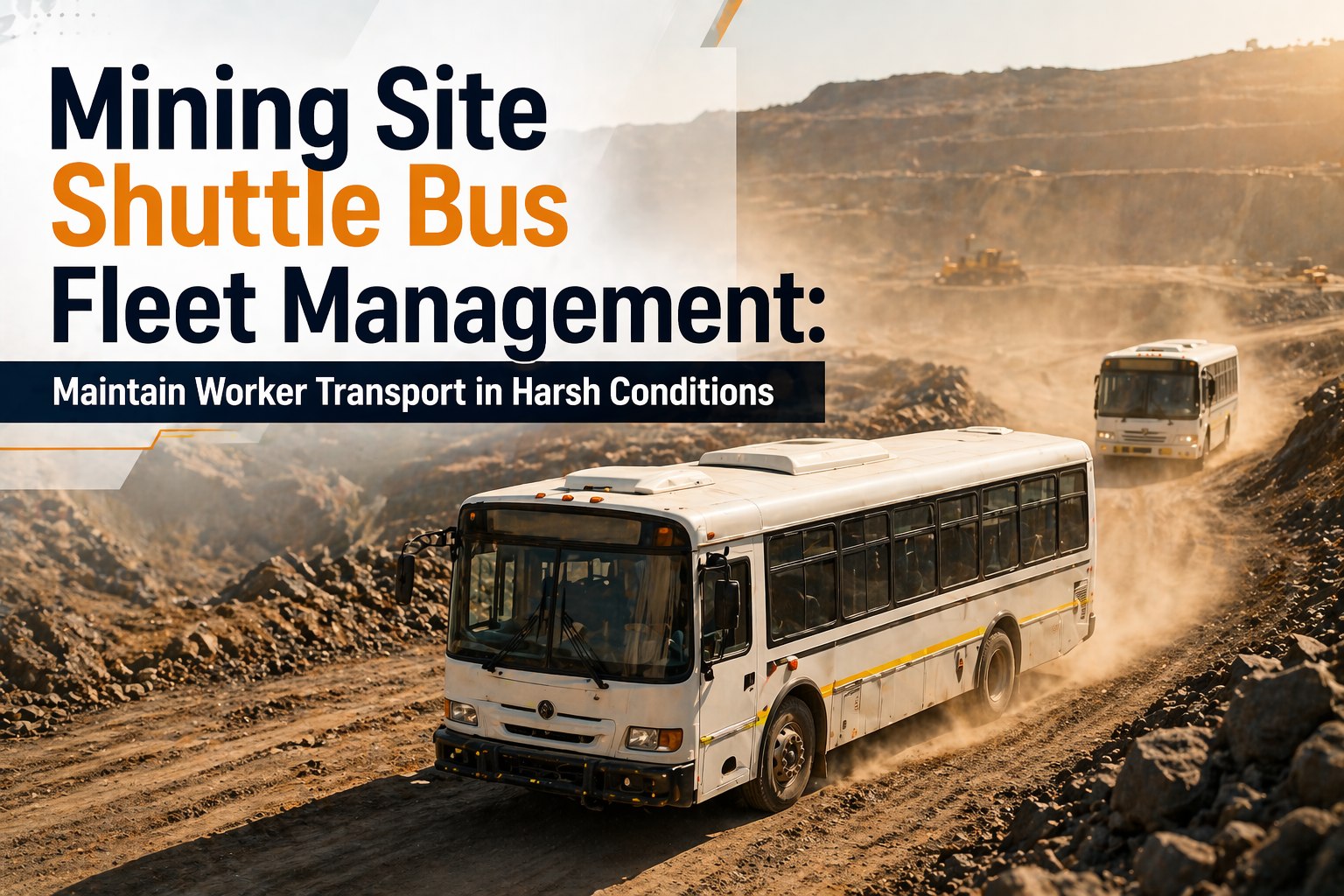
Mining Site Shuttle Bus Fleet Management
Maintain Worker Transport in Harsh Conditions
Purpose-built for extreme conditions — adapt PM intervals automatically
Why Standard PM Schedules Fail at Mining Sites
OEM maintenance schedules assume paved roads, moderate temperatures, and clean air. Mining sites deliver the opposite — and that mismatch costs operations thousands in preventable breakdowns and stranded workers.
Air filters @ 15,000 miles
Hydraulic fluid @ 2,000 hours
Suspension check @ 25,000 miles
Brake inspection @ 10,000 miles
Breakdowns, stranded crews, missed shifts
Air filters @ 7,500 miles (50% shorter)
Hydraulic fluid @ 1,200 hours (40% shorter)
Suspension check @ 8,000 miles (3x more frequent)
Brake inspection @ 3,500 miles (3x more frequent)
Predictable uptime, safe worker transport
The 5 Harsh Condition Factors That Accelerate Wear
Airborne Dust & Silica
Fine particles infiltrate engines, HVAC systems, and electrical enclosures. Creates abrasive wear cycle in bearings and seals.
Extreme Temperatures
Underground: 40°C+ accelerates lubricant breakdown. Arctic sites: subzero temps freeze components and thicken fluids.
Rough Haul Roads
Unpaved roads with rocks, ruts, and grades stress chassis, suspension, and drivetrain far beyond normal operating specs.
Continuous Vibration
Blasting, drilling and rough roads create constant vibration that loosens connections and fatigues metal components.
Corrosive Environment
Acidic mine water, salt (coastal/winter), and chemical exposure corrode structural components and electrical systems.
Track these factors per-vehicle with environment-specific PM rules →
Mining-Adapted PM Interval Matrix
Research shows severe conditions reduce standard intervals by 20-40%. Here's how BusCMMS automatically adjusts PM schedules based on your site's operating environment.
Component
Standard Interval
Mining Adjusted
Reduction
Air Filters
250 hours
125 hours
-50%
Engine Oil
500 hours
300 hours
-40%
Hydraulic Fluid
2,000 hours
1,200 hours
-40%
Suspension Inspection
1,000 hours
300 hours
-70%
Brake System
500 hours
175 hours
-65%
Electrical Connections
Quarterly
Monthly
-67%
* Intervals based on 24/7 mining operations. BusCMMS auto-adjusts based on your site's specific conditions.
Managing Shuttles in Extreme Conditions?
See how BusCMMS adapts PM intervals for dust, heat, and rough terrain — with component tracking built for mining operations.
What Mining Fleet Managers Need from CMMS
Environment-Based PM Triggers
Configure PM schedules by operating environment — dust levels, temperature ranges, terrain type. Auto-generate work orders when conditions accelerate wear.
Component Life Tracking
Track actual wear on critical components — air filters, brakes, suspension, hydraulics. Predict replacements based on site-specific degradation rates.
Offline-Capable Mobile App
Complete inspections in remote areas without connectivity. Data syncs automatically when signal returns. Critical for underground and remote pit operations.
Parts Inventory for Remote Sites
Track critical spares at each site location. Auto-reorder before stockouts. Know exactly what's available when a bus goes down 50 miles from the nearest town.
MSHA-Ready Documentation
Timestamped inspection records, photo evidence, and complete audit trails. Ready for regulatory review without scrambling through paper files.
Shift-Based Scheduling
Schedule maintenance around 24/7 operations. Ensure shuttles are ready for shift changes. Minimize worker transport disruptions.
ROI for Mining Shuttle Operations
Without Adapted PM
With BusCMMS
Calculate your potential savings in a 20-minute demo →
Expert Insight: Mining Fleet Maintenance
Mining operations face a structural challenge: equipment operates at the limits of its design envelope with high loads, extended operation, steep grades, and wide temperature swings. Dust season multiplies these stresses — creating accelerated wear that standard PM schedules can't anticipate.
The solution isn't just more frequent maintenance. It's adaptive maintenance — intervals that adjust based on actual operating conditions, component wear data, and predictive analytics. Operations that combine condition-based monitoring with proactive PM see downtime reductions of 40-45% and extend equipment life by 30% or more.
For shuttle fleets specifically, reliability isn't optional. A stranded bus means stranded workers, missed shifts, and production delays that cascade through the entire operation. The cost of proper maintenance software is a fraction of a single serious breakdown.
Ready for Mining-Grade Fleet Management?
BusCMMS adapts to your site's conditions — dust, heat, terrain, 24/7 operations. See how environment-specific PM scheduling keeps your shuttles running.
How much should PM intervals be reduced for mining operations?
Research indicates severe conditions reduce standard intervals by 20-40% on average. High dust environments require air filter changes 50% more frequently. Extreme temperatures reduce hydraulic fluid life by 40%. Rough terrain can accelerate suspension wear by 3-5x. BusCMMS allows you to configure site-specific adjustments based on your actual operating conditions.
Can BusCMMS work offline at remote mining sites?
Yes. The mobile app works fully offline — inspections, work orders, and data entry continue without connectivity. When signal returns, data syncs automatically. This is essential for underground operations and remote pit sites where cellular coverage is limited or non-existent.
How does environment-based PM scheduling work?
You configure operating environment parameters for each vehicle or site — dust level (low/moderate/severe), temperature range, terrain type, and operating hours. BusCMMS automatically adjusts PM intervals based on these factors. When a shuttle operates in severe dust conditions, air filter intervals shorten automatically. The system generates work orders based on these adapted schedules.
What compliance documentation does BusCMMS provide for MSHA?
BusCMMS creates timestamped inspection records with photo evidence, complete maintenance histories, and audit trails. Pre-shift and on-shift inspection checklists are digitized with automatic completion tracking. All records are stored securely and accessible for regulatory review without paper filing.
How quickly can a mining operation implement BusCMMS?
Most mining operations are running within 2-4 weeks. Vehicle data imports from CSV files. Environment-specific PM schedules can be configured during onboarding. The free trial lets you test with your actual fleet before committing budget — important for operations that need to demonstrate ROI to management.