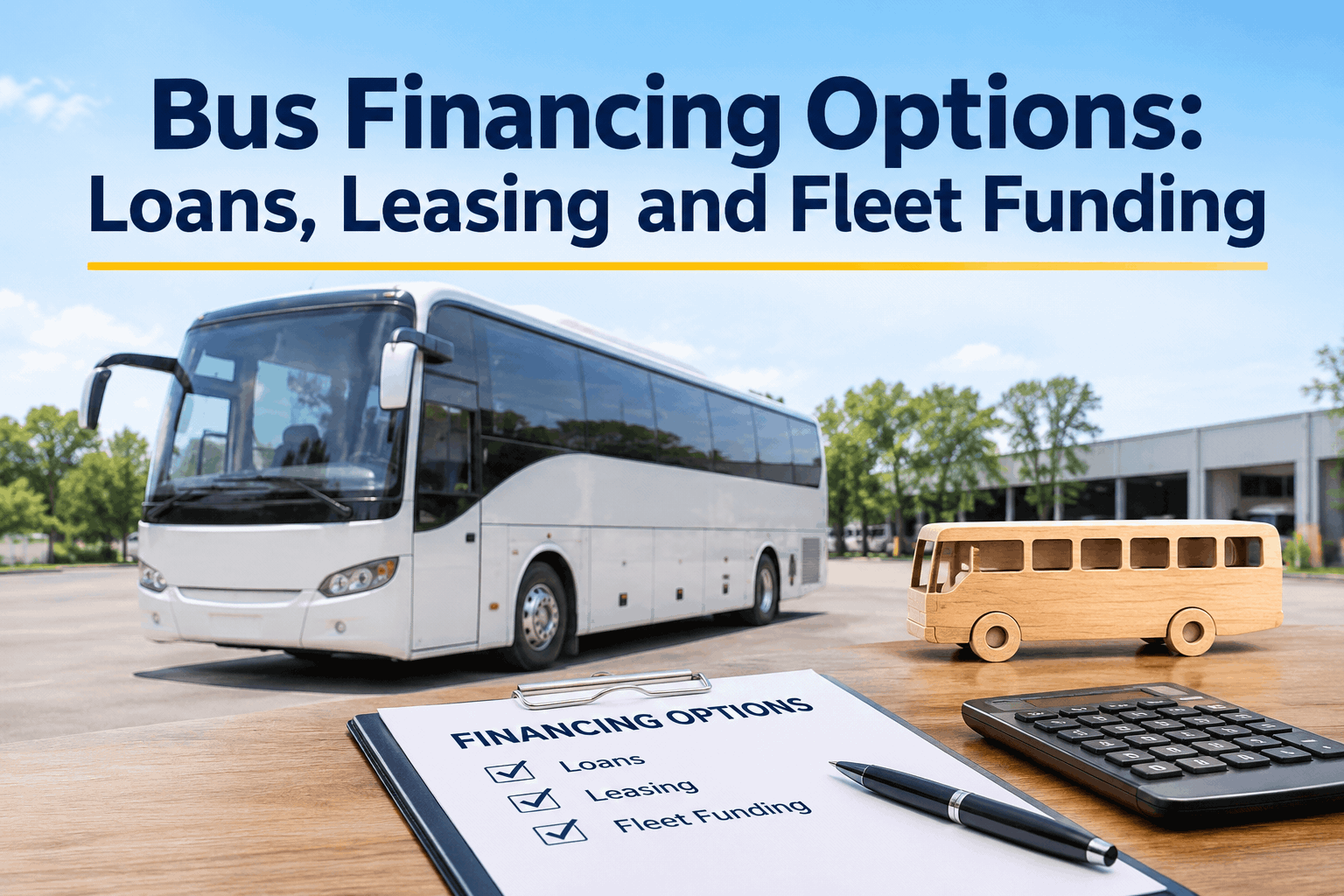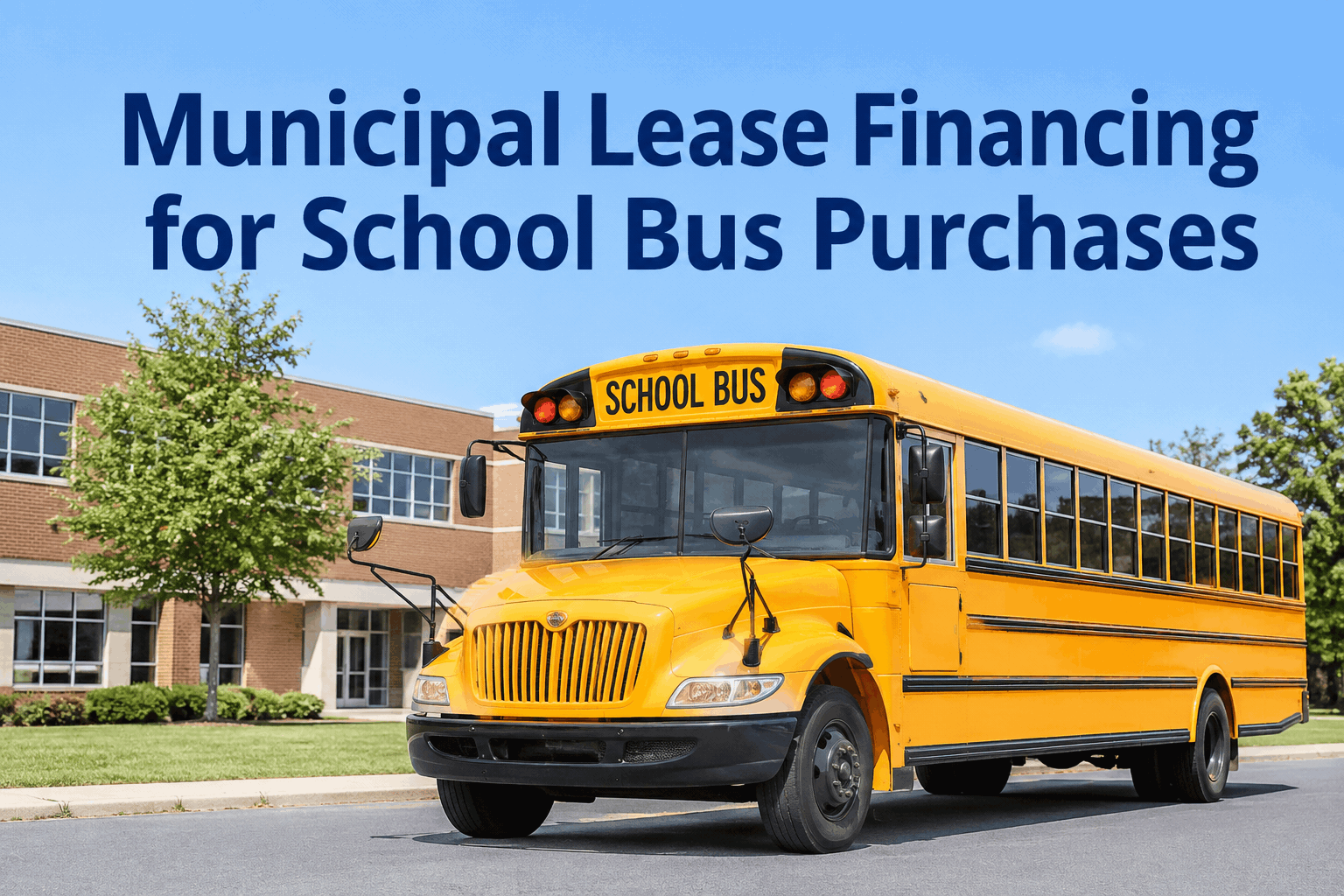
When several buses age out at once, a school district rarely has the cash to replace them in one budget year — and a bond means a referendum and months of process. Municipal lease financing is the middle path most districts take: a tax-exempt lease-purchase that spreads a school bus purchase across annual budgets, skips the vote, and ends in district ownership. You can see which buses are due for replacement in a demo before you build the request.
Municipal Lease Financing for School Bus Purchases
Put the buses on the road now, pay for them across the operating budgets they'll serve, and own them at the end — without a bond vote. That is the shape of a tax-exempt municipal lease.
Why Districts Use a Tax-Exempt Municipal Lease
A municipal lease is a lease-purchase agreement: the district makes periodic payments over the useful life of the buses and owns them at the end, often for a nominal dollar. Because the lessee is a public entity, the interest is tax-exempt, which is what makes municipal lease financing cheaper than a commercial loan. Four features make it the default for school transportation.
Spread the cost over budgets
It is far more palatable for a board to commit this year's payment than a half-million-dollar lump sum. The cost lands across the budgets the buses will actually serve.
No referendum, fast to close
Unlike a bond, a lease-purchase generally needs no voter referendum and far fewer documents — so buses can be ordered without months of process.
Tax-exempt means a lower rate
The interest a district pays is tax-exempt to the lender, so the rate comes in below commercial financing — more of each payment goes to buses, not interest.
Ownership, and not debt
Title transfers to the district at the end. A non-appropriation clause — payments depend on the board funding them each year — keeps it off the books as long-term debt.
That last number is the quiet argument for financing: a lease that lets you replace tired buses sooner can pay part of its own way through the lower upkeep of a newer fleet. You can sign up free and start seeing each bus's maintenance cost climb with age.
The Case for Refreshing, in One Picture
Districts often assume financing always costs more than running buses into the ground. The maintenance math says otherwise. An aging bus does not just risk a breakdown on a route — it steadily eats more of your shop budget every year it stays.
When you can show the board that the buses you want to replace are the ones draining the maintenance budget, a lease stops looking like new debt and starts looking like a cost swap. That is a far easier case to make with real per-bus numbers than with a gut feeling — book a demo to see your own fleet's cost-by-age curve.
Municipal Lease vs Cash vs a Bond
A district really has three ways to pay for buses, and they feel very different at budget time. Here is how a tax-exempt municipal lease stacks up against paying cash and issuing a bond.
| Factor | Pay cash | Bond | Municipal lease |
|---|---|---|---|
| Budget impact | One large hit in a single year | Spread, but adds long-term debt | Spread across annual budgets |
| Voter referendum | No | Usually required | Generally not required |
| Counts as debt? | No | Yes | Generally no (non-appropriation) |
| Cost of capital | None, but ties up reserves | Market bond rate | Tax-exempt, below commercial |
| Ownership | Immediate | Eventually | At term end, often for $1 |
| Speed to buses | Fast, if cash exists | Slow | Fast, streamlined |
None is automatically right — a flush district may simply pay cash, and a large one-time fleet overhaul may still suit a bond. But for the steady, year-after-year job of replacing a few buses at a time, the municipal lease usually wins. See how it fits a passenger operation on the passenger and transit page, and confirm the structure with your financial advisor or bond counsel.
Planning a School Bus Municipal Lease: A Checklist
Before you take a lease to the board, make sure the case is built on data. The critical items are the ones that justify the acquisition and keep the annual payment defensible.
- You have a replacement forecast showing which buses are due and whenThe lease should finance a plan, not a panic after a breakdown.CRITICAL
- You can show the rising maintenance cost of the buses you're replacingThe cost-by-age curve is what turns a request into a cost swap.CRITICAL
- Per-bus cost and condition records support the acquisitionDocumented history strengthens the board case and the application.CRITICAL
- You've confirmed tax-exempt terms with an advisor or municipal lessorBank-qualified status and rate are theirs to set, not yours to guess.PLAN
- The annual payment fits your transportation budget lineEach year's payment has to clear its own appropriation.PLAN
- You've compared the lease against paying cash or bondingKnow why the lease wins for this purchase before you present it.PLAN
Get the three critical items in hand and the lease conversation becomes a formality. You can sign up free and start building that evidence today.
How BusCMMS Supports the Lease Decision
BusCMMS is not a lender, a lessor or a municipal advisor — the tax-exempt lease itself comes from a municipal leasing company, a bank or a manufacturer's finance arm. What BusCMMS gives you is the asset case that makes the lease the right call and an easy approval.
Which buses, and when
A replacement forecast from age, mileage and condition tells you exactly how many buses to put on the lease and in what year.
The evidence to justify it
Maintenance cost per bus, rising with age, is the number that shows the board why financing a refresh is cheaper than holding on.
Board-ready records
Per-bus cost, age and service history in one place — the documentation that backs the acquisition and the annual appropriation.
The financing gets the buses; the data gets the approval. BusCMMS is how a district walks into the board meeting already holding the answer to "why these buses, and why now."
A School Business Official's Take
Key Takeaways on Municipal Lease Financing
Municipal lease financing lets a district buy the buses it needs now and pay for them the way it budgets — and the asset data is what makes the case.
Use now, pay over budgets
A lease-purchase spreads the cost and ends with the district owning the buses.
Tax-exempt, no referendum
Lower-than-commercial rates, and generally no bond vote, thanks to non-appropriation.
A refresh can pay its way
Newer buses cost far less to maintain, offsetting much of the financing.
Data wins the approval
A replacement plan and cost-by-age evidence turn a request into an easy yes.
Know which buses are due, show what they cost to keep, and the municipal lease makes itself — funding a steady fleet refresh without a budget shock or a trip to the ballot box. The financing is the easy part once the data is on the table.