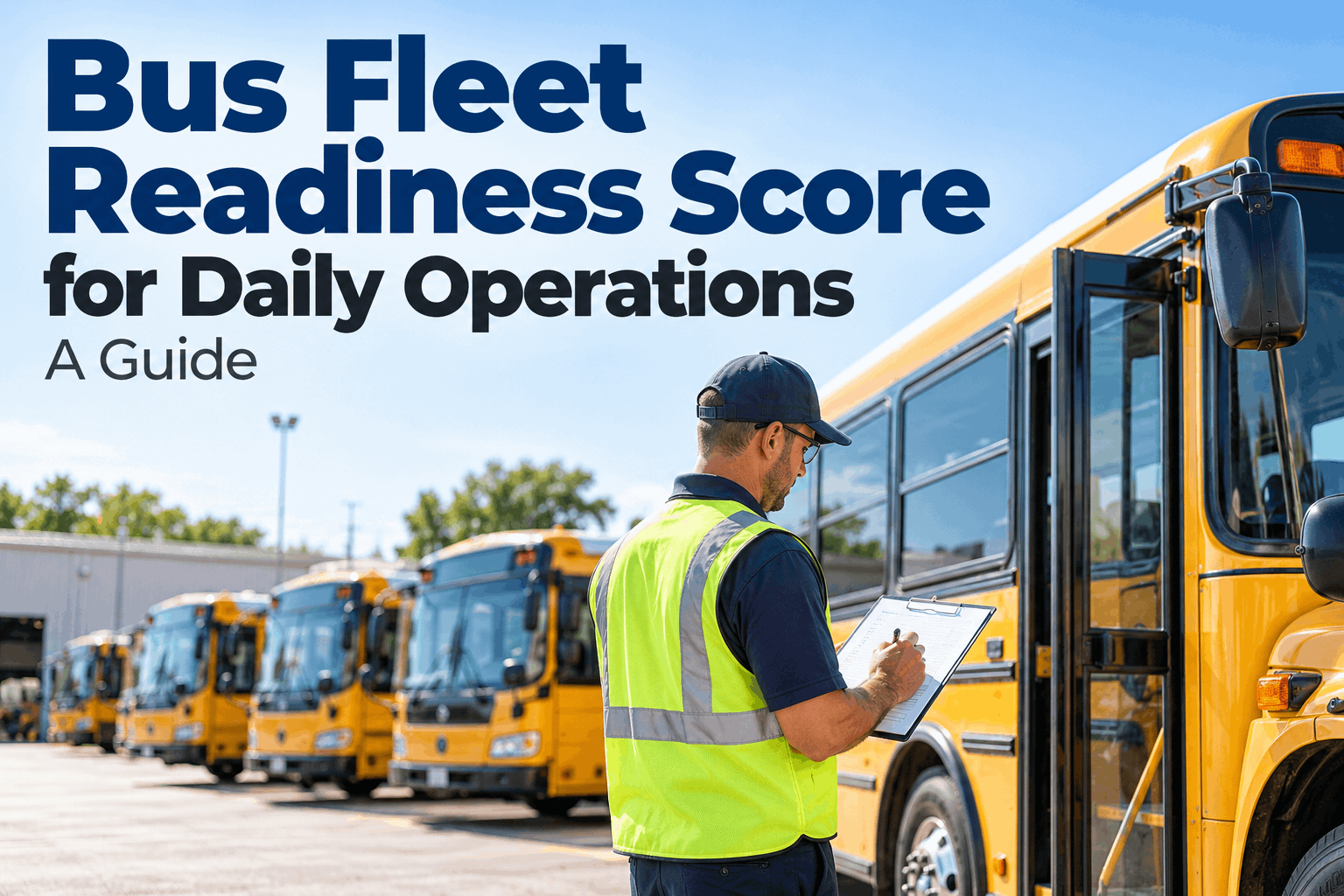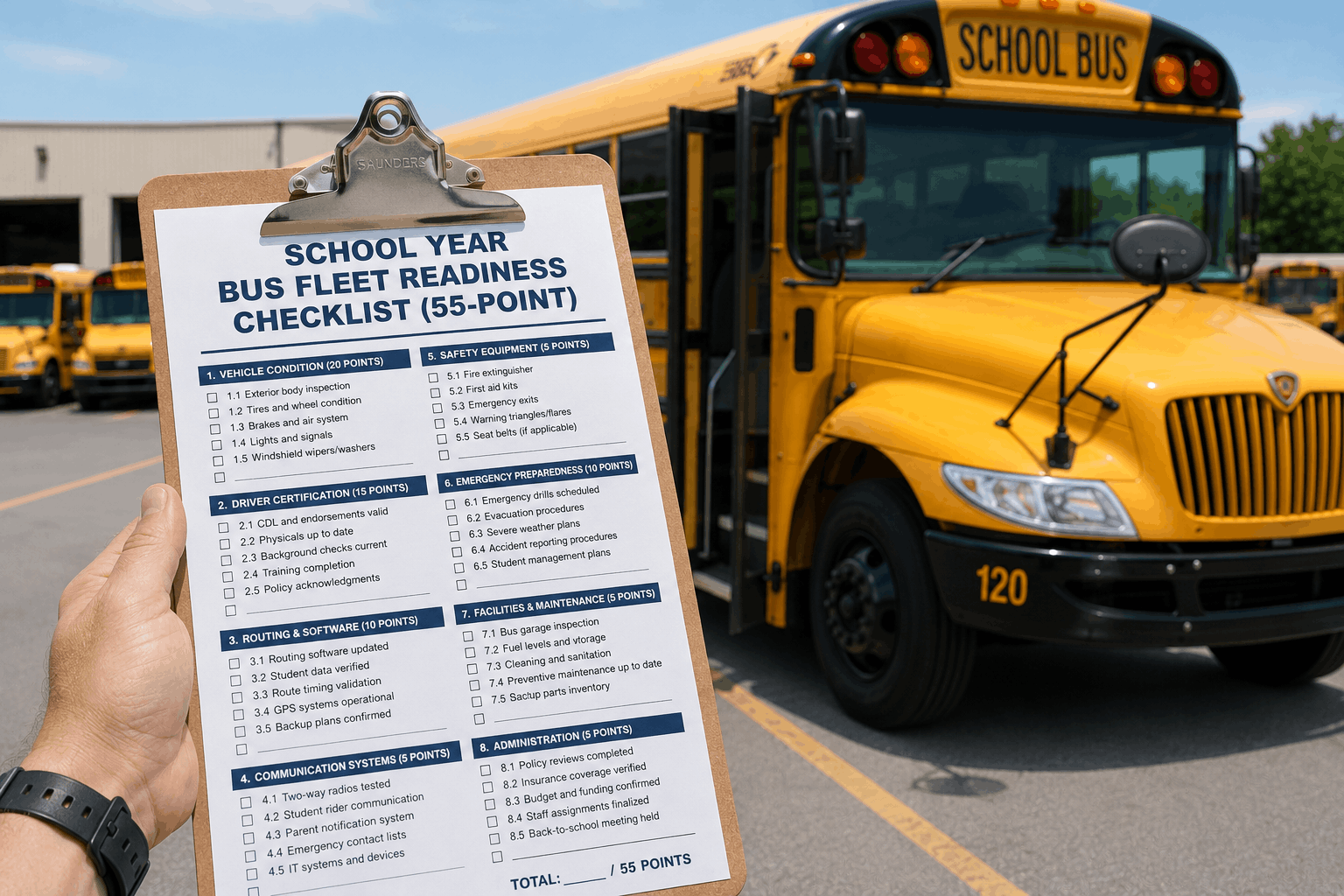
School year readiness demands systematic, documented pre-fleet inspections that ensure no vehicle hits the road with hidden defects, driver certifications lapse without renewal, or emergency protocols go unstaged. Transportation directors face the challenge of coordinating 50, 100, or even 250+ buses across multiple maintenance facilities, scheduling inspections during compressed summer windows, and capturing compliance documentation that satisfies both state auditors and school board insurance carriers. A comprehensive 55-point pre-season checklist transforms reactive crisis management into predictive, data-driven asset stewardship—catching brake wear before emergency stopping, identifying electrical faults before stranding students, and preventing the domino effect of mid-year breakdowns that escalates costs and destroys route reliability. This guide details every component of the readiness checklist, explains DOT/FMVSS compliance standards embedded in each inspection point, and shows how digital checklist platforms eliminate paper loss, capture mechanic signatures, and archive inspection photos for regulatory proof.
SCHOOL TRANSPORTATION · READINESS GUIDE · 2026
School Year Bus Fleet Readiness: 55-Point Pre-Season Inspection Checklist
Complete pre-season checklist for school bus fleets, covering structural integrity, brake compliance, electrical systems, driver certification, and emergency protocols—ensuring every vehicle is inspection-ready before students board.
The 55-Point Pre-Season School Bus Readiness Checklist
School bus readiness season runs from mid-July through August, requiring systematic inspection of entire fleets before the first day of school. The 55-point checklist covers eight critical domains: structural and chassis integrity, brake system compliance (DOT FMVSS 121), electrical and lighting systems, interior safety equipment, driver certification and clearances, routing software functionality, communication system reliability, and emergency protocol rehearsal and documentation. Each domain contains specific inspection points tied to DOT Federal Motor Vehicle Safety Standards (FMVSS), NTSB recommendations, and state school transportation regulations.
Domain 1: Structural & Chassis Inspection (8 Points)
1
Vehicle Frame Inspection
Inspect entire frame for cracks, corrosion, rust-through, or previous weld repairs. Pay special attention to connection points between frame and body. Frame integrity is non-negotiable; any compromise requires structural repair or vehicle retirement.
2
Windshield & Safety Glass (FMVSS 205)
Verify windshield is laminated safety glass with no cracks wider than 1/4 inch or damage in driver sight line. Check side and rear windows comply with FMVSS 205 safety requirements. Replace any window that obstructs emergency evacuation.
3
Mirrors & Reflective Surfaces
Verify all mirrors (driver side, passenger, rear-view, convex) are properly mounted, uncracked, and provide full visibility. Check school bus markings, reflective chevrons, and identification numbers are visible and compliant with DOT regulations.
4
Door Mechanisms & Emergency Exits
Test all doors (entrance, emergency exits, side exits) for smooth operation, proper sealing, and locking function. Emergency exit windows must open with minimal force. Document that all exits are unobstructed and clearly marked.
5
Suspension System Performance
Inspect suspension components (springs, shocks, bushings, sway bars) for wear, cracks, or damage. Check vehicle sits level and doesn't sag on any corner. Ride the bus to assess handling; any excessive bouncing requires suspension service before deployment.
6
Tire Condition & Inflation (FMVSS 119)
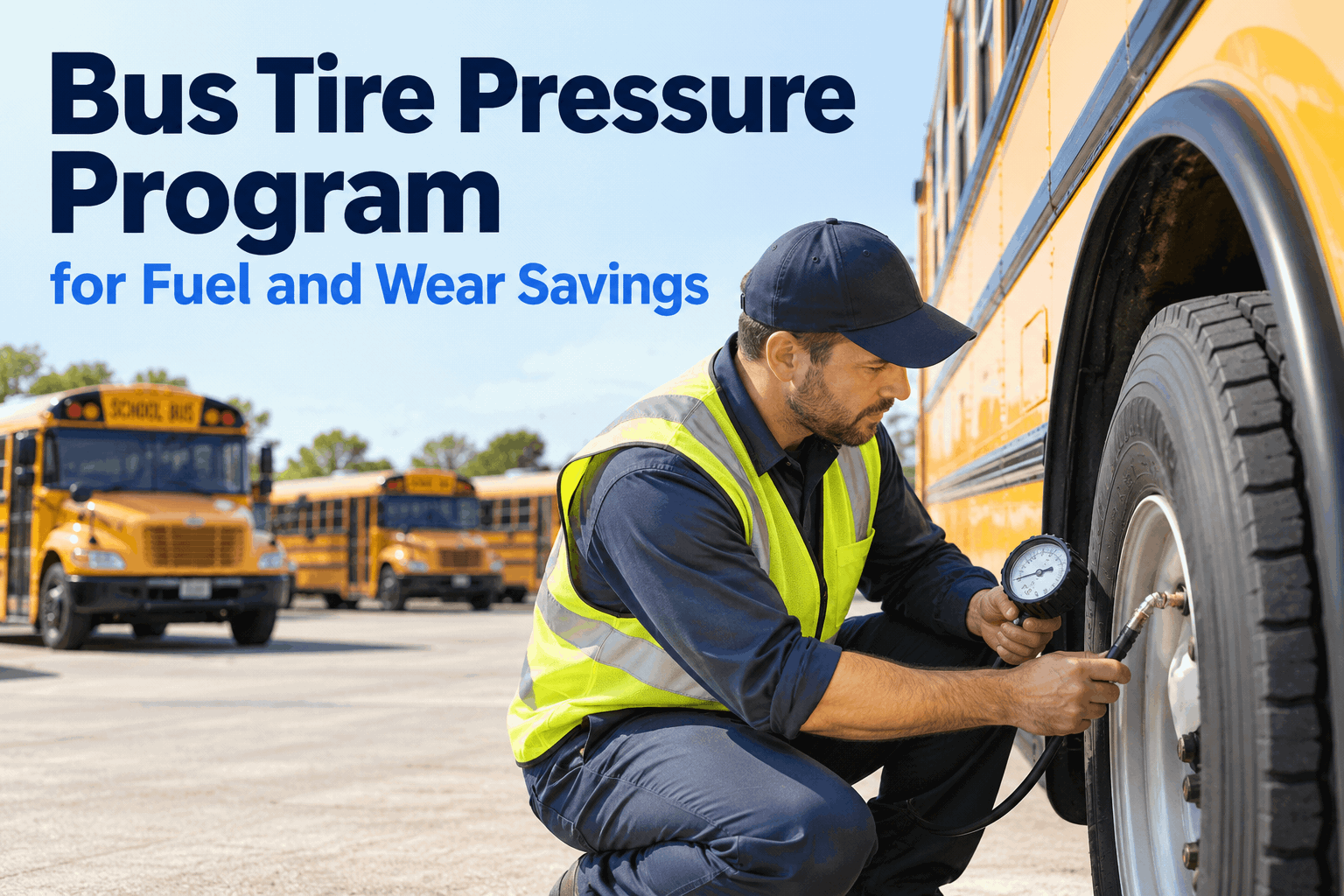
Measure tread depth on all tires; minimum legal depth is 2/32 inch, but school buses should have 4/32 inch minimum for safety margin. Verify tire pressure matches manufacturer specifications. Look for uneven wear, sidewall damage, or puncture repairs. Check tire age; tires over 6 years require inspection regardless of tread.
7
Wheel Alignment & Bearing Condition
Check wheels and tires for proper alignment and free rotation. Listen for wheel bearing noise while spinning each wheel. Grab each wheel and attempt to move it front-to-back and side-to-side to detect loose wheel bearings or bent axle components.
8
Undercarriage & Rust Assessment
Inspect undercarriage for rust, corrosion, or damage to fuel lines, electrical harnesses, or brake lines. Check for oil leaks, transmission fluid leaks, or coolant seepage. Any fluid leak requires diagnosis and repair before vehicle deployment.
Domain 2: Brake System Compliance (DOT FMVSS 121) (7 Points)
9
Air Brake System Pressure & Response
Check air compressor builds pressure to 120–140 PSI within 30 seconds of engine start. Verify pressure gauge reads accurately. Apply full service brake and check for smooth, proportional deceleration. Test parking brake engagement and verify it holds on inclines up to 20 degrees.
10
Hydraulic Brake Fluid Condition
Check brake fluid level; top up if below minimum mark. Inspect fluid color—dark brown or black indicates contamination or overheating. If fluid is contaminated, perform system flush and bleed brakes. Check for leaks at calipers, cylinders, and lines.
11
Brake Pad & Lining Wear Measurement
Measure brake pad thickness on all wheels. Minimum acceptable thickness is 3/32 inch; 1/8 inch indicates brake replacement is imminent. Any wheel with uneven wear suggests caliper or suspension issues. Inspect brake fluid for signs of brake dust contamination.
12
Anti-Lock Braking System (ABS) Functional Test
Verify ABS warning lamp illuminates when ignition is on, then extinguishes after engine start (no faults). Perform ABS self-test per manufacturer procedure. On the road, test ABS activation at safe speed; wheels should not lock and steering should remain responsive.
13
Parking Brake Engagement & Holding
Verify parking brake engages smoothly and fully. Park on level ground, engage parking brake, attempt to move vehicle forward and backward to confirm brake holds. Repeat test on uphill and downhill slopes; brake must hold on grades up to 20 degrees.
14
Brake Warning System & Indicator Lamps
Check that brake warning lamps illuminate with ignition on (air pressure, ABS, parking brake status). All warning lights must extinguish when conditions normalize. Any illuminated warning light requires diagnosis and repair before vehicle deployment.
15
Brake Lines & Hose Inspection
Visually inspect all brake lines and hoses for cracks, splits, corrosion, or loose fittings. Squeeze hoses to check for internal deterioration or bulging. Any damaged brake line or hose requires immediate replacement; do not defer this repair.
Domain 3: Electrical & Lighting Systems (8 Points)
16
Battery Voltage & Cold-Crank Amperage
Measure battery voltage; should be 12.6–12.8V at rest. Load-test battery to simulate cold cranking (minimum 200 amps); battery should maintain 9.6V or higher. If battery fails load test, replace it. Check battery terminals for corrosion and secure connections.
17
Alternator Output & Charging System
Start engine and measure alternator output at idle; should be 13.5–14.5V. Increase engine speed to 2000 RPM and verify output increases proportionally. Check alternator belt tension and condition. If alternator output is low, diagnose regulator or alternator failure.
18
Headlight Beam Pattern & Intensity
Test both low-beam and high-beam headlights in darkness. Beam pattern should be symmetric, centered, and bright enough to illuminate road 200+ feet ahead at 45 mph. Check for burnt filaments, hazy lenses, or misalignment. Adjust or replace headlights if performance is substandard.
19
Brake Lights, Turn Signals & Hazard Flashers
Test all brake lights (front, rear, center high-mounted brake light) for brightness and symmetry. Test turn signals left and right at front and rear. Verify hazard flasher operates at correct flash rate (60–120 flashes/minute). Replace any burnt bulbs or failed circuits.
20
School Bus Amber Strobe & Red Beacon
Test amber warning strobe lights (all four corners, roof) for brightness and synchronization. Test red beacon light on roof. Both systems must operate at correct flash rate. Check lens covers for cracks or fading. If lights are dim or slow, replace lamps or verify electrical supply.
21
Interior Lighting & Emergency Overhead Lights
Test all interior cabin lights, aisle lights, and emergency overhead compartment lights. Verify lights illuminate when doors open and extinguish when closed. Test emergency lighting system; lights should remain operational for minimum 60 minutes if main power fails.
22
Wiper & Washer System Function
Test windshield wipers on all speeds; blades should wipe smoothly without skipping or streaking. Test windshield washer; fluid should spray evenly and wiper should clear it completely. Check wiper blade condition and replace if worn or cracked.
23
Engine Warning Lights & Diagnostic Readiness
Verify check engine light illuminates with ignition on, then extinguishes after engine start. Perform diagnostic scan; no active or pending fault codes should be present. If codes exist, diagnose and repair before vehicle enters service.
Domain 4: Interior Safety & Passenger Areas (8 Points)
24
Passenger Seat Condition & Belt Attachment
Inspect all passenger seats for tears, cracks, or damage that could injure occupants. Check that seat frames are secure to floor or frame. Verify seat belts (if installed) are functional, properly anchored, and in good condition. Any damaged seat requires replacement.
25
Fire Extinguisher Inspection & Accessibility
Verify fire extinguisher is mounted in easily accessible location (driver area or near emergency exit). Check pressure gauge; needle should be in green zone. Verify expiration date is current; expired extinguishers must be serviced or replaced. Document inspection tag.
26
First Aid Kit Completeness & Expiration
Verify first aid kit is present and mounted in accessible location. Check that all items (bandages, antiseptic, gauze, gloves, etc.) are present and non-expired. Document inspection; replace expired items before school year begins.
27
Handrails & Grab Handles Stability
Inspect all handrails and grab handles in aisle and near doors. Attempt to move each rail; should not flex or move. Check mounting bolts are tight and not corroded. Any loose or damaged handrail must be tightened or replaced.
28
Floor Surface Trip Hazards & Cleanliness
Inspect entire floor for trip hazards, damage, cracks, or missing sections. Check floor is clean and free of debris, spills, or hazardous materials. Clean entire interior with appropriate disinfectant. Any floor damage that poses safety risk requires repair.
29
Emergency Exit Signage & Instructions
Verify all emergency exits are clearly marked with illuminated signage. Check exit instruction placards are present, readable, and not damaged. Test that all exit lights function and remain operational.
30
Passenger Area Ventilation & Climate Control
Test heating system; cabin should warm to 60°F within 10 minutes in winter conditions. Test air conditioning; cabin should cool to 75°F within 15 minutes in summer conditions. Check that all vents distribute air evenly throughout cabin.
31
Occupant Restraint Systems (if equipped)
If school buses are equipped with passenger lap belts or three-point restraints, verify all are functional and properly attached. Test locking mechanisms and check for damage or wear. Document any non-functional restraints and repair or replace.
Domain 5: Driver Certification & Safety Compliance (8 Points)
32
Commercial Driver's License (CDL) Validity
Verify CDL is current and not expired. Check that license class matches vehicle operated (Class B for school buses). Confirm no driving restrictions are listed that would prevent school bus operation. Flag any driver with restricted or expired CDL for immediate reassignment or training.
33
School Bus Passenger Endorsement (S-Endorsement)
Verify driver holds school bus passenger endorsement (S-endorsement) on CDL. Endorsement must be current and not suspended. Any driver operating school bus without S-endorsement is in violation of state law and creates significant liability exposure.
34
DOT Medical Certification & Fitness
Verify driver has current DOT medical certification card (valid for 24 months). Check expiration date and flag any certification expiring within 90 days. If medical certification is expired, driver cannot legally operate commercial vehicle until recertified by approved medical examiner.
35
FTA Drug & Alcohol Testing Program Enrollment
If fleet receives federal funding, verify driver is enrolled in FTA Part 655 or DOT drug and alcohol testing program. Document that driver has received testing program information and random testing notification. Maintain records of all tests administered.
36
Emergency Response & First Aid Certification
Verify driver has current first aid and CPR certification from accredited provider (American Red Cross, American Heart Association, etc.). Certificate must be valid for at least duration of school year. Any driver without current certification must complete training before school year.
37
Defensive Driving & School Bus Operation Training
Confirm driver has completed defensive driving course and school bus operation training. Many states require refresher training every 2–3 years. Document all training completion dates. New drivers must complete certified school bus operation course before independent route operation.
38
Criminal Background & Driving Record Check
Verify driver has passed criminal background screening (state and federal). Review MVR (Motor Vehicle Record) for violations, suspensions, or at-fault accidents in past 3–5 years. Any serious violations require risk assessment and possible driver reassignment.
39
Vehicle-Specific Training & Orientation
Confirm driver has completed orientation specific to assigned bus (location of safety equipment, emergency exits, route-specific hazards, communication systems). Document orientation completion and attach to driver file. New drivers should not operate unfamiliar routes unsupervised.
Domain 6: Routing Software & Navigation Systems (6 Points)
40
GPS Routing Software Updated with School Address Changes
Verify GPS routing software contains current school address, updated bell times, and all school-specific hazard markings (construction, detours, school zones). Cross-reference software against district building directory; any outdated address creates risk of buses being routed to wrong location.
41
Stop Scheduling Data Synchronized with Bell Times
Confirm routing software contains current bus stops and is synchronized with school bell times. Check that software calculates arrival times and identifies any stops where buses would be early or late. Run test scenarios to verify timing accuracy before students board.
42
Two-Way Radio or Cellular Communication System
Test two-way radio system (if equipped) for clear communication between bus and dispatch. Check all channels are programmed correctly. Test cellular/data connection on mobile devices (if applicable) to verify dispatch connectivity. Any communication dead zones should be identified and addressed.
43
Driver Mobile App or Tablet Interface Functionality
If fleet uses driver apps or tablets for navigation and communication, verify app is installed and current on all driver devices. Test app connectivity, map refresh, and real-time tracking. Ensure drivers understand how to use app and report issues to dispatch.
44
Parent Notification System Operational
Verify parent notification system (SMS, app-based, or email) is operational and can send test messages to parents. Confirm system integrates with routing software to provide accurate bus delay and cancellation information. Test system before school year with sample parent group.
45
Backup Navigation & Communication Procedures
Establish and document backup procedures if GPS fails (paper maps, radio communication, phone procedures). Ensure drivers know how to proceed if technology fails. Conduct table-top exercise or drill to verify drivers and dispatch understand backup protocols.
Domain 7: Emergency Protocols & Documentation (7 Points)
46
Evacuation Drill Completion & Documentation
Conduct full bus evacuation drill with all drivers. Evacuate bus using all exits (front door, emergency exits, windows) in under 60 seconds. Document drill date, time, participants, any issues encountered, and corrective actions taken. Repeat drills annually and before first route operation each school year.
47
Medical Emergency Response Procedure Posted
Post medical emergency response procedure in visible location on bus. Procedure should outline steps for recognizing medical emergency, calling 911, communicating with dispatch, and providing first aid. Ensure all drivers review and understand procedure.
48
Weather & Hazardous Condition Protocols
Establish and document protocols for operating in fog, ice, snow, rain, or severe weather. Determine trigger points for route delays, modifications, or cancellations. Communicate weather protocols to all drivers in writing and via training. Conduct annual refresher training before winter season.
49
Driver-to-Dispatcher Communication Failure Procedures
Establish procedures for drivers to follow if two-way communication with dispatch fails (no radio signal, dead battery, equipment failure). Drivers should know fallback communication method (phone, return to home base, etc.). Document and provide written procedure to all drivers.
50
Accident Scene Documentation & Reporting Training
Train all drivers on accident scene documentation: taking photos of vehicle damage, road conditions, and traffic signs; obtaining witness contact information; and filing accident reports. Provide accident report forms and sample documentation guide to all drivers.
51
Post-Incident Counseling & Trauma Support Resources
Establish relationships with employee assistance program (EAP) or counseling services. After any incident involving student injury, trauma, or fatality, ensure drivers and students have access to counseling and mental health support. Document all post-incident support provided.
52
Security & Stranger-on-Bus Protocols
Establish protocol for drivers to verify identity of any adult boarding bus who is not a regular staff member. Train drivers to refuse boarding of unauthorized persons and report suspicious activity to dispatch. Conduct drills annually to test driver response.
Final Verification Points (3 Points)
53
Fuel System & Tank Integrity
Inspect fuel tank for leaks, corrosion, or damage. Check fuel cap is tight and fuel lines show no signs of leaking. Verify fuel gauge reads correctly. If fuel system shows any compromise, vehicle must not be deployed until repaired.
54
Engine Fluid Levels & Condition
Check engine oil level (should be between min/max marks). Check coolant level in radiator and overflow reservoir. Verify power steering fluid, transmission fluid, and windshield washer fluid levels are adequate. Top off any low fluids with manufacturer-specified type.
55
Final Readiness Sign-Off & Documentation
After completion of all 55 inspection points, maintenance supervisor must sign off on readiness inspection. Document any issues found, repairs completed, and follow-up items. Maintain inspection record in vehicle file for at least 3 years for regulatory proof.
School Bus Inspection Frequency & Timeline
July–August
Pre-Season Full Inspection (all 55 points)
Complete before first day of school; critical for identifying deferred maintenance or end-of-year repairs
September–October
Post-Deployment 30-Day Review
Quick check of high-wear items (brakes, tires, lights) after initial 2,000 miles of operation
December–January
Mid-Year Safety Audit
Focus on winter-critical systems: heating, defroster, wipers, brake performance in cold weather
May–June
End-of-Year Transition Inspection
Identify summer repair backlog; schedule work for slow-season completion before new school year
Digital Checklist Platform Benefits
Eliminate Paper Loss
Digital checklists stored in cloud eliminate lost inspection forms, illegible handwriting, and difficulty retrieving historical records for audits.
Capture Photo Evidence
Attach photos of brake wear, rust, damage, or defects directly to checklist. Creates visual proof of condition for insurance and regulatory purposes.
Digital Signatures
Mechanic and supervisor digital signatures prove who conducted inspection and verified work. Non-repudiation evidence for compliance audits.
Automated Alerts
System flags failed inspection points and automatically routes work orders to maintenance team for repair tracking and completion confirmation.
Searchable Archive
Historical inspection data enables trend analysis: which buses have recurring brake issues, which maintenance frequently deferred, which repairs take longest.
Regulatory Compliance Proof
Complete, timestamped inspection records satisfy state auditors, federal oversight, and insurance company requirements. Dated digital records are stronger evidence than paper in legal proceedings.
Common School Bus Inspection Failures & Root Causes
Brake System Defects
32% of inspections
Brake pad wear, air pressure leaks, or ABS faults are most common inspection failure. Root cause: deferred maintenance due to budget constraints or inspection interval being too long. Solution: shift to predictive maintenance intervals based on wear measurements, not calendar.
Lighting System Issues
28% of inspections
Failed bulbs, corroded connections, or dimming lights. Root cause: lighting circuit degradation over years or poor electrical maintenance. Solution: conduct end-of-year lighting overhaul; replace all bulbs and inspect wiring.
Tire & Suspension Wear
24% of inspections
Tread depth below standard or suspension components loose. Root cause: high mileage accumulation and insufficient suspension maintenance. Solution: rotate tires every 15,000 miles and inspect suspension components annually.
Driver Certification Lapses
18% of inspections
Expired CDL, medical certification, or required training. Root cause: manual tracking of expiration dates; dates easily missed or forgotten. Solution: use digital system that flags certification expiring within 90 days and automatically notifies supervisors.
Communication System Failures
15% of inspections
Two-way radio dead zones or GPS routing outdated. Root cause: insufficient testing before deployment or delays in updating address/route data. Solution: conduct annual communication system audit and route data synchronization.
Frequently Asked Questions — School Bus Readiness Inspections
What is the legal requirement for pre-season bus inspections in my state?
Most states mandate pre-season inspections before first day of school and require documented proof of compliance. Check your state's Department of Education transportation rules and DOT regulations; requirements vary by state. Some states require 55+ point inspections, others specify only brake/electrical/safety checks. Consult your state's school bus inspection standards checklist.
Can we skip the pre-season inspection if we just serviced the bus at the end of last school year?
No. Pre-season inspection is legally required regardless of prior maintenance. Even if buses were serviced in June, components (tires, brakes, electrical) may have degraded over summer months. Summer sun exposure, moisture, and vibration cause deterioration. Pre-season inspection must be comprehensive and documented for legal compliance and safety.
Who should conduct the 55-point inspection—mechanics, bus drivers, or third-party inspectors?
Inspections should be conducted by certified mechanics or maintenance technicians with knowledge of DOT/FMVSS standards. Drivers can assist by performing visual walk-around and reporting obvious defects, but final sign-off and documentation must be by qualified technician. Third-party inspectors add credibility for regulatory purposes and insurance claims.
What should we do if we find critical defects during pre-season inspection?
Critical defects (brake failure, structural damage, lighting failure, emergency exit malfunction) require immediate repair before vehicle deployment. Remove vehicle from service and create high-priority work order. Allocate budget for emergency repairs; pre-season timeframe is compressed so emergency repair costs may be higher. Do not place vehicle in service until defect is corrected and re-inspected.
How long does a complete 55-point inspection take per bus?
Complete inspection typically takes 2–4 hours per bus depending on vehicle age and condition. Newer buses with fewer defects require less time; older buses with deferred maintenance require longer diagnosis and repair planning. Budget 3 hours average and multiply by total fleet size to determine pre-season labor hours and required technician staffing.
Should we use paper checklists or digital CMMS platform for documenting inspections?
Digital CMMS platform is strongly recommended. Digital checklists eliminate paper loss, enable photo attachment, capture digital signatures, flag defects for automatic work order creation, and create searchable audit trail. Paper checklists are harder to retrieve, more prone to loss, and difficult to trend over time. Digital documentation is stronger evidence in compliance audits and legal proceedings.
How often should we conduct spot-check inspections on buses already in service?
Conduct spot-check inspections on random sample (10–15% of fleet) monthly during school year. Focus on high-wear items: brake condition, tire tread, light function, and interior safety equipment. Spot-checks catch mid-season degradation early before it causes service failures. Document all spot-check results in CMMS for trending and compliance proof.
What happens if we fail a state DOT inspection due to pre-season readiness lapses?
Failed inspections can result in vehicles being placed out-of-service, fines, and potential loss of federal funding eligibility. Schools may face liability exposure if student injuries occur on out-of-service vehicles. Corrective action plans must be submitted to state with timeline for repairs. Prevention is critical—comprehensive pre-season inspections with documented proof eliminate failed audits and regulatory fines.
Digital School Bus Readiness Inspections
55-point checklists with photo capture, digital signatures, and automated work order routing.