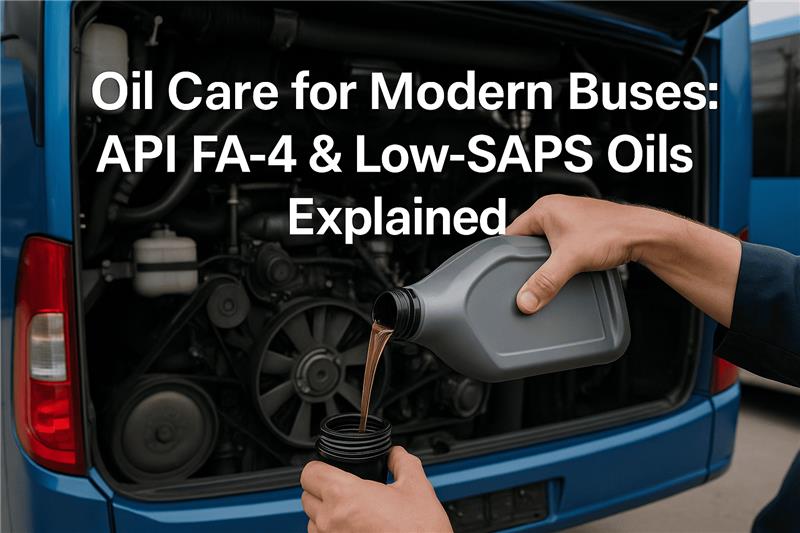
Modern bus operations face unprecedented demands for efficiency, reliability, and environmental compliance. As fleet managers and manufacturing professionals know all too well, the heart of any successful bus operation lies in proper maintenance—and nothing is more critical than choosing and managing the right engine oils. With the introduction of API FA-4 specifications and Low-SAPS (Low Sulfated Ash, Phosphorus and Sulfur) oil formulations, the landscape of bus fleet maintenance has evolved dramatically.
Today's advanced diesel engines, equipped with sophisticated aftertreatment systems, require modern-oils that not only protect engine components but also ensure optimal performance of emissions control systems. For US manufacturing professionals managing bus fleets, understanding these oil specifications isn't just technical knowledge—it's a competitive advantage that directly impacts fleet efficiency, vehicle uptime, and operational costs.
Understanding API FA-4: The Game-Changer for Heavy-Duty Engines
The American Petroleum Institute's FA-4 specification represents a significant advancement in heavy-duty engine oil technology. Introduced to meet the stringent requirements of modern diesel engines, API FA-4 oils are specifically formulated for 2017 and newer model year engines equipped with advanced emission control systems.
What sets FA-4 apart from previous specifications like CK-4 is its lower high-temperature, high-shear (HTHS) viscosity. This characteristic provides several key benefits for bus fleet maintenance:
- Enhanced Fuel Economy: The reduced viscosity minimizes internal friction, leading to improved fuel efficiency—a critical factor for cost-conscious fleet operations.
- Optimized Engine Protection: Despite lower viscosity, FA-4 oils maintain excellent wear protection and thermal stability under extreme operating conditions.
- Extended Drain Intervals: Advanced additive packages allow for longer service intervals, reducing maintenance frequency and associated downtime.
Important Note: FA-4 oils are NOT backward compatible with older engines. They're specifically designed for 2017+ model year engines and should never be used in older equipment without manufacturer approval.
For manufacturing professionals utilizing fleet software and CMMS tools, the transition to FA-4 oils presents an opportunity to leverage predictive analytics and maintenance scheduling systems to optimize oil change intervals while ensuring compliance tracking with manufacturer warranties.
Low-SAPS Oils: Protecting Your Aftertreatment Investment
Low-SAPS (Low Sulfated Ash, Phosphorus, and Sulfur) oil technology addresses one of the most critical challenges in modern diesel engine operation: maintaining the effectiveness of exhaust aftertreatment systems. These systems, including Diesel Particulate Filters (DPF) and Selective Catalytic Reduction (SCR) units, are essential for meeting current emission standards but are vulnerable to contamination from traditional oil formulations.
The benefits of Low-SAPS oils extend far beyond emissions compliance:
- Extended DPF Life: Reduced ash content minimizes filter clogging, extending service intervals and reducing replacement costs.
- Improved Regeneration Efficiency: Cleaner burning oils result in more efficient DPF regeneration cycles, maintaining optimal engine performance.
- Enhanced SCR Performance: Lower sulfur content prevents catalyst poisoning, ensuring consistent NOx reduction efficiency.
- Reduced Maintenance Costs: Fewer aftertreatment system issues translate to lower overall maintenance expenses and improved vehicle uptime.
Modern fleet automation systems can integrate with diagnostic systems to monitor aftertreatment performance in real-time, providing valuable fleet insights that help optimize maintenance schedules and identify potential issues before they become costly problems.
Implementation Strategies for Modern Bus Fleets
Successfully transitioning to API FA-4 and Low-SAPS oils requires a strategic approach that considers both technical requirements and operational realities. Here's how forward-thinking fleet managers are making this transition:
1. Fleet Assessment and Planning
Begin with a comprehensive assessment of your current fleet composition. Identify which vehicles are compatible with FA-4 oils and develop a phased implementation plan. Maintenance software and CMMS tools can help track vehicle specifications and maintenance histories to ensure proper oil selection for each unit.
2. Staff Training and Documentation
Educate maintenance personnel about the differences between oil specifications and the importance of using the correct formulation for each vehicle. Update maintenance procedures and ensure all documentation reflects current oil requirements to maintain compliance tracking.
3. Inventory Management
Implement systems to prevent cross-contamination between different oil types. Color-coding, clear labeling, and separate storage areas help ensure the right oil goes into the right vehicle every time. Integration with telematics systems can provide additional verification and tracking capabilities.
4. Monitoring and Optimization
Utilize predictive analytics and diagnostic systems to monitor oil performance and optimize change intervals. Regular oil analysis programs provide valuable data for fine-tuning maintenance schedules and identifying potential issues early.
Transform your fleet maintenance approach with advanced CMMS tools and predictive analytics.
Getting StartedBook a Demo
Cost-Benefit Analysis: Why Modern Oils Pay for Themselves
While API FA-4 and Low-SAPS oils typically cost more per gallon than conventional formulations, the total cost of ownership tells a different story. Manufacturing professionals who've made the switch report significant savings across multiple areas:
- Fuel Savings: FA-4 oils can improve fuel economy by 1-3%, which for a busy transit system can translate to thousands of dollars in annual savings per vehicle.
- Extended Service Intervals: Many fleets report 25-50% longer oil change intervals, reducing both material costs and labor expenses.
- Reduced Aftertreatment Maintenance: Lower ash content oils can extend DPF cleaning intervals by 50% or more, significantly reducing maintenance costs.
- Improved Vehicle Uptime: Fewer maintenance events and reduced unscheduled repairs mean more revenue-generating hours on the road.
Advanced maintenance software and fleet insights tools can help quantify these benefits, providing concrete data to support investment decisions and demonstrate ROI to stakeholders.
Integration with Modern Fleet Management Systems
The true power of modern oil technology is realized when integrated with comprehensive fleet management systems. Today's CMMS tools and telematics integration capabilities allow fleet managers to:
- Automatically track oil specifications for each vehicle in the fleet
- Schedule maintenance based on actual operating conditions rather than fixed intervals
- Monitor oil condition in real-time through advanced diagnostic systems
- Generate compliance reports for regulatory requirements and warranty claims
- Optimize route optimization to minimize severe-duty cycles that accelerate oil degradation
These capabilities transform oil management from a reactive maintenance task into a proactive strategy that contributes directly to fleet efficiency and profitability.
Conclusion: Embracing the Future of Bus Fleet Maintenance
The evolution to API FA-4 and Low-SAPS oils represents more than just a specification change—it's a fundamental shift toward more efficient, environmentally responsible fleet operations. For US manufacturing professionals, this transition offers an opportunity to leverage cutting-edge technology for competitive advantage.
Success in this new environment requires more than just switching oil types. It demands a comprehensive approach that integrates modern-oils with advanced maintenance software, predictive analytics, and fleet automation systems. The organizations that embrace this holistic approach will find themselves better positioned to meet the challenges of modern transportation while delivering superior performance and reliability.
The investment in proper oil care, supported by robust CMMS tools and maintenance scheduling systems, pays dividends in reduced costs, improved vehicle uptime, and enhanced regulatory compliance. As emission standards continue to tighten and operational demands increase, the importance of getting oil care right will only grow.
Ready to revolutionize your fleet maintenance approach? Discover how our comprehensive fleet software solutions can help you optimize oil care, improve efficiency, and reduce costs.
Getting StartedBook a Demo