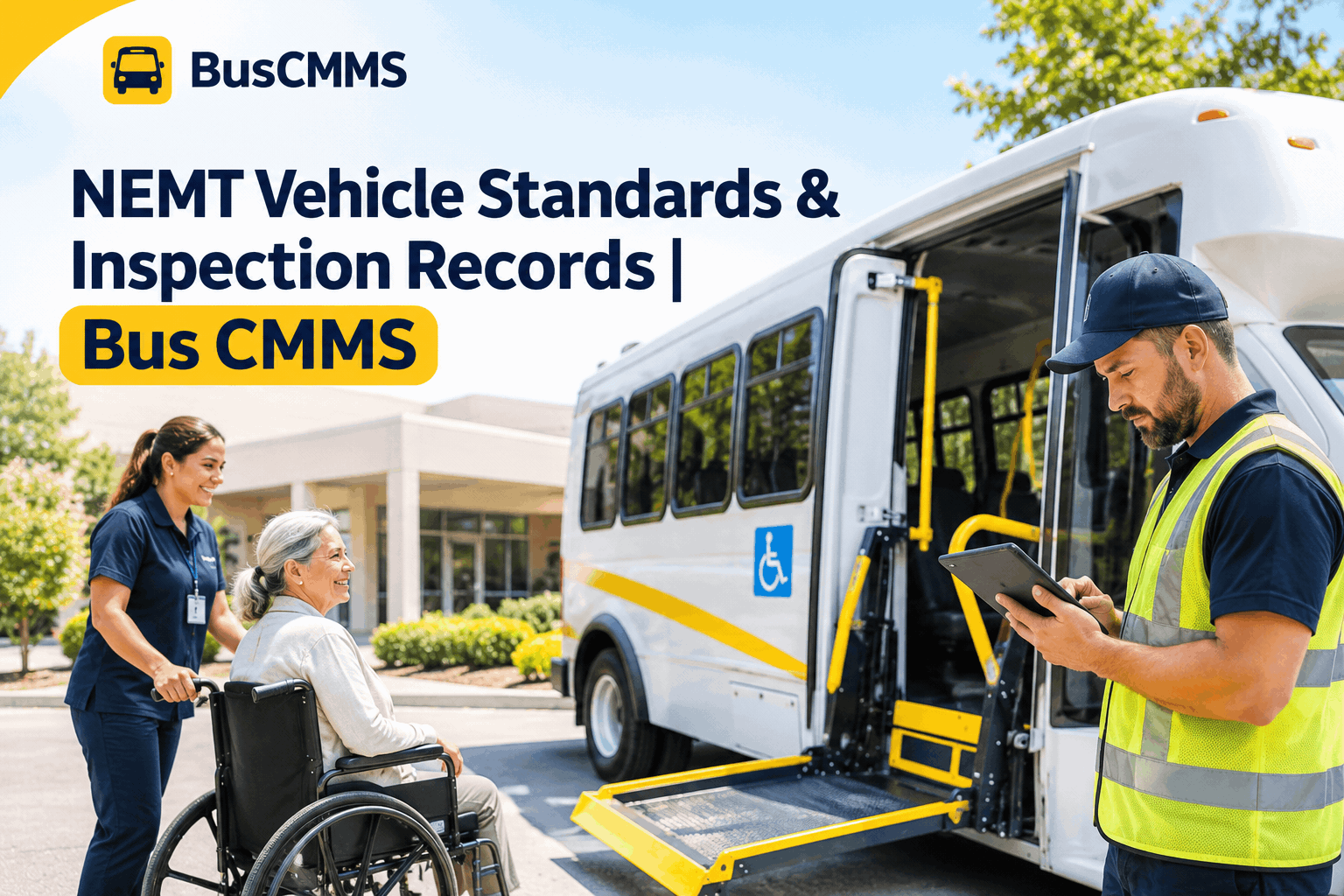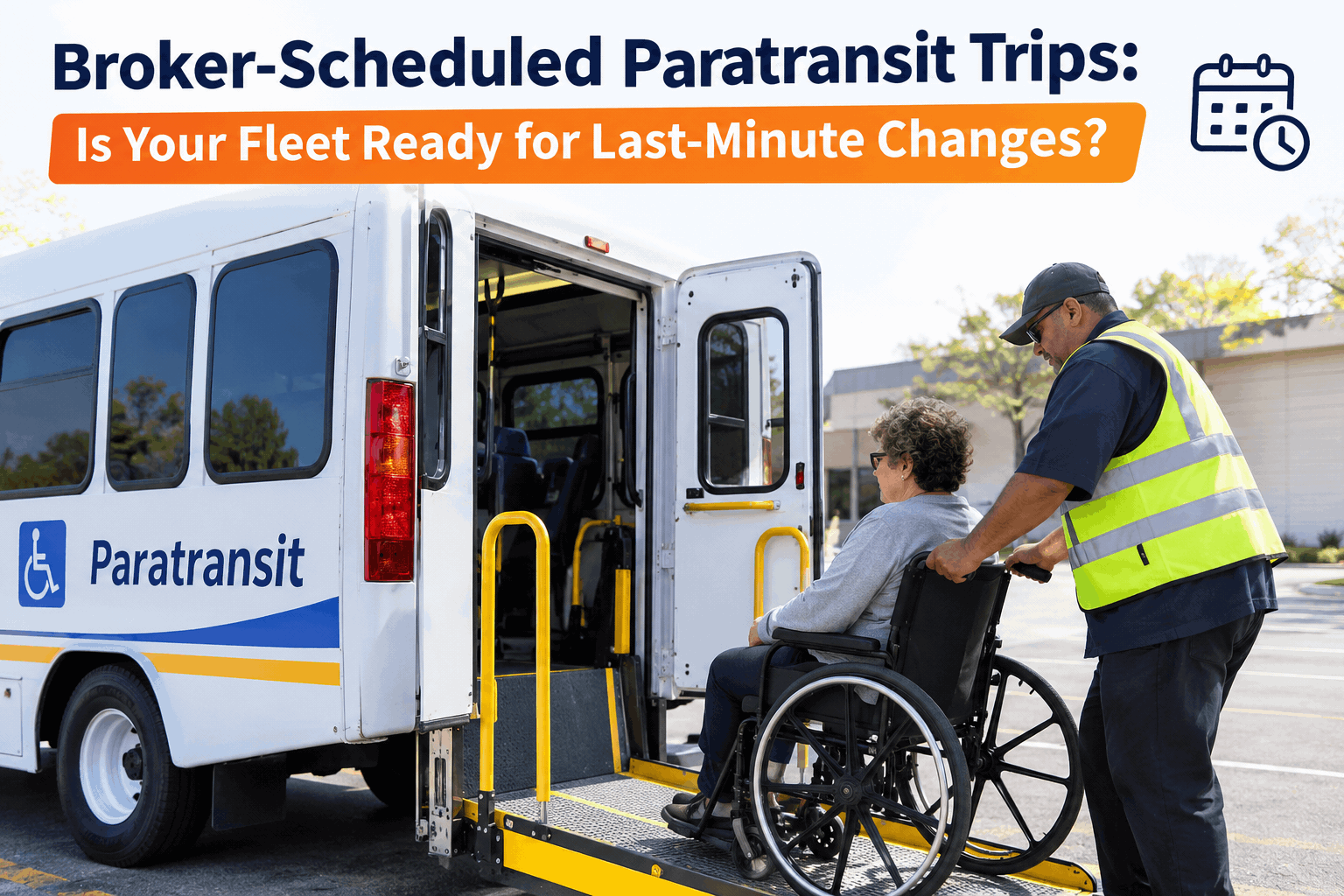
A broker-scheduled trip does not care that your van passed its 6 a.m. pull-out. It drops onto the board at 12:40 for a 1 p.m. pickup — a wheelchair rider who booked that exact ride because nothing else is accessible — and now the only question that matters is whether a ready van is sitting there to take it. That gap is what paratransit trip readiness is really about, and a BusCMMS demo shows how fleets keep vans dispatch-ready.
Broker-Scheduled Paratransit Trips: Is Your Fleet Ready for Last-Minute Changes?
The broker controls when the trip arrives. You control whether an accessible van is ready to take it. Here is why that readiness is harder to hold than on a fixed route — and how to keep it.
Why Broker-Scheduled Trips Test Your Paratransit Trip Readiness
In a brokerage model, the booking, scheduling, and dispatch often sit with the broker — you provide the vehicles and drivers. When a trip lands on your board, the only variable you own is whether a ready, accessible van is there to take it. Every drop is a yes-or-no gate.
You cannot control the drop time. You can control the gate — and that gate is won or lost in the maintenance shop before the trip ever arrives, not in dispatch after it does.
A Paratransit Van Is Only Dispatch-Ready If All of This Holds
"Ready" on a cutaway is not one green light. It is four things that each have to be true at the same moment the trip drops — and the accessibility items are the ones that strand a rider if they slip.
Inspection current
Today's pre-trip / DVIR is done and clean — no safety defect carried over from the last shift.
Lift cycles clean
The wheelchair lift deploys and stows end to end — the single item that turns an accessible trip into a no-go.
Securements complete
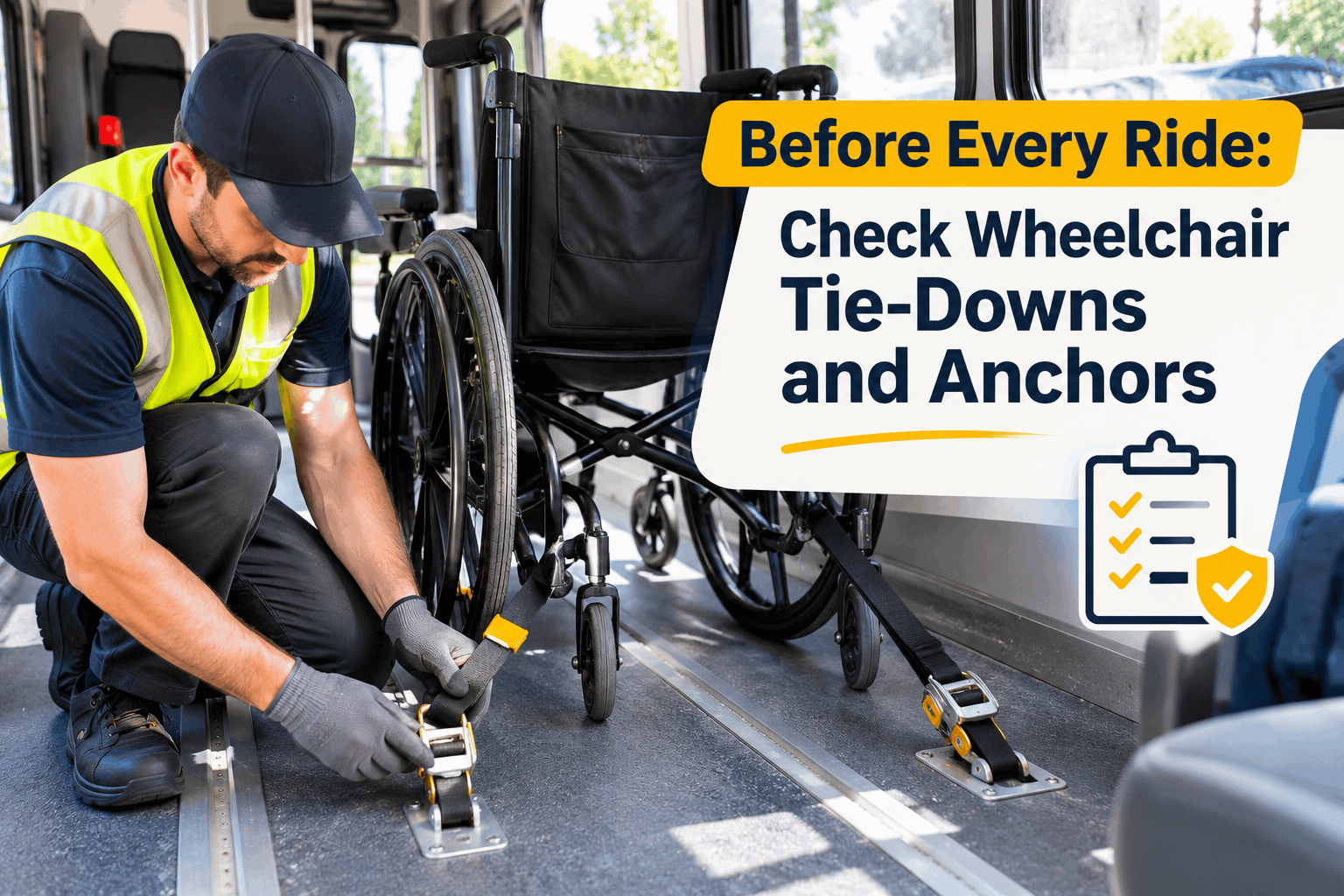
Straps, tie-downs, and the ramp are all present and working — a missing strap pulls the van out of accessible service.
No open work order
Nothing flagged earlier is still sitting unrepaired — a deferred defect is exactly what fails mid-day.
When those four live in a driver's head and a paper pile, "ready" is a guess. Walk through how BusCMMS keeps all four visible per van in a demo so dispatch never guesses.
What Breaks Paratransit Fleet Readiness Between Pickups
A van that pulled out clean can still miss a 1 p.m. trip. These are the usual reasons — and the last two are squarely a maintenance job.
Swipe sideways to see all columns →
How You Track Readiness Decides How Often a Van Is Ready
Readiness is not luck — it tracks with how you record it. A van checked only at pull-out and logged on paper drifts; one on a live digital record with every defect flagged holds far better across a broker day.
Scheduled PM by mileage and calendar, failed checks that auto-open a work order, and a running availability record are exactly what keep a van ready between broker pickups. That is the slice BusCMMS tracks.
Your Pre-Dispatch Readiness Checklist
Run this before a van is marked ready for broker trips. The CRITICAL items strand a rider the moment they fail; the PLAN items are what keep readiness from slipping as the day goes on.
-
Today's pre-trip / DVIR is done and cleanNo safety defect carried over — the inspection is current for this shift, not yesterday's.CRITICAL
-
Wheelchair lift cycles end to endDeploys and stows cleanly — the one item that turns an accessible broker trip into a no-go.CRITICAL
-
Securements and ramp all presentStraps, tie-downs, and ramp working — a missing strap pulls the van out of accessible service.CRITICAL
-
No open work order on the vanNothing flagged earlier is still unrepaired — deferred defects are what fail mid-day.PLAN
-
Preventive maintenance is not overduePM current by mileage and calendar, so small items are caught before they become a mid-route failure.PLAN
-
An accessible spare is coveredYou know which floater can take the trip if a van drops — coverage, not scramble.PLAN
If two or more CRITICAL items are a "maybe," a broker trip is one drop away from a missed ride. Start tracking van readiness free and make them a "yes."
Guesswork vs. a Readiness You Can See
The difference between catching a trip and scrambling for it is whether readiness is written down and visible when the trip lands.
Swipe sideways to see all columns →
"The broker doesn't care how my morning went. If a wheelchair trip drops at 12:40, I need to know in ten seconds which van can take it — not send someone running to the yard to check a lift."
The Short Version on Broker-Trip Readiness
You own the gate, not the drop
The broker sets when the trip arrives; your only lever is whether a ready accessible van is there to take it.
One pull-out check isn't enough
A van that passed at 6 a.m. can fail before a 1 p.m. trip — readiness has to hold all day, not once.
Accessibility items strand riders
Lift, securements, and ramp are the checks that turn a ready van into a no-go for a wheelchair pickup.
Readiness is a maintenance record
Scheduled PM, work orders, and a live availability log are what keep vans dispatch-ready between pickups.