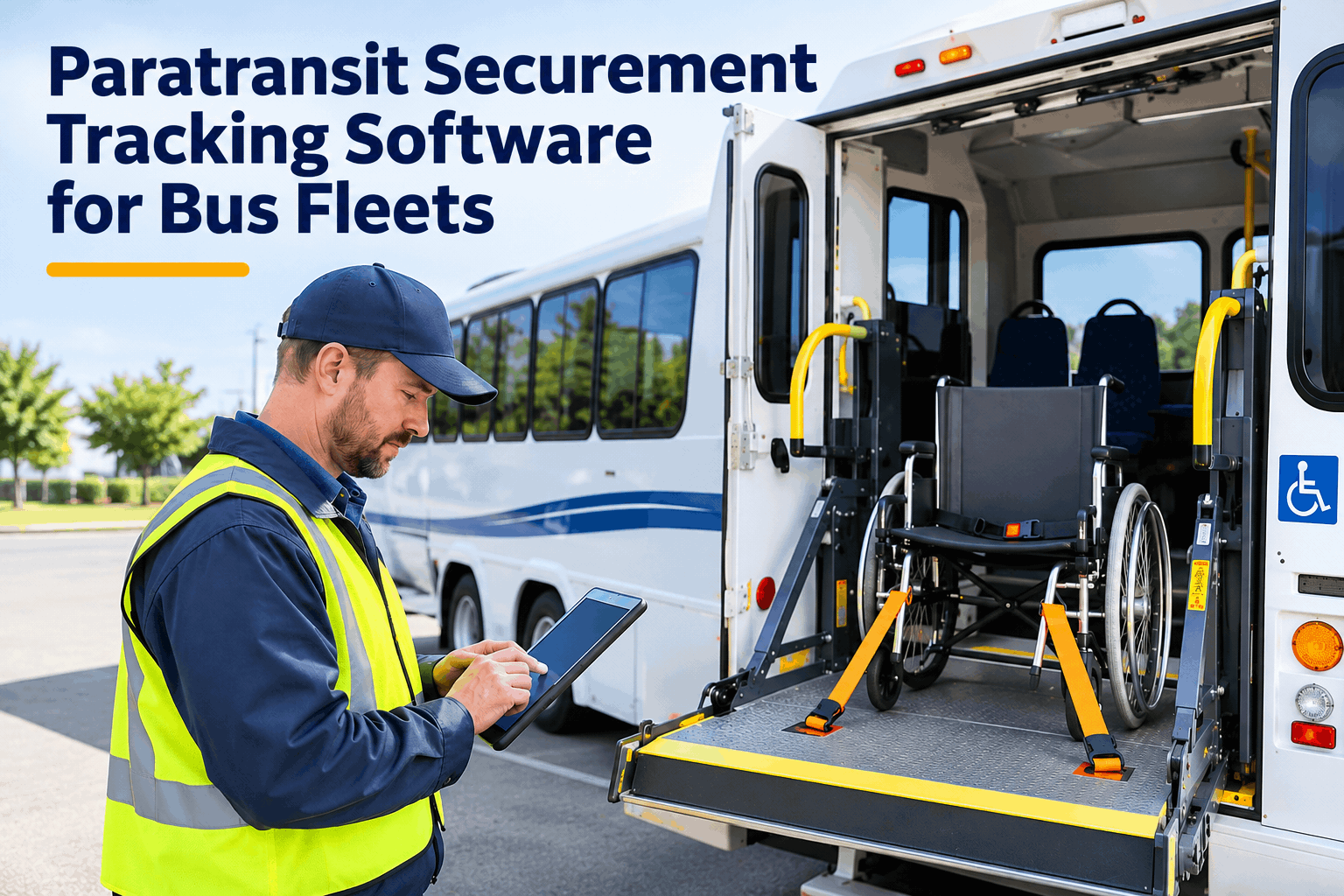
The audit letter lands and asks you to produce the complete record for forty specific trips — by trip ID, by date, by beneficiary. If those records are scattered across dispatch screens, driver notebooks and a maintenance binder in the shop, you are about to spend a very bad week. Solid NEMT trip documentation is what turns that letter from a crisis into a twenty-minute pull. You can see how the vehicle and driver side of your audit file stays organized in a demo and face the next review with the records already in order.
NEMT Trip Documentation Checklist for Medicaid Audits
When a Medicaid review asks for the records behind a trip, you either produce them in minutes or reconstruct them for days. Here is what belongs in a complete, audit-ready NEMT record set.
Why NEMT Audits Catch Providers Off Guard
A Medicaid transportation audit rarely fails because the trips did not happen. It fails because the provider cannot produce clean, matching records for the trips they billed. Three gaps show up again and again.
Records live in too many places
Trip logs in dispatch, driver credentials in a folder, vehicle inspections in the shop. When an audit wants one trip's full picture, nobody can assemble it fast.
Vehicle and driver proof is missing
Audits check more than the trip — they want proof the vehicle was inspected and the driver qualified on that date. That side is often the weakest.
The money is real
Undocumented claims get clawed back. Federal reviews have estimated millions in NEMT claims that did not comply because records were not maintained.
An audit does not reward trips that happened — it rewards trips you can prove happened, with every supporting record lined up.
What a Complete NEMT Trip Record Contains
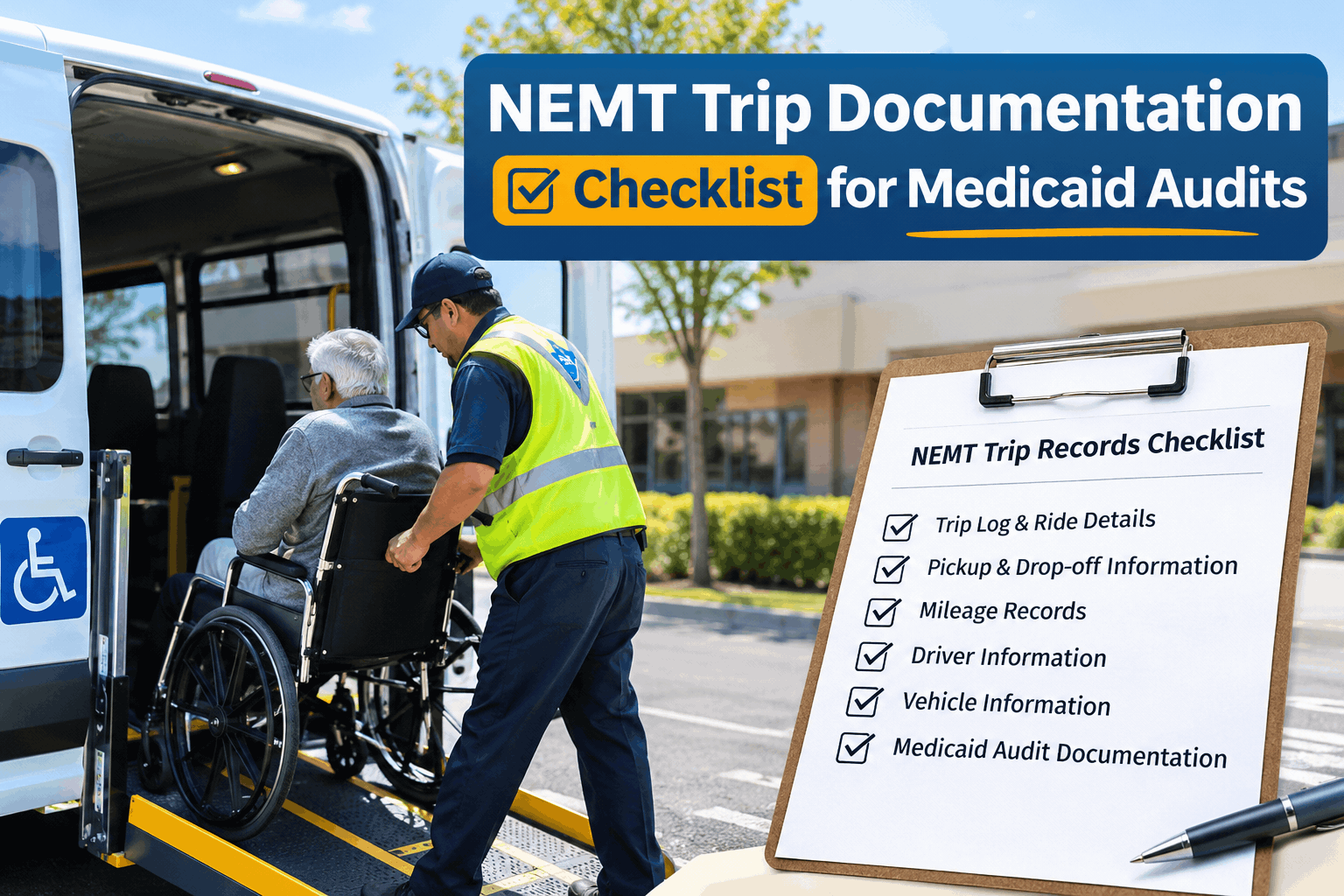
State Medicaid programs set the exact fields, and they are remarkably consistent. A daily trip log for each ride generally needs these core pieces — always confirm against your state's and broker's specific manual, since details vary.
Trip identification
A unique trip ID that ties the ride to the claim and the authorization.
Beneficiary details
Member name and Medicaid ID — who was transported, and that they were eligible.
Pickup & drop-off
Both locations with the time of pickup and the time of drop-off for the trip.
Date & times
Departure and arrival date and time, placing the trip in a verifiable window.
Mileage
Loaded trip mileage, which many state payment rules take into account.
Driver & vehicle
Driver's name and the vehicle's plate or VIN used for that specific trip.
That is the trip log itself — the ride data. But an audit also asks whether the driver and vehicle behind each trip were fit for service, and that is where a maintenance record matters. You can sign up free and keep the vehicle and driver side of that record in order.
Trip Data vs Maintenance Records: Know What Lives Where
An honest look at your audit file: part of it is ride and billing data, and part is proof the vehicle and driver were fit. They live in different systems, and knowing which is which keeps you from assuming one tool covers everything.
The trip log data
- Trip ID, beneficiary, Medicaid ID
- Pickup / drop-off times & locations
- Trip mileage billed
- Claim and authorization match
Lives in your scheduling and billing system, not a maintenance CMMS.
The vehicle & driver proof
- Vehicle inspection records, dated
- Preventive maintenance history per bus
- Defect-to-repair work orders
- Driver certification & credential tracking
The "was this vehicle and driver fit for the trip" half of the audit file.
BusCMMS does not replace your dispatch or billing system — it owns the maintenance half that audits also demand, the same records behind paratransit and NEMT compliance. You can book a demo and see exactly which part of the audit file it keeps ready.
Your NEMT Audit-Prep Checklist
Run this before a review, not during one. The first items are your dispatch system's job; the maintenance items are where a bus-built system keeps you from scrambling — each one is a record an auditor can ask for by trip.
- Trip logs complete for every billed rideTrip ID, beneficiary, pickup/drop-off, mileage, driver and vehicle — from dispatch.CRITICAL
- Vehicle inspection records on file, datedProof each vehicle was inspected and safe for the trips it ran.CRITICAL
- PM history shows service was on timeA maintenance trail proving the fleet was kept in safe operating condition.ORGANIZE
- Defects tied to closed repair work ordersShows a found problem was fixed, not left on a vehicle that kept running trips.ORGANIZE
- Driver credentials current and trackedQualifications in date for every driver behind a billed trip.ORGANIZE
- Records retrievable per vehicle on demandThe maintenance half pulls up fast, so you answer the audit instead of digging.ORGANIZE
The two critical items set the floor: complete trip logs plus dated vehicle inspections. For the maintenance side, book a demo and we will organize your vehicle and driver records before your next review.
How BusCMMS Keeps the Maintenance Half Audit-Ready
Where BusCMMS fits an NEMT audit is clear and honest: the vehicle and driver maintenance records. That is a real and often-weak part of the file, and it is exactly what a purpose-built bus CMMS is made to keep in order.
Inspection & PM records per vehicle
Dated inspections and preventive maintenance history for each bus — the proof a vehicle was fit for the trips it ran.
Defect-to-repair work orders
Every found defect tied to a closed repair, showing problems were fixed rather than ignored on an in-service vehicle.
Driver credential tracking
Each driver's qualifications and expiry dates in one place, so you can show who was in date behind every trip.
Pair your dispatch trip logs with a clean maintenance record and your audit file is whole. To set up the maintenance half, book a demo and bring your fleet and driver list.
A Compliance Manager's Take
Key Takeaways on NEMT Trip Documentation
Strong NEMT trip documentation is a two-part file — the ride record and the proof the vehicle and driver were fit. Four things to carry into your next review.
Know the required fields
Trip ID, beneficiary, pickup/drop-off, mileage, driver and vehicle — per ride.
It is two systems
Trip data lives in dispatch; vehicle and driver proof lives in maintenance.
The maintenance half is often weakest
Audits ask if the bus and driver were fit — that record gets neglected.
Retrieval speed is the win
Records you pull per vehicle in minutes turn an audit into a routine answer.
Keep complete trip logs in dispatch, keep the vehicle and driver maintenance records organized and dated per bus, and make both retrievable fast — and a Medicaid audit becomes a request you answer calmly instead of a week you dread. The trips happened; good documentation is how you prove it.