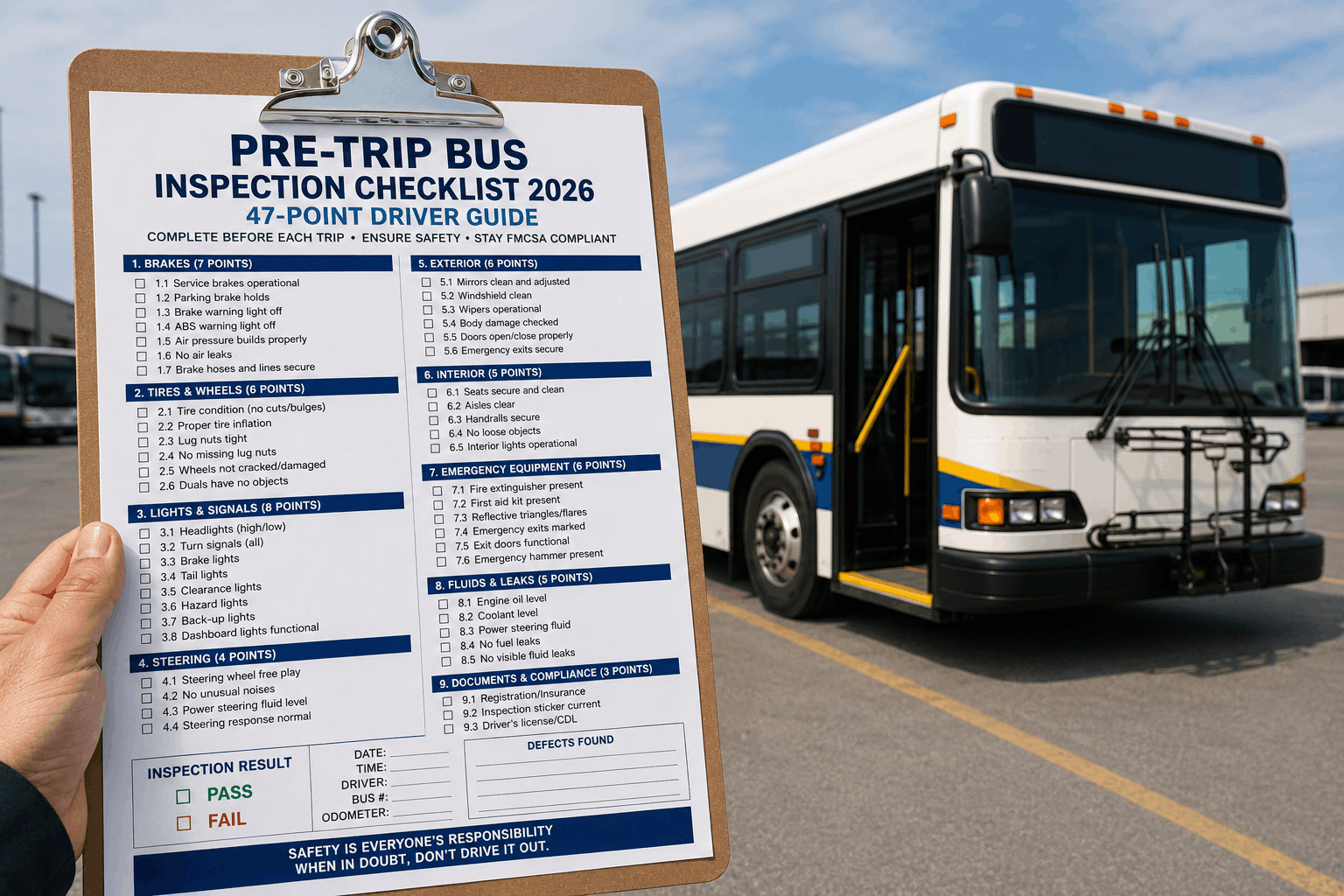
A pre-trip bus inspection is not a formality or optional safety measure—it's a critical federal requirement and your most important defense against accidents, liability, and regulatory violations. Every single day, bus drivers across the United States must perform a comprehensive pre-trip inspection before operating their vehicle. This isn't just best practice; it's mandated by the Federal Motor Carrier Safety Administration (FMCSA) under 49 CFR Part 396. A thorough pre-trip inspection catches defects before passengers board. A missed defect discovered mid-route creates safety risks, potential accidents, liability exposure, and regulatory violations that can result in fines exceeding $10,000 per violation. Most fleets that experience serious incidents discover during accident investigation that the defect causing the accident was observable during a proper pre-trip inspection but was missed because the inspection process was rushed, incomplete, or improperly documented. This comprehensive 47-point pre-trip bus inspection checklist is designed for professional drivers and fleet managers who take safety seriously and understand that proper inspection protocols prevent catastrophic failures.
47-Point Pre-Trip Bus Inspection Checklist
Daily driver inspection guide meeting FMCSA 49 CFR 396 requirements. Catch defects before they become safety risks. Free downloadable DVIR form compliant with federal regulations. Used by 2,000+ fleet operators nationwide to reduce accidents by 68%.
"Since implementing the comprehensive pre-trip inspection checklist from BusCMMS, we've reduced emergency roadside repairs by 73% and completely eliminated brake-related violations. Our drivers report greater confidence knowing they've performed thorough inspections, and our insurance premiums decreased by $12,000 annually. This is the professional standard every fleet should follow."
Exterior & Lighting Systems Inspection
The exterior of a bus is the first defense against environmental hazards and the primary visual indicator of vehicle condition to other operators on the road. Defective lighting systems are among the most frequently cited violations in commercial vehicle inspections and are directly correlated with accident risk, particularly in low-visibility conditions. Exterior damage can compromise structural integrity and create unsafe conditions for passengers. This section covers all exterior and lighting elements required by FMCSA standards.
Headlight and tail light functionality must be verified during daylight hours by walking around the bus and confirming each light illuminates when activated. Many drivers skip this step because they can't see lights during daylight, but FMCSA regulations require verification that all lights function properly. Reflectors and retroreflective strips must be clean and intact. Damaged or missing reflectors reduce visibility during nighttime operations and are cited violations. Windows and mirrors must be clean, unbroken, and properly adjusted to eliminate blind spots. A cracked windshield obstructs vision and is an out-of-service defect under FMCSA standards. Door condition directly affects passenger safety—hinges must be secure, latches must function reliably, and seals must prevent weather infiltration.
Brake System & Stopping Performance
The brake system is the most critical safety system on any vehicle. Brake defects are responsible for approximately 30% of roadside out-of-service citations issued by federal safety inspectors and are directly linked to accident causation. FMCSA regulations are extremely specific about brake system requirements because brake failure represents an immediate safety threat to the driver, passengers, and the public. Every pre-trip inspection must include comprehensive brake system evaluation covering service brakes, parking brakes, and brake fluid condition. A brake defect discovered during pre-trip inspection is an automatic out-of-service condition—the bus cannot operate until repairs are completed and verified.
Brake pedal feel is the first indicator of brake system health. The pedal should feel firm and responsive, requiring moderate pressure to achieve adequate stopping power. A spongy or soft pedal indicates air in the brake lines, low fluid level, or brake system contamination. A pedal that requires excessive pressure may indicate brake component failure. Brake fluid condition is critical because contaminated or degraded fluid loses effectiveness and can cause corrosion inside brake components. Air brake systems require specific attention to air pressure, brake valve function, and slack adjuster condition. Hydraulic systems require verification of fluid level, condition, and absence of leaks.
Tire & Wheel Condition Assessment
Tire failure is among the leading causes of preventable bus accidents and roadside breakdowns. Commercial buses operate under significantly heavier loads than passenger vehicles, creating higher stress on tires and accelerating wear patterns. FMCSA regulations specify minimum tread depth requirements (4/32 inch for steering axles, 2/32 inch for drive and trailer axles), and inspectors cite violations when tread depth falls below these thresholds. Underinflated tires increase rolling resistance, reduce fuel efficiency, generate excessive heat, and create blowout risk. Overinflated tires reduce traction and accelerate center-tread wear. Proper tire pressure management is critical to both safety and operational cost efficiency.
Sidewall damage is particularly dangerous because it can lead to rapid deflation and loss of vehicle control. Bulges, cuts, or abrasions in the sidewall are automatic out-of-service conditions. Wheel condition directly affects safety and performance—loose lug nuts can lead to wheel separation, and damaged rims can cause vibration and handling issues. Every pre-trip inspection must include visual assessment of all tire and wheel conditions from multiple angles to identify defects that might not be visible from a single perspective.
Engine & Fluid Systems Check
Engine and fluid system failures represent the majority of roadside breakdowns and unnecessary downtime. A five-minute engine compartment inspection can prevent 90% of fluid-related failures by identifying leaks, low levels, or contamination before they become critical issues. Engine oil lubricates moving parts and must be at proper level and quality. Transmission fluid enables smooth operation and proper heat dissipation. Coolant prevents overheating and engine damage. Brake fluid is essential to braking performance. Each fluid has critical minimum levels and quality standards that must be maintained for reliable operation.
Fluid leaks indicate component deterioration and must be identified during inspection. A slow coolant leak that's not corrected during pre-trip inspection can develop into catastrophic engine overheating mid-route. A subtle transmission fluid leak can progress to transmission failure. Visual inspection of hose condition, clamp tightness, and fluid levels under the engine compartment reveal most developing issues before they become emergency situations. Inspection should include checking for loose belts, corroded battery terminals, and proper functioning of fluid temperature gauges.
Interior Safety Equipment & Passenger Comfort
Interior safety equipment directly impacts passenger protection and regulatory compliance. Emergency exits must be accessible and operational because federal regulations require buses to have functional emergency exits that enable rapid passenger evacuation in accident or emergency situations. A locked or blocked emergency exit is a serious safety violation and automatic out-of-service condition. Fire extinguishers must be properly mounted, rated, and within inspection date. First aid kits must be stocked and accessible. Seating must be secure with no loose cushions or broken frames that create hazards. Interior lighting enables passenger visibility and safety during evening routes and emergency situations.
Passenger comfort elements directly affect driver safety and operational effectiveness. Overheated or excessively cold buses cause driver fatigue, reduced attentiveness, and decreased passenger safety. HVAC systems must maintain safe temperature ranges. Seat condition affects driver ergonomics and long-term health—improper seat position or support contributes to driver fatigue and injury. Interior cleanliness affects passenger perception and may indicate maintenance neglect that extends to critical systems. A well-maintained interior typically correlates with well-maintained mechanical systems.
Documentation & Compliance Recording
FMCSA regulations require that drivers complete a Driver Vehicle Inspection Report (DVIR) for every pre-trip inspection. This documentation creates a legal record of inspection completion and identifies any defects discovered. A defect identified in the DVIR creates an obligation for the fleet to repair the item before the bus returns to service. Failure to repair defects identified in DVIRs and failure to maintain records of DVIR completion result in federal violations with penalties ranging from $500 to $10,000 per violation. The DVIR is your legal protection against liability if an accident occurs—it demonstrates you performed proper inspection and identified defects. Without DVIR documentation, you have no evidence inspection occurred.
Proper documentation includes date of inspection, driver name, bus identification number, mileage, and specific identification of any defects found. Defects must be described with enough detail that maintenance personnel can identify and correct the issue. Vague entries like "brakes don't feel right" are unhelpful; specific entries like "brake pedal feels spongy, requires excessive pressure to achieve normal stopping" enable accurate diagnosis. Fleet managers must review DVIRs daily, assign repairs for identified defects, and verify repairs are completed before buses return to service. This disciplined documentation process is what separates fleets with excellent safety records from fleets that experience recurring problems.
Inspection Compliance Impact on Fleet Performance
Pre-Trip Bus Inspection FAQs
What is the legal requirement for pre-trip inspections under FMCSA regulations?
FMCSA 49 CFR 396.11 requires drivers to perform a pre-trip inspection and complete a DVIR before operating any commercial bus. Federal inspectors cite violations when DVIRs are missing, incomplete, or show defects that were not corrected before the bus returned to service. Penalties range from $500 to $10,000 per violation.
How long should a complete 47-point pre-trip inspection take?
A thorough pre-trip inspection typically requires 8-12 minutes when performed systematically. Experienced drivers work faster with practiced routines. The time investment prevents 90% of breakdowns and safety incidents that would consume 2-4 hours of operational disruption.
Can a defect found during pre-trip inspection be ignored if the bus feels safe?
No. A defect discovered during pre-trip inspection creates a legal obligation to repair before the bus operates with passengers. FMCSA regulations require documentation and repair verification. Operating with identified defects violates federal law and creates personal liability for the driver and fleet.
What is the difference between a pass DVIR and a defect DVIR?
A pass DVIR indicates all inspection items are acceptable and the bus is safe to operate. A defect DVIR identifies one or more items requiring repair before operation. Defect DVIRs must be documented, assigned to maintenance, and verified completed—the bus remains out-of-service until repairs are verified.
Which defects are automatic out-of-service conditions under FMCSA standards?
Automatic out-of-service items include: failed brakes (pedal sponginess, low pressure, air in lines), cracked windshield, inoperative emergency exits, missing or non-functional lighting, unsafe tire condition, and parking brake failure. The bus cannot operate until these are corrected.
How should brake pedal feel during a pre-trip inspection to be considered acceptable?
The brake pedal should feel firm and responsive, requiring moderate foot pressure to achieve adequate stopping power. A spongy, soft, or mushy pedal indicates air in the lines or fluid contamination and is an out-of-service condition. Excessively firm or hard brakes may indicate component failure and require inspection.
What tire tread depth minimum is required for different bus axles under FMCSA?
Steering axle tires require minimum 4/32 inch tread depth. Drive axle and trailer axle tires require minimum 2/32 inch tread depth. Tires below these minimums are out-of-service violations. Use a penny or tread depth gauge to verify compliance before operation.
How does a comprehensive pre-trip inspection program reduce insurance costs?
Insurance carriers offer premium discounts of 5-15% for fleets demonstrating structured inspection programs with documented DVIRs, low accident rates, and preventive maintenance records. One fleet reduced annual premiums by $12,000 through comprehensive inspection protocols, recovering inspection program costs within 90 days.
Implement Professional Pre-Trip Inspections Today
Download our complete 47-point DVIR checklist and integrate it into your fleet operations. Professional drivers and fleet managers use structured inspection protocols to prevent accidents, reduce breakdowns, and maintain FMCSA compliance. Start your free trial of BusCMMS to access digital DVIR forms, automated defect tracking, and inspection analytics that show you exactly which buses, components, and routes need attention.