A professional bus driver's checklist isn't just a compliance form — it's the 10-minute routine that protects your CDL, your passengers, and your career. This guide covers everything: the complete 7-point walk-around, the DOT-mandated DVIR, and exactly what separates paper checklists from the digital workflows top fleets use today.
Professional Bus Driver Checklist: Complete Daily, Pre-Trip and Post-Trip Guide
The 7-point walk-around that keeps your CDL clean and your passengers safe
Complete Inspection Time
Why Every Bus Driver Needs a Professional Checklist
During the 2025 CVSA Roadcheck, 18.1% of inspected vehicles were placed out of service — mostly for brake and tire defects a proper pre-trip would have caught. For bus drivers carrying passengers, the stakes are even higher.
41%
of OOS violations are brake-related
14K
accidents prevented by DVIRs annually
95%+
pass rate with proper inspections
The 7-Point Walk-Around Method
FMCSA recommends the 7-point walk-around used in CDL training nationwide. Walk the same pattern every time — nothing gets missed.
Pre-Trip Inspection Checklist
Complete this checklist before every trip. Under 49 CFR 392.7, you cannot operate a CMV unless satisfied that all parts and accessories are in good working order.
Engine Compartment
Oil level — between min/max marks
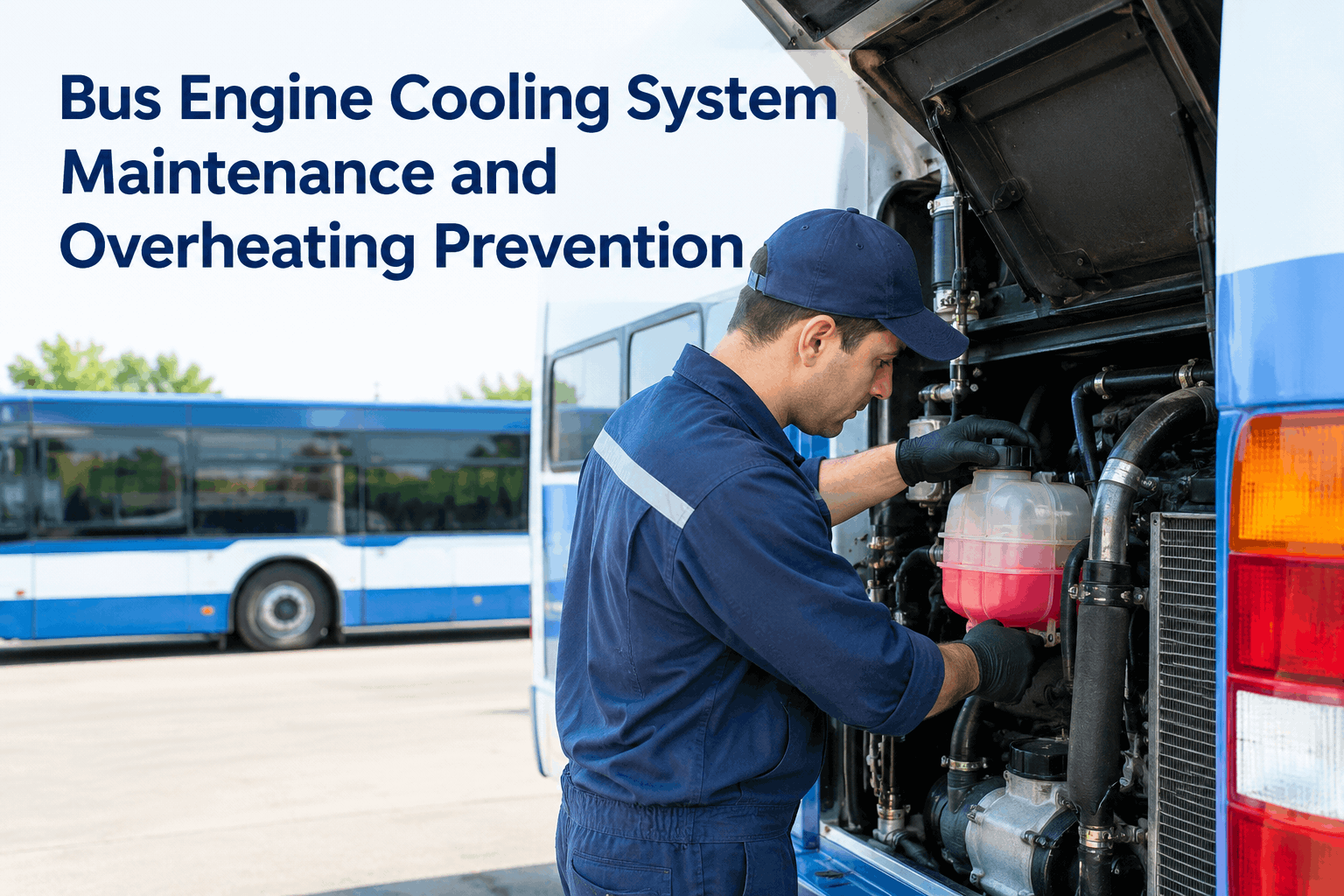
Coolant level — proper level, no leaks
Power steering fluid — adequate level
Belts and hoses — no cracks, fraying, leaks
Wiring — no loose or exposed wires
Brakes (41% of OOS Violations)
Air pressure builds to 120-140 psi
Low pressure warning by 55-60 psi
Parking brake holds stationary
Air loss <3 psi/min with brakes applied
Brake linings >1/4" thickness
Tires & Wheels (21% of OOS)
Steer axle tread — min 4/32"
All other tires — min 2/32"
No exposed belt or ply material
Proper inflation, no leaks
Fasteners tight, no cracked rims
Lighting & Signals
Headlights — high and low beam
Turn signals — all operational
Brake lights — functional
Hazard flashers — front and rear
Clearance and marker lights
Bus-Specific Safety
Stop arm extends/retracts properly
Crossing gate operates correctly
Emergency exits open freely
Emergency door alarm works
First aid kit & fire extinguisher
Cab Interior & Controls
Windshield — no cracks in sweep
Wipers — operational
Mirrors — mounted and adjusted
Horn — functional
Gauges — all reading normal
Get This Checklist as a Printable PDF
During your demo, we'll walk through the digital version and provide you with a customized printable template for your fleet — yours to keep.
Complete This Checklist in 5 Minutes on Your Phone
Your drivers tap through each item. Defects auto-create work orders. Records stored 14+ months for audits. No more clipboards.
Post-Trip Inspection & DVIR
Under 49 CFR 396.11, every bus driver must complete a DVIR at the end of each day — whether defects are found or not. Unlike trucks, passenger-carrying vehicles require daily DVIRs regardless of condition.
Walk-Around
Check all components after day's operation
Document Defects
List specific issues with photos if digital
Sign & Submit
Submit before going off-duty
Next Driver Review
Sign that repairs were made
Driver A finds defect
→
Carrier repairs & certifies
→
Driver B signs & drives
Breaking any link = audit citation + fines up to $15,420
Paper vs Digital Checklists
As of March 23, 2026, FMCSA explicitly authorizes electronic DVIRs (FMCSA-2025-0115). Here's how the two methods compare:
15-20 min to complete
Illegible handwriting
Lost or damaged forms
Manual filing for audits
No photo evidence
Delayed defect notification
5 min guided walk-through
Clear, consistent data
Cloud storage — never lost
Instant audit access
Photo evidence included
Instant defect alerts + work orders
DVIR Penalties You Must Know
$1,270
Per day for failing to complete required DVIRs
$12,700
For falsifying reports ("rubber stamping")
$15,420
For failing to repair defects before dispatch
$23,048
For operating under out-of-service order
Expert Insight
"The biggest misconception drivers have is that pre-trip is about memorizing a list. DOT examiners want to see that you understand why each component matters and what a defect actually looks like in the real world."
"A 10-minute inspection prevents 10 hours of problems — DOT fines, roadside breakdowns, and outcomes no driver wants to think about. The drivers who take inspections seriously keep their CDL clean for decades."
Before First Route
Complete 7-point pre-trip walk-around. Review previous DVIR and sign if defects were repaired.
End of Day
Complete post-trip inspection. File DVIR with any defects found. Sign and submit before going off-duty.
Every 90 Days
Emergency exit inspection required for buses (49 CFR 396.3).
See How 200+ Fleets Replaced Paper Checklists
In your demo, we'll show you digital inspections in action and give you a printable checklist template customized for your fleet.
How long should a bus pre-trip inspection take?
A thorough pre-trip inspection takes 10-15 minutes with paper forms, or 5-7 minutes with digital tools that guide drivers through each checkpoint. Never rush — missing a defect costs far more time than the inspection itself.
Do bus drivers need to file a DVIR every day?
Yes. Unlike trucks (which only require DVIRs when defects are found), passenger-carrying vehicles — including all buses — must file a DVIR at the end of each day regardless of whether defects were discovered. This is a common audit trap.
Are electronic DVIRs DOT-compliant?
Yes. Electronic DVIRs have been permitted since 2018, and FMCSA published a final rule on February 19, 2026 (effective March 23, 2026) explicitly authorizing eDVIRs. Digital DVIRs actually exceed paper requirements because they include timestamps, GPS location, and photo documentation.
What happens if I skip a pre-trip inspection?
Operating without completing a pre-trip inspection violates 49 CFR 392.7. Fines range from $1,270 per day to $23,048 for operating under an out-of-service order. Beyond fines, violations impact your CSA scores, trigger additional audits, increase insurance premiums, and create litigation exposure.
What are the 11 FMCSA-required DVIR components?
The 11 required components are: service brakes (including trailer connections), parking brake, steering mechanism, lighting devices, tires, horn, windshield wipers, rear-vision mirrors, coupling devices, wheels and rims, and emergency equipment. Buses have additional requirements for emergency exits and passenger safety equipment.