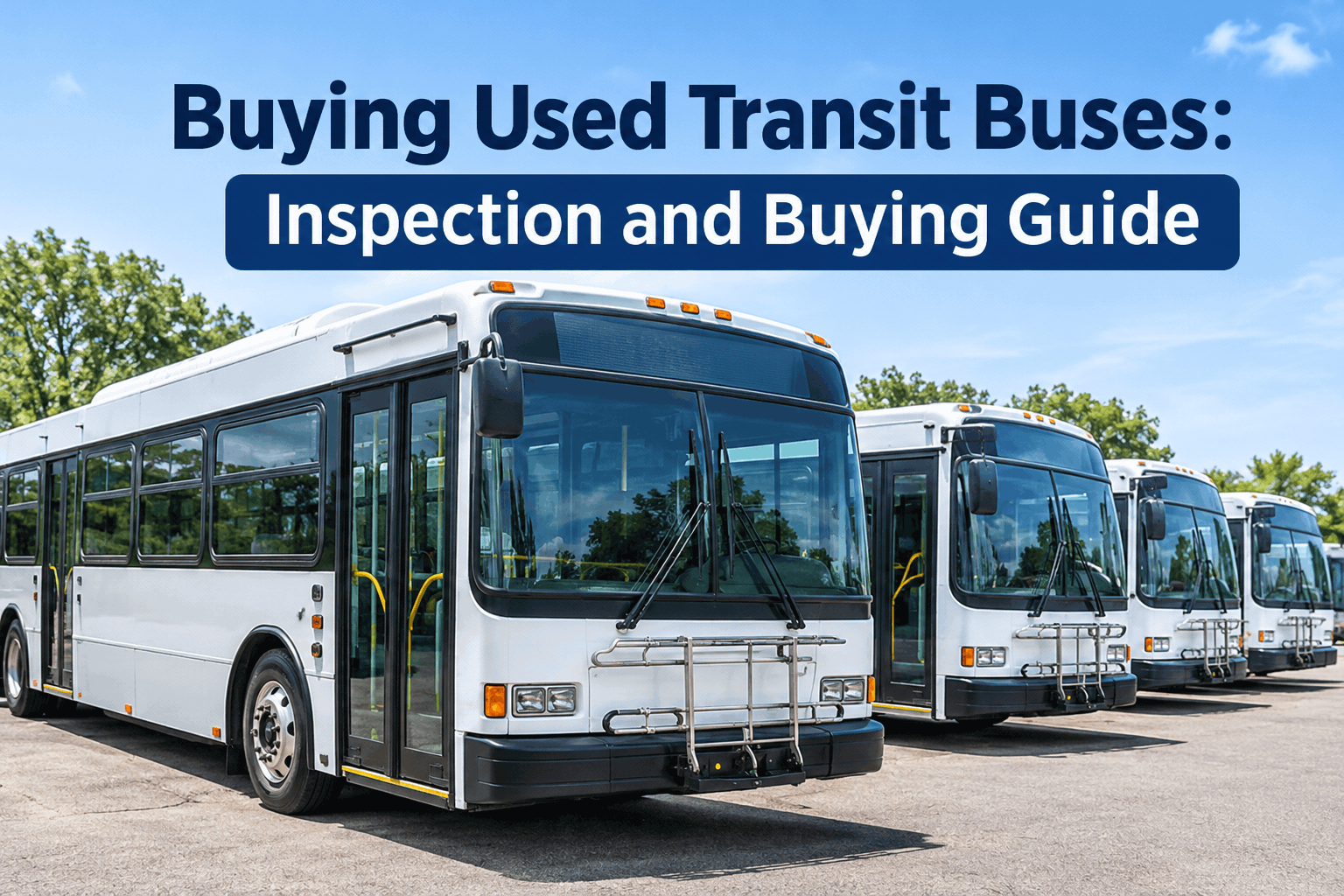
The purchase price on a bus tells you what it cost, not what it is worth today. Residual value — what a buyer would actually pay for it right now — moves every month with age, mileage and condition, and most fleets never track it. Getting bus fleet residual value and asset valuation right means knowing that number per unit, not guessing from the books. You can see what each bus is really worth in a demo.
Bus Fleet Residual Value Tracking and Asset Valuation
The number in your accounting system and the number a buyer will pay are rarely the same. Tracking a bus's real residual value — and what drives it — is how you stop losing money in the gap.
Why Residual Value Is a Moving Number Most Fleets Miss
Residual value is simply what a bus would sell for at a given moment — and it sits at the heart of asset valuation, resale, insurance and lease-end decisions. The trouble is that it is never the number in front of you. The price you paid is history, and the book value in your ledger follows an accounting formula, not the used-bus market. Four gaps trip fleets up.
Purchase price isn't current worth
What you paid when the bus was new tells you nothing about what it will bring today. Value starts falling the moment it enters service.
Book value isn't market value
Book value is an accounting figure that can sit well above or below what a buyer will actually pay. Chasing a book number can leave real money at auction.
Condition and records move it
Two identical buses of the same age and mileage are not worth the same if one has a full service history and the other has none. Documentation is value.
An untracked value is a guess
If you only know what you paid, every decision that depends on current value — resale, insurance, a lease buyout — is made blind.
That maintenance premium is the part you can actually control. A buyer or appraiser with no service records has to assume the worst, and prices accordingly — so the records you keep are the difference. You can sign up free and start building the history that defends your buses' value.
What Moves a Bus's Residual Value
A residual value estimate is the sum of a handful of forces, some that drag it down and some you can push up. Knowing which is which tells you where to spend effort — and where the number is simply out of your hands.
Age and mileage only move one way, and the market moves on its own. Condition and, above all, documented maintenance are where a fleet makes its own luck on value. That is why a residual number is only as good as the asset data behind it — book a demo to see these drivers tracked per bus.
What an Accurate Residual Value Lets You Do
Tracking residual value is not busywork for the finance office — a current, defensible number per bus pays off across the whole operation. Each of these decisions quietly depends on knowing what a bus is worth today.
| What it lets you do | Why it needs a current value |
|---|---|
| Plan a resale | Know what to expect before you list, not after the offer comes in |
| Set insurance coverage | Insure to true value — neither over-paying nor under-covered |
| Decide a lease-end or buyout | Compare residual against the payoff to keep or return the bus |
| Report asset value | Carry a defensible figure on the books instead of a stale estimate |
| Time a replacement | Act while value is still worth capturing, before it bottoms out |
The same per-bus value feeds all of them, which is why it is worth tracking once and using everywhere. See how it fits a passenger operation on the passenger and transit page, or book a demo to see your fleet valued unit by unit.
Your Residual Value Tracking Checklist
An accurate valuation starts with the data under it. Run your fleet against this list — the critical items are the ones a residual number simply cannot be trusted without.
- Every bus has current age and mileage trackedThe two baseline drivers of any residual-value estimate.CRITICAL
- A complete maintenance history is attached to each unitThe documentation that earns the 10–20% maintenance premium.CRITICAL
- You track condition, not just the odometerInspections and repairs are what separate two same-age buses.CRITICAL
- You check your estimate against a market referencePair your data with an auction or valuation guide, not the ledger.PLAN
- You know your equity on financed or leased busesValue versus payoff tells you whether to hold, sell or buy out.PLAN
- Residual value feeds your replacement and disposal timingSell or retire while the value is still there to capture.PLAN
Get the three critical items in place and the valuation follows. You can sign up free and start tracking the value drivers today.
How BusCMMS Supports Residual Value Tracking
BusCMMS is not an appraisal service or a pricing guide — it does not publish a market price. What it does is own the asset data that a credible residual value is built from, and the records that prove it.
Age, mileage & condition per bus
The core drivers of value, tracked for every unit, so your estimate rests on current data instead of the original invoice.
Complete maintenance history
A full, exportable service record for each bus — the documentation that earns the maintenance premium and defends the value at sale.
Replacement & resale planning
Value and cost trends per bus, so you can act on real worth — when to sell, when to hold, and what to expect at disposal.
Bring that data to a market reference and you have a residual value you can stand behind — for the board, the insurer, the lessor or the buyer.
A Fleet Asset Manager's Take
Key Takeaways on Residual Value and Asset Valuation
Residual value is what a bus is worth now, not what you paid or what the ledger says — and tracking it accurately turns asset valuation from a guess into a number you can use.
Book value isn't market value
The accounting number and the resale number diverge — track the one a buyer pays.
Records are worth real money
A documented history commonly adds a 10–20% premium at resale.
One value, many uses
Resale, insurance, lease-end and reporting all run on a current per-bus value.
Data drives the number
Age, mileage, condition and history are what make a residual estimate credible.
Track the drivers, keep the records, and check your number against the market — and your fleet's value stops being a surprise at auction and becomes an asset you manage on purpose. What a bus is worth is knowable; most fleets just never look.