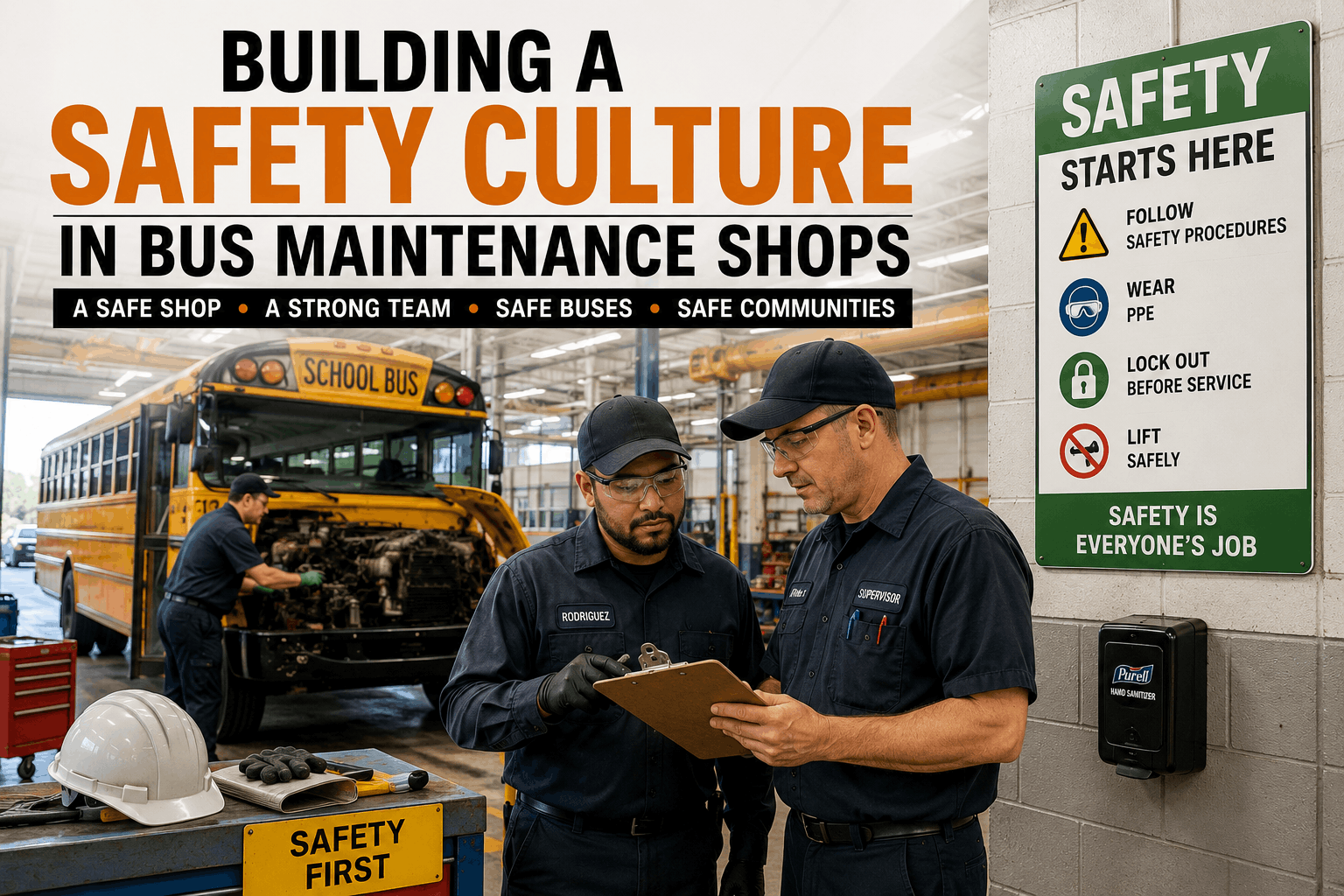
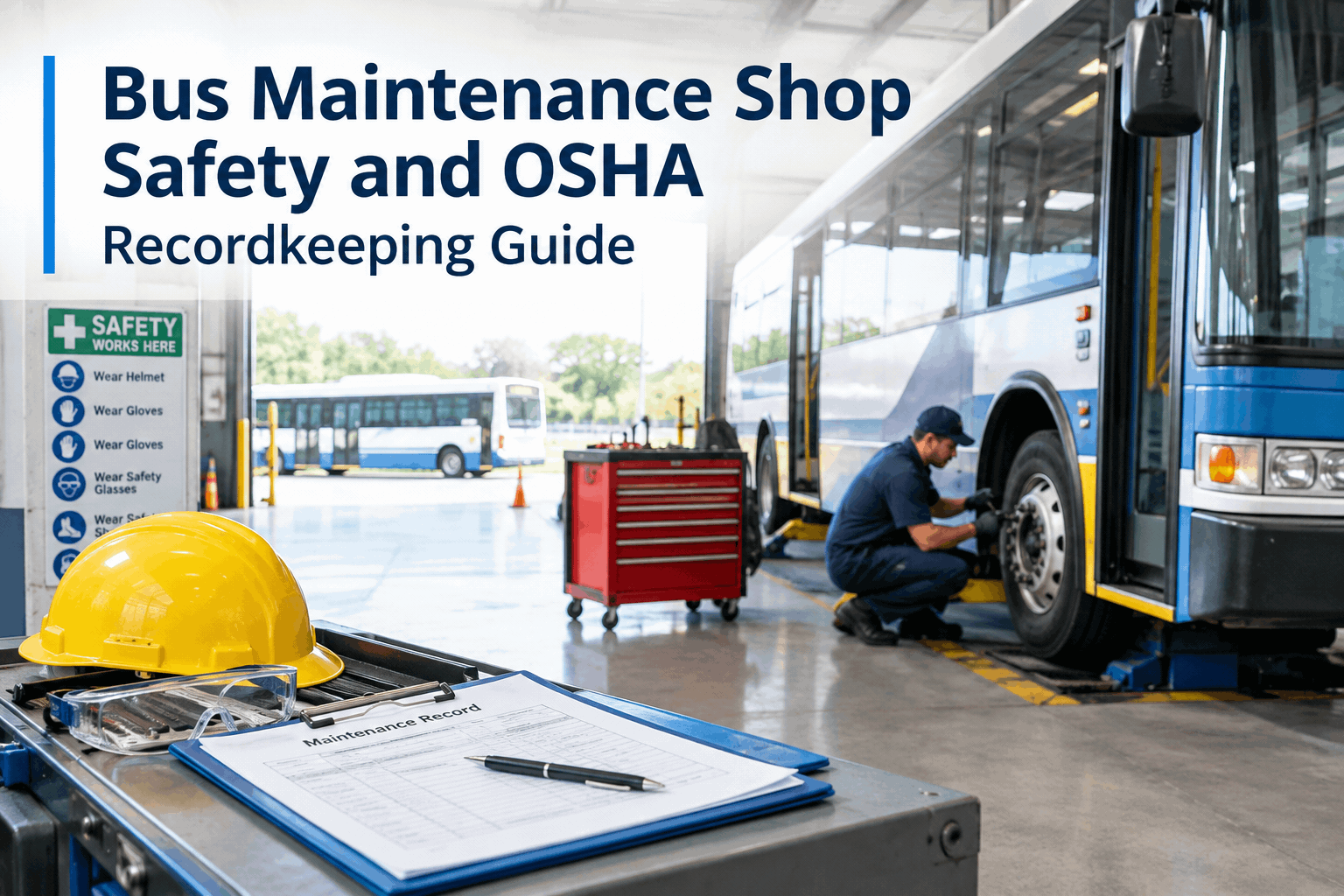
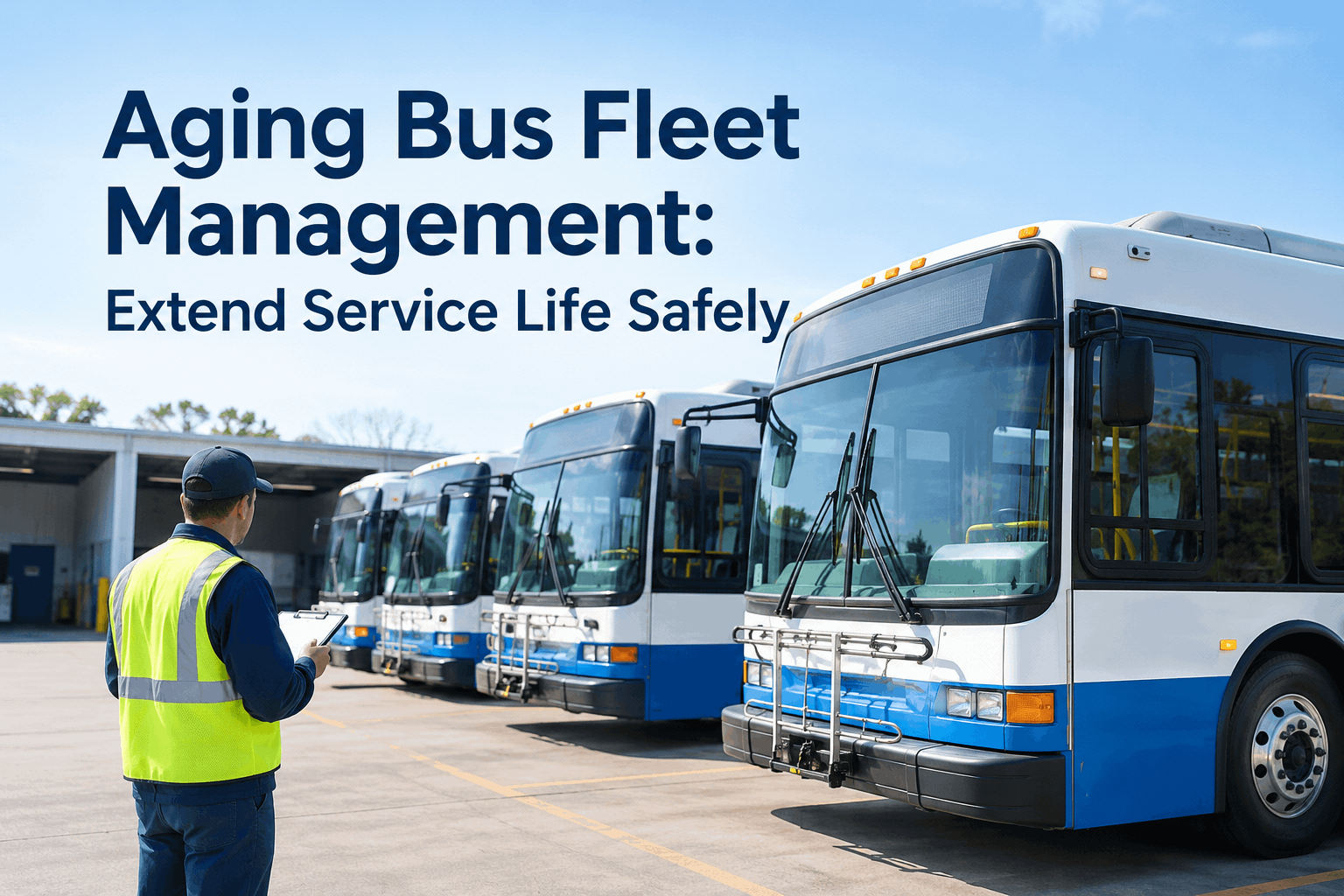
A technician reaches under a running bus to grab a tool. Another lifts an engine block without proper equipment. A third works on brakes without lockout/tagout. These happen because safety culture is weak — workers prioritize speed over procedure. Bus maintenance shops have real hazards: 500+ PSI pressurized systems, heavy equipment, rotating machinery, toxic fluids, electrical hazards. One mistake can kill or permanently injure a technician. Yet many shops operate with minimal safety programs. Injuries are preventable. Data shows fleets with strong safety cultures have 50–70% fewer shop injuries and lower workers' comp costs. This guide explains how to build a safety culture in bus maintenance shops: from written policies, lockout/tagout procedures, lifting equipment standards, PPE requirements, incident reporting, to creating an environment where workers feel safe raising concerns without fear.
Workplace Safety
Building a Safety Culture in Bus Maintenance Shops
Shop injuries are preventable. Learn how to build safety culture from policies, training, and procedures that protect technicians.
Why Shop Safety Culture Matters
A single serious injury in a maintenance shop costs $50,000–$500,000+ in medical, workers' comp, lost productivity, and legal liability. A death costs far more. Yet many shops operate with reactive safety: respond to incidents after they happen rather than prevent them. Proactive safety culture means: written policies enforced daily, worker training before dangerous tasks, near-miss reporting and learning, and leadership that treats safety as equally important as productivity.
Safety Culture Impact on Injuries
Strong culture: 2–4 injuries per 200,000 hours worked
Weak culture: 7–12 injuries per 200,000 hours worked
Difference: 50–70% fewer injuries in strong safety culture
Workers' Comp Cost Difference
Strong culture: $30,000–$50,000 annual per 50-technician shop
Weak culture: $100,000–$200,000 annual per 50-technician shop
Annual savings: $50,000–$150,000 through prevention
5 Pillars of Shop Safety Culture
1
Written Safety Policies & Procedures
Create shop safety manual covering: lockout/tagout, lifting equipment, PPE requirements, electrical safety, pressurized system safety, chemical handling, and incident reporting.
2
Mandatory Training Before Task Assignment
Every technician must complete safety training before working on hazardous systems. Document all training and renew it regularly.
3
Rigorous Equipment & Tool Standards
Use proper lifting equipment, calibrated pressure gauges, inspected air lines, grounded electrical tools, and safe work procedures.
4
Near-Miss Reporting & Continuous Learning
Create a safe environment where technicians report hazards without fear. Investigate every near-miss and share lessons learned.
5
Leadership Commitment & Accountability
Supervisors should check for safety violations daily. Unsafe shortcuts should be addressed immediately, and production pressure should never override safety.
Critical Safety Procedures: Top 5 Risk Areas
Lockout/Tagout on Pressurized Systems
Hazard: Pressurized air or hydraulic release during work creates explosion risk.
Procedure: Isolate pressure source, bleed pressure to zero, lock isolation valve, and tag with technician name and date.
Heavy Lifting
Hazard: Dropping heavy components can cause crushing injury or death.
Procedure: Use hydraulic lift stands and engine hoists. Never work under unsupported loads.
Electrical Hazards
Hazard: Battery work and high-voltage systems can create shock or arc-flash risk.
Procedure: Disconnect batteries, use insulated tools, wear gloves, and remove metal jewelry.
Chemical Handling
Hazard: Skin absorption, inhalation, and eye contact with fluids or solvents.
Procedure: Read safety data sheets, wear gloves and eye protection, and keep spill containment available.
Tire Work
Hazard: Tire rim separation or explosion during high-pressure inflation.
Procedure: Use a safety cage, stand to the side, and never exceed maximum pressure.
"We had a serious accident: technician reached under running bus to grab a tool, arm got caught in pulley. Severe injury, extensive surgery. Woke us up. Implemented comprehensive safety program: written policies, mandatory training, daily safety briefings, LOTO enforcement. First year, no serious injuries. Workers now feel safe reporting hazards. We prevented what could have been another tragedy."
— Safety Manager, 40-bus fleet, Pennsylvania
Build a Strong Shop Safety Culture
Prevent injuries. Reduce workers' comp costs. Protect your team.