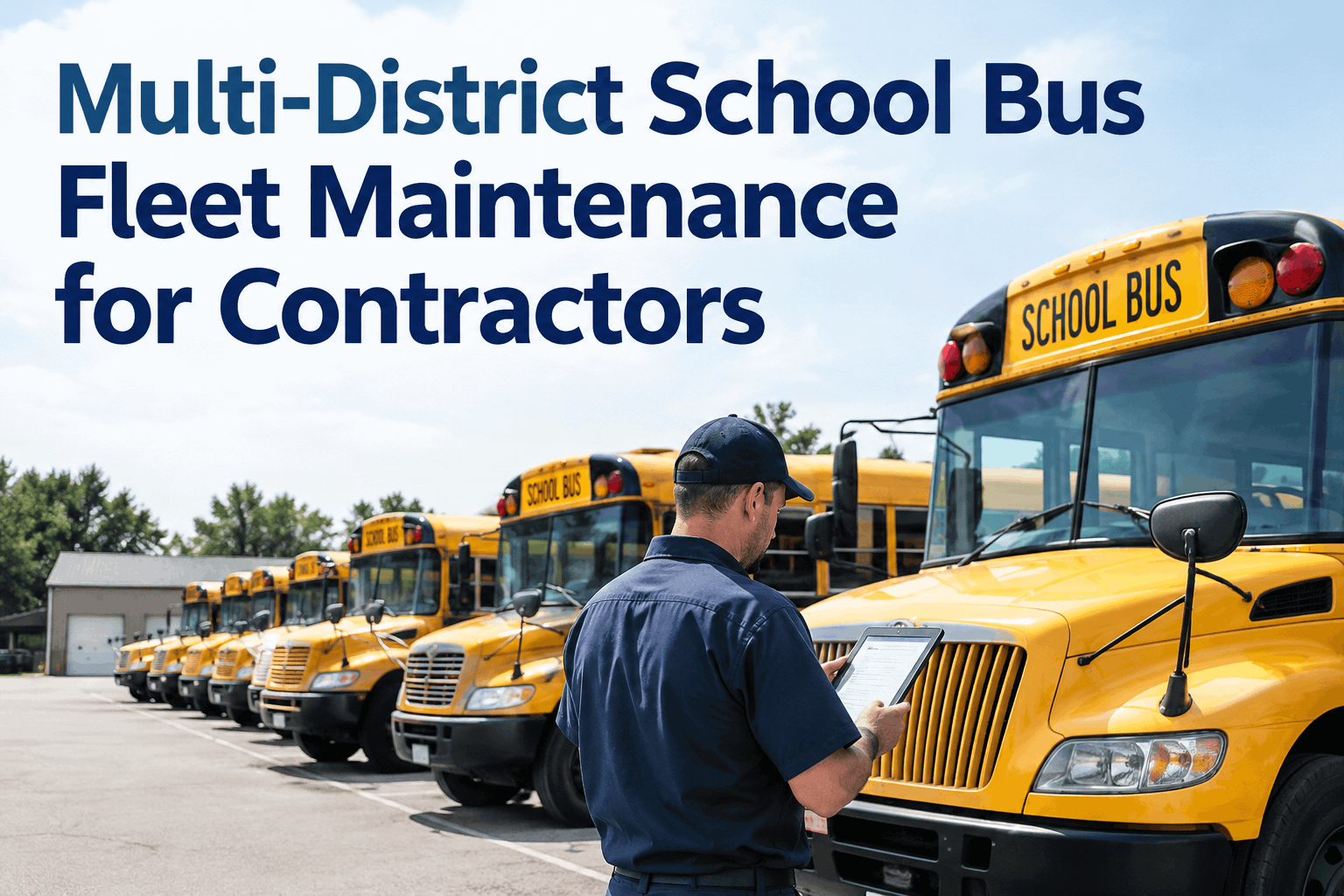
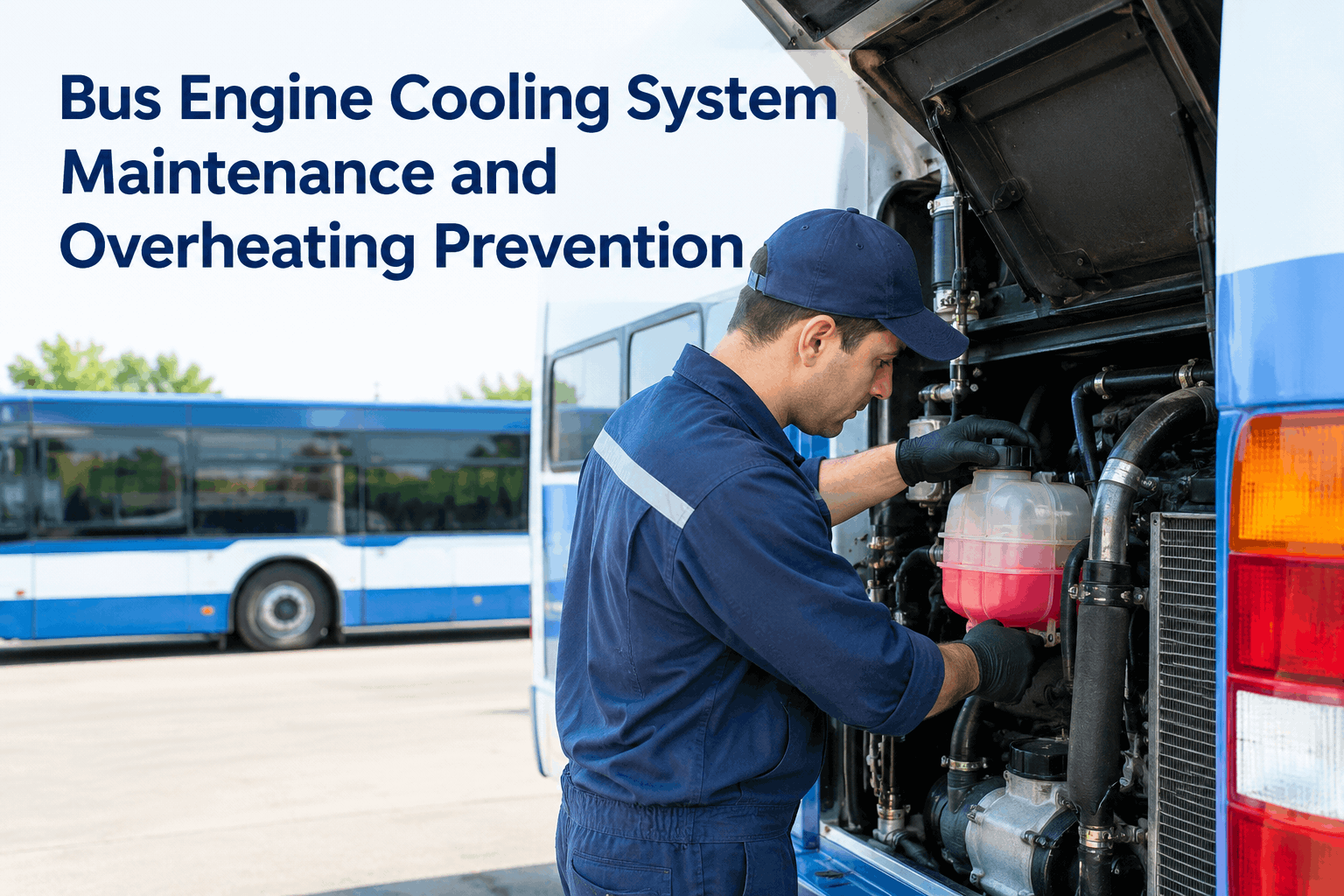
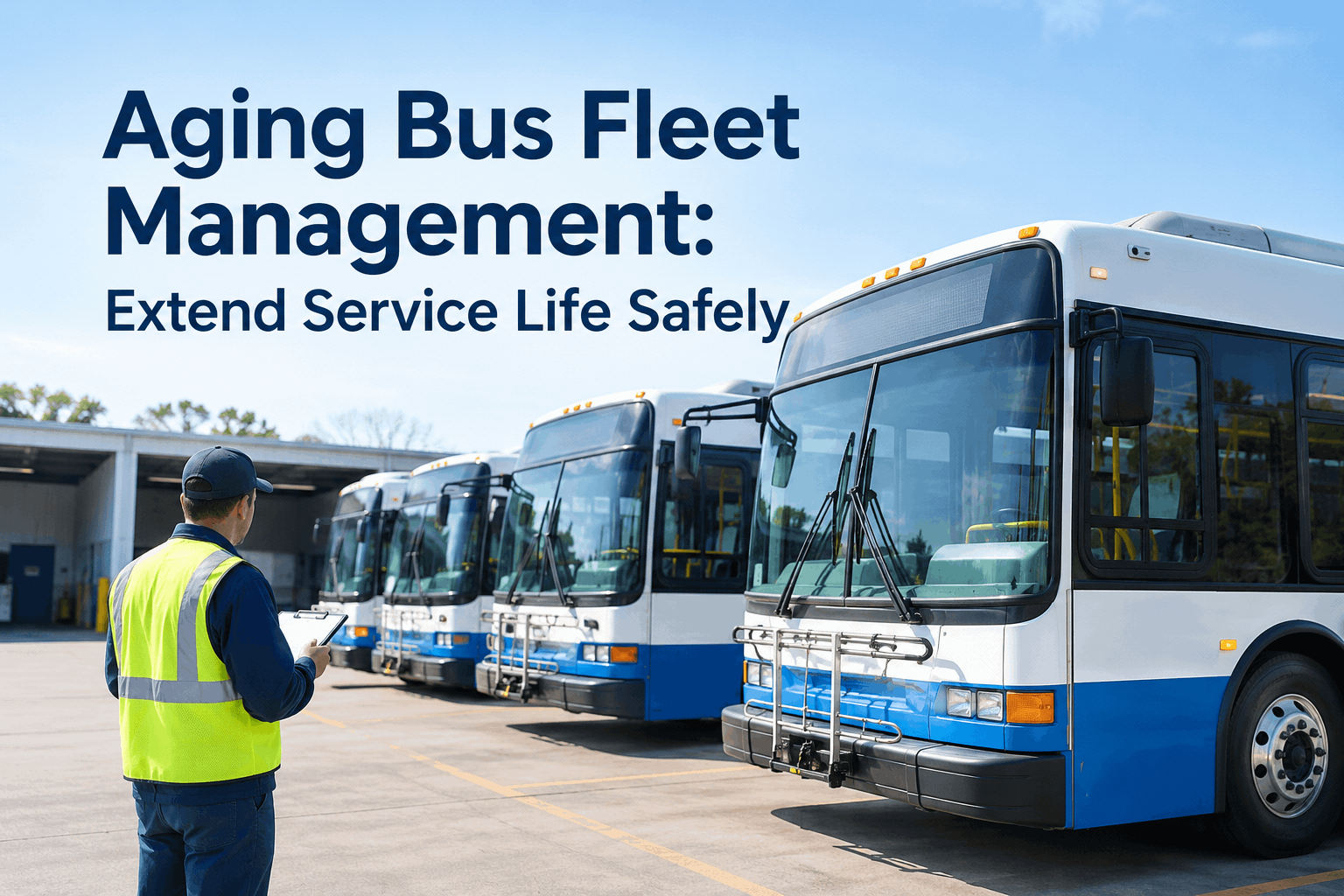
Your annual inspection is next week. Do you know every item the inspector will check — and which one could put your bus out of service? FMCSA's 49 CFR 396 Appendix A lists over 100 inspection points, and missing just one means your bus doesn't leave the lot. This 2026 school bus inspection checklist covers every DOT requirement so you can pre-inspect, fix defects, and pass the first time.
School Bus Annual Inspection Checklist — Free Printable PDF 2026
Complete DOT inspection checklist with all 49 CFR 396 Appendix A items for school bus fleets
23%
vehicle out-of-service rate (2024 CVSA)
14 mo
record retention required
$23,048
max OOS violation fine
Inspection Frequency Requirements
Not all inspections are annual. School buses have multiple inspection cycles mandated by federal law, and missing any one triggers fines and out-of-service orders. Here's what you're legally required to complete:
Daily
Driver Vehicle Inspection Report (DVIR) — pre-trip and post-trip required49 CFR 396.11
Every 90 Days
Emergency exits, push-out windows, emergency door marking lights49 CFR 396.3
Annual
Full DOT inspection per Appendix A — all systems, by qualified inspector49 CFR 396.17
Semi-Annual
Some states (IN, OH, NJ) require inspections every 6 monthsState DOT
Sign up free to auto-schedule inspection reminders — never miss a 90-day or annual deadline again.
Inspection Checklist Preview by Category
The full annual inspection covers 10 major systems with over 100 individual check points. Here's a preview of each category — the complete checklist is available when you book a demo or sign up.
Brake System
18 items
Service brakes functioning all axles
Parking brake holds on grade
Brake drums free of cracks
Air leaks <4 psi/minute (air brakes)
+14 more in full PDF
Lighting & Signals
15 items
Headlights (high/low beam)
Alternating warning lights
Stop arm lights operational
Clearance markers illuminated
+11 more in full PDF
Steering System
12 items
Steering wheel play within limits
Power steering fluid level
Tie rod ends secure
No fluid leaks in steering gear
+8 more in full PDF
Tires & Wheels
14 items
Tread depth 4/32" steer, 2/32" drive
No exposed cord or sidewall damage
Lug nuts tight, none missing
Matching tire sizes per axle
+10 more in full PDF
Body & Frame
16 items
Frame free of cracks
All fasteners secure
Suspension components intact
Floor free of holes/damage
+12 more in full PDF
Emergency Equipment
11 items
Emergency exits open freely
Fire extinguisher charged/current
First aid kit complete
Warning triangles present
+7 more in full PDF
Get the Complete 100+ Point Checklist
Book a 15-minute demo and we'll send you the full printable PDF with every DOT inspection point — plus show you how to digitize inspections fleet-wide.
Top Inspection Failures (2024 Data)
The 2024 CVSA International Roadcheck inspected 48,761 commercial vehicles. Here's what caused the most out-of-service orders — and why your pre-inspection checklist needs to catch these first:
#1
Brake System Defects
3,093 violations in 2024
23%
Vehicle OOS Rate
Nearly 1 in 4 vehicles failed
#2
Lighting Violations
Most common single defect
5.1%
Driver OOS Rate
CDL/medical card issues
Pre-inspecting your fleet before the annual DOT inspection catches 21% of defects that would otherwise result in out-of-service orders. Sign up free to track defects and repairs — every issue documented until fixed.
Inspection Zone Walkthrough
Qualified inspectors follow a systematic pattern around the bus. Here's the 8-zone inspection sequence most DOT inspectors use:
Engine Compartment
Fluids, belts, leaks
Driver Area
Controls, mirrors, gauges
Front Exterior
Lights, wipers, glass
Left Side
Tires, fuel, body
Rear
Lights, exits, exhaust
Right Side
Tires, mirrors, entry
Interior
Seats, exits, floor
Undercarriage
Frame, suspension, brakes
Book a demo to see our zone-by-zone digital inspection that guides technicians through every check in order.
Penalties for Non-Compliance
$23,048
Operating under OOS order
$2,304
Vehicle OOS violation
$1,544/day
Recordkeeping violations
$33,252
Unsatisfactory safety rating
Beyond fines, the average out-of-service violation costs fleets $4,200+ when including downtime, emergency repairs, and route disruption. Prevention costs a fraction of that.
Record Retention Requirements
DOT auditors don't just check your buses — they check your paperwork. Missing or incomplete records trigger fines even if your buses are in perfect condition.
14 Months
Annual inspection reports
49 CFR 396.21
12 Months
Roadside inspection reports
49 CFR 396.9
3 Months
Driver Vehicle Inspection Reports
49 CFR 396.11
1 Year +6 Mo
Maintenance records (while in control)
49 CFR 396.3
Paper records get lost. Digital records are audit-ready. Sign up free to store inspection records automatically — instant retrieval, no filing cabinets.
State-Specific Requirements
Federal law requires annual inspections at minimum, but many states have stricter schedules. Check your state's requirements:
California
45 days / 3,000 mi
Indiana
Semi-annual
New Jersey
Every 6 months
Ohio
Semi-annual
Texas
Annual + state
New York
Semi-annual
Book a demo to configure state-specific inspection schedules — BusCMMS auto-schedules based on your location.
What's Included in the Full PDF
100+ inspection points per 49 CFR 396 Appendix A
Organized by 8 inspection zones
Pass/fail criteria for each item
OOS criteria clearly marked
Signature and date fields
Record retention tracking
Emergency exit 90-day checklist
Printable or fillable format
Expert Insight
After managing school bus compliance for fleets ranging from 25 to 200 buses, here's what separates 98% pass rates from 80%:
Pre-inspect two weeks before the annual. Not the day before. Two weeks gives your shop time to order parts, schedule repairs, and re-inspect before the official date.
Don't skip the 90-day emergency exit checks. Inspectors specifically look for documented 90-day exit inspections. Missing these records is a common audit failure that's 100% preventable.
Track defects to resolution. A defect logged but never repaired is a compliance gap waiting to fail. Every item flagged on a DVIR or pre-inspection should generate a work order that closes only when fixed.
The fleets that pass every inspection aren't lucky — they're systematic. This checklist is step one.
Annual inspections aren't pass/fail events — they're the result of daily, 90-day, and preventive maintenance done right. This checklist gives you the framework. BusCMMS gives you the system to track every inspection, every defect, and every repair across your entire fleet.
Book a demo to get the full PDF checklist, plus see how digital inspections eliminate paper, auto-generate work orders, and keep records audit-ready for 14+ months automatically.
Get Your Free Inspection Checklist PDF
Book a 15-minute demo and we'll send you the complete 100+ point school bus inspection checklist — plus show you how to digitize inspections across your fleet.
How often do school buses need DOT inspections?
Federal law requires annual inspections per 49 CFR 396.17, but emergency exits must be inspected every 90 days per 49 CFR 396.3. Many states (California, Indiana, New Jersey, Ohio, New York) require semi-annual inspections. Daily DVIRs are required for every bus.
Who can perform a school bus annual inspection?
Per 49 CFR 396.19, inspectors must understand Part 393 and Appendix A standards, identify defects, and be knowledgeable in inspection methods. This can include certified ASE technicians, state-certified inspectors, or in-house mechanics with documented qualifications.
What happens if a school bus fails an annual inspection?
The bus is placed out of service until defects are corrected. Operating an OOS bus carries fines up to $23,048 per incident. The defects must be repaired, documented, and the bus must pass re-inspection before returning to service.
How long must I keep school bus inspection records?
Annual inspection reports: 14 months (49 CFR 396.21). DVIRs: 3 months (49 CFR 396.11). Maintenance records: 1 year plus 6 months after vehicle leaves your control (49 CFR 396.3). Roadside inspection reports: 12 months.
What are the most common school bus inspection failures?
According to 2024 CVSA data: brake system defects (#1), lighting violations (#2), tire/wheel issues, steering components, and missing/expired emergency equipment. These account for over 70% of out-of-service orders.