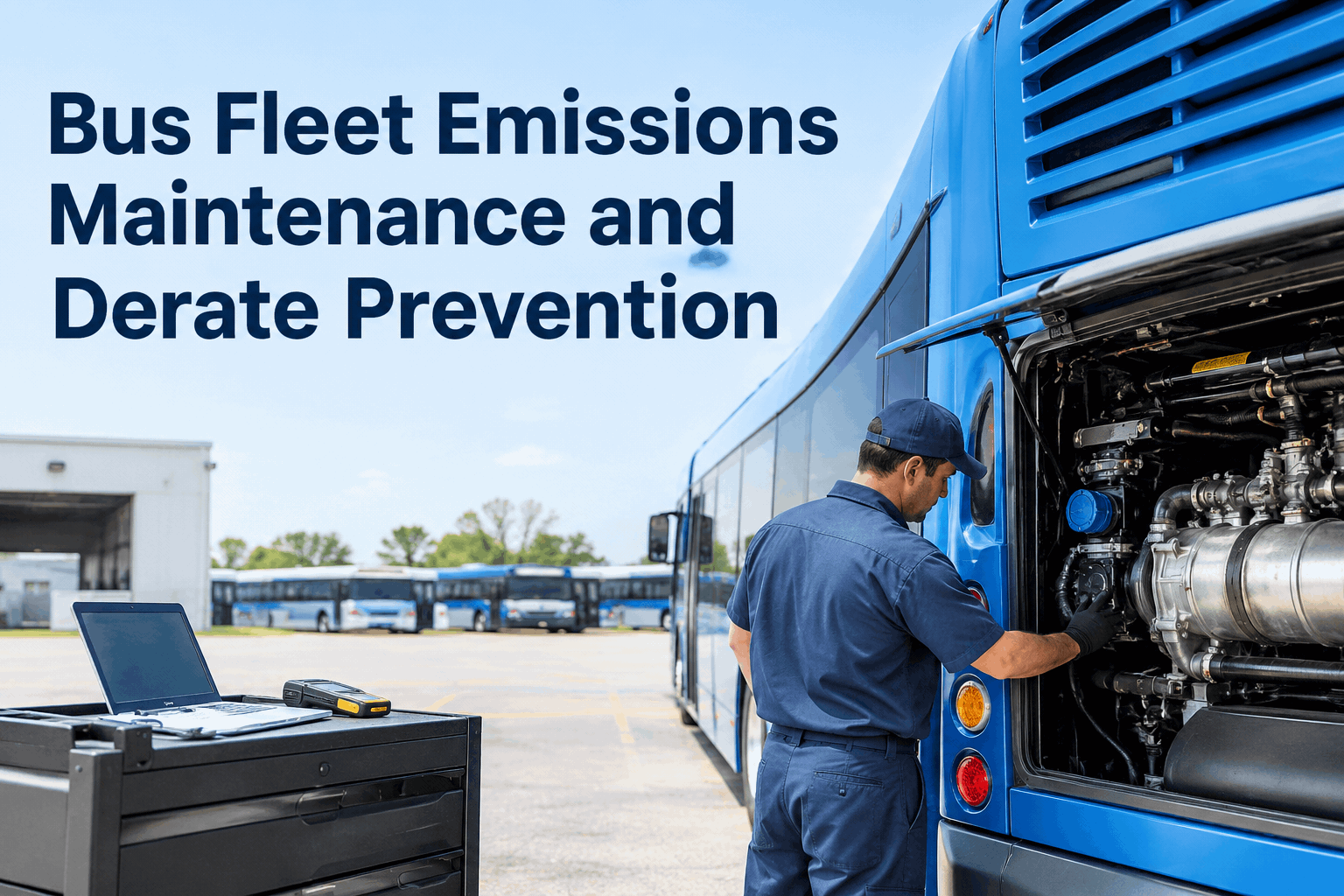
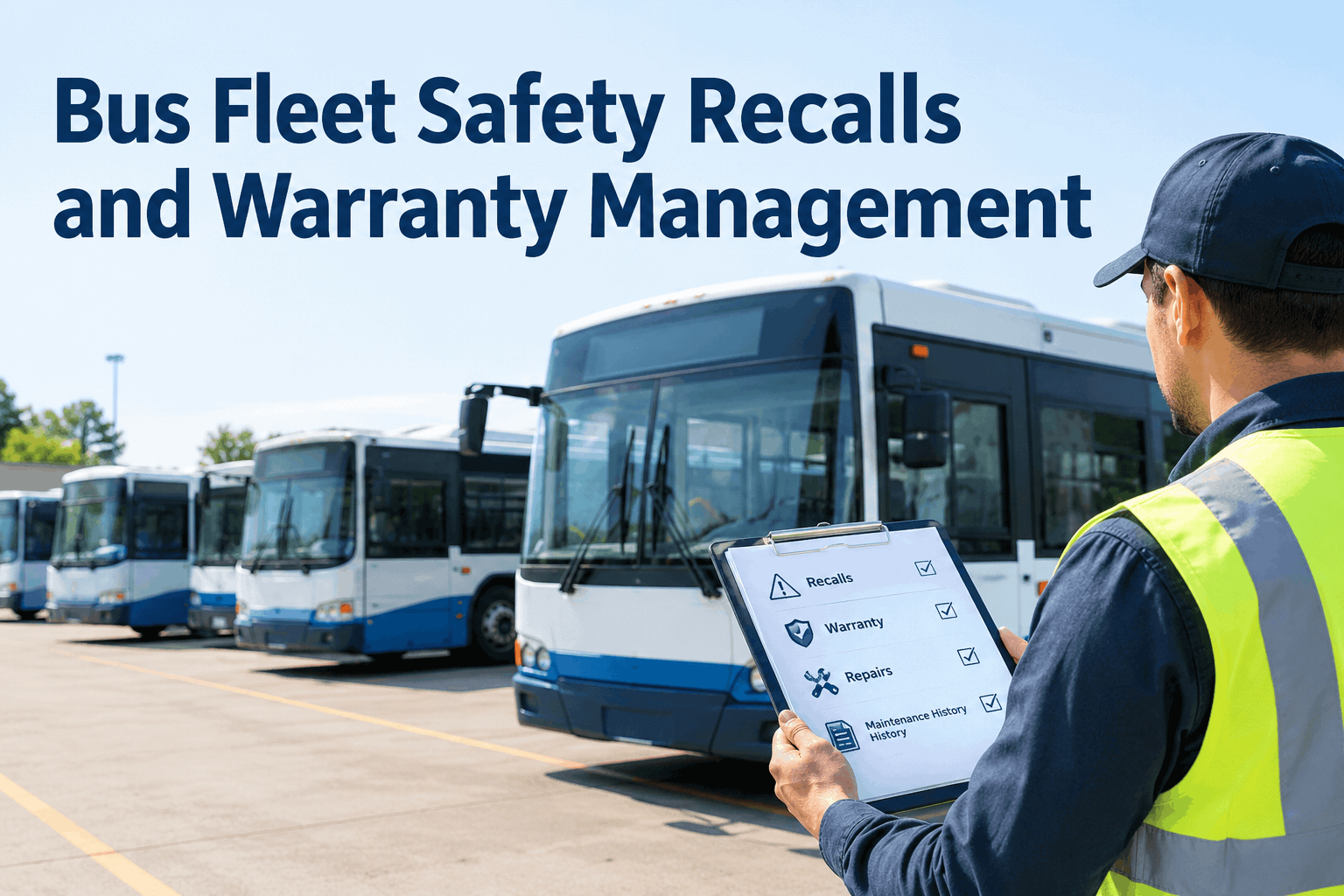
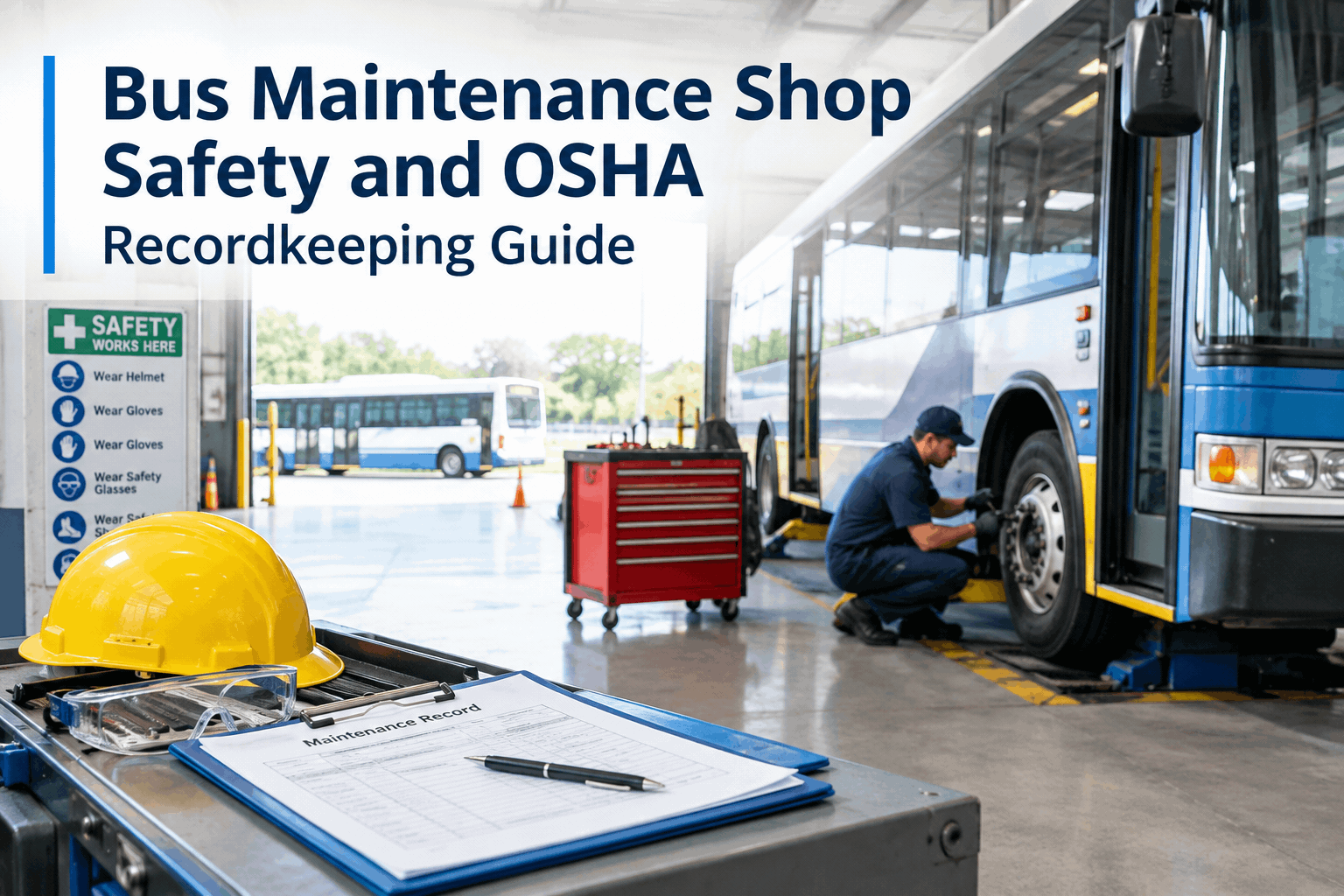
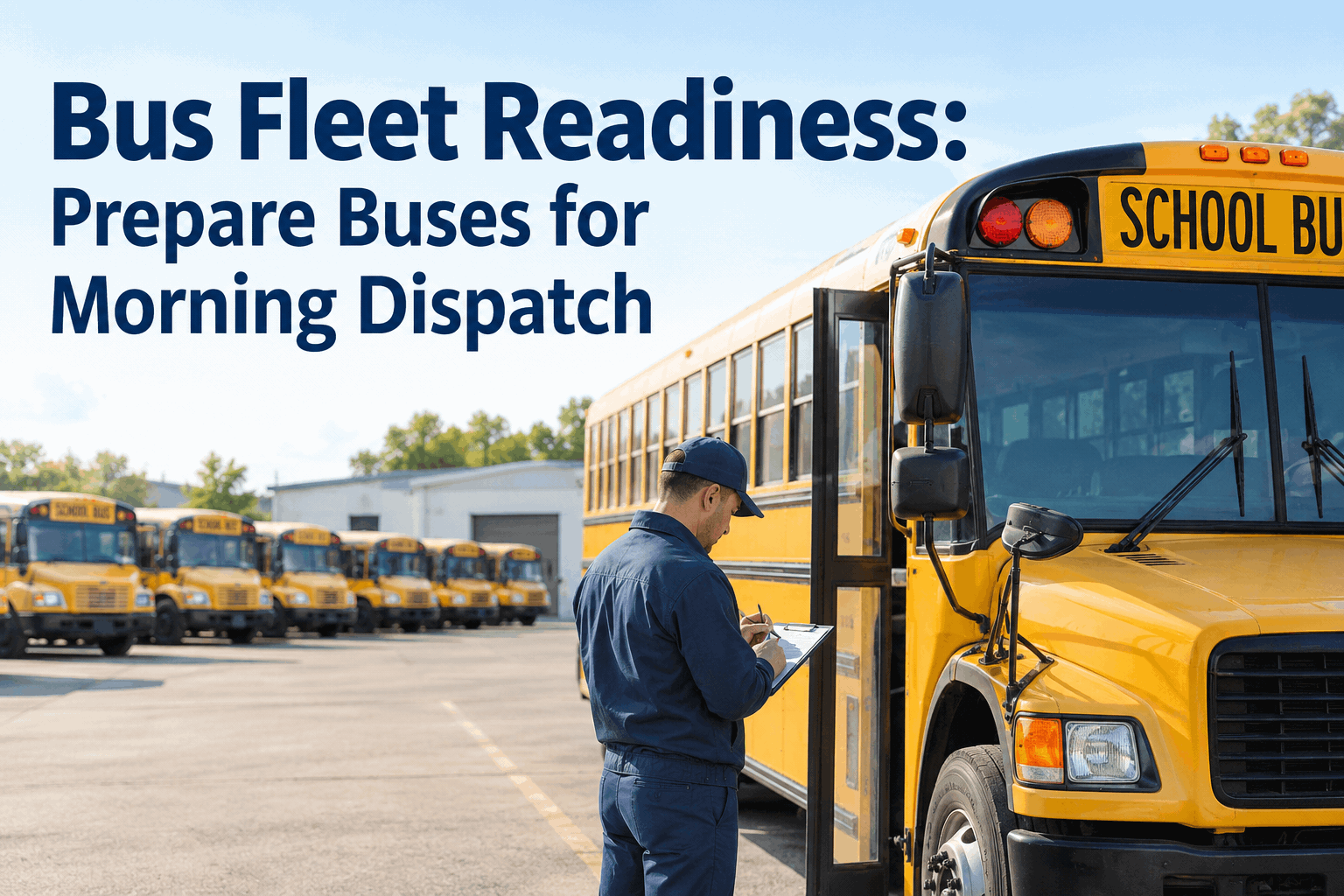
It's late July. School starts in four weeks. You have six buses past their PM-A mileage, two with brake measurements no one recorded, and the 90-day emergency exit inspection is overdue for an entire batch. Your lead technician is working off a spreadsheet last updated in March. Sound familiar? Every U.S. school transportation department faces this exact pressure every single year—and nearly all of it is preventable. This guide gives you the complete 2026 school bus preventive maintenance schedule, every interval and every DOT requirement, plus shows exactly how leading districts have turned this annual scramble into a routine that runs itself.
The PM Tier System: What PM-A, PM-B, and PM-C Actually Cover
The industry-standard school bus PM program runs on three service tiers—each building on the previous. The rule is simple: whichever threshold arrives first, mileage or calendar, triggers service. Missing a tier doesn't just delay maintenance—it compounds risk exponentially by the next interval.
Use whichever threshold arrives first—mileage or calendar. A bus sitting idle over summer still accumulates time-based wear on rubber seals, belts, and fluids. School routes with frequent stops also wear brake components faster than mileage alone reflects. If your system doesn't track both triggers simultaneously, you have a gap that will eventually cost you. Create a free BusCMMS account to track mileage and calendar triggers together for every bus in your fleet.
Federal DOT Requirements Built Into Your Schedule
Your PM schedule isn't optional—federal law defines what gets inspected, when, and how long you must keep the records. Non-compliance fines reach $15,420 per incident under current FMCSA rules. Here's what 49 CFR Part 396 requires from every school bus fleet:
School Year PM Calendar: When Every Service Falls
Plan your shop capacity around the natural rhythm of the school year. Summer break is your PM-C window. Mileage-based tiers trigger throughout the year at different times per bus depending on route length. Here's how a well-run fleet maps the calendar:
Best-in-class fleets maintain 80–85% preventive maintenance versus only 15–20% reactive. The industry average sits at 55–60% preventive. Each 10-point improvement in PM ratio reduces total fleet costs by 8–12%. Book a demo to see how BusCMMS auto-generates work orders by mileage threshold and calendar date—so nothing gets missed.
Expert Review: Paper Schedule vs. Automated CMMS
One Texas school district cut their annual PM compliance prep from six weeks of manual record hunting down to under two days after switching to automated maintenance tracking. The difference wasn't budget—it was the system. Here's how paper and digital approaches compare on every dimension that matters to a transportation director.
Paper works acceptably for a fleet of 10–15 buses where one person knows every vehicle. Beyond that, the administrative overhead becomes the liability—not the maintenance itself. Sign up for BusCMMS free and see your entire fleet's PM status on a single live dashboard.
The 4 Maintenance Intervals Most Districts Consistently Miss
State DOT audits reveal the same patterns year after year. These four intervals account for the majority of compliance violations and preventable breakdowns in school bus fleets across the country.
These aren't obscure requirements. They're on every DOT inspection checklist. They get missed because the tracking system relies on human memory rather than automated triggers. Book a 20-minute demo to see how BusCMMS flags every one of these intervals before they become violations.
From Scramble to System: Making This Schedule Work All Year
A school bus preventive maintenance schedule posted on a shop wall is not a maintenance program—it's a reminder that one exists somewhere. The districts achieving 85% fewer breakdowns and 40% lower maintenance costs aren't using better checklists. They're using systems that make the checklist impossible to skip. Every PM-A, PM-B, and PM-C interval is triggered automatically when mileage or calendar thresholds are hit. Every 90-day exit check generates a work order before the deadline. Every DVIR is signed, stored, and retrievable in seconds when an auditor arrives. The template in this guide gives you the structure. The question is whether your tracking system will enforce it.
Skipping preventive maintenance isn't saving money—it's borrowing trouble at 3–5x the eventual cost. One prevented emergency breakdown on a single bus pays for a year of PM scheduling software. Start your free BusCMMS trial and automate your entire school bus PM schedule from day one.
Frequently Asked Questions
How often should school buses receive preventive maintenance?
Daily pre-trip inspections are required by DOT (49 CFR 392.7 and 396.11). Beyond that, PM-A service (oil change, fluids, filters) is due every 5,000–7,500 miles. PM-B (intermediate service including brake measurement) is due every 15,000–20,000 miles. PM-C (major service including coolant flush, brake drums, and DOT annual inspection) is due every 30,000–45,000 miles. Emergency exits must be inspected every 90 calendar days regardless of mileage. Whichever threshold—mileage or calendar—arrives first triggers service.
What federal regulations apply to school bus maintenance records?
Under 49 CFR Part 396, school bus fleets must maintain: a systematic inspection and maintenance program with records retained for 1 year (49 CFR 396.3); daily DVIRs retained for 3 months (49 CFR 396.11); annual DOT inspection records retained for 14 months (49 CFR 396.17); and emergency exit inspection records every 90 days. As of March 23, 2026, FMCSA rule FMCSA-2025-0115 explicitly authorizes electronic DVIRs, giving digital records full legal standing under federal law.
What is the difference between PM-A, PM-B, and PM-C service?
PM-A is the basic oil change and inspection service (5,000–7,500 miles, approximately 1.5–2 hours). PM-B is the intermediate service that includes all PM-A tasks plus fuel filter replacement, brake lining measurement, transmission check, and DPF inspection (15,000–20,000 miles, 3–4 hours). PM-C is the major service that includes all prior tasks plus coolant flush, transmission service, brake drum service, full electrical system test, and the DOT annual inspection (30,000–45,000 miles, 5–8 hours). Each tier builds cumulatively on the previous one.
Can a school district perform its own DOT annual inspections?
Yes. Under 49 CFR 396.17(d), motor carriers may perform their own annual inspections, provided the inspector is qualified under 49 CFR 396.19. Qualifiers must have knowledge and ability to identify defective components, understanding of Appendix A inspection standards, and access to appropriate tools and methods. Records must be retained for 14 months and be available for DOT review. Most larger districts with a qualified lead technician on staff perform their own annual inspections as part of the summer PM-C window.
How does a CMMS help with school bus PM schedule compliance?
A properly configured CMMS eliminates the core failure point of manual PM tracking: reliance on human memory and paper logs. It triggers PM-A, PM-B, and PM-C work orders automatically when a bus reaches the mileage or calendar threshold—whichever arrives first. It schedules 90-day emergency exit inspection cycles in advance and alerts the shop before deadlines. Every completed service is recorded with date, mileage, technician, and parts used—creating an audit-ready record that satisfies all 49 CFR Part 396 retention requirements without manual filing.