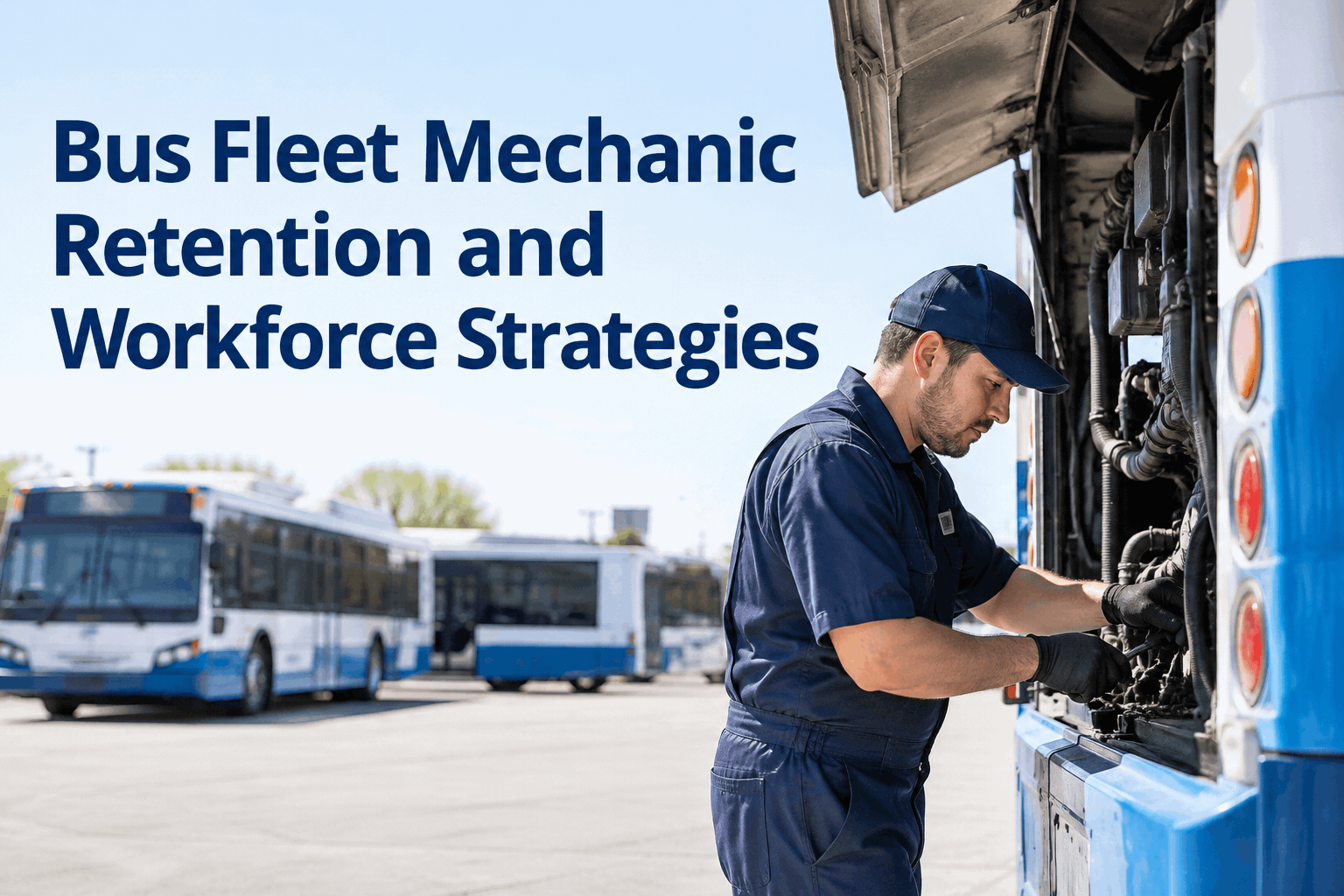
The school bus technician shortage just hit its worst recorded level. The TechForce Foundation confirms the shortage is growing more severe despite industry efforts. The industry needs nearly 1 million new technicians between 2024 and 2028. Private sector companies offer 20% higher wages than school districts for the same skills. 81% of districts report bus staffing shortages as a problem, with 46% calling it major. And here's the compounding pressure: technician pay rose 18.5% over five years — and it's still not enough. The mechanics you do have are being pulled to drive routes (44% regularly drive buses), leaving even less time for maintenance. Meanwhile, fleets are getting more complex — EV buses need HV certification, mixed fuel types multiply PM requirements, and aging buses need more repairs. You can't hire your way out of this. There aren't enough qualified candidates in the pipeline. The solution isn't more people — it's getting more maintenance output from the team you already have. This guide shows exactly how.
The Numbers: How Bad It Actually Is
These aren't projections — they're current conditions documented by industry surveys and workforce research.
The math is simple: you have fewer technicians, more complex buses, the same number of routes, and the same compliance requirements. Something has to give — and it can't be safety. See how BusCMMS helps short-staffed shops maintain compliance—book a demo.
The 6 Productivity Multipliers for Short-Staffed Shops
You can't hire mechanics that don't exist. What you can do is eliminate the non-wrench-time tasks that consume 35–42% of your technicians' day. Each multiplier below gives your existing team more maintenance output per hour.
Combined, these six multipliers can increase effective maintenance capacity by 30–50% without hiring a single additional technician. The first five require a CMMS. The sixth requires data that a CMMS provides. See how BusCMMS gives short-staffed shops more output per tech—schedule a demo.
Expert Review: Why This Shortage Is Structural, Not Cyclical
This isn't a temporary hiring dip that recovers when the economy shifts. Four forces make the technician shortage permanent — and each one is getting worse.
The technician shortage isn't a problem you solve with a job posting. It's a structural force that requires a structural response: systems that multiply each tech's output, capture knowledge before it retires, and automate every task that doesn't require a wrench in hand. The fleets that adapt to the new reality — fewer techs, more software, higher output per person — will maintain compliance and uptime. The ones waiting for the hiring market to improve will wait forever.
The school districts getting ahead aren't the ones with the biggest budgets — they're the ones that eliminated paper first. Nearly 60% of fleets now use maintenance software, up significantly year over year. The remaining 40% are falling behind. See how BusCMMS helps short-staffed shops keep buses compliant—request a demo.
Frequently Asked Questions
How bad is the school bus technician shortage in 2026?
The industry needs nearly 1 million new technicians by 2028. 81% of districts report staffing shortages, 44% of mechanics regularly drive routes, and some municipal shops operate at 33% staffing. TechForce Foundation confirms the shortage is growing more severe despite rising pay (18.5% increase over 5 years). See how to do more with fewer techs—book a demo.
Can software really replace the need for more technicians?
Software doesn't replace technicians — it multiplies their output. By eliminating paper work orders (+15–20% productivity), automating PM scheduling (frees 4–6 foreman hours/week), connecting DVIRs to work orders (zero admin processing), and pre-staging parts (70–80% fewer delays), a CMMS gives your existing team 30–50% more effective maintenance capacity.
What's the average wrench time in a school bus shop?
Without proper systems, average wrench time is only 58–65%. That means 35–42% of your technician's paid hours are spent on non-repair tasks: paperwork, parts searching, schedule checking, walking to the office. A CMMS pushes wrench time toward 80%+ by putting everything on a mobile device at the bay. See the wrench time difference—schedule a demo.
Should I stop letting technicians drive routes?
A tech driving 2 hours daily loses 10 hours/week of shop capacity. If your PM backlog is growing, compliance is at risk, or reactive repairs are increasing, pulling techs from routes may be more cost-effective than losing maintenance capacity. A CMMS provides the data — PM compliance rates, repair backlogs, downtime trends — to make this case to administration with evidence.
How do I retain the technicians I have?
Beyond competitive pay: give them modern tools. No qualified technician wants to work with paper forms and filing cabinets when private shops have tablets and digital work orders. Invest in EV certification (these techs command 20% higher wages — if you train them, they're more likely to stay). Build career pathways with apprenticeship programs from local high schools. Give your team modern tools—book a demo.