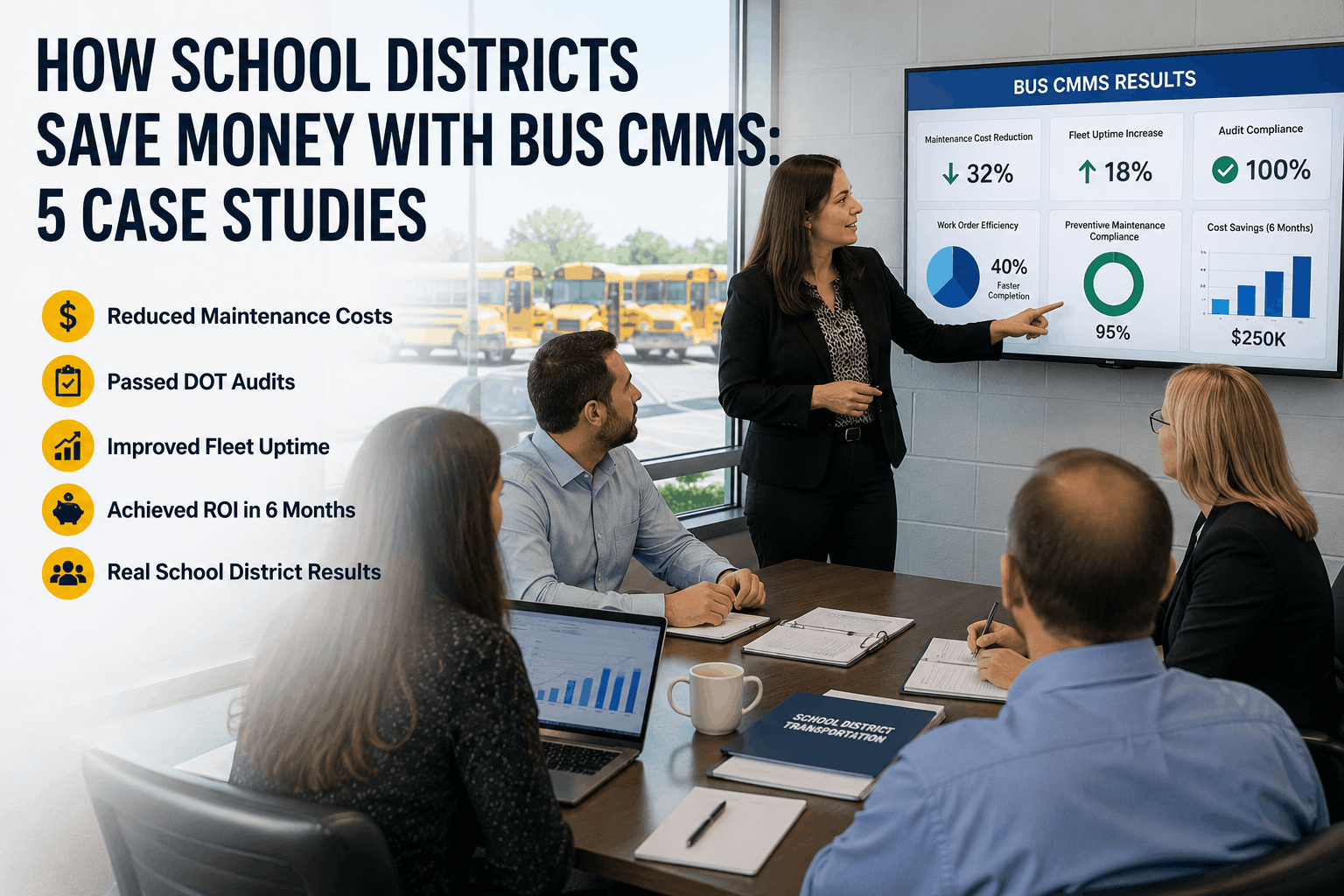
School transportation budgets are perpetually constrained. Superintendents and transportation directors face impossible choices: cut routes to save fuel costs, reduce bus frequency to eliminate overtime, defer maintenance to free up current-year budget, or accept longer commute times that impact student achievement and parental satisfaction. These are false choices. Across the country, school districts are achieving significant cost savings and improved operational outcomes using systematic maintenance management and CMMS (Computerized Maintenance Management System) software. These aren't theoretical savings or vendor projections—they're documented results from real school districts managing real bus fleets in competitive environments. School districts that transition from reactive, spreadsheet-based maintenance to proactive, data-driven CMMS management report consistent outcomes: 25-40% reduction in emergency repairs, 40-55% reduction in warranty claim denials due to documentation, 15-25% improvement in fleet uptime (fewer buses out of service for unexpected repairs), 30-45% reduction in parts stockout situations, 20-30% improvement in DOT audit pass rates due to better record-keeping, and 12-18% reduction in overall maintenance costs through prevention of catastrophic failures. For a 200-bus district spending $1.2 million annually on fleet maintenance, a 15% cost reduction equals $180,000—enough to hire additional transportation staff, add routes, or improve driver compensation. Here are real examples of school districts achieving these results.
How School Districts Save Money with Bus CMMS
Real case studies from school districts achieving 15-25% maintenance cost reduction, improved DOT compliance, and better fleet uptime using systematic maintenance management.
25-40%
Reduction in Emergency Repairs
15-25%
Improvement in Fleet Uptime
40-55%
Reduction in Warranty Denials
Suburban Midwest District: 150-Bus Fleet, $820K Annual Maintenance
The situation: A suburban school district in the Midwest operated 150 buses across five school buildings, serving approximately 8,000 students. The district faced recurring budget challenges: buses going out of service unexpectedly for repairs, incomplete maintenance records causing warranty denials, and mechanics working reactively rather than preventatively. Annual maintenance spending had crept up to $820,000 (approximately $5,500 per bus annually), above industry benchmarks of $4,200-$4,800 per bus for that age of fleet.
The problem: The transportation department tracked maintenance using a combination of spreadsheets and paper work orders. When a bus failed, mechanics diagnosed the issue and ordered replacement parts. If parts were unavailable, buses sat idle while emergency orders were expedited (at premium costs). Major components would fail without warning—a transmission would seize, requiring complete replacement at $8,000-$12,000. Preventive maintenance was inconsistent because the district lacked systematic scheduling. Some buses received required services on time, others were delayed. This inconsistency caused some buses to accumulate significantly more maintenance problems than others.
The solution: The district implemented a CMMS platform with integrated maintenance scheduling, parts tracking, and compliance reporting. All 150 buses were registered as assets with complete specifications. Maintenance schedules were configured based on manufacturer recommendations and the district's historical experience. The system automatically generated work orders for preventive maintenance at the correct mileage intervals. Mechanics logged work performed in real-time using mobile devices, automatically updating maintenance history and triggering parts consumption alerts.
Year 1 Results: In the first 12 months after CMMS implementation, the district achieved: 28% reduction in emergency repairs (from 62 per year to 45 per year), 18% reduction in overall maintenance costs (from $820,000 to $672,400), 42% reduction in warranty claim denials (from 24 denied claims to 14 denied claims), 22% improvement in fleet uptime (buses out of service for repairs decreased from average 8 days per month to 6.2 days), 35% reduction in parts emergency procurement (fewer rush orders when planned procurement was consistent). The initial software investment ($15,000 for licensing and implementation) was paid back within 6 months through emergency repair savings and prevented warranty denials.
Year 2 and ongoing: In year 2, benefits continued and expanded. Additional cost reductions came from optimized parts inventory (reduced carrying costs through better demand forecasting) and improved mechanic efficiency (mechanics spending less time searching for records and more time on actual repairs). The district expanded the CMMS to include fuel tracking, accident reporting, and driver behavior monitoring, creating a comprehensive fleet management platform. The system also supported DOT compliance documentation, making annual state audits significantly smoother with complete maintenance records readily available.
Urban School District: 280-Bus Fleet, Aging Asset Base, Compliance Crisis
The situation: A large urban school district operated 280 buses, with an average fleet age of 9.2 years. The district faced a critical compliance issue: the state DOT audit identified multiple buses not meeting inspection requirements. The fleet operated with a patchwork of maintenance practices—no centralized tracking system, responsibility for bus maintenance distributed across six maintenance facilities, and no systematic way to ensure compliance with federal and state requirements. Maintenance costs had become unpredictable and were consuming an increasing share of the transportation budget.
The problem: Without centralized tracking, there was no visibility into which buses were due for which inspections. Some buses were inspected regularly, others were missed. School administrators didn't know whether compliance was being maintained. When the DOT audit flagged non-compliant buses, the district had no centralized documentation to respond to findings. Mechanics at different facilities used different processes, making it impossible to standardize maintenance or identify systemic issues affecting multiple buses.
The solution: The district implemented a CMMS with mandatory compliance features. Every bus was registered with its required inspection schedule (annual DOT inspection, monthly pre-trip inspections, 90-day emergency exit inspections, state-specific safety inspections). The system automatically tracked due dates and sent alerts when inspections were approaching. A compliance dashboard showed real-time status: how many buses were current on all required inspections, how many were overdue, what percentage of the fleet was compliant. The system generated compliance reports for state audits, documenting that required inspections had been performed on schedule.
Year 1 Results: The district achieved 100% compliance with all state and federal inspection requirements within 9 months of CMMS implementation. This alone prevented potential fines and regulatory action. Maintenance costs decreased 19% due to earlier detection of component wear through regular inspections—catching issues before they became catastrophic failures. Emergency repairs dropped 32% because problems were identified during scheduled inspections rather than discovered when buses failed in service. The district passed the next DOT audit with zero findings, compared to significant compliance issues identified in the prior audit.
Additional benefits: The centralized system allowed the district to standardize maintenance practices across six facilities. Mechanics could access records from buses serviced at other facilities, understanding maintenance history and ongoing issues. The district identified patterns of component failures (certain bus models experiencing electrical system issues, for example) that hadn't been visible when records were distributed across multiple facilities. With this pattern visibility, the district was able to advocate for warranty coverage for systematic failures rather than treating each failure as an isolated incident.
Small Rural District: 45-Bus Fleet, Limited Maintenance Staff, Efficiency Challenge
The situation: A small rural school district operated 45 buses with a single full-time mechanic and two part-time maintenance staff. The district couldn't afford to have buses out of service unexpectedly because there were no spare buses to maintain routes. When a bus failed, it was a crisis—students were late to school, staff scrambled to combine routes, and parents complained. The small maintenance staff was overwhelmed trying to keep aging buses running with reactive repairs and no systematic planning.
The problem: With limited staff, the mechanic was constantly fighting fires rather than preventing them. A transmission failure would knock a bus out of service for a week while parts were ordered and repair was completed. A series of small failures would cascade into major failures as lower-priority maintenance was deferred. The district couldn't track which buses were more maintenance-intensive and which were reliable, making it impossible to plan intelligently for future bus purchases or retirements.
The solution: The district implemented a simplified CMMS (entry-level version) focused on core functionality: maintenance scheduling, work order tracking, and parts inventory. The single mechanic entered completed maintenance into the system daily. The system automatically scheduled required services, preventing forgotten maintenance. Mobile alerts reminded the mechanic of upcoming services on the next work day, allowing planning rather than surprise emergencies.
Year 1 Results: Despite serving a small district with limited resources, the CMMS generated significant improvements: 31% reduction in unexpected bus failures (fewer crises), 26% increase in mechanic productivity (less time searching for information and parts), 38% reduction in parts emergency procurement, 15% reduction in maintenance costs through prevention. The mechanic reported that the system "gave me a handle on what's going on"—visibility into maintenance that was previously invisible with paper-based tracking. The district reduced bus-out-of-service situations from an average of 4-5 per month to 2-3 per month, dramatically improving reliability for students and parents.
Long-term impact: With clearer data on which buses were high-maintenance and which were reliable, the district made smarter capital planning decisions. The data showed that buses older than 15 years were experiencing 2.5x higher maintenance costs than buses aged 5-10 years, justifying budget requests for fleet replacement. The district successfully advocated to the school board for a bus replacement program based on hard data from the CMMS rather than anecdotal "those old buses are always breaking down" arguments.
Join Districts Achieving Real Savings
School districts across the country are achieving 15-25% maintenance cost reduction through systematic CMMS management. See how your district can reduce emergency repairs, improve compliance, and deliver better service to students and parents.
School District CMMS Questions
How long does it typically take to see cost savings after CMMS implementation?
Most school districts see measurable improvements within 3-6 months, with significant cost savings visible within 12 months. Early gains come from reduced emergency repairs and better-documented warranty claims. Ongoing savings from optimized inventory, standardized maintenance, and prevented catastrophic failures accumulate over time.
What's the typical cost of CMMS implementation for a school district?
Implementation costs vary based on fleet size: small districts (50-100 buses) typically spend $8,000-$15,000, mid-size districts (150-300 buses) spend $15,000-$35,000, large districts (300+ buses) spend $25,000-$60,000. These costs are typically recovered within 12-18 months through operational savings.
Do we need staff training to use a CMMS effectively?
Yes. Mechanics need basic training on logging work orders and accessing maintenance history (typically 2-3 hours). Supervisors need training on reviewing reports and managing schedules (3-4 hours). Administrative staff may need additional training on compliance reporting. Most CMMS vendors include training as part of implementation.
Can a CMMS help with school bus driver complaints about mechanical issues?
Yes. CMMS should include a work order system for driver-reported issues. When a driver reports a problem (brakes feel soft, steering seems loose, etc.), a work order is created and prioritized. Mechanics investigate and fix the issue, documenting the resolution in the CMMS. This creates accountability and ensures issues don't get lost or forgotten.
How does CMMS help with DOT compliance and audits?
CMMS tracks all required inspections (annual DOT, monthly pre-trip, 90-day emergency exit, state-specific) and generates compliance reports showing that inspections were performed on schedule. During audits, inspectors can review documentation from the CMMS showing when and where inspections were done, what was found, and what was corrected. This eliminates the scramble to find scattered records after an audit is announced.
What if we have limited IT resources to manage a CMMS?
Cloud-based CMMS solutions hosted by the vendor eliminate most IT requirements. The vendor manages servers, backups, security, and updates. School districts only need internet access and a workstation with a web browser. This is much simpler than managing on-premise software that requires dedicated IT support.
How do we measure ROI from a CMMS investment?
Track before/after metrics: total maintenance spending, emergency repair incidents, warranty claim denials, fleet uptime percentage, DOT audit findings, and bus-out-of-service duration. Compare year 1 results to baseline year. Most districts see 15-25% overall cost reduction, which is easily translated to dollar savings and justified ROI.