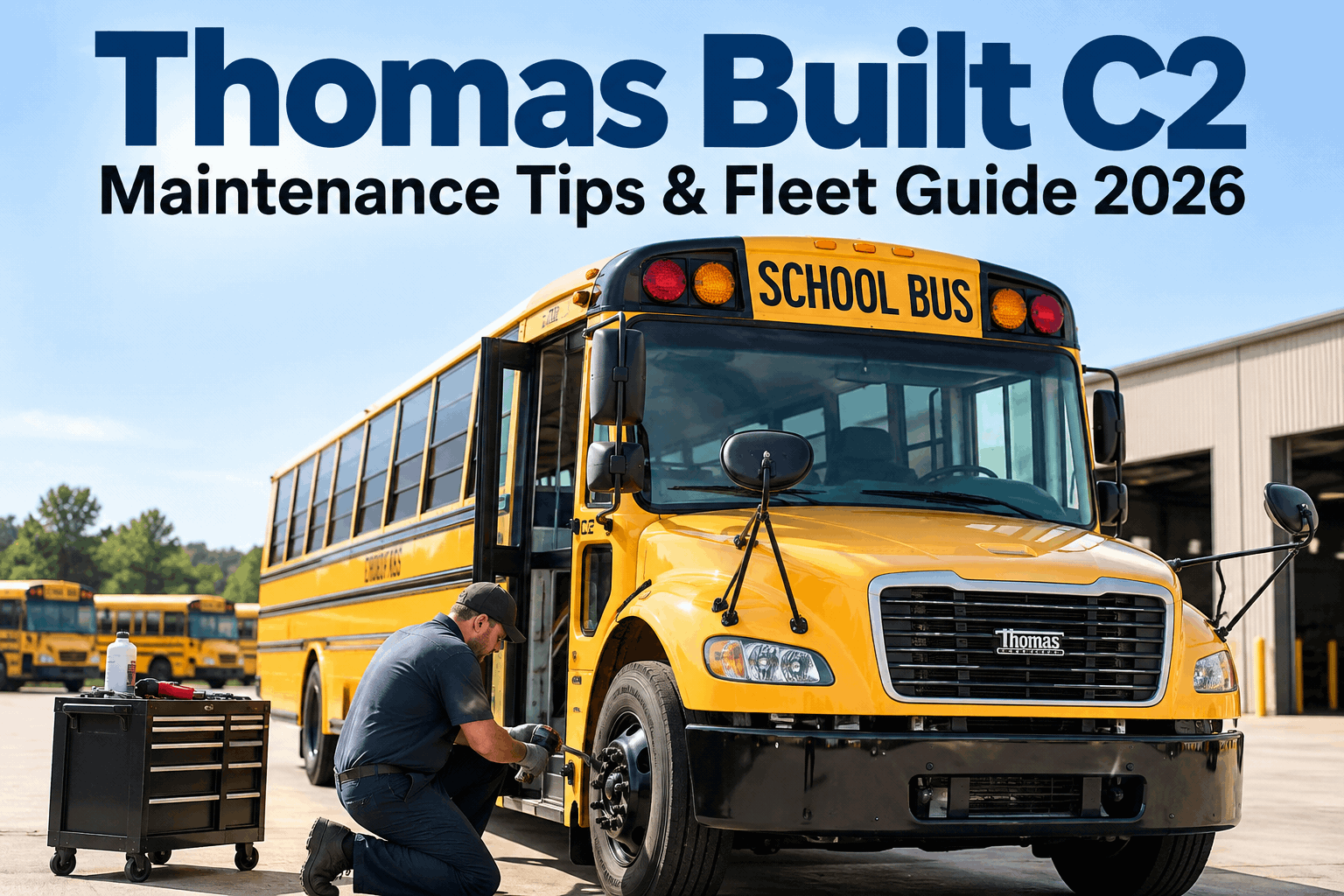
The Thomas Built Saf-T-Liner C2 works through daily school routes, frequent stops, changing weather, and long idle periods. Keeping it reliable takes more than a generic mileage reminder: technicians need repeatable inspections, configuration-specific service plans, and a clear history of every reported defect. This guide shows what to check, what to record, and how to turn C2 maintenance findings into completed work.
Thomas Built C2 Maintenance Tips That Keep Routes Moving
Know the systems to inspect, document recurring defects, and plan preventive service around each bus—not a one-size-fits-all interval.
One C2 nameplate. Different maintenance requirements.
C2 fleets can contain different model years, engines, fuel types, brake configurations, and optional equipment. Build the service plan from the specific vehicle's OEM documentation and operating conditions.
Capture the configuration first
- VIN, model year, mileage, and engine hours where available
- Engine, fuel type, transmission, and emissions equipment
- Brake system and applicable inspection procedures
- Wheelchair lift, air conditioning, and other fitted equipment
- Approved OEM intervals, fluids, filters, and parts
Why this matters in BusCMMS
Separate vehicle records and preventive maintenance schedules help the shop avoid applying the wrong service template to every C2 in the yard.
Example records only; not actual fleet data.
Want to organize different C2 configurations in one maintenance system? Book a demo for C2 preventive maintenance planning.
Six C2 maintenance areas worth consistent attention
Use these inspection priorities alongside the applicable Thomas Built, chassis, engine, and component instructions—not as substitutes for them.
Brakes & air system
Inspect warning indications, leaks, hoses, wear, and system behavior using the procedure for the installed brake configuration. Record measurements where required.
Log: symptoms, measured condition, repair resultTires, wheels & steering
Check tire pressure and condition, wheel-end concerns, steering play, and suspension issues. Watch for repeated uneven wear across routes.
Log: tire position, condition, corrective actionEngine, fluids & cooling
Look for leaks, fluid-level changes, cooling concerns, warning lamps, and unusual operating behavior. Use the correct engine-specific service literature.
Log: engine hours, fluids, service detailsBattery, starting & wiring
Investigate slow cranking, intermittent lights, charging concerns, and harness damage. Document symptoms before replacing components.
Log: diagnostic observations and test resultsWarning lights & doors
Function-test the eight-light system, stop arm, entrance door, mirrors, and other required safety equipment using approved procedures.
Log: functional pass/fail and defect severityHVAC & passenger area
Inspect defrost performance, heater operation, seats, emergency exits, and interior condition before issues disrupt a route.
Log: location, observation, and follow-upMake these findings easier to follow up: Sign up free to organize school bus inspection records.
Use the right trigger for the right task
School buses accumulate wear through miles, hours, time, and operating conditions. A strong PM plan checks the appropriate trigger for each maintenance item.
| Maintenance activity | Planning trigger | Record to keep |
|---|---|---|
| Driver walk-around and safety checks | Before operation, per applicable policy | Inspection result and defects |
| Engine oil, filters, fluids | OEM mileage, hours, time, and duty cycle | Service date, odometer, materials |
| Brake and tire condition | Required inspections plus condition findings | Measurements and repairs |
| Cooling, HVAC, and seasonal readiness | Calendar and operating season | Functional tests and corrective work |
| Recurring electrical or warning-system issue | Defect occurrence and verified repair | Fault history and closeout notes |
Give every C2 a maintenance plan the shop can follow.
Connect inspection findings with scheduled service and vehicle-specific maintenance history.
Turn a driver's observation into a verified repair
The most useful maintenance record shows what happened after the issue was reported—not just that someone checked a box.
Inspect
Driver or technician records a C2 defect.
Prioritize
Supervisor evaluates safety and service impact.
Repair
Assigned work order captures labor and parts.
Verify
Recheck function and document release.
Saf-T-Liner C2 · Bus 027
Illustrative workflow, not a screenshot or claim of a specific built-in C2 diagnostic feature.
See how your team could connect inspections and repairs: Book a demo of BusCMMS work order tracking.
A simple weekly review for C2 fleet managers
Review repeat issues and upcoming maintenance before they turn into missed morning routes.
Overdue PM
Which buses are approaching or past their approved service trigger?
Open safety defects
Which buses need review or repair before release?
Repeat repairs
Which components have returned to the shop more than once?
Parts readiness
Are common C2 service parts available for upcoming work?
Replace scattered spreadsheets with vehicle histories: Sign up free to start tracking C2 maintenance.
Thomas Built C2 maintenance FAQs
How often should a Thomas Built C2 receive preventive maintenance?
Follow the applicable OEM maintenance schedule for the specific VIN, engine, fuel system, model year, and operating conditions. Mileage alone may not capture high-idle or seasonal service needs.
What should drivers inspect before a C2 route?
Use the required driver inspection procedure and local operating policy. Typical attention areas include tires, lights, mirrors, doors, warning devices, visible leaks, and brake-system indications. Required checks vary with equipment and jurisdiction.
Are all Saf-T-Liner C2 buses maintained the same way?
No. Engine, fuel, brake, and equipment configurations vary. Service intervals, fluids, and inspection procedures should be matched to each vehicle's official documentation.
How can a shop reduce repeat C2 breakdowns?
Record consistent defect descriptions, diagnostic findings, repairs, parts used, and verification results. Review recurring issues by bus and component rather than treating each visit as unrelated.
Can BusCMMS replace Thomas Built diagnostic software?
No. BusCMMS helps organize inspections, preventive maintenance, work orders, and maintenance records. OEM-specific diagnostic tools and service information are still needed for supported testing and repairs.
Keep your C2 maintenance records ready when your buses need to be.
Give technicians a clearer path from inspection findings to scheduled maintenance and completed repairs.
Want a closer look? Book a demo for your Thomas Built fleet.