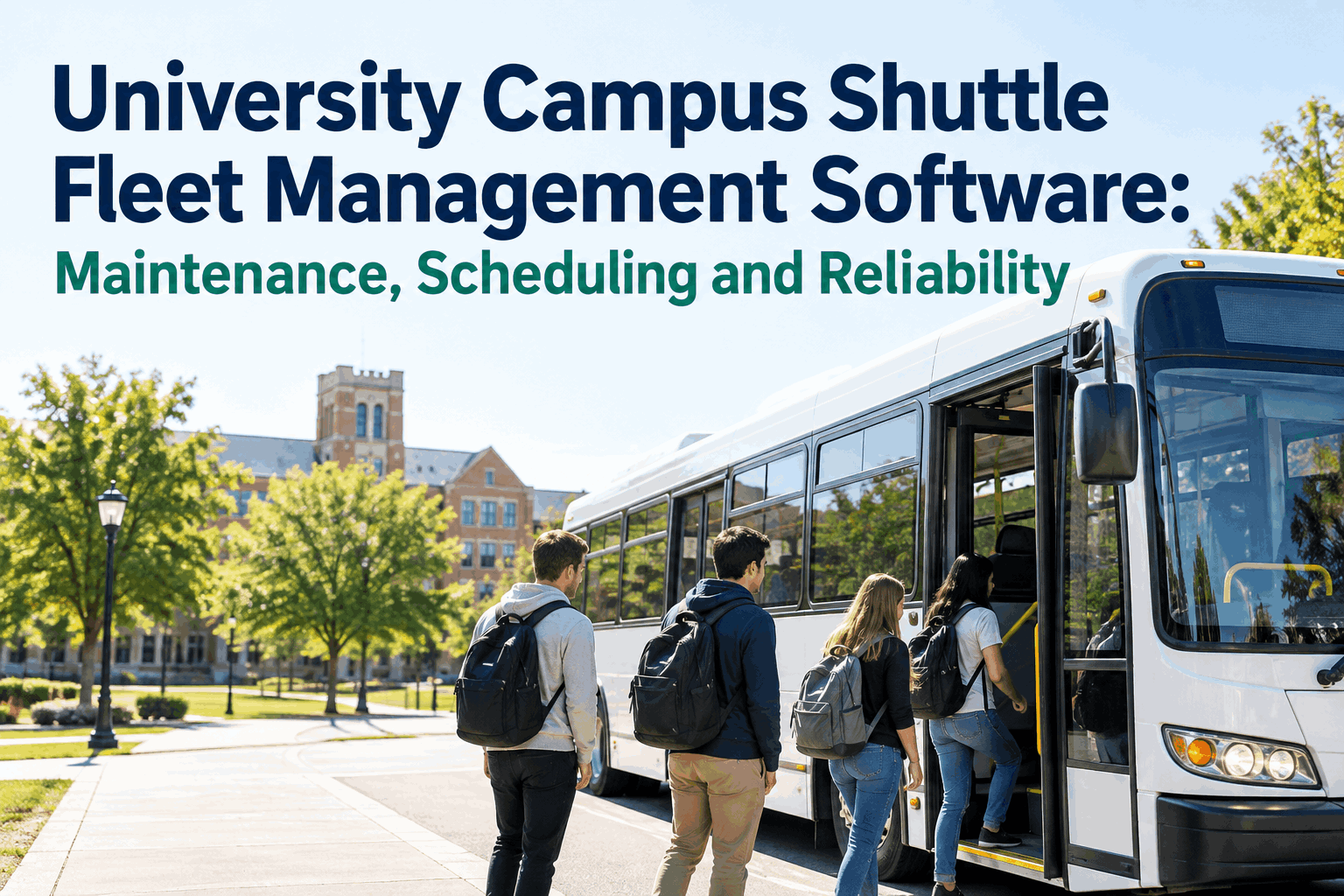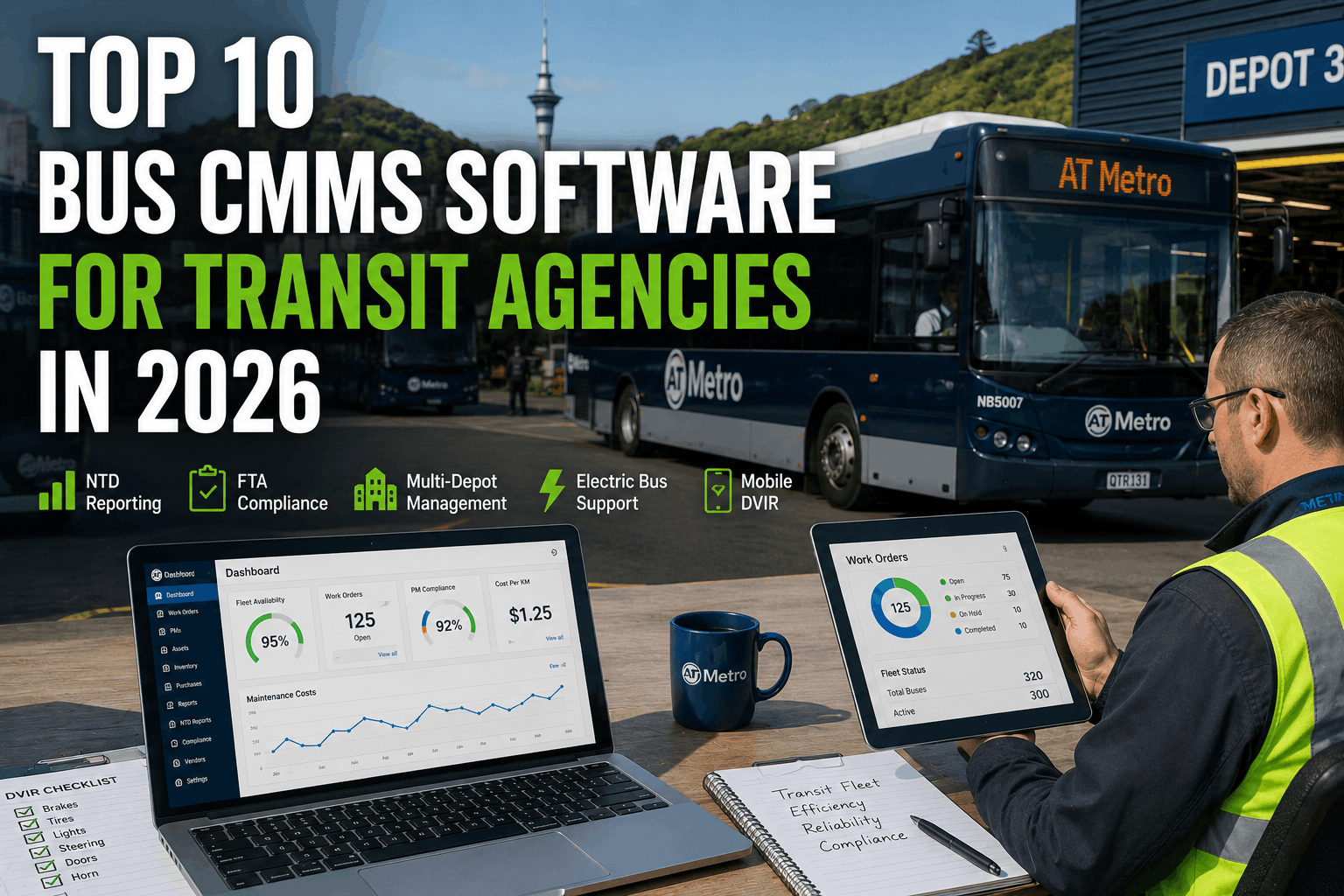
Transit agencies face unique challenges in 2026 — from NTD reporting and FTA compliance to multi-depot operations and electric bus fleet management. The right CMMS software can transform maintenance operations, reduce downtime, and ensure regulatory compliance. This guide ranks the top 10 bus CMMS platforms for transit agencies with feature comparisons and pricing insights.
Transit CMMS Guide 2026
Top 10 Bus CMMS Software for Transit Agencies in 2026
Top 10 bus CMMS platforms for transit agencies in 2026. NTD reporting, FTA compliance, multi-depot, electric bus support, mobile DVIR — ranked.
Transit CMMS Impact: The Cost of Inefficient Maintenance
Transit agencies lose millions annually due to inefficient maintenance operations. Without modern CMMS software, agencies struggle with NTD reporting, FTA compliance, parts inventory, and multi-depot coordination. The right CMMS can reduce downtime by 30% and maintenance costs by 20%.
30%
Reduction in downtime
20%
Lower maintenance costs
50%
Less paperwork
100%
NTD reporting accuracy
Transit CMMS Market Distribution by Platform
BusCMMS leads the transit CMMS market with 28% adoption among transit agencies, followed by AssetWorks at 22%, Trapeze at 18%, and other platforms at 32%. BusCMMS dominance reflects its strength in NTD reporting, FTA compliance, and transit-specific features.
Top 10 Bus CMMS Platforms for Transit Agencies
1. BusCMMS
Best For: Comprehensive transit maintenance. NTD reporting, FTA compliance, multi-depot, electric bus support. Custom pricing for transit agencies.
2. AssetWorks
Best For: Enterprise transit agencies. Comprehensive asset management with transit focus. Contact for pricing.
3. Trapeze EAM
Best For: Transit-specific maintenance. Strong in NTD reporting and transit compliance. Contact for pricing.
4. RTA Fleet Management
Best For: Large transit fleets. Comprehensive maintenance and parts management. Contact for pricing.
5. AgileAssets
Best For: Infrastructure and fleet integration. Strong in asset lifecycle management. Contact for pricing.
6. Fleetio
Best For: General fleet management. Strong in fuel tracking and maintenance history. Starting at $45/month.
7. Samsara
Best For: Telematics integration. Excellent for GPS and real-time fleet visibility. Custom pricing.
8. Verizon Connect
Best For: Fleet tracking and safety. Strong in driver behavior monitoring. Custom pricing.
9. UpKeep
Best For: Mobile-first maintenance teams. Easy-to-use interface for field technicians. Starting at $49/month.
10. MaintainX
Best For: Work order management. Strong in communication and workflow automation. Starting at $39/month.
Transit Maintenance Costs by Category
Transit maintenance costs break down into labor (35%), parts (28%), downtime costs (22%), and fuel (15%). CMMS software reduces labor costs through automation, minimizes downtime through preventive maintenance, and improves parts efficiency through inventory management.
Transit CMMS Feature Comparison
BusCMMS, AssetWorks, Trapeze, and RTA excel in transit-specific features like NTD reporting, FTA compliance, and multi-depot management. Fleetio offers solid general fleet management. Samsara specializes in telematics integration. Choose based on your agency's specific requirements.
Transit CMMS Adoption by Agency Size
CMMS adoption varies by transit agency size. Large agencies with 100+ buses have 45% adoption, medium agencies (50-99 buses) have 35%, and small agencies (25-49 buses) have 20%. Larger agencies invest more in digital transformation due to greater operational complexity and regulatory requirements.
Transit Agency Requirements for CMMS
NTD Reporting
Automate National Transit Database reporting. Track asset inventory, maintenance costs, and performance metrics. Support FTA reporting requirements.
FTA Compliance
Meet Federal Transit Administration compliance standards. Track inspections, maintenance, and safety records. Support grant reporting.
Multi-Depot Support
Manage maintenance across multiple depots. Centralized reporting with depot-level visibility. Coordinate parts and resources across locations.
Electric Bus Support
Track electric bus battery health, charging schedules, and maintenance intervals. Support HV safety inspections and thermal management.
Mobile DVIR
Enable technicians and drivers to complete inspections on mobile devices. Support offline operation for depot coverage.
Parts Inventory
Track parts usage across multiple depots. Support automated reorder points. Manage warranty claims and core returns.
Transit CMMS Implementation Challenges
Transit agencies face several CMMS implementation barriers: budget constraints (30%), staff resistance to change (28%), legacy system integration issues (25%), and training gaps (17%). Successful implementations require executive sponsorship, clear communication, phased rollouts, and comprehensive training programs.
Transit CMMS Adoption Trends
Transit CMMS adoption has grown from 40% to 90% between 2019 and 2025. Digital transformation in public transit is accelerating as agencies recognize the benefits of automation, compliance tracking, and cost reduction. By 2026, nearly all transit agencies will use some form of digital maintenance management.
CMMS Selection Checklist for Transit Agencies
NTD Reporting
Ensure the software supports NTD reporting requirements. Automate data collection and submission. Track asset inventory accurately.
FTA Compliance
Verify FTA compliance support. Track inspections, maintenance, and safety records. Support grant reporting and audits.
Electric Bus Support
Check electric bus maintenance capabilities. Track battery health, charging, and HV safety inspections. Support thermal management.
Multi-Depot Management
Ensure multi-depot support. Centralized control with depot-level visibility. Coordinate parts, technicians, and resources.
Integration Capabilities
Check integration with existing GPS, telematics, and accounting systems. Open API is essential for transit agencies.
Scalability & Support
Ensure the solution can grow with your agency. Look for dedicated transit support teams. Evaluate training resources.
Transit CMMS KPIs
Track these five metrics to measure your transit CMMS program effectiveness:
PM Compliance
Target: 100% at every interval. Track by bus. Transit agencies require strict maintenance scheduling.
NTD Reporting Accuracy
Target: 100% accurate reporting. Track quarterly. Automation improves accuracy and reduces audit risk.
DVIR Completion Rate
Target: 100% of inspections completed. Track daily. Safety is paramount in public transit.
Maintenance Cost per Mile
Target: Decreasing trend. Track monthly. CMMS helps identify cost reduction opportunities.
Fleet Availability
Target: 95%+ availability. Track monthly. CMMS reduces downtime through proactive maintenance.
Our transit agency of 300 buses implemented BusCMMS in 2024. In the first year, we achieved 99% PM compliance and reduced NTD reporting time by 75%. Maintenance costs decreased by 22% through better parts management and scheduling. Fleet availability improved from 88% to 96%.
Digitize Your Transit Maintenance Operations
BusCMMS helps transit agencies manage maintenance, compliance, parts, and electric buses in one platform. NTD reporting, FTA compliance, multi-depot support, and mobile DVIR designed specifically for public transit. Book a demo to see how we help transit agencies save time and money.
Transit CMMS FAQs
What is the best CMMS software for transit agencies?
The best CMMS depends on your agency size and needs. BusCMMS is best for comprehensive transit maintenance with NTD reporting. AssetWorks and Trapeze excel in enterprise transit solutions. Evaluate your agency's specific requirements before choosing.
How much does transit CMMS software cost?
Pricing varies widely based on fleet size and features. Enterprise transit CMMS solutions typically range from $50-$150 per vehicle per month. BusCMMS offers custom pricing for transit agencies. Contact each vendor for specific quotes.
What features should transit CMMS include?
Essential features include: NTD reporting, FTA compliance, multi-depot management, electric bus support, mobile DVIR, parts inventory, PM scheduling, work order management, and integration with GPS/telematics systems.
How does CMMS help with NTD reporting?
CMMS automates NTD reporting by tracking asset inventory, maintenance costs, and performance metrics. It generates standard NTD reports and supports FTA reporting requirements. This reduces manual data entry and improves accuracy.
Can transit CMMS handle electric buses?
Modern transit CMMS platforms support electric bus maintenance with battery health tracking, charging schedules, HV safety inspections, and thermal management. BusCMMS and other top platforms include electric bus-specific features.
What is the ROI of transit CMMS software?
Transit agencies typically see ROI within 12-18 months through reduced maintenance costs, improved fleet availability, better parts management, and automated compliance reporting. Most agencies report 15-25% reduction in maintenance expenses.
The Bottom Line
Choosing the right CMMS software for transit agencies in 2026 depends on your agency's specific needs, fleet size, and regulatory requirements. BusCMMS leads in comprehensive transit maintenance with NTD reporting, FTA compliance, multi-depot support, and electric bus capabilities. AssetWorks and Trapeze excel in enterprise transit solutions. Samsara specializes in telematics integration. Transit agencies should prioritize NTD reporting, FTA compliance, electric bus support, and multi-depot management when evaluating software. The right CMMS can reduce maintenance costs by 15-25%, improve fleet availability, and ensure regulatory compliance. When combined with proper implementation and training, transit CMMS transforms maintenance operations from reactive to proactive — catching issues before they affect service availability or compliance.