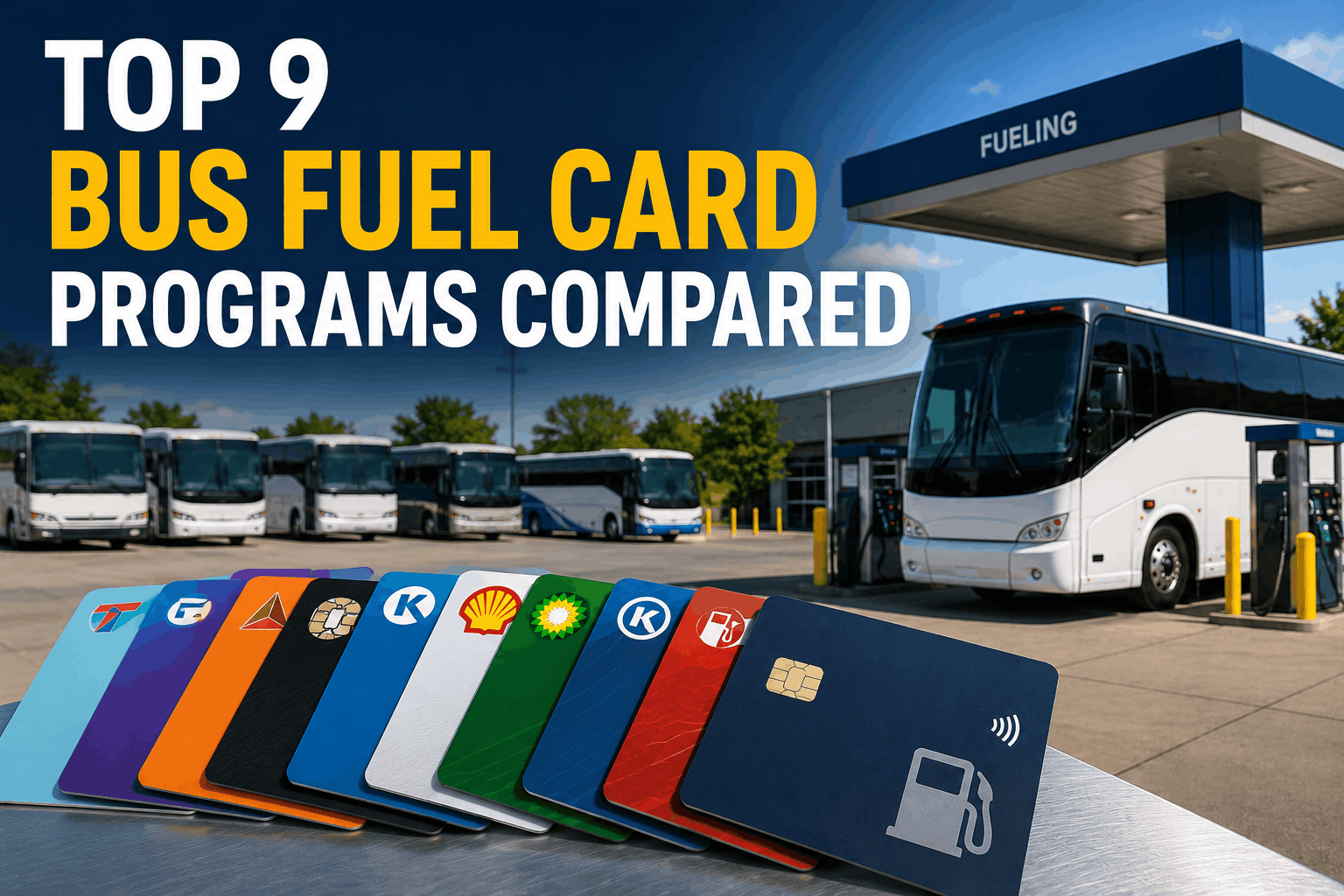
Fuel card programs help bus fleets control fuel spend, earn rebates, and prevent fraud. Choosing the right card requires comparing rebate rates, acceptance networks and integration with maintenance systems. This guide compares the top nine bus fuel card programs for 2026, including WEX, Comdata, and Voyager, to help you maximize savings.
Top 9 Bus Fuel Card Programs Compared 2026
Top 9 Bus Fuel Card Programs Compared (WEX, Comdata, Voyager)
Compared: 9 top fuel card programs for bus fleets. WEX, Comdata, Voyager, Fuelman, Shell, BP — rebates, fraud controls, CMMS integration, school and transit fit.
Why Bus Fleets Need a Dedicated Fuel Card Program
Fuel is the second-largest operating cost for bus fleets. A strategic fuel card program delivers per-gallon rebates, real-time spend controls, and seamless data integration with fleet management software to cut costs and administrative burden.
6–12¢/gal
Average fuel rebate for bus fleets
18%
Average annual fuel spend reduction
92%
Fraud reduction with card controls
3.1x
ROI from fuel card rebates alone
Fuel Card Program Implementation Progress
1
Assess Fleet Fuel Needs
Analyze fuel consumption by vehicle type, route patterns, and current spend to define requirements.
2
Compare Card Programs
Evaluate top programs on rebate rates, acceptance network, controls, and integration capabilities.
3
Issue Cards & Set Controls
Assign cards to vehicles or drivers, set purchase limits, and activate fraud alerts.
4
Integrate with CMMS
Connect fuel data to maintenance software for automatic cost-per-mile tracking and PM scheduling.
5
Monitor & Optimize
Review fuel reports monthly, adjust controls, and switch cards if rebate terms change.
Top 9 Bus Fuel Card Programs Ranked for 2026
WEX dominates with a 10.2¢ per gallon rebate for large bus fleets, followed by Comdata at 9.1¢ and Voyager at 8.7¢. Fuelman, Shell, and BP provide solid mid-tier options with strong acceptance networks. P-Cards deliver only 4.5¢ but offer flexible spending categories beyond fuel.
Fuel Card Program Adoption Trends
Adoption of dedicated fuel card programs among bus fleets has surged from 31% to 74% over seven years. Fleets switching from generic credit cards save an average of 18% on fuel costs through rebates and better controls. Integration with CMMS platforms further accelerates ROI.
5 KPIs to Track Fuel Card Program Success
Monitor these metrics to ensure your fuel card program delivers maximum value:
Rebate Earned per Vehicle
Target: Increasing quarterly. Track total cents-per-gallon rebate across all cards; optimize program selection annually.
Fuel Cost per Mile
Target: Decreasing or stable. Integrate fuel data with CMMS for automatic cost-per-mile analysis.
Unauthorized Purchase Rate
Target: Below 0.5%. Monitor exceptions; tighten product codes and dollar limits to eliminate misuse.
Card Acceptance Coverage
Target: 95%+ of route locations. Verify network coverage quarterly; switch cards if acceptance gaps appear.
Administrative Time Savings
Target: 15+ hours/month. Automated data feeds eliminate manual reconciliation and receipt tracking.
Fuel Card Program Evaluation Pass/Fail Criteria
Rebate Rate
Pass: 8¢/gal or higher for bus fleet volumes. Tiered rebates that improve with volume.
Fail: Flat low rebate with no volume incentives; hidden fees that offset earnings.
Acceptance Network
Pass: 95%+ coverage of fleet routes. Includes truck stops, retail stations, and cardlock sites.
Fail: Limited network causing drivers to search for stations or use backup cards frequently.
Fraud Controls
Pass: Real-time alerts, purchase limits by gallons or dollars, product code restrictions, odometer prompts.
Fail: Basic controls only; no ability to restrict purchases to fuel and fleet-related products.
CMMS Integration
Pass: Automatic fuel data import into BusCMMS or similar platform for cost-per-mile tracking and PM scheduling.
Fail: No integration options; data remains siloed requiring manual entry.
Customer Support
Pass: 24/7 dedicated fleet support, online account management, and dedicated account representative.
Fail: General customer service with long hold times and no fleet-specific expertise.
Pricing Transparency
Pass: Clear fee structure with no hidden charges; all rebates and fees disclosed upfront.
Fail: Opaque pricing, monthly minimums that penalize seasonal fleets, surprise service fees.
Switching to WEX with BusCMMS integration cut our fuel reconciliation time from 40 hours to zero each month. We earn 10.2¢ per gallon rebate across our 120-bus fleet, saving $48,000 annually. Fuel card controls stopped all unauthorized purchases within the first week. Our cost-per-mile tracking now updates automatically with every fill-up.
Maximize Fuel Savings with Integrated Fuel Management
BusCMMS integrates directly with WEX, Comdata, Voyager, and other top fuel cards to automatically track fuel spend, calculate cost-per-mile, and trigger maintenance alerts. See how much your fleet can save.
Bus Fuel Card Program FAQs
Which fuel card offers the highest rebate for bus fleets?
WEX Fleet Card offers the highest rebate at 10.2¢ per gallon for high-volume bus fleets. Comdata and Voyager follow closely. Rebates depend on annual fuel volume and negotiated terms.
Can fuel cards integrate with maintenance software?
Yes. BusCMMS integrates with WEX, Comdata, Voyager, and Fuelman to automatically import fuel transactions, update cost-per-mile, and trigger PM schedules based on actual fuel consumption data.
How do fuel card controls prevent fraud?
Fuel cards allow you to restrict purchases by product type (fuel only), set per-transaction dollar limits, limit gallons per day, and require driver ID or odometer entry. Real-time alerts flag unusual activity instantly.
What fees should I watch for with fleet fuel cards?
Common fees include monthly card fees ($2–$5 per card), network access fees, and out-of-network surcharges. Evaluate total cost against rebates earned. Top programs often waive fees for large fleets.
Are there fuel cards specifically for school buses?
WEX and Voyager offer specialized programs for school bus fleets with tax-exempt purchasing support, route-specific fueling, and integration with student transportation software. Fuelman also provides school fleet discounts.
How does BusCMMS help manage fuel card programs?
BusCMMS connects fuel card transaction data directly to each vehicle, tracks fuel economy trends, sets PM reminders based on actual fuel consumption, and generates reports for fuel spend analysis, rebate tracking, and audit readiness.
The Bottom Line
The right fuel card program can save a bus fleet 18% or more on fuel costs annually through rebates, reduced fraud, and administrative efficiency. WEX leads the 2026 ranking with a 10.2¢/gal rebate, while Comdata and Voyager provide strong alternatives with robust acceptance networks. Use the five KPIs to track program performance and the six pass/fail criteria to evaluate any fuel card provider. With fuel card adoption reaching 74% across the industry, fleets still using generic credit cards are leaving significant money on the table. Pair your fuel card with BusCMMS to automatically capture every transaction, monitor cost-per-mile, and build a fully integrated fleet management system that pays for itself through fuel savings alone.