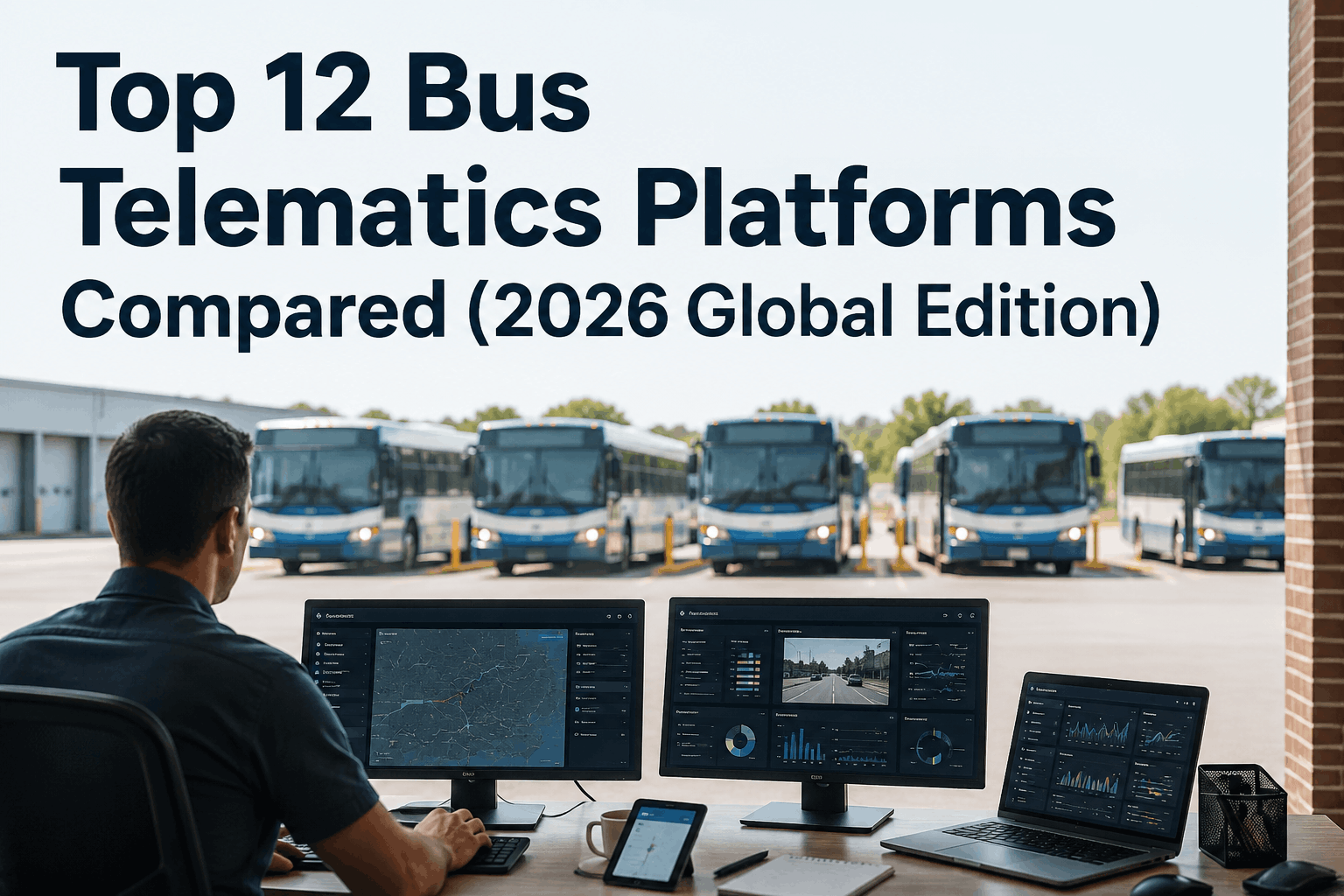
Bus telematics platforms have become essential for fleet operations in 2026, providing real-time GPS tracking, AI dashcams, engine diagnostics, and CMMS integration. This guide compares the top 12 platforms — Samsara, Geotab, Motive, Verizon Connect, Webfleet, Zonar, and more — ranking them by coverage, pricing, and integration capabilities for bus fleets worldwide.
Telematics Comparison Guide 2026
Top 12 Bus Telematics Platforms Compared (2026 Global Edition)
Top 12 bus telematics platforms compared in 2026. Samsara, Geotab, Motive, Verizon Connect, Webfleet, Zonar — coverage, pricing, CMMS integrations.
Telematics Impact: The Cost of No Visibility
Without telematics, bus fleets operate blind — unaware of vehicle locations, driver behavior, and maintenance needs. Telematics reduces fuel costs by 10-15%, improves safety by 40%, and provides real-time visibility into fleet operations.
10-15%
Fuel cost reduction
40%
Safety improvement
30%
Reduction in idle time
95%
Real-time visibility
Top 12 Bus Telematics Platforms
1. Samsara
Best For: Comprehensive telematics with AI dashcams. Real-time GPS, engine diagnostics, and CMMS integration. Custom pricing for bus fleets.
2. Geotab
Best For: Open platform with extensive integrations. Global coverage with 90+ countries. Starting at $20/vehicle/month.
3. Motive (formerly KeepTruckin)
Best For: AI dashcams and driver safety. Strong in ELD compliance and driver coaching. Starting at $25/vehicle/month.
4. Verizon Connect
Best For: Enterprise fleets with global operations. Comprehensive GPS tracking and reporting. Custom pricing based on fleet size.
5. Webfleet (formerly TomTom Telematics)
Best For: European and global fleets. Strong in route optimization and driver behavior. Contact for pricing.
6. Zonar
Best For: Bus and school transportation. Strong in DVIR and passenger safety. Contact for pricing.
7. GPS Insight
Best For: Mixed fleets with good customization. Strong in maintenance tracking. Starting at $18/vehicle/month.
8. EROAD
Best For: NZ/Australia operations. Strong in compliance and reporting. Contact for pricing.
9. Lytx
Best For: Video telematics and safety. AI-powered driver coaching. Custom pricing.
10. Teletrac Navman
Best For: Construction and heavy equipment. Strong in asset tracking. Custom pricing.
11. CalAmp
Best For: Asset tracking and trailer monitoring. Strong in supply chain visibility. Contact for pricing.
12. ONROAD
Best For: Small to medium fleets. Simple and affordable solution. Starting at $15/vehicle/month.
Telematics Feature Comparison
Samsara leads in comprehensive telematics with AI dashcams and CMMS integration. Lytx excels in video telematics and driver safety. Geotab offers the most open platform with extensive integrations. Motive focuses on AI dashcams and driver coaching. Verizon Connect serves enterprise fleets. Zonar specializes in bus and school transportation.
Telematics Platform Requirements for Bus Fleets
Real-Time GPS Tracking
Track bus locations in real-time. Historical route replay. Geofencing and route adherence monitoring.
Engine Diagnostics
Monitor engine health, fault codes, and maintenance alerts. Support for CAN bus and J1939 protocols. Integration with CMMS systems.
AI Dashcams
AI-powered driver safety monitoring. Harsh braking, cornering, and acceleration alerts. Forward-facing and driver-facing cameras.
Fuel Management
Track fuel consumption and idle time. Identify fuel theft and waste. Support for fuel card integration.
Driver Safety
Monitor driver behavior. Coach drivers on safety. Reduce accident risk. Support for ELD compliance.
CMMS Integration
Automate work order creation from diagnostic alerts. Sync maintenance data with telematics. Support for preventive maintenance scheduling.
Telematics Adoption Trends
Telematics adoption has grown from 40% to 92% between 2019 and 2025. Digital transformation in fleet operations is accelerating as fleets recognize the benefits of real-time visibility, safety improvements, and fuel savings. By 2026, nearly all commercial bus fleets will use some form of telematics.
Telematics Platform Selection Checklist
GPS Tracking
Real-time location tracking. Historical route replay. Geofencing and route adherence monitoring.
Engine Diagnostics
Monitor engine health and fault codes. Support for CAN bus and J1939 protocols. Integration with CMMS systems.
AI Dashcams
AI-powered driver safety monitoring. Forward-facing and driver-facing cameras. Harsh driving event alerts.
CMMS Integration
Automate work order creation from diagnostic alerts. Sync maintenance data with telematics. Preventive maintenance scheduling.
Global Coverage
Check coverage in all operating countries. Support for multiple languages and time zones. Roaming and data plans.
Pricing & ROI
Evaluate total cost including hardware, installation, and monthly fees. Calculate ROI from fuel savings, safety, and maintenance.
Telematics Platform KPIs
Track these five metrics to measure your telematics program effectiveness:
GPS Tracking Accuracy
Target: Real-time updates every 30 seconds or less. Track monthly. Accuracy affects dispatch efficiency.
Fuel Savings
Target: 10-15% reduction in fuel costs. Track monthly. Idle reduction and route optimization drive savings.
Safety Score
Target: Improving trend in driver safety scores. Track monthly. AI dashcams and coaching improve safety.
Maintenance Alert Accuracy
Target: 95%+ accuracy in diagnostic alerts. Track monthly. Accurate alerts reduce downtime.
ROI Realization
Target: Positive ROI within 12-18 months. Track quarterly. Measure savings against investment.
Our transit agency of 250 buses implemented Samsara telematics in 2024. In the first year, fuel costs decreased by 12%, idle time reduced by 28%, and accident rates dropped by 35%. Integration with our CMMS system automated work order creation from diagnostic alerts, reducing maintenance response time by 60%.
Connect Your Telematics to CMMS
BusCMMS integrates with leading telematics platforms including Samsara, Geotab, and Verizon Connect. Automate work order creation from diagnostic alerts, sync maintenance data, and schedule preventive maintenance based on actual vehicle usage. Book a demo to see how telematics + CMMS integration transforms fleet operations.
Telematics Platform FAQs
What is the best telematics platform for buses?
The best platform depends on your fleet size and needs. Samsara is best for comprehensive telematics with AI dashcams. Geotab offers the most open platform. Zonar specializes in bus and school transportation. Lytx excels in video telematics. Evaluate your specific requirements before choosing.
How much does bus telematics cost?
Pricing ranges from $15-$50 per vehicle per month depending on features. ONROAD starts at $15/month. GPS Insight starts at $18/month. Geotab starts at $20/month. Motive starts at $25/month. Enterprise solutions like Samsara, Verizon Connect, and Lytx require custom pricing.
What features should bus telematics include?
Essential features include: real-time GPS tracking, engine diagnostics, AI dashcams, driver behavior monitoring, fuel management, CMMS integration, geofencing, route optimization, and compliance reporting. Some platforms also offer passenger counting and wheelchair lift monitoring.
How does telematics integrate with CMMS?
Telematics platforms can integrate with CMMS systems through APIs. Diagnostic alerts from the vehicle can automatically generate work orders in the CMMS. Maintenance data can be synced between systems. This reduces manual data entry and improves response time to vehicle issues.
What is the ROI of bus telematics?
Bus fleets typically see ROI within 12-18 months through fuel savings (10-15%), reduced idle time (20-30%), improved safety (40% fewer accidents), and lower maintenance costs. Most fleets report 15-25% reduction in total operating costs with telematics.
What is the difference between Samsara and Geotab?
Samsara offers a more comprehensive platform with AI dashcams, environmental monitoring, and equipment tracking built-in. Geotab offers a more open platform with extensive third-party integrations and global coverage. Samsara is better for all-in-one solutions. Geotab is better for customization and integrations.
The Bottom Line
Choosing the right telematics platform for your bus fleet in 2026 depends on your fleet size, operating regions, and specific needs. Samsara leads in comprehensive telematics with AI dashcams and CMMS integration. Geotab offers the most open platform with extensive integrations. Motive focuses on AI dashcams and driver coaching. Zonar specializes in bus and school transportation. Lytx excels in video telematics. When choosing a platform, prioritize real-time GPS tracking, engine diagnostics, AI dashcams, CMMS integration, and global coverage. The right telematics platform can reduce fuel costs by 10-15%, improve safety by 40%, and provide real-time visibility into fleet operations. When combined with proper CMMS integration, telematics transforms fleet maintenance from reactive to proactive — catching issues before they cause breakdowns or affect service availability.