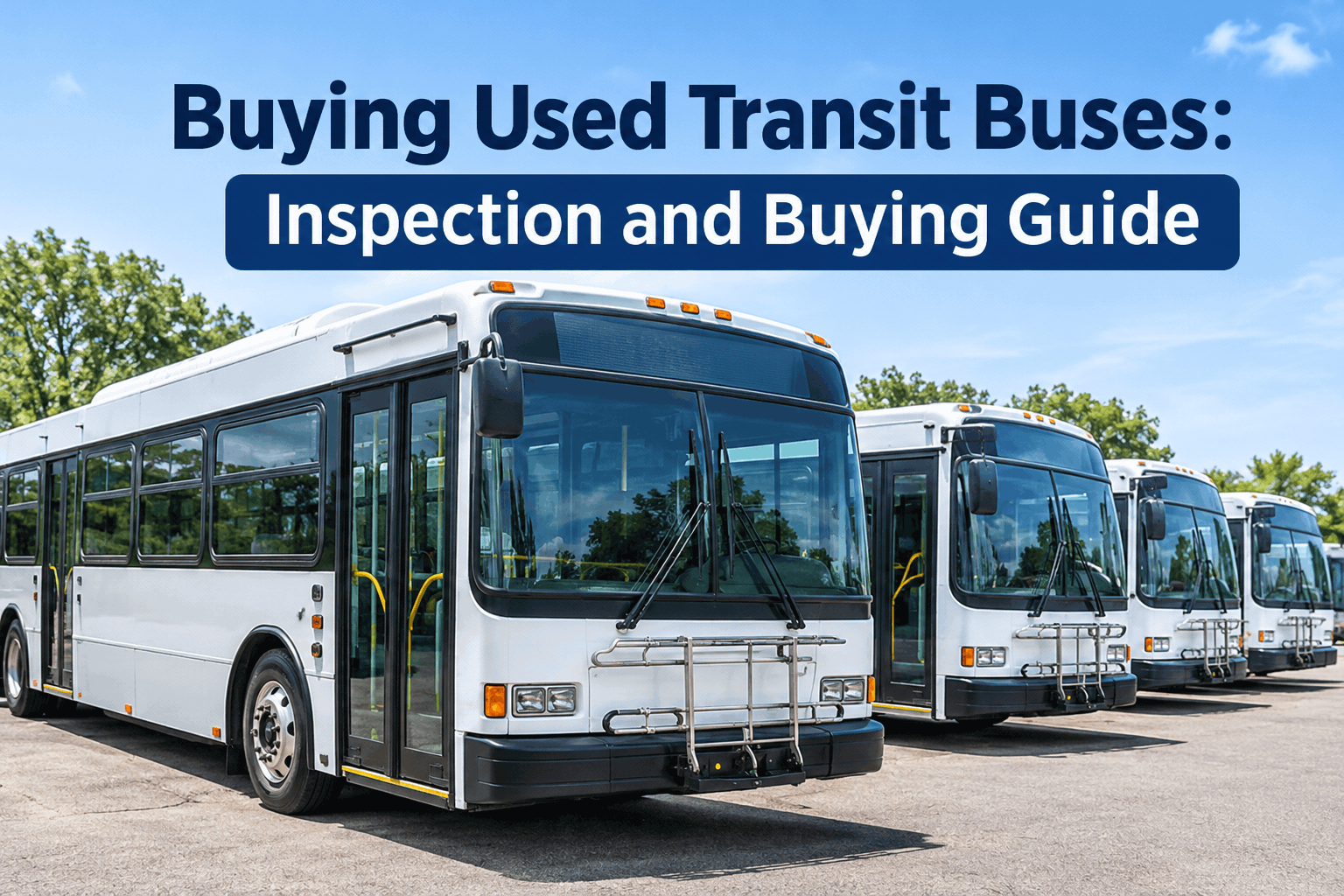
Sell a bus too early and you hand the next owner years of good service you already paid for. Hold it too long and you are pouring money into repairs on a unit worth almost nothing at trade-in. Knowing when to sell a bus is the difference — and it is not a gut call, it is the point where rising upkeep crosses falling resale value. You can see where each bus sits on that curve in a demo before you list a single unit.
When to Sell a Bus: Maximize Trade-In and Resale Value
Every bus has a window where its resale value is still worth capturing but its upkeep is starting to climb. Miss it and you lose money twice. Here is how to find that window for each unit.
Why the Timing of the Sale Decides What You Get Back
A bus is a depreciating asset the day it enters your yard, and its value and its upkeep move in opposite directions. Resale value drops steeply in the early years, then flattens. Maintenance cost does the reverse — low while the bus is young, then climbing as major components age. Sell in the gap where value is still real and cost has not yet spiked, and you maximize bus resale value. Four pressures decide whether you hit that gap or miss it.
Sell too early, give away paid-for life
Trade a bus with years of low-cost service left and you hand that value to the next owner for a fraction of what it is worth to you.
Hold too long, lose it twice
Keep a bus past its window and you pay climbing repair bills while its trade-in value quietly shrinks to scrap money.
Depreciation is steep early, then flat
Most value is lost in the first few years, so the sweet spot usually sits well before a bus is fully depreciated, not at the end.
An undocumented bus sells for less
Buyers pay more for a bus with a complete service record. No history means no trust, and no trust means a lower offer.
The curve looks obvious on paper; the hard part is knowing where each specific bus sits on it right now. That takes per-bus cost and mileage data, not a fleet-wide rule of thumb — you can sign up free and start tracking each bus's cost trend and age.
A Bus's Life, in Four Stages
It helps to map the sell decision onto the stages a bus actually moves through. For a standard heavy-duty transit bus, two FTA markers frame the back half — the minimum service life and the Transit Asset Management benchmark — and the smart sell window usually opens before you reach them.
Hitting the FTA minimum does not mean a bus is worthless — many agencies run buses well past it when cost and reliability allow. But the marker is a planning cue: once a bus is in late mid-life, you want its sale mapped out while it still has resale value left to capture. You can book a demo and see each bus placed on this timeline automatically.
Signs a Bus Is Entering Its Sell Window
You rarely get one loud signal — you get a few quiet ones that add up. These are the signs that a bus is moving from asset to liability, and what each one is telling you to do.
| Sign | What it is telling you | What to do |
|---|---|---|
| Cost per mile climbing vs its class | Upkeep is starting to outrun the bus | Start the sale plan now |
| A major overhaul is coming due | A big bill is about to sink its resale | Sell before the repair, not after |
| Downtime and road calls rising | Reliability is slipping on real routes | Move it up the replacement list |
| Nearing FTA useful life | A planning and grant milestone is reached | Make it eligible to plan a sale |
| Resale still healthy for its age | The window is open right now | Capture it before it closes |
The single most useful of these is cost per mile climbing against the bus's class — it is the earliest honest warning that the curve is turning. See how it plays out across a real passenger fleet on the passenger and transit page, or book a demo to see which of your buses are flashing these signs.
Your Sell-or-Keep Readiness Checklist
Before you decide to sell or hold any bus, make sure you are deciding on data. The critical items are the three that most directly set the timing and the price you will get.
- You track cost per mile per bus and can see it trendingThe rising curve is your earliest signal the window is opening.CRITICAL
- Each bus's age and mileage sit against FTA useful-life markersYou cannot time the window without knowing where on it the bus sits.CRITICAL
- A complete service history is attached to every unitDocumented records are what let you ask — and get — a higher price.CRITICAL
- You know a major overhaul's cost before it comes dueSelling just ahead of a big-ticket repair protects your resale value.PLAN
- You aim sales toward seasonal market highsThe same bus brings more when used-bus demand is strong.PLAN
- Replacement is planned and funded, not reactiveA planned sale beats a fire sale after a breakdown every time.PLAN
If the three critical items are not in hand, you are guessing at the most expensive timing decision in the fleet. You can sign up free and start building that record today.
How BusCMMS Helps You Time the Sale
BusCMMS will not quote you a market price — that comes from a dealer, an auction or a valuation guide. What it does is tell you when each bus is hitting its window and hand you the records that make it sell for more.
Cost-per-mile trend per bus
See each bus's operating cost climb against its class, so you catch the curve turning up instead of finding out at the next big repair.
Age and mileage vs useful life
Every bus placed against FTA markers, so you always know which units are entering their sell window and which still have prime life left.
Complete maintenance records
A full, exportable service history for every unit — the documentation a buyer trusts and pays extra for at trade-in or resale.
Timing, lifecycle position and a clean record in one place turn the sell decision from a yearly guess into a plan you can take to the board with the numbers behind it.
A Fleet Manager's Take
Key Takeaways on When to Sell a Bus
Knowing when to sell a bus is one of the highest-value calls you make all year — and it rewards data over instinct every time.
Sell in the gap
The window is where value is still real and upkeep has not yet spiked — before the crossover, not after.
Cost per mile is the signal
A rising per-bus cost trend is the earliest honest sign the curve is turning.
Records are worth real money
A documented service history raises resale value and buyer trust — sell with it, not without.
Plan it, do not react
A sale timed before a major repair beats a fire sale after a breakdown every time.
Watch the cost trend, place each bus on its lifecycle, keep the records clean, and the sell decision stops being a loss you absorb and becomes value you recover. The best time to sell a bus is while someone else still wants to buy it.