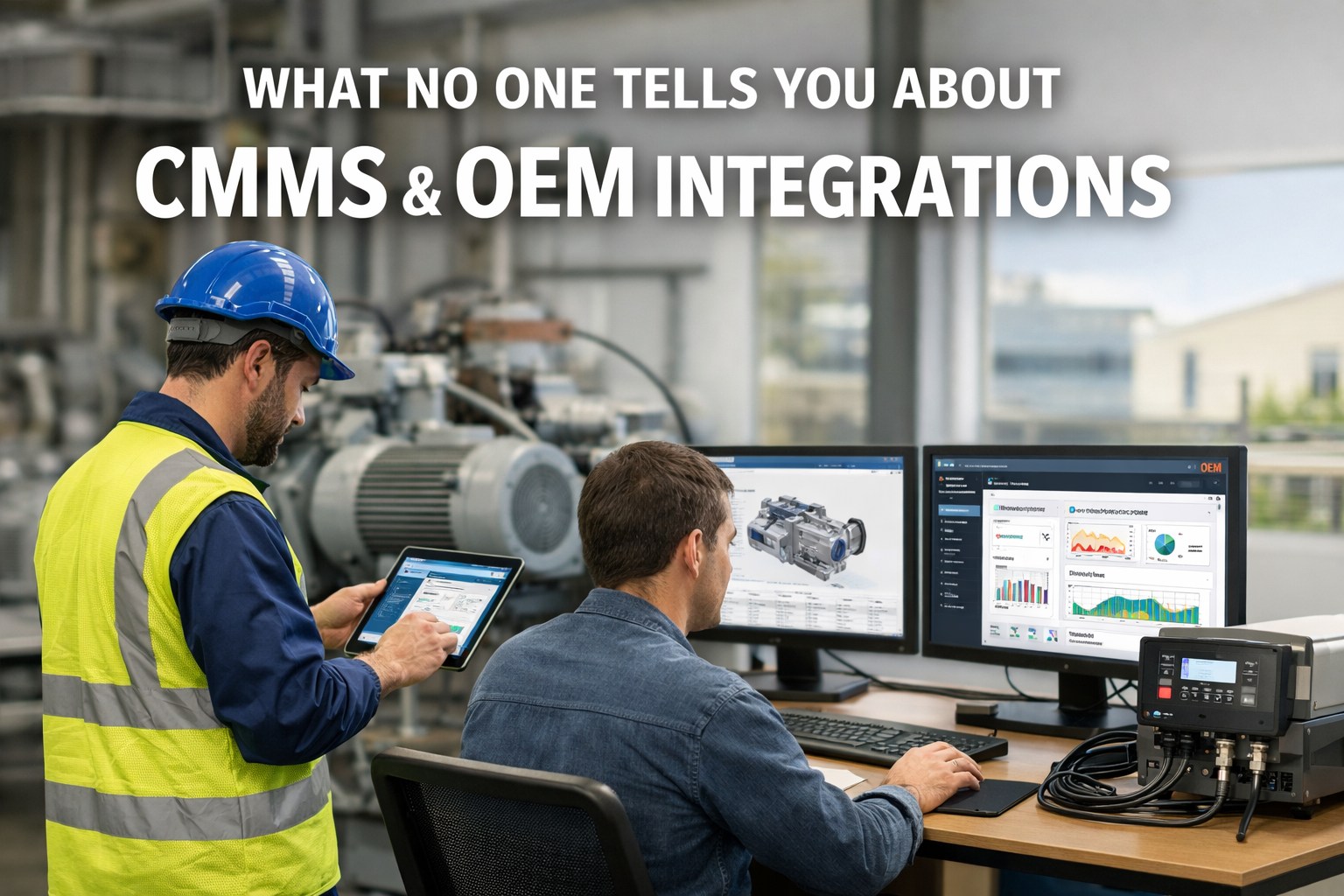
You've heard the promises: seamless data flow, reduced downtime, and operational efficiency that will make your competitors weep. But here's what the sales brochures don't tell you about CMMS and OEM integrations – the real story that every manufacturing professional needs to know before diving headfirst into digital transformation.
While everyone's busy talking about the benefits of fleet software and predictive analytics, the industry has been surprisingly quiet about the challenges, hidden costs, and unexpected opportunities that come with integrating your Computerized Maintenance Management System (CMMS) with Original Equipment Manufacturer (OEM) systems. Let's pull back the curtain and explore what really happens when these two worlds collide.
The Integration Reality Check: It's Not Plug-and-Play
Despite what vendors might suggest, CMMS tools and OEM systems don't just shake hands and start sharing data like old friends. The reality is far more complex, and understanding this upfront can save you months of frustration and thousands of dollars.
Most OEMs use proprietary diagnostic systems that speak their own language – literally. These systems often employ custom protocols, data formats, and communication standards that weren't designed with third-party integration in mind. Your CMMS, meanwhile, expects standardized data feeds that align with its internal structure and workflows.
This disconnect means you'll likely need middleware solutions, custom API development, or specialized telematics integration platforms to bridge the gap. What seems like a simple connection often requires significant technical expertise and ongoing maintenance to keep the data flowing smoothly.
Pro Tip: Before committing to any integration project, demand a technical proof-of-concept that demonstrates actual data exchange between your specific OEM equipment and CMMS platform. Theoretical compatibility and real-world functionality are two very different things.
The Hidden Goldmine: Predictive Analytics and Fleet Efficiency
Here's where things get interesting – and where the real value lies. When CMMS and OEM integrations work properly, they create something much more powerful than the sum of their parts. You're not just connecting systems; you're building an intelligent maintenance ecosystem that can predict failures before they happen.
OEM diagnostic systems generate massive amounts of data: engine performance metrics, hydraulic pressure readings, temperature fluctuations, vibration patterns, and hundreds of other parameters. When this data flows into your CMMS, it transforms from raw numbers into actionable maintenance insights.
For bus fleet maintenance operations, this means your system can identify patterns that indicate an upcoming transmission failure three weeks before it happens. Your maintenance scheduling becomes proactive rather than reactive, and your vehicle uptime improves dramatically. Route optimization becomes data-driven, factoring in real-time equipment health alongside traditional logistics considerations.
The fleet automation possibilities are equally impressive. Imagine your CMMS automatically scheduling preventive maintenance based on actual equipment condition rather than arbitrary time intervals. Or having your system flag vehicles that shouldn't be assigned to demanding routes due to developing mechanical issues.
Compliance Tracking: Your Secret Weapon Against Regulatory Headaches
Nobody talks about this enough, but integrated CMMS and OEM systems create an incredibly powerful compliance tracking framework. When your maintenance software automatically captures and logs every diagnostic event, performance metric, and system status update, you're building an auditable trail that regulatory bodies absolutely love to see.
For manufacturing environments with strict safety requirements, this integration creates automatic documentation of equipment performance, maintenance interventions, and system health status. Your compliance reporting shifts from manual data compilation to automated report generation. During audits, you can provide detailed equipment histories, maintenance records, and performance data with the click of a button.
The integration also enables real-time compliance monitoring. Instead of discovering regulatory violations during scheduled inspections, your system can alert you the moment equipment operates outside acceptable parameters. This proactive approach prevents violations before they occur and demonstrates a commitment to safety that regulators appreciate.
Ready to Transform Your Maintenance Operations?
Don't let integration challenges hold you back from unlocking the full potential of your fleet maintenance strategy.
Getting StartedBook a Demo
The Data Quality Paradox: More Isn't Always Better
Here's something that might surprise you: successful CMMS and OEM integration isn't about capturing every possible data point. It's about capturing the right data points and presenting them in ways that drive decision-making.
OEM systems can generate overwhelming amounts of information. A single piece of heavy equipment might produce thousands of data points per hour. Without proper filtering and analysis, this data becomes noise rather than insight. The key is working with your integration team to identify which metrics actually correlate with maintenance needs and operational efficiency.
Smart fleet insights come from pattern recognition, not data volume. Your integrated system should focus on identifying trends, anomalies, and predictive indicators rather than simply storing everything. This approach reduces storage costs, improves system performance, and makes the data actually useful for your maintenance teams.
The most successful implementations create customized dashboards that present actionable information to different stakeholders. Your mechanics need different data views than your fleet managers, and your compliance team needs different reports than your operations supervisors.
The Long-term Strategic Impact: Beyond Maintenance
The most underestimated aspect of CMMS and OEM integration is its impact beyond the maintenance department. When done right, this integration becomes a strategic business tool that influences procurement decisions, operational planning, and financial forecasting.
Your integrated system provides unprecedented visibility into the total cost of ownership for different equipment types, manufacturers, and operational patterns. This data drives smarter procurement decisions, helping you choose equipment that delivers the best long-term value rather than the lowest upfront cost.
Fleet efficiency improvements compound over time. Better maintenance scheduling reduces emergency repairs, extends equipment life, and improves fuel efficiency. Predictive analytics help you optimize replacement schedules, ensuring you retire equipment at the optimal point in its lifecycle.
The operational intelligence generated by these integrations also supports strategic planning. You can model the impact of fleet expansion, route changes, or operational modifications before implementing them. This data-driven approach to strategic planning reduces risk and improves outcomes.
Conclusion: The Integration Imperative
CMMS and OEM integrations represent more than a technological upgrade – they're a fundamental shift toward data-driven maintenance management. While the challenges are real and the implementation requires careful planning, the long-term benefits extend far beyond what most organizations initially expect.
The manufacturers and fleet operators who embrace these integrations now are building competitive advantages that will compound over time. They're not just maintaining equipment more efficiently; they're creating intelligent operational ecosystems that adapt, learn, and improve continuously.
The question isn't whether you should pursue CMMS and OEM integration – it's how quickly you can implement it effectively. The organizations that move first will set the operational standards that others will struggle to match.
Start Your Integration Journey Today
Transform your maintenance operations with intelligent CMMS and OEM integration solutions designed for modern manufacturing professionals.
Getting StartedBook a Demo